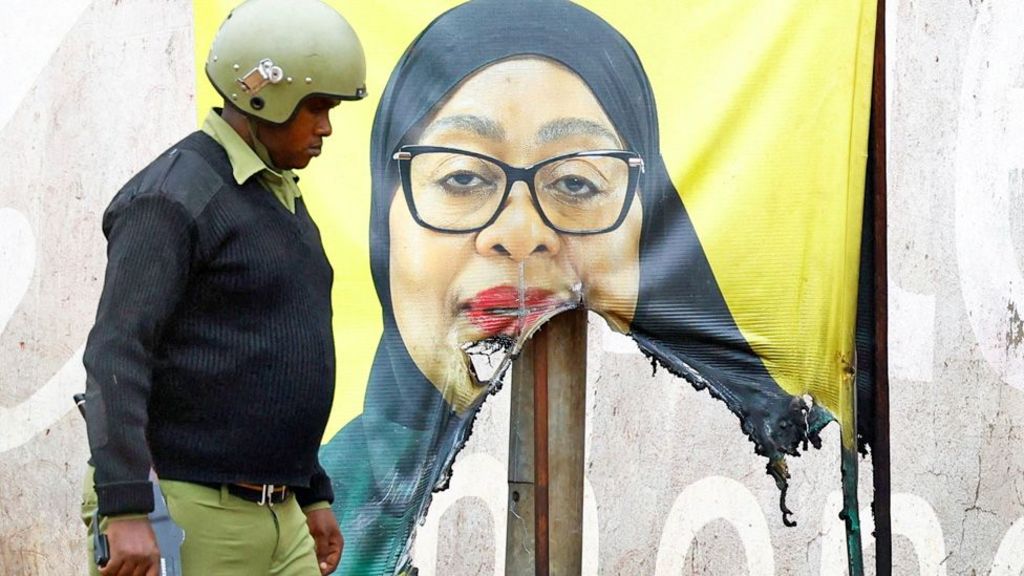
Tanzania is witnessing a wave of unrest as protests continue for the third consecutive day, despite stern warnings from the country’s military leadership. Demonstrators, primarily young citizens, have flooded the streets of major cities, decrying the recent presidential election as unfair. The exclusion of key opposition figures from contesting against President Samia Suluhu Hassan has fueled widespread discontent. The government has imposed an internet blackout, making it challenging to verify reports of casualties, while a curfew has been extended to curb the escalating violence. The United Nations has expressed grave concern, urging Tanzanian security forces to avoid excessive force. UN human rights spokesperson Seif Magango cited credible sources indicating at least 10 fatalities. Amnesty International has also raised alarms, though communication disruptions have hindered their ability to confirm these reports. Hospitals are withholding information from journalists and human rights groups, further obscuring the true scale of the crisis. The government has downplayed the violence, emphasizing its control over the situation. Meanwhile, the electoral commission has announced results from over half of the country’s 100 constituencies, with President Samia, representing the long-ruling Chama Cha Mapinduzi (CCM) party, expected to secure victory. The CCM has governed Tanzania since its independence in 1961. On the semi-autonomous archipelago of Zanzibar, incumbent President Hussein Mwinyi of the CCM has reportedly won nearly 80% of the vote, though opposition leaders have alleged massive fraud. The protests have disrupted daily life, with tourists stranded at airports due to flight delays. Critics accuse the government of undermining democracy, citing the imprisonment of main opposition leader Tundu Lissu on treason charges and the disqualification of another prominent contender, Luhaga Mpina, on legal technicalities. Samia, Tanzania’s first female president, assumed office in 2021 following the death of her predecessor, John Magufuli. While initially praised for easing political repression, her administration has faced growing criticism for narrowing the political space and targeting critics through arrests and abductions. The situation remains tense as the nation awaits official election results, expected on Saturday.