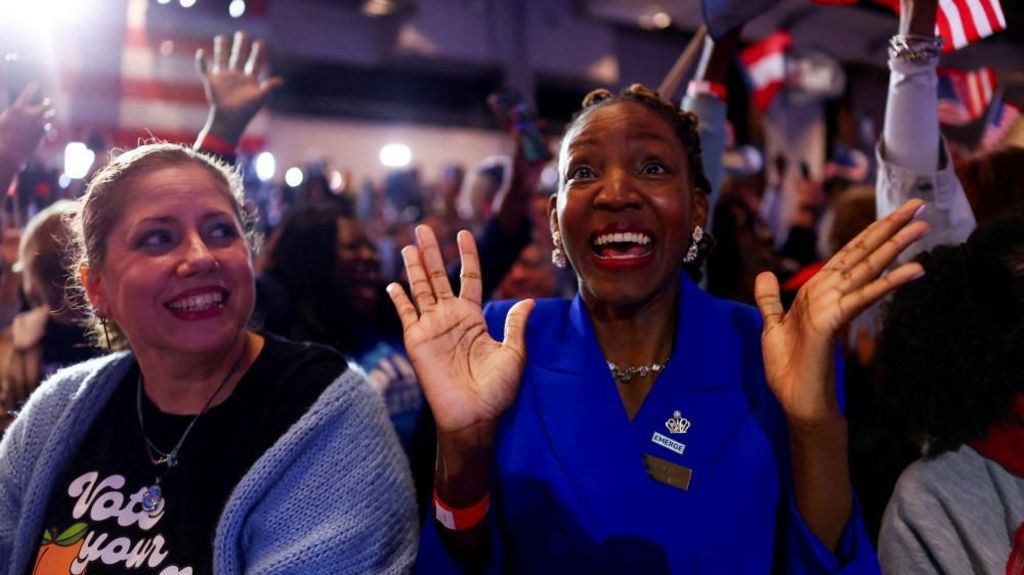
As 2026 U.S. midterm polls remained partially open across the country, early unofficial projections have confirmed a wave of landmark victories for the Democratic Party, putting it on track to reclaim majority control of the U.S. House of Representatives alongside a string of high-profile Senate and gubernatorial flips that upended long-held partisan expectations across traditionally competitive battleground states.
One of the night’s most celebrated early breakthroughs unfolded in North Carolina, where former two-term Democratic Governor Roy Cooper pulled off a widely watched win over Republican candidate Michael Whatley to claim the state’s U.S. Senate seat. The triumph marks the first time Democrats have won a North Carolina Senate contest since 2008, capping off years of sustained, resource-heavy organizing efforts in a state that had leaned reliably red for most of the past two decades. Addressing a raucous room of cheering supporters Tuesday evening, Cooper framed the win as a testament to grassroots collective action: “Tonight we show the country that when everyday people come together, we can make change.”
In Georgia, the party notched two history-making wins that shattered 20 years of Republican control of the state’s top executive office. Former Atlanta Mayor Keisha Lance Bottoms defeated self-funding billionaire healthcare executive Rick Jackson, who had earned endorsements from outgoing Republican Governor Brian Kemp and former President Donald Trump, and poured a staggering $200 million of his personal fortune into the race. Bottoms’ projected victory makes her the first Black person and the first woman ever elected governor of Georgia, a result that Democratic operatives in the state had described as a hard-fought, carefully cultivated opportunity just weeks before polls opened. Incumbent Democratic Senator Jon Ossoff also secured a comfortable re-election victory over Republican U.S. Representative Mike Collins, defying GOP hopes of flipping the Peach State Senate seat back after Trump carried Georgia in the 2024 presidential election. In his victory address, Ossoff struck a unifying tone for voters concerned about democratic stability: “For all those who doubted whether our republic would survive the turmoil of the last two years, the first light of dawn is on the horizon.” The decisive win is already fueling widespread speculation that Ossoff, a rising star in the national party, could emerge as a leading 2028 Democratic presidential contender.
Another barrier-breaking victory came in New Hampshire, where longtime Democratic U.S. Representative Chris Pappas defeated former Republican Senator John Sununu, scion of one of New England’s most prominent political dynasties, to become the first openly gay man ever elected to the U.S. Senate. The 46-year-old lawmaker, who had served in the House representing New Hampshire’s 1st Congressional District since 2019, opted to forgo a House re-election bid to mount his Senate campaign, and emphasized the cordial, issue-focused tone of the race in his victory remarks, paying public tribute to his opponent: “We all owe John Sununu a big debt of gratitude for his decades of public service to the people of New Hampshire.”
Even as votes continue to be tabulated across dozens of remaining House and Senate districts, the early wave of Democratic upsets has already reshaped the national partisan landscape, defying pre-election forecasts that predicted modest GOP gains across key battlegrounds.
Ecstatic scenes and historic moments: What’s happened so far in the midterms