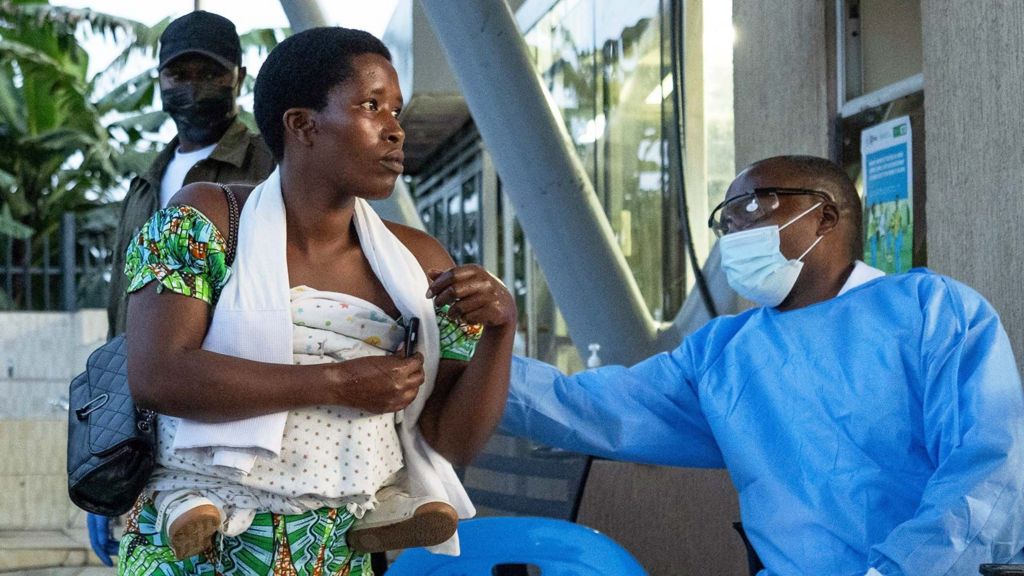
An ongoing Ebola outbreak originating in the Democratic Republic of the Congo (DRC) has spread faster and wider than initial assessments projected, international health officials have warned, with cases already detected in neighboring Uganda and multiple provinces across the unstable Central African nation. As of Tuesday, official counts put suspected cases in the DRC at more than 513, with 131 recorded fatalities in the country and one additional death in Uganda. But new analysis from the London-based MRC Centre for Global Infectious Disease Analysis suggests official numbers are likely far lower than the actual caseload, with researchers warning that substantial under-detection could mean the total number of infections has already surpassed 1,000. The true size of the outbreak remains uncertain, the study added, noting that current confirmed figures understate the outbreak’s real scale.
The World Health Organization (WHO) representative to the DRC, Dr. Anne Ancia, told the BBC that expanded on-the-ground investigations have confirmed the virus has reached multiple new regions, including the conflict-affected province of South Kivu and Goma, eastern DRC’s largest population center home to roughly 850,000 residents that is currently controlled by Rwandan-backed armed groups. The outbreak’s epicenter remains DRC’s Ituri province, a chronically insecure region marked by widespread forced population displacement that has severely complicated response efforts. “The more we are investigating this outbreak, the more we realise that it has already disseminated at least a little bit across border and also in other provinces,” Ancia explained. Chronic instability across multiple affected provinces pushes residents to move frequently, raising the risk of further transmission, she added.
The Red Cross echoed the WHO’s warning, noting that all the conditions that allow Ebola to escalate rapidly—delayed case identification, low community awareness, and strained health systems—are already present in the current outbreak. DRC President Félix Tshisekedi called for calm and urged citizens to maintain vigilance following an emergency crisis meeting on the outbreak Monday evening. WHO Director-General Tedros Adhanom Ghebreyesus, who declared the outbreak a Public Health Emergency of International Concern (PHEIC) last week, said he is deeply alarmed by both the size and acceleration of the epidemic.
Health investigators believe the outbreak had been circulating for several weeks before it was first officially detected on April 24. Complicating response efforts further, there is no approved vaccine for the specific viral strain driving the current outbreak: the rare Bundibugyo strain, which has only caused two recorded outbreaks previously, with roughly a third of infected patients dying from the disease. The WHO is currently evaluating whether existing antiviral treatments developed for other Ebola strains may offer some protection against Bundibugyo.
Neighboring and regional countries have already implemented emergency precautions to slow cross-border spread. Rwanda has closed its entire border with the DRC, while Uganda has advised citizens to avoid traditional greetings including hugs and handshakes, and multiple other African nations have tightened entry screenings and prepped health facilities to handle potential cases.
International fallout from the outbreak has already spread beyond Africa: an American citizen, identified as missionary doctor Peter Stafford, developed Ebola symptoms over the weekend and is being evacuated to Germany for treatment. The U.S. Centers for Disease Control and Prevention (CDC) confirmed it is also coordinating the evacuation of at least six other American citizens who had potential exposure to the virus.
WHO and partner humanitarian organizations are currently working alongside DRC government officials and local community leaders to contain transmission, urging residents to follow public health safety guidelines and seek immediate care at the nearest health facility if they develop any Ebola symptoms.
Ebola is a viral infectious disease that begins with flu-like symptoms including fever, headache, and fatigue. As the infection progresses, patients often develop vomiting and diarrhea, which can progress to organ failure; some patients also experience internal and external bleeding. The virus spreads through direct contact with infected bodily fluids such as blood or vomit. The 2014-2016 West African Ebola epidemic, caused by the Zaire strain for which an approved vaccine now exists, remains the largest outbreak of the virus since its discovery in 1976, with more than 28,600 confirmed infections and 11,325 recorded deaths across multiple countries including Guinea, Sierra Leone, the United States, the United Kingdom, and Italy.