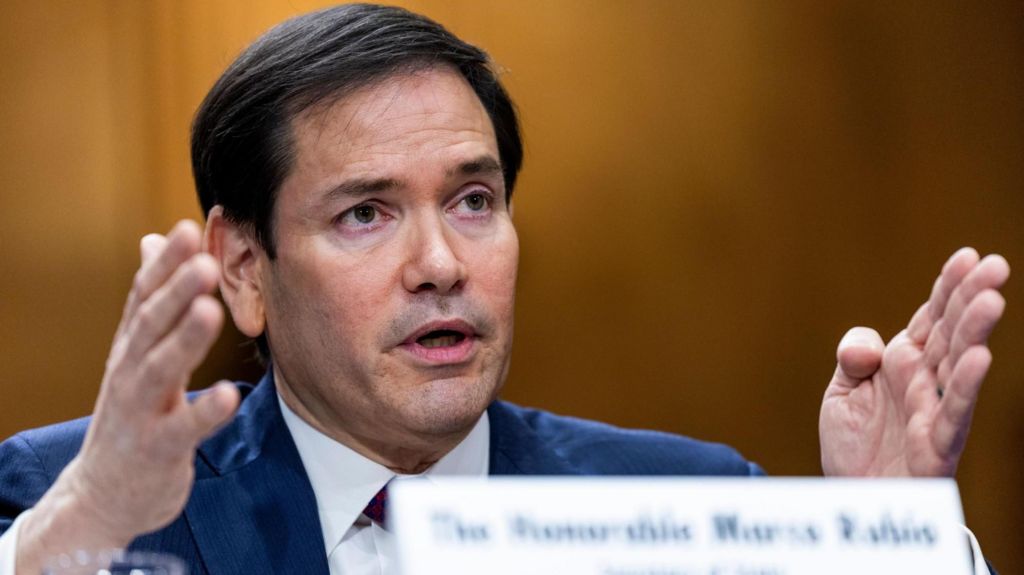
WASHINGTON – Secretary of State Marco Rubio faced intense congressional scrutiny Wednesday during a long-awaited Senate Foreign Affairs Committee hearing on Venezuela, defending the Trump administration’s military operation that ousted Nicolás Maduro as a justified “law enforcement action” rather than an act of war.
The hearing marked the first public congressional examination of the unprecedented January 3rd Delta Force operation that extracted Maduro from Caracas in his pajamas to face drug trafficking charges in New York. The session, which senators had requested since well before the military intervention, revealed sharp divisions over the legal and strategic foundations of the administration’s Venezuela policy.
Rubio, a former senator who previously chaired this very committee, maintained a consistently robust defense throughout the proceedings. He characterized Maduro not as a legitimate head of state but as “an indicted drug criminal” with whom negotiation proved impossible. “The glue that held the regime together was corruption and graft,” Rubio stated. “His removal has created the conditions to begin to move away from that.”
A central point of contention emerged around the administration’s circumvention of congressional war powers. Rubio carefully stressed that “we did not occupy a country” and that “there are no US troops on the ground,” framing the operation as a targeted drug enforcement action rather than military engagement. This distinction drew skepticism from several committee members, including Republican Senator Rand Paul, who retorted that the operation resembled a “drug bust” lacking proper legal justification.
The secretary outlined a comprehensive plan for Venezuela’s political and economic restructuring under interim President Delcy Rodriguez. Most significantly, he detailed Washington’s intention to maintain full control over Venezuela’s oil industry, with oil revenues currently held in Qatari offshore accounts pending transfer to U.S. Treasury blocked accounts. These funds would be released only for narrowly defined needs upon Washington’s approval.
Rubio framed this arrangement as beneficial for both nations, suggesting Venezuelan oil profits would increasingly purchase U.S. goods rather than service debts to Russia or China. He also revealed that Rodriguez had “pledged to end Venezuela’s oil lifeline to the Cuban regime” – a statement with significant implications for regional dynamics.
While refusing to rule out additional military force, Rubio expressed confidence in the current trajectory, comparing Venezuela’s situation to a “critically ill patient” requiring immediate intervention. He cited Spain and Paraguay’s democratic transitions as historical parallels for the challenging path ahead.
The hearing concluded without clear consensus, reflecting ongoing debates about executive power, international law, and the future of U.S. policy in Latin America. With Rodriguez’s cooperation described as essential but uncertain, and Cuban officials undoubtedly monitoring developments, the coming months will test whether the administration’s vision of transformative change can be realized.