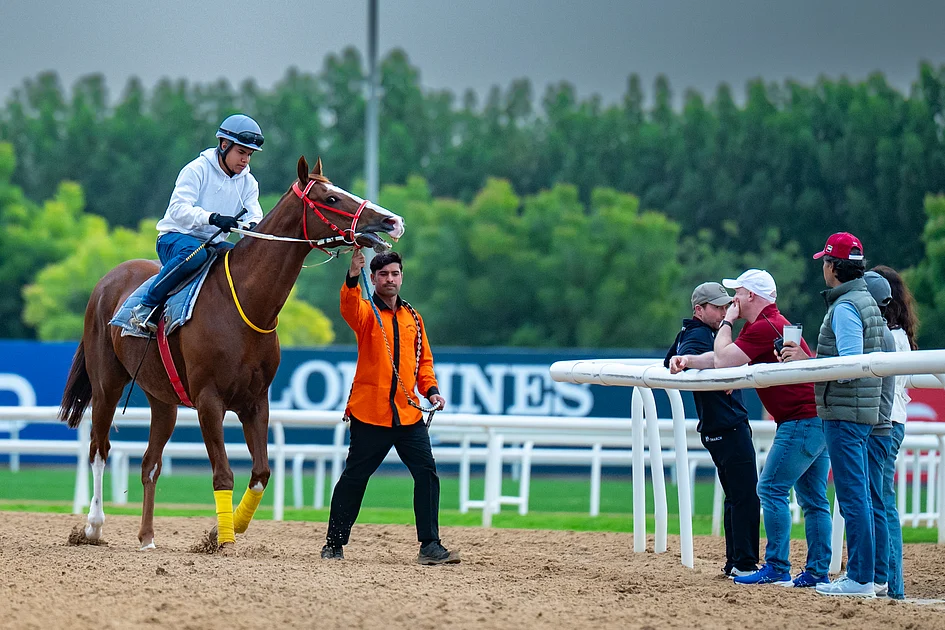
As the first light of dawn breaks over Dubai, the Meydan Racecourse awakens to a symphony of rhythmic hoofbeats and the quiet hum of meticulous preparation. Each morning at 6 AM, this iconic sporting venue transforms into a theater of precision where champions are forged through an elaborate ballet of human dedication and equine athleticism.
The morning tranquility is punctuated by the powerful strides of thoroughbreds circling the track, their breathing creating steam clouds in the cool morning air. Close behind, tractors perform a crucial maintenance ritual—smoothing the sand surface to erase hoof imprints and create optimal racing conditions. According to Mohamed Abbas Youssef, Racecourse Facility Manager, this daily resurfacing eliminates potential obstacles, allowing horses to achieve maximum performance without compromising safety.
From a modest viewing deck typically reserved for VIPs, observers can witness the intimate details of training sessions—the visible exertion of muscles, the focused intensity in the animals’ eyes, and the distinctive sound of their heavy breathing resembling human exertion at peak performance.
The preparation regimen begins far earlier than most realize. Veteran horse trainer Julio Olascoaga starts his day at 2:45 AM, a full hour before the first equine athletes arrive. His responsibilities encompass comprehensive fitness management—designing exercise programs, monitoring nutritional intake, and conducting physical assessments to determine race readiness.
With 35 horses currently under his supervision, Olascoaga organizes them into five training groups. These athletes train daily with only one rest day per week, undergoing high-intensity “fast work” sessions every 7-10 days to evaluate competitive readiness. All training concludes by 8:30 AM to avoid Dubai’s intensifying heat and humidity.
The international character of the Dubai Racing Carnival brings additional complexity to scheduling. “We accommodate horses from Europe, America, and South America,” Olascoaga explains. “International arrivals typically come pre-conditioned, requiring mainly maintenance training alongside our local Meydan thoroughbreds.”
While the racing season officially runs from November through March to capitalize on cooler temperatures, the preparation cycle begins much earlier—typically in early July—demonstrating the extensive lead time required to develop championship-caliber performers. This hidden world of dawn preparations represents the unsung foundation upon which the glamour of international horse racing is built.