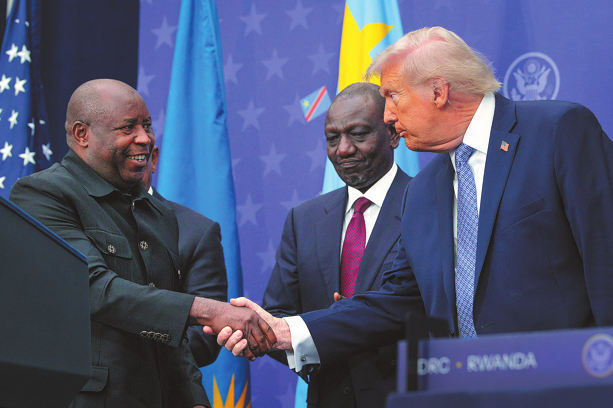
In a high-profile diplomatic ceremony at the recently renamed Donald J. Trump Institute of Peace in Washington DC, the United States facilitated a landmark agreement between the Democratic Republic of Congo and Rwanda on Thursday. The trilateral meeting, hosted by former President Donald Trump, brought together Congolese President Felix Tshisekedi and Rwandan President Paul Kagame to sign a peace framework addressing the protracted conflict in eastern DRC.
The agreement includes significant economic components, with both African nations granting US corporations access to their substantial mineral reserves—critical resources essential for advanced manufacturing including military aircraft and consumer electronics. “We’ll be involved with sending some of our biggest and greatest US companies over to the two countries,” Trump announced during the proceedings.
However, the diplomatic optimism contrasted sharply with realities on the ground. Within 24 hours of the signing, combat operations resumed in eastern DRC, with both government forces and M23 rebels exchanging accusations of ceasefire violations. The region has experienced intensified conflict since late 2021, with Congo maintaining allegations of Rwandan support for the rebel group—claims consistently denied by Kigali.
The humanitarian situation in conflict-affected areas remains dire. Goma, a strategic city of approximately two million people currently under rebel control, continues to suffer from closed infrastructure, suspended government services, and severe economic hardship. Residents report escalating crime rates and surging commodity prices, conditions exacerbated by recent reductions in US aid funding that previously supported conflict relief efforts.
The current violence traces its origins to colonial-era ethnic divisions between Hutu and Tutsi populations, divisions that ultimately catalyzed the 1994 Rwandan genocide and subsequent regional instability. Despite the newly signed agreement, analysts remain skeptical about immediate peaceful resolution, noting that active combat continues throughout the resource-rich eastern territories.