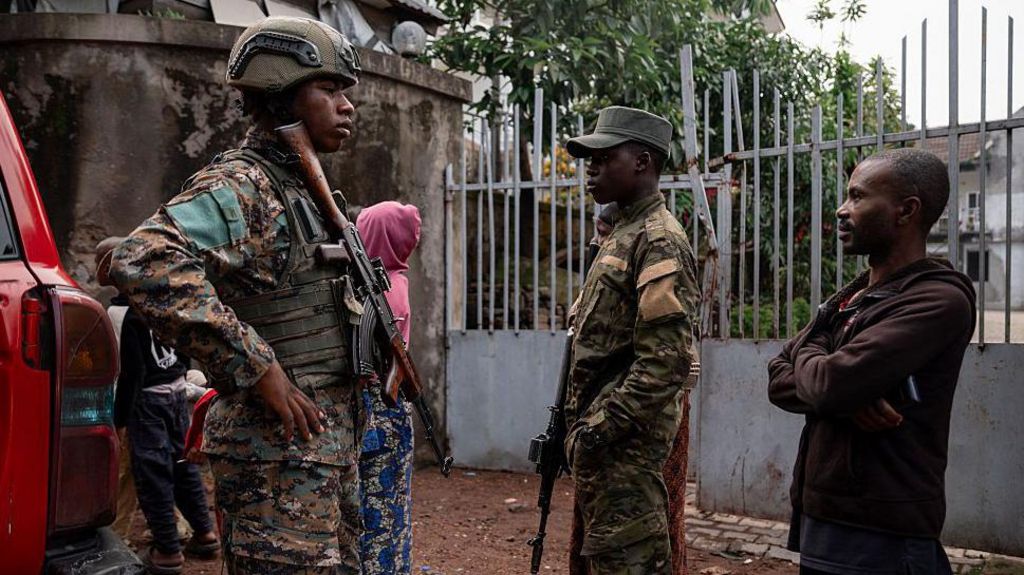
In a significant diplomatic development, the Democratic Republic of Congo and Rwanda have committed to implementing concrete measures to reduce bilateral tensions through negotiations facilitated by the United States in Washington. This breakthrough follows recent U.S. sanctions imposed on the Rwandan Defence Forces and four senior officials for their alleged direct support of the M23 rebel group operating in eastern DR Congo.
The trilateral joint statement outlines coordinated steps toward de-escalation, with both nations reaffirming their commitment to mutual sovereignty and territorial integrity. As part of the agreement, Rwanda will initiate military disengagement and remove defensive installations from specified areas within Congolese territory. Concurrently, DR Congo has pledged to intensify time-bound operations against the Democratic Forces for the Liberation of Rwanda (FDLR), an armed faction including participants in the 1994 Rwandan genocide that remains active in the eastern regions.
This diplomatic initiative occurs against the backdrop of a stalled peace process despite a U.S.-brokered agreement signed in December. The M23 rebel group continues to maintain control over substantial territories in eastern DR Congo, including the major urban centers of Goma and Bukavu. Recent military movements near the Burundian border have raised concerns about potential regional escalation.
Rwanda maintains that its military presence constitutes defensive measures against security threats posed by armed groups in DR Congo, consistently denying allegations of supporting M23 rebels. The Congolese government has conversely been accused of violating the peace agreement through indiscriminate drone attacks and ground offensives.
Washington has warned that continued Rwandan military support to M23 forces, coupled with their strategic positioning, creates substantial risk of transforming the conflict into a broader regional confrontation.