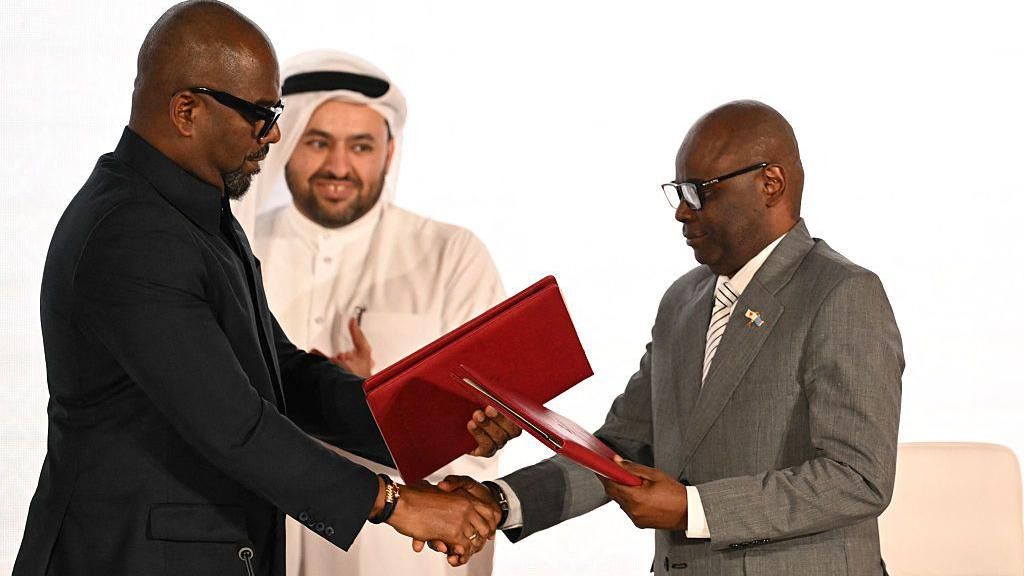
In a significant development aimed at ending decades of conflict in the resource-rich eastern region of the Democratic Republic of Congo (DRC), the Rwandan-backed M23 rebels and the Congolese government have signed a peace framework in Doha, Qatar. The ceremony, attended by Congolese envoy Sumbu Sita Mambu and M23 secretary Benjamin Mbonimpa, marks a crucial step toward resolving one of Africa’s most protracted conflicts. Qatar, alongside the United States and the African Union, has been actively mediating the peace process. Earlier this year, the M23 captured key cities, including Goma and Bukavu, escalating tensions. The new framework, which builds on previous agreements signed in July and last month, outlines eight protocols addressing humanitarian access, the return of displaced people, and judicial protection. However, US Africa envoy Massad Boulos noted that many details remain unresolved, and progress on prisoner exchanges and ceasefire monitoring has been slower than anticipated. Kinshasa has demanded the withdrawal of Rwandan troops from its territory, while Kigali insists this can only occur once the Congo-based FDLR militia, linked to the 1994 Rwandan genocide, is disbanded. The M23, one of the largest factions in the conflict, has expressed support for the Qatar-mediated talks, emphasizing their focus on addressing the root causes of the crisis. Despite this progress, the region remains volatile, with thousands killed and hundreds of thousands displaced since January. The DRC government has reportedly sought US assistance in securing the region, offering access to critical minerals like coltan in exchange for security guarantees. Rwanda denies supporting the M23, despite substantial evidence, and claims its military presence is defensive. The peace framework represents a fragile hope for stability in a region long plagued by violence and exploitation.