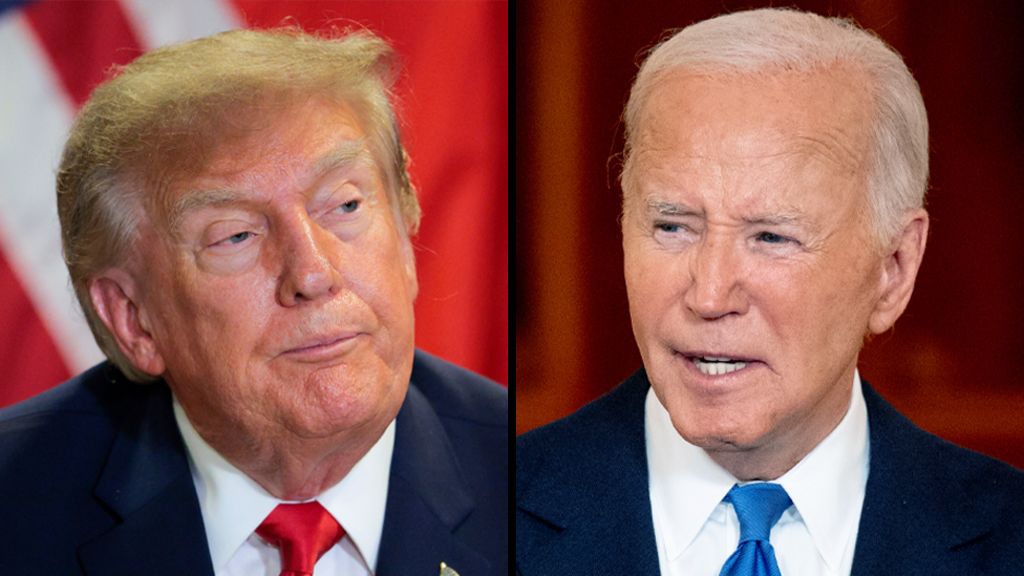
The White House is currently grappling with a well-documented political paradox that dominated the final year of Joe Biden’s 2024 term: headline economic indicators remain largely robust, yet widespread public frustration over stubbornly high consumer prices has eroded voter confidence in the administration’s economic stewardship.
During his 2024 presidential campaign, Donald Trump made a central, unambiguous pledge to households reeling from elevated post-pandemic costs, vowing that immediate action on his first day in office would drive down everyday prices across the board. Two years into his current term, that promise has proven far more difficult to deliver on than anticipated. Official data shows US gross domestic product expanding at a respectable 2.2% annual pace, the national unemployment rate holding steady at 4.2% — a figure far stronger than comparable major European economies such as Germany, which has struggled to generate consistent growth — and major stock market indices hovering near all-time highs. Yet the latest inflation report, released weeks ahead of the 2026 midterm elections, confirms what American consumers have experienced firsthand for months: everyday costs for groceries, fuel and household essentials remain persistently high, outpacing modest wage gains. Average hourly earnings have risen just 3% over the past year, while consumer prices have climbed 3.7%, leaving most working Americans with less purchasing power than they had 12 months prior.
While the core political disconnect between strong macroeconomic data and sour public sentiment mirrors the challenge Biden faced in 2024, the root causes of current inflation differ sharply. Biden’s final year in office was defined by lingering supply chain disruptions and pent-up consumer demand stemming from the global Covid-19 public health crisis. By contrast, Trump’s current inflation headwinds are tied in part to the ongoing US-Israel military conflict with Iran that has pushed global energy and petrol prices upward, alongside measurable price impacts from his administration’s signature trade and immigration policies. Even Republican-aligned University of Maryland economist Peter Morici has noted that current elevated costs are directly traceable to Trump’s policy choices, particularly the sweeping “Liberation Day” universal tariffs announced in April 2025. A Federal Reserve Bank of New York study calculated that these tariffs added an estimated 2.9% to overall consumer goods costs, a burden that was only partially mitigated after the White House paused a subset of the levies, negotiated revised trade pacts, and was blocked by the US Supreme Court from implementing additional tariffs via emergency executive authority.
The Trump administration has pushed back aggressively against public criticism of its economic record, framing its performance as a dramatic turnaround from what it describes as the “Biden inflation crisis”. White House spokesperson Matthew Middleton argued that the administration’s pro-growth, low-regulatory agenda had already blunted the worst of the price surge inherited from the prior administration, while Trump ally and economic commentator Larry Kudlow has hailed the current jobs-rich expansion as “the greatest story never told”, pointing to near-zero mass layoff rates as proof of underlying economic strength. The White House has also highlighted its record of tax cuts, prescription drug cost reductions and sustained job creation as tangible wins for working households. As voter frustration mounts ahead of the midterms, the administration has floated new targeted relief measures to address cost-of-living pain, including a proposed cap on exorbitant credit card interest rates and a one-time $5,000 direct payment to all adult US residents, conditional on Republicans retaining full congressional control after the upcoming elections.
Veteran Democratic pollster Celinda Lake, who advised Biden’s 2020 presidential campaign but did not work on his 2024 re-election bid, points out that the persistent rift between official economic data and public sentiment stems from a fundamental communications gap between policy experts and ordinary voters. While economists define falling inflation as a slowdown in the rate of price growth, most voters interpret the term to mean a full return to pre-inflation price levels, a scenario that almost never occurs in modern market economies. “You cannot argue with people about their own lived reality,” Lake noted, emphasizing that voters judge economic performance exclusively by their personal household budgets, not abstract GDP metrics or stock market milestones. The Biden administration spent much of 2024 attempting to highlight low unemployment and slowing inflation to voters, but failed to close that perception gap, a failure that contributed to widespread public disapproval of its economic management. Unlike Biden, who could largely attribute his inflation challenges to unforeseen global public health shocks, Trump has far less political cover to deflect blame, as a significant share of current price pressures are directly linked to policy choices his own administration implemented. With the 2026 midterms fast approaching, the central question for the White House is whether it can succeed where its predecessor failed, and bridge the yawning gap between strong macroeconomic statistics and the widespread lived experience of stretched household budgets.
Donald Trump’s biggest economic problem looks strangely familiar