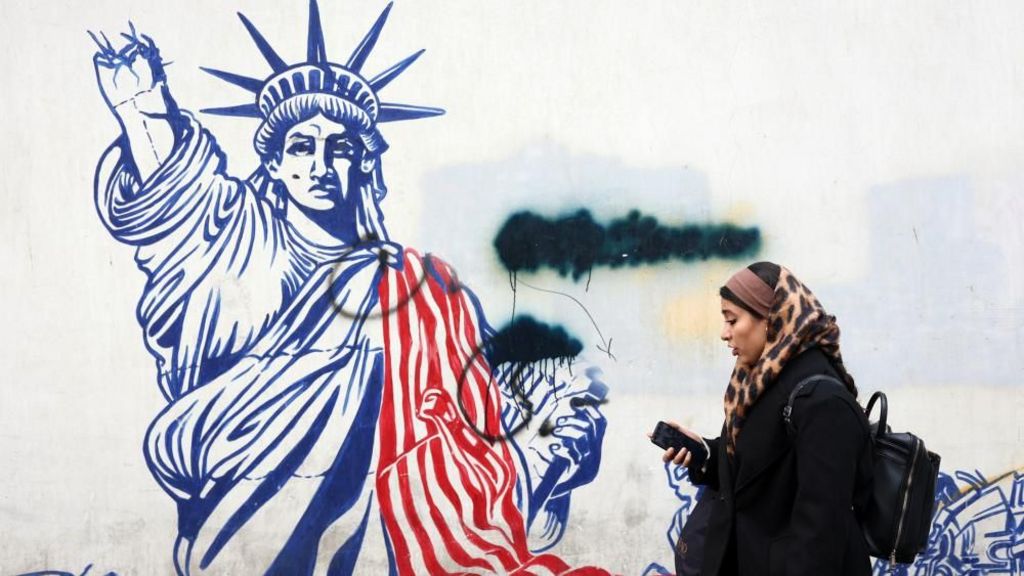
The Trump administration faces a critical juncture in determining its response to Iran’s violent suppression of domestic protests, with military, cyber, and diplomatic options under consideration. President Trump, who previously declared the U.S. “locked and loaded” to assist Iranian protesters, now confronts the full scale of Tehran’s crackdown amid emerging evidence of widespread violence.
White House Press Secretary Karoline Leavitt emphasized the unpredictability of Trump’s decision-making, stating, “Nobody knows what President Trump is going to do except for President Trump.” Senior officials are scheduled to brief the president on Tuesday regarding potential courses of action, which reportedly include targeted strikes, cyber operations, and psychological campaigns aimed at disrupting Iran’s command structures.
Despite recent success in Venezuela with the capture of Nicolas Maduro, administration officials recognize Iran presents a fundamentally different challenge. As a battle-hardened regime with significant ballistic capabilities and regional proxies, Iran cannot be compared to Venezuela’s weakened state. Pentagon officials caution that any military action would likely avoid ground operations, recalling the disastrous 1980 hostage rescue attempt that contributed to President Carter’s electoral defeat.
Analysts suggest Trump’s primary objective may be influencing regime behavior rather than pursuing regime change. Will Todman of the Center for Strategic and International Studies noted, “The risks of regime change are so great that I don’t yet believe that is his primary objective here.” Potential goals include securing concessions in nuclear talks, ending the crackdown, or implementing reforms leading to sanctions relief.
Diplomatic channels remain active, with administration officials receiving private messages from elements within the Iranian regime anxious to maintain dialogue about their nuclear program. Vice-President JD Vance is among those advocating for diplomatic solutions first, emphasizing the need for “real negotiation” regarding Iran’s nuclear program.
However, continued violence in Iran creates pressure for demonstrative action. Some analysts argue limited strikes could embolden protesters while cautioning that symbolic actions might strengthen regime resolve through rally-around-the-flag effects. The administration must also consider Iran’s threatened retaliation and the ongoing capabilities of its regional proxies, including Yemen’s Houthis and Iraqi Shiite militias.
Exiled opposition figure Reza Pahlavi has urged swift intervention, claiming earlier action would ultimately save lives. Yet White House officials recognize the situation’s complexity, balancing diplomatic possibilities against the risks of military escalation and the moral imperative to respond to state violence against civilians.