On the 225th anniversary of one of the most pivotal naval battles of the Napoleonic era, marine archaeologists from Denmark’s Viking Ship Museum have announced a landmark discovery: the wreck of the Danish flagship *Dannebroge*, sunk by British forces under Admiral Horatio Nelson during the 1801 Battle of Copenhagen, has been located on the seabed of Copenhagen Harbor.
The conflict that claimed the *Dannebroge* was rooted in 19th century European geopolitics. Denmark had joined the League of Armed Neutrality, an alliance of Northern European powers including Russia, Prussia and Sweden, that sought to protect neutral shipping from British blockades during the Napoleonic Wars. To prevent the Danish navy from falling under French control, Nelson led a British fleet in a surprise attack on the Danish blockade positioned outside Copenhagen Harbor on April 2, 1801. The brutal, hours-long clash killed and wounded thousands of combatants, and remains remembered as one of Nelson’s most famous military victories. It was during this battle that Nelson, who had lost vision in his right eye decades earlier, allegedly ignored a recall order from his superior, famously remarking, “I have only one eye, I have a right to be blind sometimes” — an anecdote that gave rise to the enduring idiom “to turn a blind eye.”
As the Danish flagship and Nelson’s primary target, the 48-meter *Dannebroge* commanded by Commodore Olfert Fischer bore the brunt of the British attack. Cannon fire shredded its upper deck, and incendiary shells sparked an uncontrollable blaze. “When a cannonball hits a ship, it’s not the cannonball that does the most damage to the crew, it’s wooden splinters flying everywhere, very much like grenade debris,” explained Morten Johansen, head of maritime archaeology at the Viking Ship Museum, describing the nightmare conditions for sailors on board. The badly damaged vessel drifted northward in the harbor before eventually exploding, with historical records noting the blast produced a deafening roar heard across the entire city of Copenhagen.
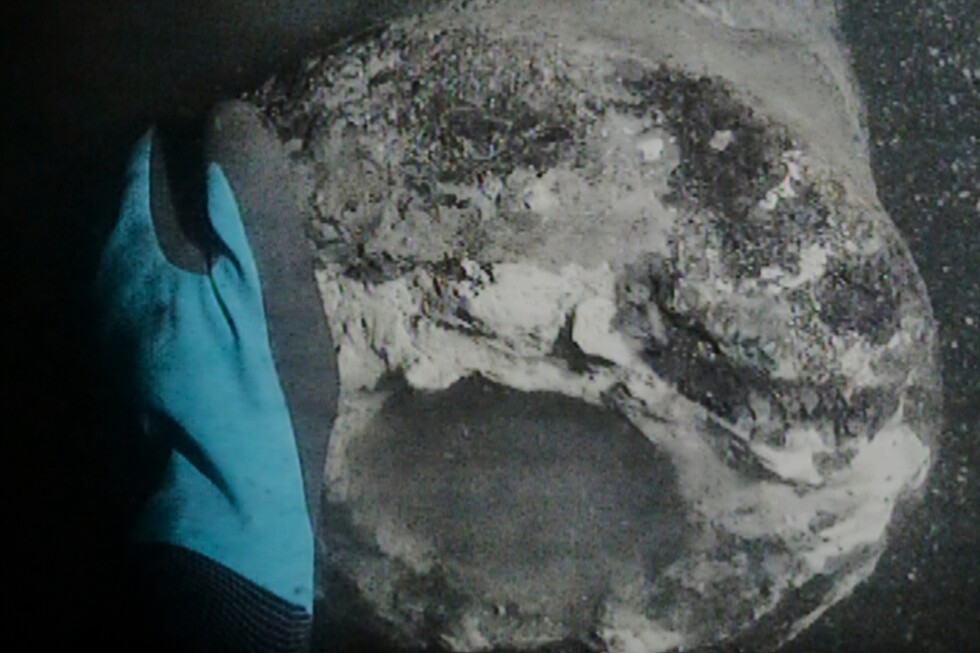
For more than two centuries, the exact location of the wreck remained a mystery. That changed when archaeologists launched targeted surveys of the area late last year, zeroing in on a site that aligned with historical accounts of the *Dannebroge*’s final resting position, 15 meters below the water’s surface. Working in thick seabed sediment with near-zero visibility, the team has already confirmed the wreck’s identity: the dimensions of recovered wooden fragments match 19th century ship schematics, and dendrochronological dating, which uses tree rings to date wood, confirms the timber matches the period when the *Dannebroge* was built. So far, divers have recovered two intact cannons, military uniforms, metal insignia, footwear, glass bottles, ceramic fragments, basketry, and even a partial human lower jawbone, likely belonging to one of the 19 *Dannebroge* crew members still unaccounted for after the battle.
Working at the site is a grueling challenge. Silt stirred up by divers’ movements keeps the water in near-complete darkness. “Sometimes you can’t see anything, and then you really have to just feel your way, look with your fingers instead of with your eyes,” said Marie Jonsson, a diver and maritime archaeologist on the project. Even more pressing is the race against time: the wreck site lies in the footprint of Lynetteholm, a massive planned coastal housing and development project scheduled to begin construction on the site in the near future, with completion targeted for 2070. The months-long underwater excavation is being rushed to recover as much of the wreck and its artifacts as possible before construction begins.
For Denmark, the discovery of the *Dannebroge* is far more than a archaeological find: the 1801 battle is deeply woven into the country’s national identity. “It’s a big part of the Danish national feeling,” Johansen noted. While the battle has been extensively documented by historians for more than two centuries, much of what is known comes from secondhand accounts from outside observers. Archaeologists believe the wreck holds untold new details about what life was really like for sailors caught in the brutal fighting, and may uncover long-lost personal stories of the men who served on the flagship. “There are bottles, there are ceramics, and even pieces of basketry,” Jonsson said. “You get closer to the people onboard.” The Associated Press was the only international news outlet granted exclusive access to the excavation site.