President Donald Trump’s persistent campaign to acquire Greenland has ignited significant bipartisan opposition in Congress, creating an unusual alliance between Republicans and Democrats. This development signals growing unease over the administration’s unilateral approach to foreign policy and military interventions.
The controversy has evolved beyond a simple territorial dispute into a broader examination of presidential authority. Lawmakers from both parties are increasingly questioning the administration’s use of economic pressure and military force to advance geopolitical objectives in Venezuela, Iran, and now the Arctic region.
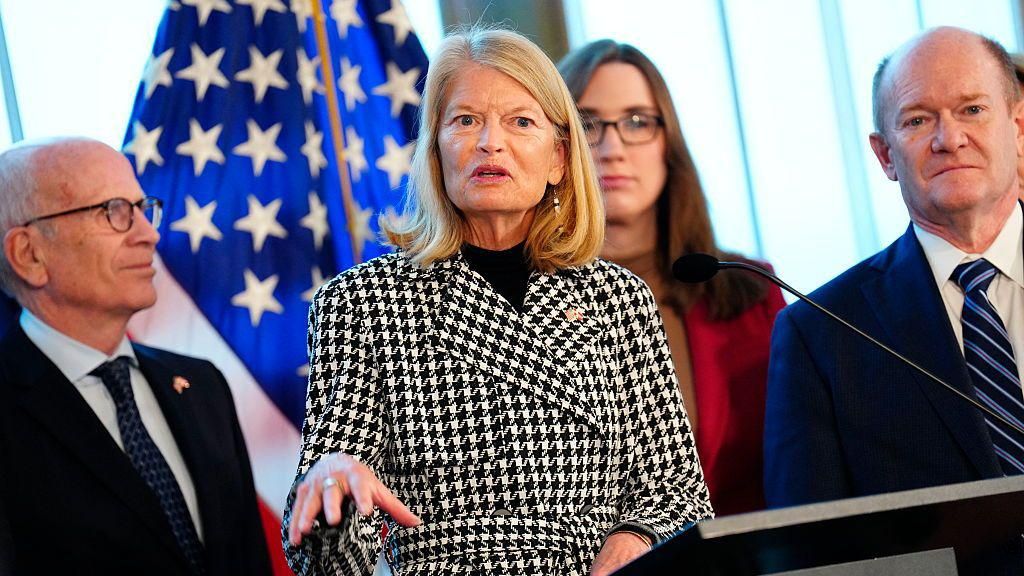
Republican leaders, who have typically supported Trump’s foreign policy agenda since his return to office, are now expressing reservations about the proposed Greenland acquisition. Senator Thom Tillis (R-N.C.) publicly criticized potential tariffs on countries opposing the takeover, warning such measures would ultimately benefit geopolitical rivals China and Russia while damaging American interests and alliances.
The Arctic territory, while self-governing, remains under Danish sovereignty, making any attempted acquisition a complex international legal matter. Senator Lisa Murkowski (R-Alaska), co-chair of the Senate Arctic Caucus, emphasized that respect for Greenland’s sovereignty should be ‘non-negotiable,’ reflecting concerns shared by several Republican colleagues.
Trump has defended his position by asserting strategic necessity, claiming control of Greenland is vital for competing with China and Russia in the increasingly important Arctic region. When questioned by BBC journalists about potential damage to NATO alliances, the president dismissed concerns and reiterated that obtaining the territory was crucial for both U.S. and global security interests.
Congress possesses several mechanisms to potentially restrain presidential action regarding Greenland, primarily through control of funding allocations. Legal experts note that any purchase would require congressional appropriation of funds, while military action would necessitate authorization. However, the administration has previously demonstrated willingness to expand executive power to circumvent legislative obstacles on issues ranging from immigration to tariffs.
The political dynamics mirror earlier tensions over Venezuela, where several Republicans joined Democrats in attempting to limit military engagement. Although previous measures have failed, they indicate growing congressional willingness to challenge presidential authority in foreign affairs.
The situation remains fluid, with Trump suggesting developments are imminent while lawmakers consider legislative responses. The administration might pursue alternative arrangements that avoid formal treaties requiring Senate ratification, though legal scholars express skepticism about such approaches for matters of this significance.