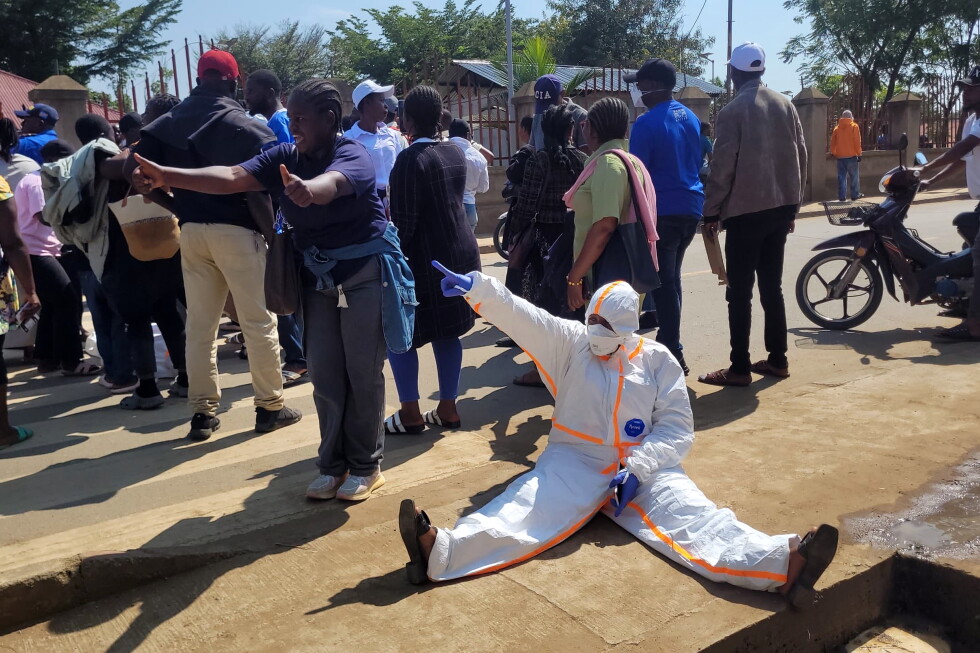
BUNIA, Democratic Republic of Congo – A growing crisis over worker compensation has compounded the public health emergency unfolding in eastern Congo, where dozens of frontline health workers leading the response to the country’s record-fast Ebola outbreak walked off the job Thursday to demand long-overdue pay. The striking workers abandoned critical treatment facilities in the outbreak’s epicenter, even as international aid organizations continue to warn that the virus is spreading at an alarming rate that outpaces current response efforts.
New government data updated through Tuesday and released Thursday confirms the outbreak has grown to 3,973 confirmed cases, with a total death toll of 1,801. This outbreak ranks as the second-largest Ebola event in recorded history, falling only behind the devastating 2014–2016 West African outbreak that infected more than 28,000 people and killed over 11,000 across the region.
Thursday’s protest was held outside the governor’s office in Bunia, the capital of Ituri province – the region that accounts for nearly 90% of all of Congo’s confirmed Ebola cases. This demonstration marks the latest in a series of work stoppages over unpaid wages that have disrupted response operations for weeks. Striking workers, including frontline nurses who provide direct, life-saving care to Ebola patients, report they have not received base salaries or hazard bonuses since the outbreak was declared in mid-May. The outbreak is centered in one of Congo’s most remote, vulnerable regions that has already been destabilized by years of ongoing rebel conflict.
“With this mismanagement, Ebola will never be eliminated from this province. We call on authorities at every level of government to intervene to find a quick solution to this issue,” said Edouige Makosi, one of the striking protesters.
In past statements, Congolese officials have blamed complex logistical challenges for the persistent payment delays. As of Thursday, authorities had not issued any immediate response to requests for comment on the latest protests. Poor working conditions and lack of support for frontline response workers have been a persistent, core flaw throughout this outbreak. Beyond unpaid wages, dozens of health workers and facilities have been targeted by attacks from rebel groups and violent community mobs in recent months.
During an official visit to Congo Wednesday, World Health Organization Director-General Tedros Adhanom Ghebreyesus publicly urged Congolese authorities to make supporting and caring for frontline Ebola responders a top priority. This week, the global medical humanitarian organization Doctors Without Borders warned that the outbreak continues to spread at an “alarming and unprecedented rate,” noting that while response capacity has expanded in recent weeks, interventions still fail to reach at-risk communities fast enough to break chains of human-to-human transmission.
Current government data shows 674 confirmed Ebola patients are currently receiving care in isolation facilities, the vast majority of them in Ituri province. While contact tracers are successfully monitoring at least 75% of people documented to have been exposed to infected patients, officials warn that a far more troubling trend is unfolding: between 60% and 70% of all new confirmed cases are detected among people with no recorded exposure to known cases. These unlinked cases are concentrated mostly in isolated rural areas, where access for response teams is severely limited by ongoing rebel violence and frequent population movement linked to informal mining activity.