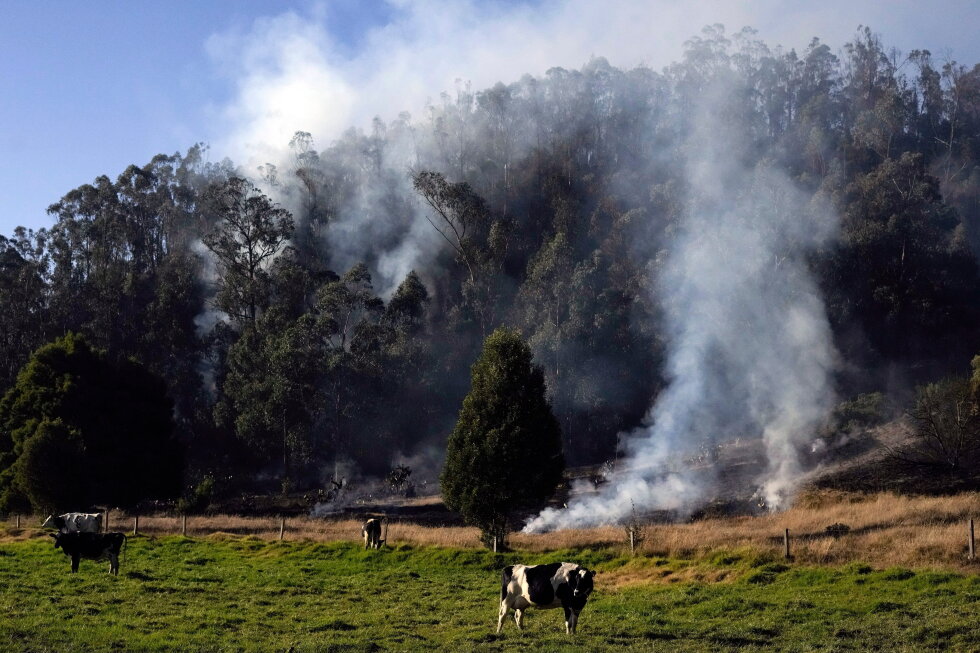
BOGOTÁ, COLOMBIA – In a groundbreaking move for global forest conservation, Colombia has signed into law a first-of-its-kind mandatory framework requiring the entire domestic cattle industry to implement full livestock traceability, guaranteeing that national beef supply chains are completely free of deforestation-linked production. Environmental advocates across the globe are hailing the legislation as a historic precedent, marking the first time any tropical forest country has rolled out such a sweeping nationwide rule to curb forest loss driven by cattle ranching.
Under the new law, government regulatory bodies and private sector actors across the cattle supply chain are mandated to integrate three core systems: individual cattle tracking, official land ownership verification, and real-time deforestation monitoring. This cross-system integration is designed to flag any livestock raised on land cleared of forest, blocking these animals from entering legal commercial supply chains entirely.
For decades, unregulated expansion of cattle ranching has stood as the single largest driver of deforestation in Colombia’s portion of the Amazon basin, with large swathes of protected forest cleared illegally through land grabbing to create new pasture. Proponents of the legislation argue it will close longstanding regulatory gaps that have allowed cattle reared on illegally deforested land – including grazing areas inside protected national parks and conservation reserves – to launder into legitimate domestic retail and international export markets.
Susanne Breitkopf, U.S. forest campaigns director for the Environmental Investigation Agency (EIA), an international watchdog that has spent years documenting deforestation tied to Colombia’s cattle sector, emphasized that the law sets a replicable blueprint for other tropical forest nations grappling with the same issue. “This is a win for forests, for Indigenous and local communities that have acted as the world’s most effective forest stewards, and for consumers around the world who are increasingly demanding that the food they buy does not contribute to forest destruction or illicit land activities,” Breitkopf noted.
The legislation comes at a moment of mounting global pressure, as both governments and agribusiness face growing requirements from international import markets to prove major commodities including beef are not linked to deforestation. Environmental advocates point out that robust traceability systems are quickly becoming a non-negotiable prerequisite for accessing key overseas markets, while also giving law enforcement clearer tools to identify and crack down on illegal land grabbing and forest clearing.
Data from organizations backing the law shows Colombia has lost roughly 3.3 million hectares (8.2 million acres) of forest in recent decades – an area nearly identical in size to the entire country of Belgium – with the Amazon region seeing the most severe rates of loss. While Brazil’s Amazonian state of Pará has previously implemented cattle traceability rules for producers, environmental groups stress that Colombia’s new law goes further by codifying a uniform, nationwide legal mandate rather than a subnational policy.
A 2025 EIA analysis underscored the urgency of the reform, finding that hundreds of thousands of cattle were moved between 2020 and 2024 from production areas overlapping protected national parks into legal supply chains. The new law is the culmination of more than five years of coordinated advocacy from environmental organizations, policy researchers, and progressive lawmakers, who have long warned that fragmented oversight and weak regulation allowed illegally deforestation-linked cattle to flow through Colombia’s disjointed cattle supply chain.
Natalia Katixa Escobar, a researcher with Colombian legal and policy think tank Dejusticia, which has documented the links between cattle expansion and deforestation, explained that the law addresses a long-standing institutional disconnect between Colombia’s agricultural and environmental regulators. “One of its most immediate achievements is that it builds a formal bridge between environmental policy and agricultural oversight,” Escobar said. “For years, the control mechanisms for cattle ranching and traceability had absolutely no integration with environmental monitoring – that gap is what allowed illegal activity to thrive.”
Colombian Environment Minister Irene Vélez Torres told reporters the new framework will help the government clearly separate responsible, law-abiding cattle producers from actors linked to forest destruction. “This means it will become increasingly hard for forest destruction and illicit economic activity to hide behind the facade of legitimate supply chains,” Vélez said.
The law sets a phased two-year implementation timeline to give stakeholders time to adapt. Within the first six months, the national government must roll out compliance support programs for small and medium producers, launch an official certification system for deforestation-free beef products, and allocate dedicated funding to strengthen monitoring systems in active deforestation hotspots. After one year, regulators must finalize formal rules for national cattle identification and traceability protocols, and formalize mandatory due diligence requirements for deforestation-free cattle ranching.
By the end of the second year, all major supply chain actors including slaughterhouses, meat processors, cattle auction houses, traders, and live cattle exporters will be required to have full due diligence policies in place to guarantee their supply chains are deforestation-free. A core component of the reform is the mandatory gradual integration of separate government databases, which for the first time will allow officials to cross-reference data on land tenure, cattle ownership, and recent forest loss to flag illegal operations.
While supporters say these structural changes will dramatically improve regulators’ ability to intercept deforestation-linked cattle before they reach legal markets, observers warn that the law’s ultimate success hinges on consistent, well-funded enforcement – particularly in remote Amazon regions where illegal deforestation remains rampant and state presence is often limited.
If implemented fully, the policy could become a global model for other tropical forest countries working to protect their forest ecosystems while retaining access to increasingly sustainability-focused international commodity markets. “The real test will be what happens on the ground,” Escobar emphasized. “While the law fixes critical gaps in oversight and information sharing, reducing deforestation will also depend on improved governance and consistent enforcement in the most remote parts of the Colombian Amazon. Whether it will deliver significant reductions in Amazon deforestation remains to be seen.”
This coverage from The Associated Press, which received funding from private philanthropic foundations for its climate and environmental reporting, maintains full editorial independence over all content.