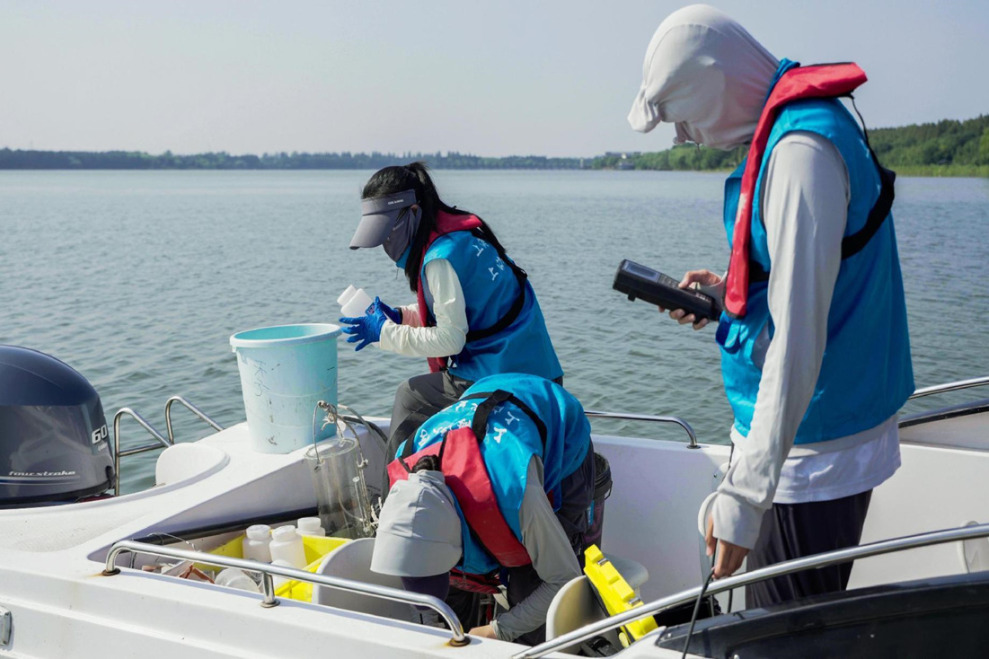
A team of marine biologists from Shanghai Ocean University’s College of Fisheries and Life Science has made a notable addition to global biodiversity records, confirming the discovery of a previously undocumented diatom species in the waterways of Shanghai’s Chongming Island. The new finding, formally published in the peer-reviewed international botanical journal Phytotaxa, marks a meaningful contribution to algal taxonomy and freshwater ecological research in the Yangtze River Delta region.
The new species, officially named *Tryblionella chongmingensis* after its place of discovery, was first collected during a systematic regional ecological field survey carried out by the research team in August 2024. Scientists encountered the previously unknown algal specimen while sampling water and sediment in the Nanheng Diversion Canal and the interconnected small tributaries that crisscross Chongming Island, a major ecological conservation zone located at the mouth of the Yangtze River.
Taxonomic analysis confirmed that *Tryblionella chongmingensis* holds a set of unique morphological characteristics that set it apart from all other recorded species within the Tryblionella genus. Its defining features include a longitudinal undulating valve structure with the lowest elevation positioned on the proximal side, and the complete absence of an axial sternum. These distinct traits form the diagnostic basis for classifying the new species within the aphyletic Tryblionella group. Additionally, the new species is marked by a comparatively larger cell size than its close relatives, further distinguishing it from similar known taxa.
Biodiversity surveys of freshwater microalgae play a key role in understanding regional aquatic ecosystem health, particularly in ecologically critical areas like Chongming Island, which functions as an important ecological barrier for Shanghai and the lower Yangtze basin. This discovery adds new data to global diatom diversity research and provides a foundational reference for future studies on algal evolution, aquatic environmental monitoring, and biodiversity conservation in eastern China.