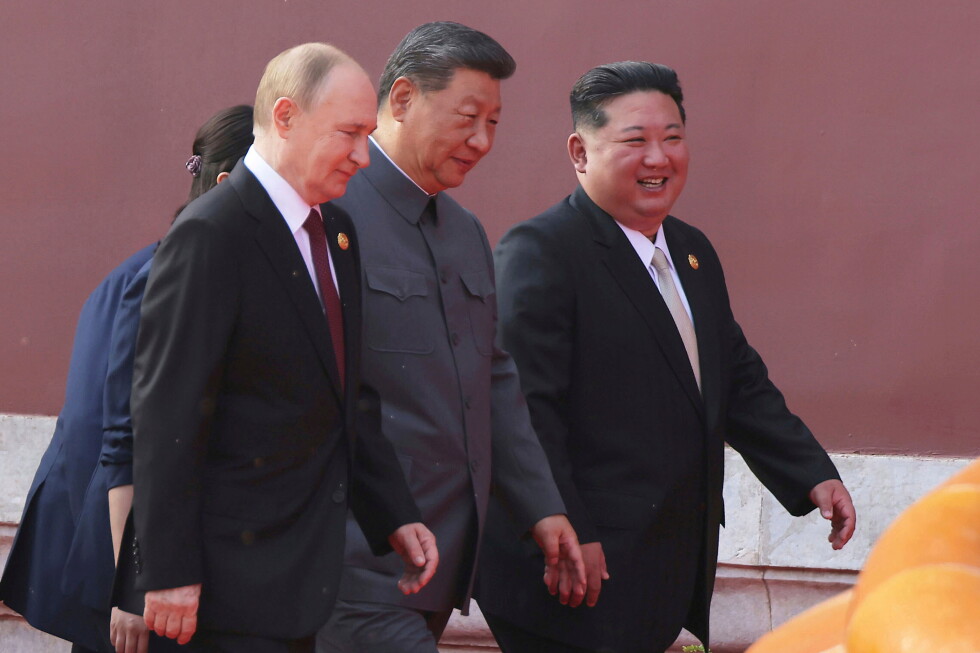
For the first time in seven years, Chinese President Xi Jinping will touch down in Pyongyang on Monday for a two-day diplomatic visit that experts say carries far-reaching implications for the balance of power across Northeast Asia and global geopolitical rivalry with the United States. The core highlight of the trip will be a scheduled summit with North Korean leader Kim Jong Un, marking the first face-to-face meeting between the two leaders since their last encounter in Beijing last September, when both attended a major military parade alongside Russian President Vladimir Putin. No official public agenda has been released for the talks, but foreign policy analysts widely frame the visit as a deliberate bid to reinforce China’s historical influence in Pyongyang while advancing mutual strategic goals at a moment when both countries face escalating tensions with Washington.
This high-profile trip comes on the heels of consecutive summits Xi held in Beijing with U.S. President Donald Trump and Russian President Putin just one month prior, and it precedes a planned September visit by Xi to the U.S. for another meeting with Trump. According to Kwak Gil Sup, head of the Seoul-based One Korea Center, a research outlet focused on North Korean affairs, the visit is designed to showcase China’s outsize influence across the Korean Peninsula and cement its role as the leading power in Northeast Asia amid intensifying great power competition with the United States.
For decades, China has served as North Korea’s primary economic lifeline and its most critical diplomatic backer on the global stage. It is widely reported that Beijing has refrained from fully implementing United Nations sanctions imposed on Pyongyang over its nuclear program and has discreetly provided critical aid to support the economically struggling North Korean regime. This year also marks the 75th anniversary of the establishment of bilateral diplomatic ties and the 65th anniversary of the two countries’ mutual defense treaty, a key milestone that adds symbolic weight to Xi’s trip.
In recent years, however, questions have grown over the stability of the Sino-North Korean alliance, as Pyongyang has deepened its strategic and military cooperation with Moscow. North Korea has supplied thousands of troops and artillery ammunition to support Russia’s ongoing war in Ukraine, and in exchange, it has received significant economic assistance and advanced military technology from the Kremlin. Still, analysts note North Korea cannot depend exclusively on Russia for support, creating an opening for Beijing to reassert its traditional role.
For Xi, restoring China’s exclusive strategic sway over North Korea would deliver a key diplomatic advantage ahead of his upcoming talks with Trump, who has repeatedly stated his desire to restart diplomatic negotiations with Kim Jong Un over Pyongyang’s nuclear program. Experts point out that enforcing UN sanctions on North Korea is not a top priority for the Chinese government. In a pre-visit op-ed published by North Korea’s state-run flagship newspaper Rodong Sinmun on Monday, Xi emphasized that Beijing and Pyongyang must deepen strategic coordination and work jointly to push back against “hegemonism and coercive politics” to build a balanced, multipolar global order.
Analysts forecast that Xi will bring tangible economic incentives to strengthen bilateral ties during the visit, including packages of urgently needed rice and fertilizer aid, a relaunch of Chinese group tourism to North Korea, and pledges to advance stalled cross-border joint economic development projects. “North Korea can’t solely rely on Russia. It needs to maintain a balanced alignment with China,” Kwak noted. The warm welcome extended by North Korean state media reflects Pyongyang’s enthusiasm for the visit: Rodong Sinmun referred to Xi as “the most honored state guest” in a Monday editorial, noting that Pyongyang’s capital was already steeped in a welcoming atmosphere of friendship ahead of the trip.
A key concession Kim is expected to seek from Xi is a softer approach on the contentious issue of North Korean denuclearization. Analysts expect Xi will avoid pressing Kim aggressively for denuclearization commitments, instead offering vague general statements in support of regional peace and stability. This leniency is critical for Kim, who is actively pushing for global recognition of North Korea as a legitimate nuclear-armed state as a core prerequisite for convincing the international community to lift crippling UN sanctions.
“Chinese officials have long taken the position of not speaking publicly about denuclearization on the Korean Peninsula, while still keeping it as a stated long-term policy goal. Kim appears to want Xi to accept North Korea as a nuclear neighbor,” explained Leif-Eric Easley, a professor of international studies at Ewha University in Seoul.
In recent weeks, Kim has ramped up public displays of his nuclear ambitions. Just one week before Xi’s visit, Kim presided over the opening of a new industrial facility for producing enriched uranium, a core material for nuclear weapons, and pledged to expand North Korea’s nuclear arsenal “at an exponential rate.” He also oversaw sea trials of a newly built guided missile destroyer and called for accelerating efforts to develop a sea-based nuclear force capable of holding regional and global targets at risk. On the eve of Xi’s visit, Kim Yo Jong, the powerful sister of Kim Jong Un and a top senior Pyongyang official, doubled down on the regime’s position, dismissing U.S. demands for full denuclearization as an “escapist and anachronistic dream.”
Since the collapse of high-stakes denuclearization talks with Trump in 2019, Kim Jong Un has rejected repeated overtures for negotiations from both Washington and Seoul, focusing exclusively on expanding and modernizing his country’s nuclear and missile arsenals. Last September, Kim noted he still held “good personal memories” of his previous interactions with Trump, but insisted the U.S. must drop its demand for complete denuclearization as a precondition for any new diplomatic talks. Experts ultimately predict Kim aims to eventually enter into arms reduction negotiations with the U.S. to secure sanctions relief and other economic concessions in exchange for partial rollbacks of his nuclear program.