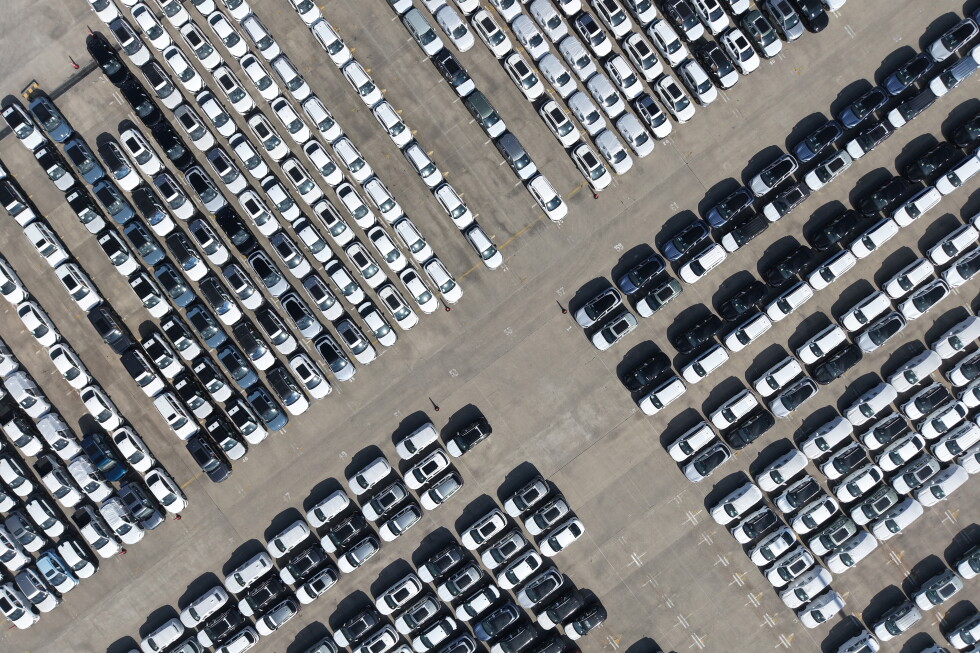
HONG KONG – China’s automotive industry is facing a stark divide in 2024, with booming overseas electric vehicle (EV) demand driving explosive export growth even as a prolonged downturn drags down domestic sales, new industry data shows.
Data released by the China Association of Automobile Manufacturers (CAAM) reveals that Chinese passenger car exports jumped 80% year-on-year in June alone, climbing to 905,000 units from May’s 809,000. For the first half of the year, total exports have surged 72% to more than 4.4 million units, a staggering increase that cements China’s position as the world’s top exporter of passenger vehicles. By comparison, domestic passenger car sales over the same January-June period reached nearly 8.3 million units, with 1.5 million sold in June – still a larger total volume than exports, but down 26% from last year’s levels.
Multiple overlapping pressures have weighed heavily on China’s domestic auto market. The crowded, saturated landscape has ignited cutthroat price wars that have squeezed margins and left many potential buyers waiting for deeper discounts before committing to a purchase. A long-running slump in the country’s property sector has eroded household wealth and disposable income, cutting consumer willingness to make big-ticket purchases like new cars. Compounding these headwinds, the rollback of government EV purchase incentives has also dampened domestic demand for electric vehicles.
Global consulting firm AlixPartners projects that total light vehicle sales, which include passenger cars, will drop by roughly 10% this year, as consumer expectations of further price declines push purchase delays across the market. Against this backdrop, expanding into international markets has shifted from an opportunity to a survival imperative for most Chinese automakers. “In China’s highly competitive environment, companies that don’t venture overseas will face immense difficulties in surviving,” Wei Haigang, president of GAC International, the overseas arm of Chinese automaker GAC Group, stated at a June auto expo in Hong Kong.
Leading domestic brands like BYD have already moved aggressively to capture global market share, opening new production facilities in key high-demand regions to scale up output and reduce trade costs. This rapid global expansion has lifted long-term profit outlooks for Chinese automakers, but it has also sparked growing trade tensions with major trading partners.
The divide is particularly clear in the North American market. In a recent positive development for Chinese brands, Canada approved an annual import quota that allows 49,000 Chinese-made EVs to enter the country at a preferential low tax rate, opening a new foothold for Chinese manufacturers. Industry analysts are now closely watching the Canadian market to see if this access paves the way for future entry into the U.S. market, where steep punitive tariffs have effectively blocked most Chinese EV exports to date. Even so, trade barriers continue to harden in some regions: last month, Polestar, the Sweden-based EV brand controlled by China’s Geely Holding Group, announced that the U.S. Commerce Department has banned Polestar from selling vehicles in the U.S. starting from the 2027 model year.
Industry analysts hold largely positive long-term outlooks for China’s auto export growth. Stephen Chan, an analyst with S&P Global Ratings, projects that full-year Chinese passenger car exports will grow between 30% and 50% annually through 2026. AlixPartners forecasts that total Chinese vehicle exports will rise from roughly 7 million units in 2025 to around 10 million units by 2026.
Analysts also note that geopolitical tensions tied to the ongoing conflict in Iran have pushed global gasoline prices higher, which is expected to further boost consumer and fleet demand for electric vehicles worldwide – a shift that plays directly to the strength of Chinese EV manufacturers, who have built significant cost and production scale advantages in the global EV supply chain.