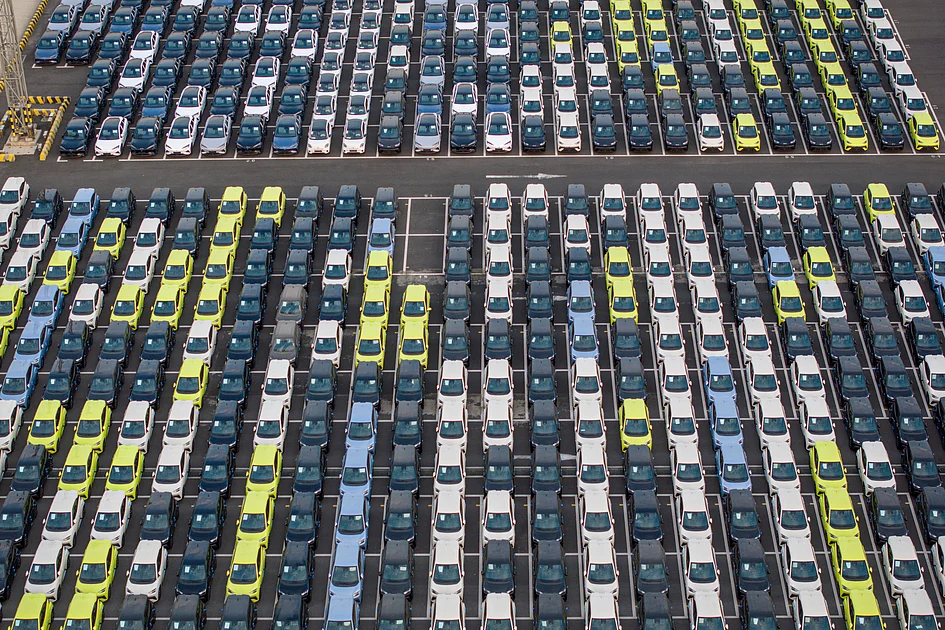
Chinese automotive giant BYD is positioned to surpass Tesla as the world’s premier electric vehicle manufacturer by annual sales volume as 2025 concludes. Final sales figures expected imminently will likely confirm this seismic shift in the global EV landscape, marking the first time Tesla has relinquished its leadership position since dominating the market.
Based on cumulative data through November 2025, Shenzhen-based BYD has achieved remarkable sales of 2.07 million electric vehicles, including both pure EVs and hybrid models. In contrast, Tesla reported 1.22 million deliveries by the end of September. Industry analysts project Tesla’s fourth-quarter performance will decline significantly, with consensus estimates hovering around 449,000 vehicles according to FactSet analysis. This would bring Tesla’s total 2025 sales to approximately 1.65 million units, representing a 7.7% decrease year-over-year.
Several factors have contributed to this market realignment. Tesla experienced a temporary sales surge in Q3 2025, reaching nearly half-a-million deliveries, largely driven by the impending expiration of a US tax credit for electric vehicle purchases. This incentive program was terminated under legislation supported by former President Donald Trump. Deutsche Bank forecasts an even more substantial downturn for Tesla, projecting only 405,000 vehicles sold in the fourth quarter with declines of approximately one-third in both North American and European markets, and a 10% reduction in China.
Beyond fiscal policy changes, Tesla has faced market headwinds related to CEO Elon Musk’s political endorsements of Trump and far-right figures, alongside intensifying competition from Chinese manufacturers and European automakers. Industry analyst Dan Ives of Wedbush Securities noted that while fourth-quarter deliveries might show weakness, Wall Street remains focused on Tesla’s autonomous driving initiatives scheduled for 2026.
BYD’s ascendancy hasn’t been without challenges. Facing compressed profitability in China’s price-sensitive domestic market, the company has aggressively pursued international expansion. Jing Yang, Director of Asia-Pacific Corporate Ratings at Fitch Ratings, highlighted BYD’s pioneering efforts in establishing overseas production capacity and supply chains, noting that ‘geographical diversification is likely to help it navigate an increasingly complicated global tariff environment.’
This global expansion occurs amid rising trade barriers, including 100% tariffs on Chinese EV imports implemented during the Biden administration and additional European tariffs. In response, BYD is developing manufacturing capabilities in Hungary to circumvent these trade restrictions.
While Tesla’s immediate prospects in pure EV sales appear challenged, the company maintains potential growth avenues through autonomous driving technology. Analyst Michaeli of TD Cowen suggests breakthroughs in Tesla’s ‘full self-driving’ capabilities could significantly boost demand. The anticipated April 2026 production start of the Cybercab robotaxi and recently introduced lower-priced Models 3 and Y variants provide additional pathways for Tesla’s market repositioning.