Former U.S. President Donald Trump has issued a stark warning to Canada, threatening to impose 100% tariffs on Canadian products should the nation finalize its recently announced trade agreement with China. The threat was delivered via Trump’s Truth Social platform over the weekend, where he asserted that China is “successfully and completely taking over” Canada and cautioned against the country becoming a “drop off port” for Chinese goods destined for the U.S. market.
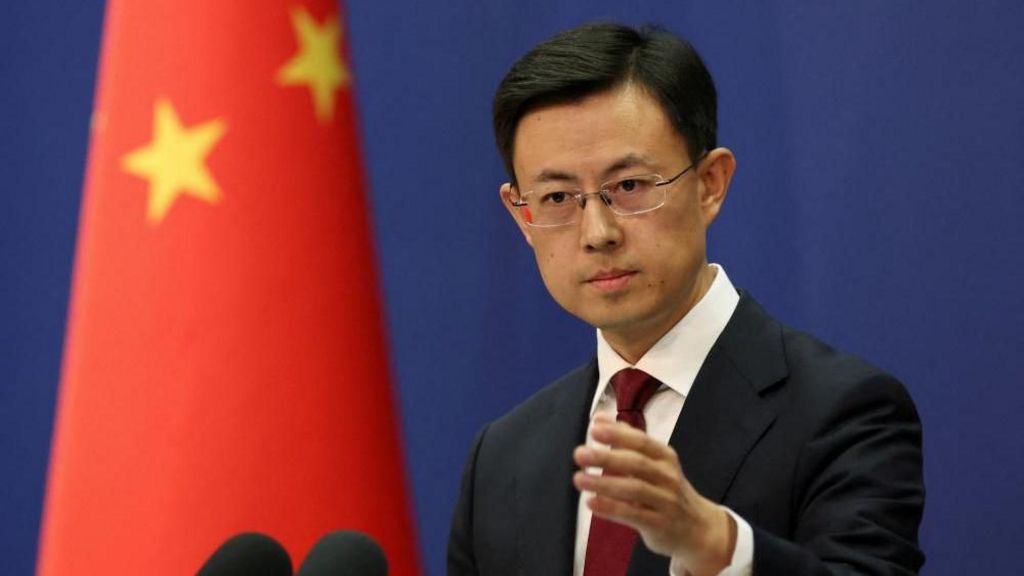
In response to these allegations, both Canadian and Chinese officials have moved to clarify the nature of their new arrangement. Chinese Foreign Ministry spokesperson Guo Jiakun stated on Monday that the partnership “does not target any third party” and is designed to “serve the common interests of the people of both countries.” He emphasized that international relations should be approached with a “win-win rather than the mentality of zero-sum” framework.
Canadian Prime Minister Mark Carney explicitly denied that the agreement constitutes a free-trade deal with Beijing, stating Canada has “never” considered such an arrangement. He clarified that the understanding focuses on specific tariff adjustments: reducing levies on Canadian canola oil exports to China from 85% to 15% by March, while Canada will apply the Most-Favoured-Nation rate of 6.1%—a significant reduction from 100%—to a limited number of Chinese electric vehicle imports.
Prime Minister Carney suggested that Trump’s threats are likely a negotiation tactic ahead of a mandatory review of the United States-Mexico-Canada Agreement (USMCA) scheduled for later this year. “The president is a strong negotiator, and I think some of these comments and positioning should be viewed in the broader context of that,” Carney told reporters. He also reaffirmed Canada’s commitment to diversifying its trade portfolio to become “less dependent on the United States,” a position he recently underscored in a speech at Davos where he noted the rupture of the U.S.-led world order.
The escalating tension marks a notable shift from Trump’s previous stance, which had characterized a potential Canada-China deal as “a good thing.” U.S. Treasury Secretary Scott Bessent later sought to clarify the conditional nature of the tariff threat, explaining it would apply specifically “if we see that the Canadians are allowing the Chinese to dump goods.”