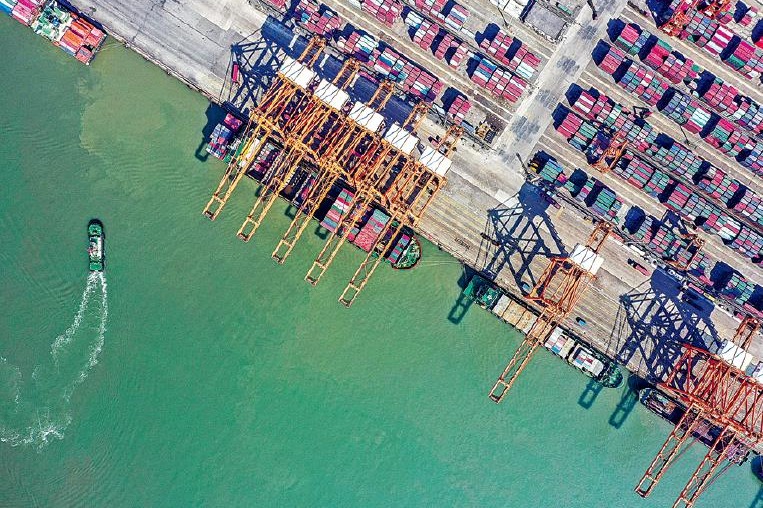
BEIJING, April 8, 2026 (Xinhua) — Chinese Premier Li Qiang has officially signed a State Council decree to promulgate a landmark set of new regulations focused on reinforcing national industrial and supply chain security, a policy framework set to take effect immediately upon its release.
Comprising 18 distinct articles, the new regulatory regime is crafted to address growing global and domestic risks that threaten the stability of China’s production and distribution networks. Its core objectives are threefold: pre-emptively mitigate systemic security risks across industrial and supply chains, boost the overall resilience and reliability of these critical networks, and protect national economic and social stability as well as core national security interests.
The regulations lay out clear guiding principles for future work in this sector. Among these guiding tenets is a commitment to supporting the stable, unimpeded operation of global industrial and supply chains, alongside targeted backing for core technology research and development in strategically important key industries.
To turn these principles into actionable policy, the regulatory text updates and formalizes institutional mechanisms designed to guarantee steady production, unobstructed circulation, and continuous operations for raw materials, core technologies, critical equipment, and finished goods across key industrial sectors.
A key new provision laid out in the regulations is the establishment of a formal security investigation mechanism for industrial and supply chain issues. Under this framework, relevant Chinese regulatory authorities are authorized to launch official investigations and implement targeted countermeasures against any foreign country, region, international organization, or foreign entity or individual that engages in activities undermining China’s industrial and supply chain security.
The policy comes amid growing global volatility in cross-border supply chains, driven by geopolitical tensions, trade restrictions, and shifting global production patterns, making strengthened domestic resilience a priority for economic policymakers across major economies.