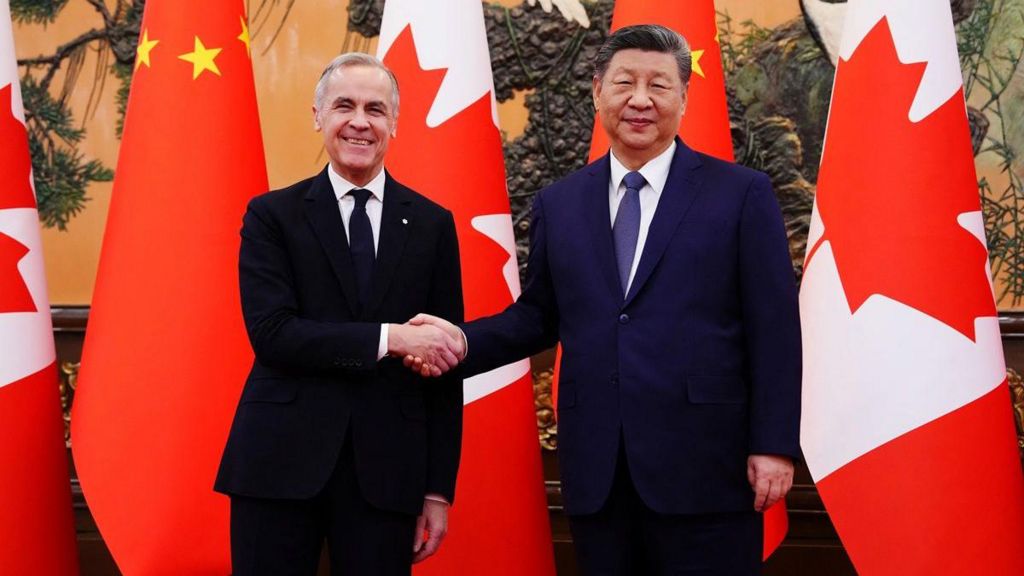
In a historic diplomatic breakthrough, Chinese President Xi Jinping and Canadian Prime Minister Mark Carney have announced a comprehensive tariff reduction agreement, signaling a dramatic thaw in bilateral relations during the first Canadian leadership visit to Beijing in nearly a decade. The landmark deal, finalized during intensive negotiations at the Great Hall of the People, will see China slash tariffs on Canadian canola oil from 85% to 15% effective March 1st, while Canada will apply most-favored-nation rates of 6.1% on Chinese electric vehicles.
This economic détente represents a significant reversal from years of escalating trade tensions that began in 2018 with the arrest of Huawei executive Meng Wanzhou and China’s subsequent detention of two Canadian citizens. The relationship further deteriorated in 2024 when Canada imposed 100% tariffs on Chinese EVs following similar U.S. measures, prompting Beijing to retaliate with tariffs exceeding $2 billion on Canadian agricultural products.
Prime Minister Carney characterized the negotiations as “realistic and respectful” while emphasizing that Canada maintained clear “red lines” regarding human rights concerns, election interference allegations, and the need for diplomatic “guardrails.” The Canadian leader acknowledged the fundamentally different political systems between the nations but advocated for direct dialogue rather than “megaphone diplomacy.”
Analysts view this diplomatic reset as part of Canada’s broader strategy to diversify trade relationships amid uncertainty in U.S.-Canada relations following the reinstatement of Trump-era tariffs. The agreement potentially opens doors for increased Chinese investment in Canada while positioning Beijing as a stable alternative trading partner on the global stage.
The reconciliation has already inspired similar diplomatic movements, with South Korean, Irish, and expected British and German leaders scheduling Beijing visits. As Carney noted, this reorientation reflects how “the world has changed dramatically” and how nations are recalibrating relationships in response to evolving global power dynamics.