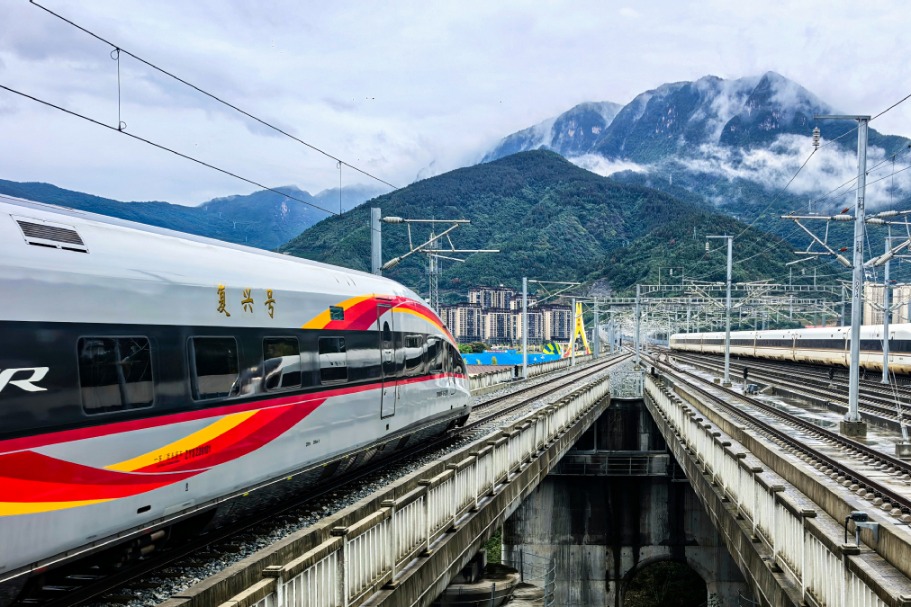
BEIJING, Oct. 22 (Xinhua) — As part of its ongoing push to upgrade and expand a world-leading modern railway infrastructure ecosystem, China brought 1,625 kilometers of newly constructed railway segments into full commercial operation across the first nine months of 2026, latest official data from China State Railway Group Co., Ltd. (China Railway) confirms.
The national railway sector recorded total fixed-asset investment reaching 601.2 billion yuan (approximately $89 billion) over the January-September period, marking a 1.3% year-on-year uptick that underscores sustained state commitment to transport network optimization. China Railway officials noted that the expanded track footprint and steady capital inflows have delivered tangible gains in overall network operational efficiency, while unlocking fresh growth momentum for broad-based economic and social progress.
A slate of high-impact new lines and modernized stations launched service during the reporting window, including four high-speed rail sections that went online on Sept. 28. These new links connect Xiongan New Area in northern China’s Hebei Province to Shangqiu in central Henan Province, Xi’an to Ankang in northwestern Shaanxi Province, Yichang to Xingshan in central Hubei Province, and Harbin to Yichun in northeastern Heilongjiang Province. Company representatives emphasized that these projects have streamlined fragmented regional rail networks, cut cross-regional travel times dramatically, and improved daily mobility for communities located along the routes, while also spurring targeted industrial upgrading and underutilized local resource development to act as a new growth engine for high-quality regional socioeconomic advancement.
As of the close of 2025, China’s total operational railway mileage stood at 165,000 kilometers, of which over 50,000 kilometers consisted of high-speed rail tracks, forming the largest high-speed passenger network on the planet. Current long-term planning targets project the national high-speed rail footprint will expand to 70,000 kilometers by 2035, structured around a framework of eight north-south vertical trunk lines and eight east-west horizontal trunk lines. Upon full completion, this grid will seamlessly connect all major metropolitan hubs, densely populated city clusters, and core economic development zones across the country.
The steady flow of capital into railway construction aligns with surging public demand for rail travel in the world’s second-largest economy: China Railway data shows total passenger trips via rail hit an all-time first-three-quarters high of 3.71 billion in 2026, representing a 4.8% year-on-year increase. Earlier in October, the National Railway Administration released a forward-looking innovation roadmap that aims to put in place a science and technology innovation system leading global railway modernization by 2030. The plan outlines a minimum of 20 flagship demonstration projects and real-world application scenarios for cutting-edge technologies, including a 400 km/h high-speed train operating system, alongside accelerated research and development for a 600 km/h high-speed maglev platform, plus full domestic testing and validation of core components for localized production.
China adds 1,625 km of new rail lines amid push to build modern railway infrastructure