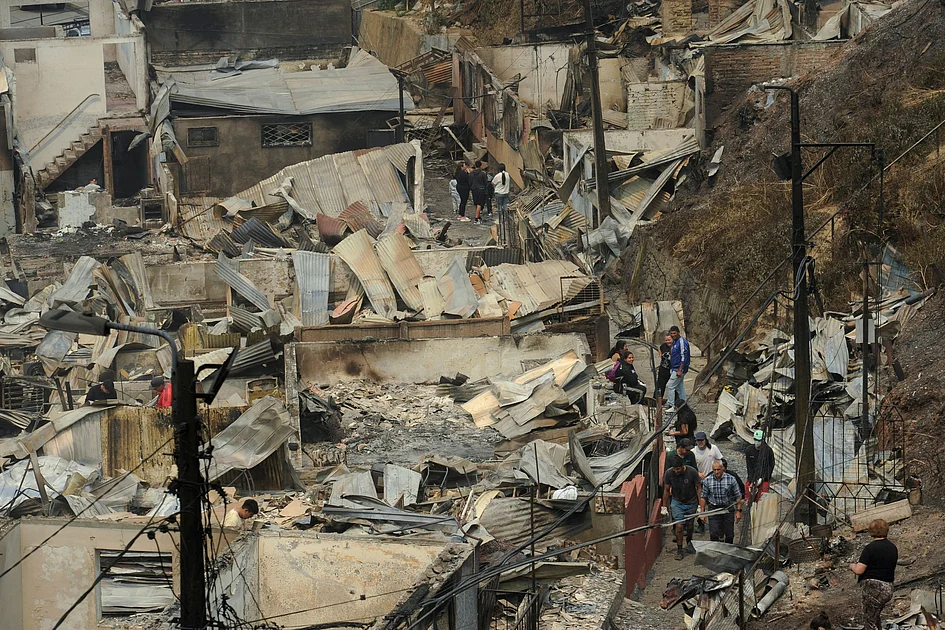
Chile is grappling with a devastating wildfire catastrophe that has claimed at least 19 lives and triggered mass evacuations across central and southern regions. The fires, fueled by an intense heatwave and powerful winds, have consumed over 35,000 hectares—an area comparable to Philadelphia—destroying 325 homes and damaging another 1,100 properties.
The coastal city of Penco, just north of Concepcion, has suffered the heaviest human toll, with most fatalities occurring in this vulnerable community. Thousands of residents returned to their neighborhoods on Monday to sift through the ashes of their destroyed homes while firefighters continued battling more than 30 active blazes.
Security Minister Luis Cordero warned that despite slightly improved overnight conditions, the largest fires remained uncontrolled with high temperatures expected to persist throughout the day. ‘Our main concern is that new fires will be triggered throughout the region,’ Cordero stated during a news briefing.
The crisis has prompted President Gabriel Boric to declare a state of catastrophe in the hardest-hit Ñuble and Bio Bio regions, mobilizing national emergency resources. Meteorological services have issued extreme heat warnings for central and southern Chile, with temperatures forecast to reach 37°C (99°F).
University of Chile forest fire expert Miguel Castillo explained the unprecedented scale of the disaster: ‘There have been several consecutive days over 30 degrees Celsius, which is rare for the Concepcion area. When fires reach this size under extreme conditions, they practically become uncontrollable monsters.’
The tragedy follows similar wildfires in Argentina’s Patagonia region earlier this month, where approximately 15,000 hectares burned, suggesting a broader pattern of climate-related disasters affecting South America during its summer season.