Deep within the radioactive contamination of Ukraine’s Chernobyl Exclusion Zone, where humans have not been allowed to settle for nearly four decades, one of the planet’s most remarkable ecological recoveries is unfolding. On ground poisoned by the worst nuclear disaster in human history, rare and once-endangered wildlife roams free, turning a symbol of human catastrophe into an accidental wild refuge—now facing a new, man-made threat from Russia’s full-scale invasion of Ukraine.
The disaster that created this strange landscape dates back to April 26, 1986, when a catastrophic explosion at the Chernobyl Nuclear Power Plant blew a plume of radioactive fallout across much of Europe. The disaster forced the immediate evacuation of every town and village across a 2,600-square-kilometer exclusion zone spanning Ukraine and neighboring Belarus, displacing more than 100,000 people. To this day, the zone remains too radioactive for permanent human habitation, unfit for settlement for generations to come. But in the absence of people, nature has reclaimed the land.
Wolves now traverse the vast unoccupied terrain that humans abandoned. Brown bears, absent from the region for more than a century, have returned to repopulate their historic range. Populations of lynx, moose, red deer, and even free-roaming dog packs have rebounded dramatically, creating an ecosystem that mirrors the wild European landscapes of centuries past. The most notable success story, however, centers on Przewalski’s horse, a rare wild breed native to the steppes of Mongolia that once hovered on the edge of total extinction.
Distinct from all domestic horse breeds, Przewalski’s horses carry 33 pairs of chromosomes—one more than their domesticated relatives— and are the last truly wild horse species walking the planet today. Known as takhi, meaning “spirit,” in their native Mongolia, the species was first formally documented by 19th-century Russian explorer Nikolai Przhevalsky, from whom it takes its common name. As the species declined to near-extinction across its original Asian range, conservationists launched an experimental reintroduction in the Chernobyl exclusion zone in 1998, releasing a small founding population into the radioactive landscape.
Four decades on, that experiment has yielded what leading zone ecologist Denys Vyshnevskyi calls a “small miracle”: a self-sustaining, free-roaming population of the rare horses has taken root and grown. Hidden motion-activated camera traps, which Vyshnevskyi spends hours installing across dense, overgrown terrain, have revealed the horses adapting to their new home in unexpected ways: they seek shelter from harsh winters and biting insects in crumbling Soviet-era barns and abandoned human homes, even bedding down inside the derelict structures. While many of the original introduced animals died off in the first years, the remaining population has adapted, forming small, stable social groups: one mature stallion, multiple mares, and their young, alongside separate all-male bands of younger horses.
Scientists have not recorded widespread wildlife die-offs tied to the zone’s persistent background radiation, though subtle biological impacts have been documented: some frog species have evolved darker pigmentation to protect against radiation damage, while bird populations in the most contaminated areas show higher rates of cataract development. Even so, ecologists broadly agree that the absence of human activity, from industrial development to hunting and agriculture, has created a net benefit for wildlife that far outweighs the costs of low-level radiation exposure. “Nature recovers relatively quickly and effectively,” Vyshnevskyi explained, noting that the exclusion zone now looks much like European landscapes did centuries before widespread industrialization and human settlement. The transformation is visible to the naked eye: tree saplings push through the foundations of abandoned apartment blocks, crumbling roads have been reclaimed by forest, and faded Soviet road signs stand weathered beside overgrown cemeteries dotted with leaning wooden crosses.
For conservation science, the Chernobyl recovery offers an unprecedented natural experiment. “For those of us in conservation and ecology, it’s kind of a wonder,” Vyshnevskyi said. “This land was once heavily used—agriculture, cities, infrastructure. But nature has effectively performed a factory reset.”
That accidental wonder is now under severe threat from the 2022 Russian invasion of Ukraine. When Russian troops advanced toward Kyiv in the early weeks of the war, fighting swept directly through the Chernobyl exclusion zone, with soldiers digging fortifications and military positions directly into contaminated soil. Military activity has sparked widespread wildfires across the zone’s forests, sparked by downed drones and artillery strikes. Oleksandr Polischuk, who leads a local firefighting unit in the zone, says crews often must travel dozens of kilometers across unpaved, dangerous terrain to reach blazes. The fires pose an additional hidden risk: they can stir up trapped radioactive particles and release them back into the atmosphere, spreading contamination across wider areas.
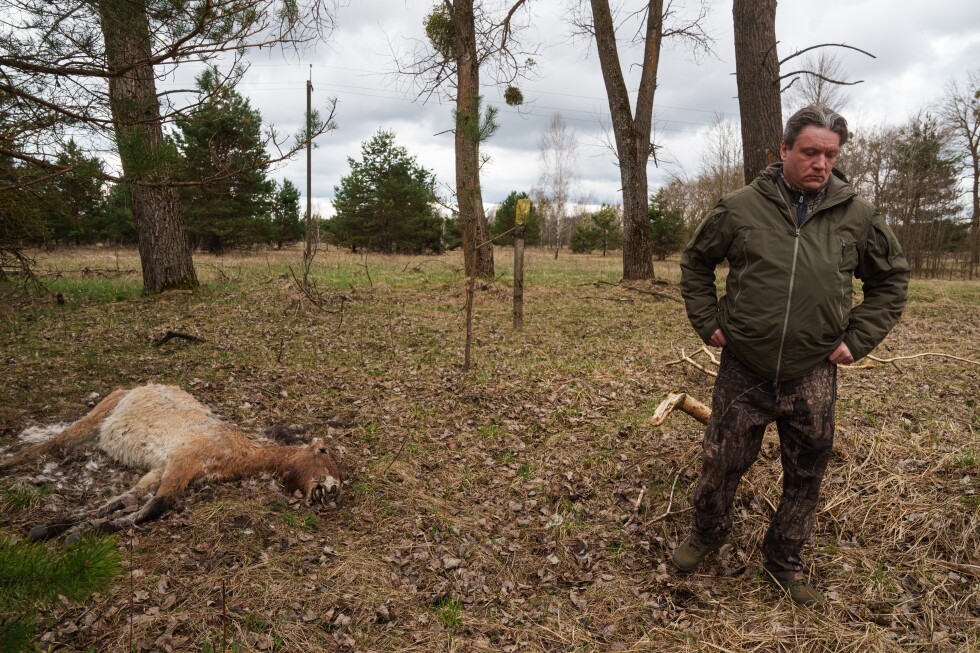
Harsh wartime winters and damage to Ukraine’s power grid have also taken a heavy toll, stripping protected area management teams of critical resources. Scientists have recorded sharp increases in fallen trees and dead wildlife, casualties of both extreme cold and hastily built military fortifications that fragment habitat and disrupt animal movement. Today, the exclusion zone is no longer just a quiet accidental wildlife refuge: it is a heavily militarized corridor, crisscrossed with concrete barriers, barbed wire, and unmarked minefields. Personnel who monitor the wildlife and maintain the zone rotate in and out constantly to limit their radiation exposure, just as they navigate the constant risks of a war that has settled across the contaminated landscape.
The paradox of Chernobyl remains, decades after the disaster: it will almost certainly remain off-limits to permanent human settlement for generations. It is a landscape defined by one of humanity’s worst mistakes, too dangerous for people to call home. Yet in that absence, it has become a haven for life—one that ecologists are working desperately to protect even amid the chaos of a new man-made conflict.