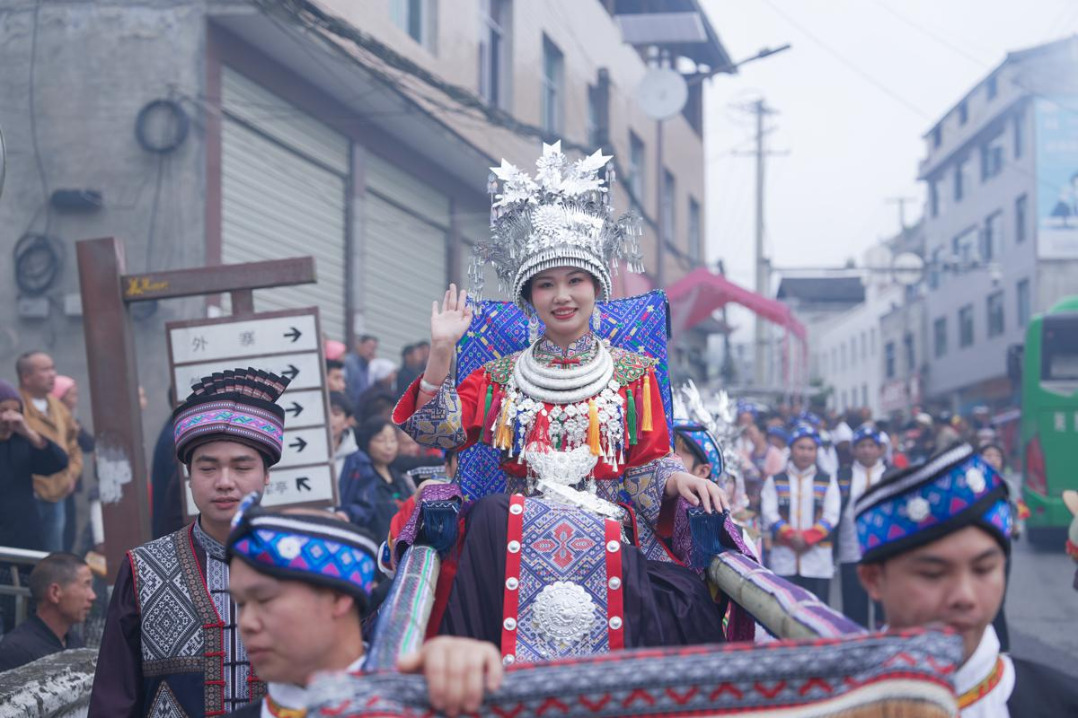
The rolling hills of southern China came alive with polyphonic folk melodies this weekend, as the centuries-old Dawuliang Singing Festival kicked off in Tongdao Dong Autonomous County, Huaihua, Hunan Province. The annual cultural gathering drew participants from multiple ethnic groups across the adjacent border regions of Hunan, Guizhou Province and the Guangxi Zhuang Autonomous Region, turning the remote county into a vibrant hub of cross-ethnic cultural exchange.
Rooted in Dong ethnic heritage, the festival carries a 300-year history tied to a legendary tragic love story from the Dong community. What began as a small, community-centered observance of that tale has gradually transformed over generations into a beloved annual celebration that welcomes ethnic groups beyond the Dong people, including Miao, Yao and Zhuang communities.
Today, the festival serves multiple purposes: it is a space for young people from across regional ethnic groups to gather, sing traditional folk songs, build social connections, and pass down intergenerational cultural heritage to younger generations. For local communities, the event remains a cornerstone of ethnic identity, keeping centuries-old oral traditions and musical customs alive amid rapid modern change, while fostering solidarity among diverse ethnic groups in southern China.