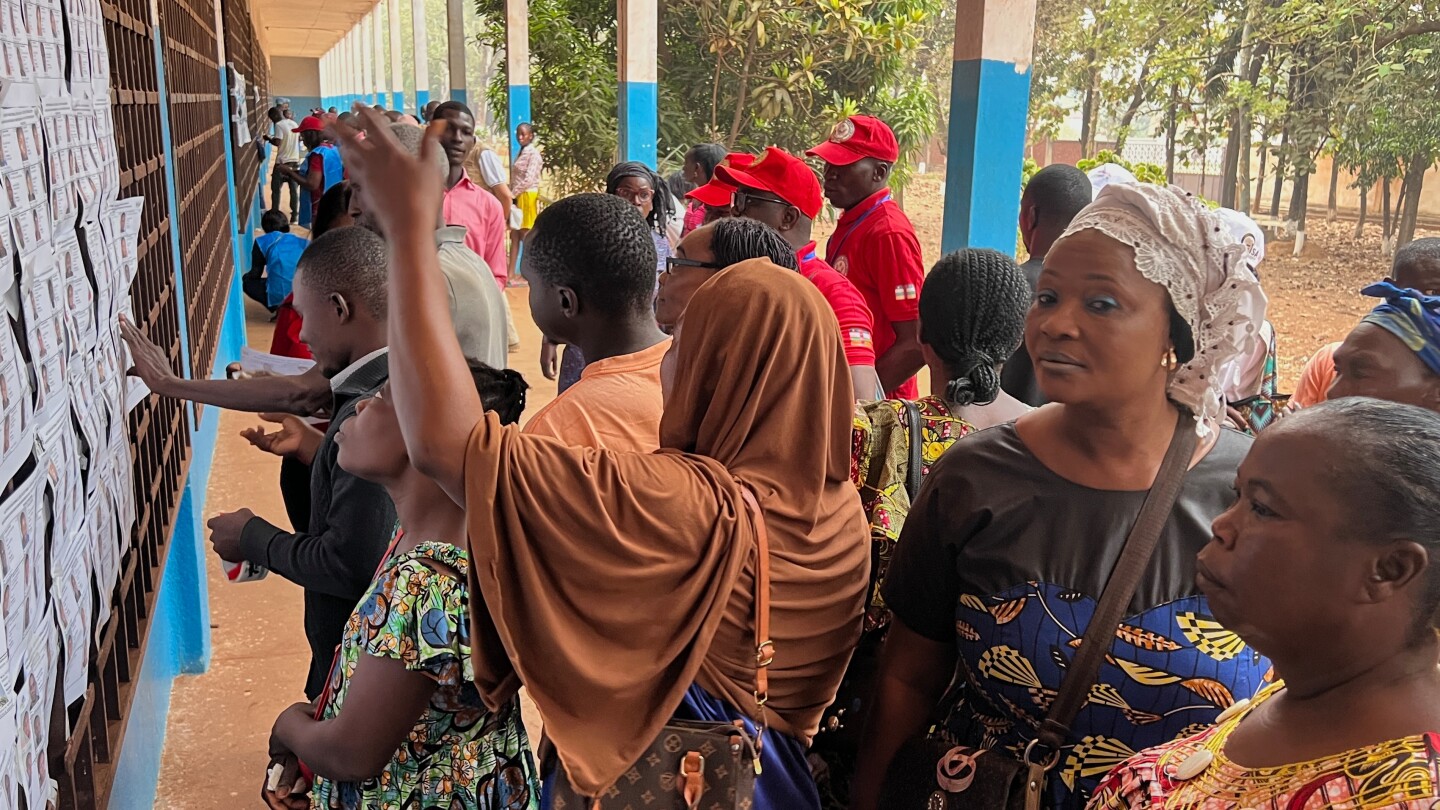
BANGUI, Central African Republic — Citizens participated in nationwide elections on Sunday to select their next president and parliamentary representatives, with incumbent leader Faustin Archange Touadéra widely anticipated to secure an unprecedented third term. The electoral process, which combined presidential, legislative, regional, and municipal ballots, represented the most extensive voting initiative in the country’s recent history.
Approximately 2.4 million registered voters participated in the election, which proceeded relatively smoothly despite initial delays at certain polling stations. Voting concluded at 7 p.m. local time, immediately followed by ballot counting procedures. Electoral authorities have not yet released official voter turnout figures.
President Touadéra, considered Russia’s closest African ally, faced competition from six opposition candidates, including former prime ministers Anicet-Georges Dologuélé and Henri-Marie Dondra. Notably absent was the main opposition coalition, the Republican Bloc for the Defense of the Constitution, which announced an election boycott in October citing an uneven political landscape.
Analysts project Touadéra’s likely victory would significantly strengthen Russia’s security and economic interests in the mineral-rich nation. This election occurs amidst growing international scrutiny regarding Russia’s military involvement in Africa, particularly the transition from the Wagner mercenary group to the officially sanctioned Africa Corps.
The Central African Republic has experienced prolonged instability since 2013, when Muslim rebels overthrew then-President François Bozizé. Although a 2019 peace agreement temporarily reduced violence, several armed groups have since resumed hostilities. Touadéra’s campaign emphasized his administration’s efforts to establish peace, stability, and economic recovery for the nation’s 5.5 million citizens.
International peacekeeping forces, including the United Nations MINUSCA mission with approximately 17,000 personnel, provided crucial security support during the electoral process. However, logistical challenges persisted due to the country’s difficult terrain featuring dense forests, inadequate road infrastructure, and remote communities.
Provisional results are expected within one week, with potential runoff elections scheduled if no presidential candidate achieves more than 50% of the vote.