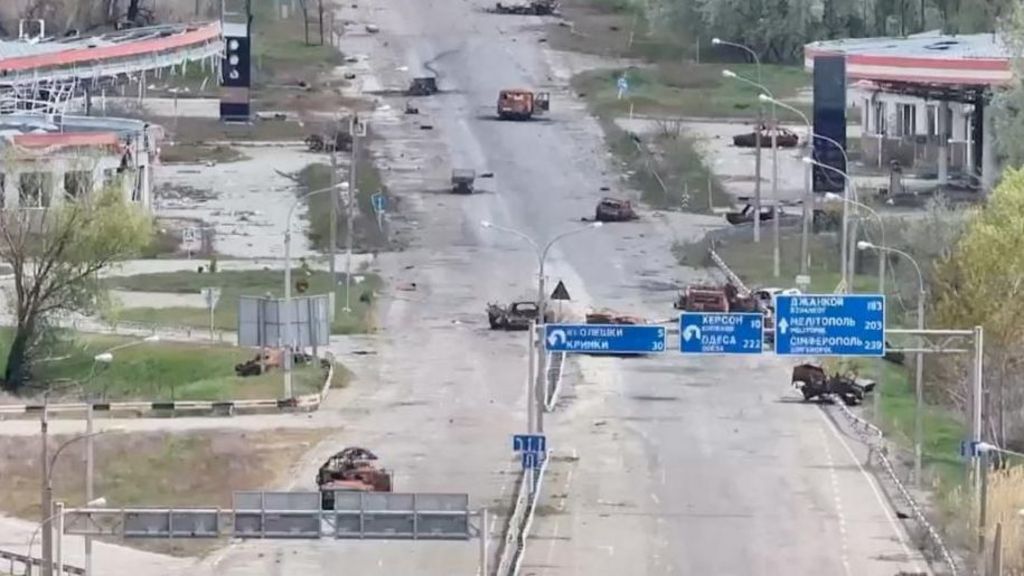
A landmark ceasefire initially negotiated to deliver critical food and medical supplies to the Russian-occupied southern Ukrainian city of Oleshky has been formally extended across the broader Kherson region, multiple official sources confirmed this week, marking the largest de-escalation of hostilities in the area since the full-scale Russian invasion began in February 2022. For thousands of civilians trapped in Oleshky, the truce arrives after nearly two years of unthinkable hardship: the city’s pre-war population of 24,000 has dwindled to an estimated 1,700 to 2,000 remaining residents, with several thousand more stranded in surrounding rural settlements. Since the Kakhovka Dam was destroyed in 2023, the area has been entirely cut off from electricity, gas, and running water, forcing surviving residents to forage for and cook garden weeds to fend off extreme hunger, with no open shops or functional local services left operating. Escape from the city had long been effectively impossible: the Dnipro River forms one natural barrier, while all overland exit routes are heavily mined, targeted by regular drone attacks, and patrolled by Russian military forces, leaving civilians trapped between life-threatening starvation and the risk of sudden death attempting to flee. The breakthrough truce, which came into effect in the early hours of Tuesday, was mediated through collaborative efforts by U.S. First Lady Melania Trump and Pope Leo XIV, who had issued a public appeal earlier this month directly to Russian President Vladimir Putin and Ukrainian President Volodymyr Zelensky to allow unimpeded humanitarian access and safe civilian evacuation from the besieged settlement. As of press time, no violations of the ceasefire have been reported across the expanded Kherson coverage zone, which now spans both Ukrainian-held Kherson city and adjacent occupied territories to create unobstructed safe passage corridors for incoming humanitarian convoys. Under the negotiated terms, the truce will remain active until 22:59 local Ukrainian time on 1 November, with coordinated demining operations already underway: Russia’s Dnepr army group units have confirmed they are conducting engineering reconnaissance to clear explosive and booby-trap devices from key access roads, with aid deliveries projected to reach Oleshky as early as Thursday, followed by a formal voluntary evacuation operation scheduled for Friday. Both parties to the conflict have publicly affirmed their commitment to the truce: Kremlin spokesman Dmitry Peskov stated all proceedings are moving “according to plan” and explicitly praised U.S. mediation efforts led by Melania Trump, while Ukrainian Foreign Minister Andrii Sybiha noted that a successful implementation of the ceasefire and humanitarian operations could “pave the way for other steps in the peace process” for the broader conflict. Even as the de-escalation unfolds, significant uncertainties and resident concerns remain. Many civilians in Oleshky are wary of sharing their names and personal details with authorities due to fears of Russian reprisals, and widespread spotty cellular and communication coverage makes it extremely difficult to coordinate with people remaining inside the occupied city. Multiple residents and recent escapees have shared concerns that Russian authorities may force evacuees to relocate to Russian-held territories such as Crimea, or regions inside Russia including Rostov, Krasnodar, and Stavropol, rather than allowing them to travel to Ukrainian-controlled areas, with President Zelensky warning that routes cleared by Russian forces are currently structured to redirect fleeing civilians toward Russian territory. A local resident named Serhii, who trekked through minefields to escape Oleshky three weeks prior, noted he was forced to travel through Russia and Belarus to eventually reach Ukrainian-held land, and called for a dedicated safe crossing point across the Dnipro River to avoid Russian-controlled territory entirely, though all remaining bridges across the river have been destroyed and the riverbanks are heavily mined, making such a crossing currently unfeasible. Local Russian-installed Kherson occupation head Vladimir Saldo claimed that most Oleshky residents wish to relocate to Russia, a statement that has not been independently verified by on-the-ground observers. Ukrainian military general staff officials have urged civilians across the region to avoid sharing unconfirmed details about evacuation routes, convoy timelines, or gathering points to prevent hostile parties from disrupting the operations. For residents in Ukrainian-held Kherson city, the ceasefire has already brought tangible improvements: no explosions or drone-related casualties have been recorded since 3 a.m. local time on Tuesday, with pedestrians and vehicles moving freely across urban thoroughfares, a marked shift from the months of near-constant shelling that defined daily life in the region prior to the truce.