分类: world

  • HRW Israel-Palestine director resigns, accuses watchdog of ‘cooking the books’

    HRW Israel-Palestine director resigns, accuses watchdog of ‘cooking the books’

    A significant internal rupture has emerged at Human Rights Watch (HRW) following the resignation of its former Israel-Palestine director, Omar Shakir. In a damning resignation letter, Shakir accused the organization’s senior leadership, specifically new Executive Director Philippe Bolopion, of deliberately suppressing a fully-vetted report that concluded Israel is committing crimes against humanity by denying Palestinians their right of return.

    The report, titled “‘Our Souls Are in the Homes We Left’: Israel’s Denial of Palestinians’ Right to Return and Crimes Against Humanity,” was allegedly blocked from publication in late November despite having completed the standard review process. Shakir revealed that the report was so near to release that donors had been briefed, it was coded into HRW’s website, and an embargoed press link was prepared.

    Shakir stated that Bolopion justified halting publication over concerns that detractors would misinterpret it as HRW endorsing a call to ‘demographically extinguish the Jewishness of the Israeli state.’ Shakir condemned this reasoning as ‘cooking the books’ and allowing ‘pragmatism’ to dictate legal findings—a approach he characterized as more typical of politics than principled human rights advocacy. He cited this decision as a fundamental compromise of HRW’s commitment to fact-based reporting and consistent application of international law, which ultimately led to his resignation.

    The right of return is a principle codified in the 1948 Universal Declaration of Human Rights, which HRW itself has upheld in other contexts, such as a 2023 report on the Chagos Islands. The historical context traces back to the 1948 Nakba, where Palestinians were expelled following Israel’s establishment, and further displacements occurred after the 1967 war.

    Shakir also acknowledged the intense scrutiny he faced in his role, particularly following the October 7th attacks and the subsequent war in Gaza, which has resulted in over 71,800 Palestinian deaths and has been deemed a genocide by numerous UN experts and institutions. He contrasted the suppression of the right-of-return report with the publication of HRW’s 2024 report on the October 7th attacks, which drew backlash from Palestinians but was published because it was ‘the principled thing to do.’

    HRW did not respond to requests for comment on these allegations by the time of publication.

  • Saif al-Islam, son of late Libyan leader Muammar Gaddafi, has been killed: Sources

    Saif al-Islam, son of late Libyan leader Muammar Gaddafi, has been killed: Sources

    Multiple sources including family associates, legal representatives, and Libyan media outlets have confirmed the death of Saif al-Islam Gaddafi, the most prominent son of former Libyan leader Muammar Gaddafi. The reports emerged on Tuesday, though specific details regarding the circumstances and location of his demise remain unclear at this time.

    Once a central figure in shaping Libya’s political direction prior to the 2011 uprising, Gaddafi’s public visibility had diminished significantly in recent years. His legacy remains deeply controversial, marked by both his political influence during his father’s regime and serious legal challenges that followed.

    In 2015, a Libyan court delivered a death sentence in absentia against Gaddafi for his role in violently suppressing peaceful demonstrations during the revolution that ultimately overthrew his father’s government. Additionally, the International Criminal Court had provisionally charged him with crimes against humanity, with his legal team’s efforts to dismiss the case proving unsuccessful.

    In a brief political resurgence in 2021, Gaddafi registered as a presidential candidate for elections scheduled that December. However, the electoral process collapsed amid ongoing political instability and factional disputes that have continued to plague the North African nation since the revolution.

  • UAE pledges $500 million for Sudan aid; efforts ongoing for Ramadan truce

    UAE pledges $500 million for Sudan aid; efforts ongoing for Ramadan truce

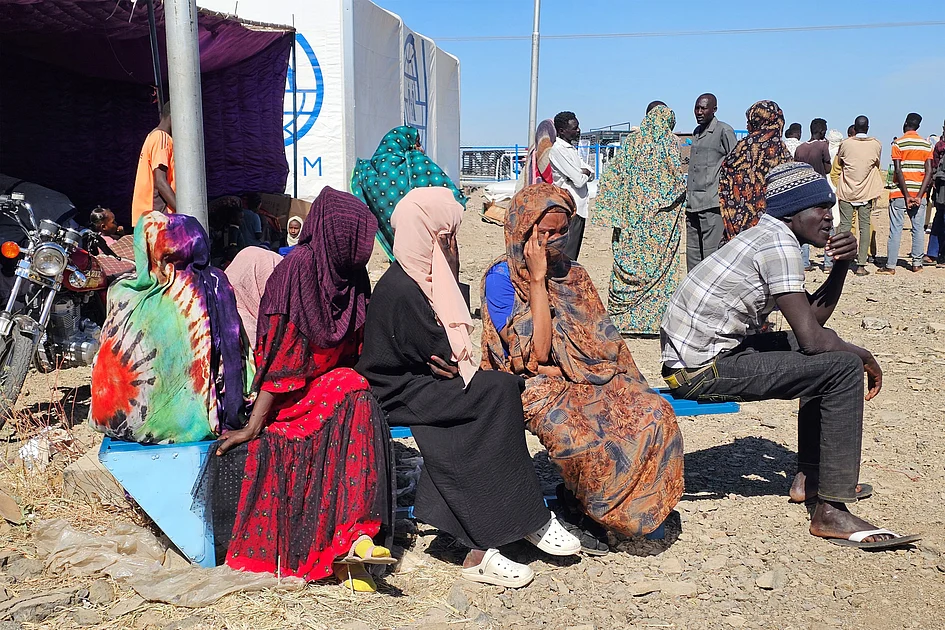
    In a major humanitarian commitment, the United Arab Emirates has pledged $500 million to United Nations aid operations in Sudan during a high-level donor conference in Washington. The announcement comes alongside intensified diplomatic efforts to broker a temporary ceasefire before the commencement of Ramadan later this month.

    UAE State Minister Lana Nusseibeh, addressing the conference, emphasized her nation’s desire to see an immediate cessation of hostilities. The Gulf state has consistently condemned violations by all warring factions and advocates for the establishment of an independent, civilian-led government in Khartoum.

    The devastating conflict has precipitated one of the world’s most severe humanitarian catastrophes, resulting in tens of thousands of fatalities, the displacement of millions, and widespread famine across the vast African nation. Recent combat has intensified across multiple fronts, including southern Kordofan where military engagements continue unabated.

    US Special Envoy for Africa Massad Boulos revealed that Washington anticipates total new funding pledges to reach approximately $1.5 billion, including an additional $200 million commitment from the United States. Boulos acknowledged disappointing progress since former President Trump’s November commitment to intervene following a request from Saudi Crown Prince Mohammed bin Salman.

    Diplomatic channels remain active through the ‘Quad’ grouping comprising officials from the US, UAE, Egypt, and Saudi Arabia. This coalition has developed a peace proposal that has gained acceptance among these mediating nations, though the warring Sudanese factions have yet to agree to either a temporary truce or the comprehensive peace plan. Boulos expressed hope that the proposal would eventually be presented to the UN Security Council and Trump’s Board of Peace for international endorsement.

  • US military shoots down Iranian drone in Arabian Sea: Official

    US military shoots down Iranian drone in Arabian Sea: Official

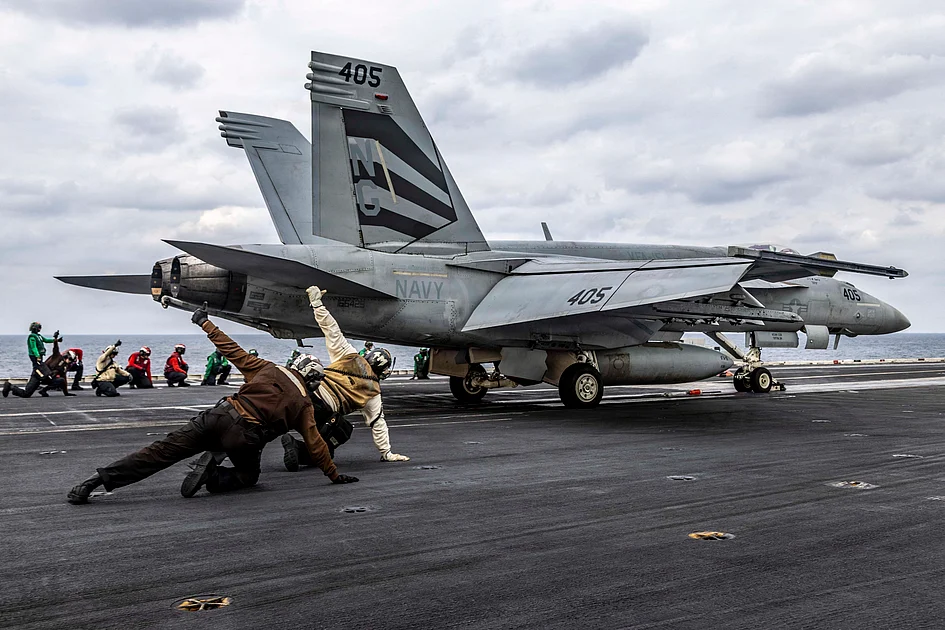
    A U.S. F-35 fighter jet engaged and destroyed an Iranian unmanned aerial vehicle over the Arabian Sea on Tuesday after the drone advanced toward the USS Abraham Lincoln aircraft carrier, according to an official statement from the U.S. military.

    The incident, which occurred on February 3, 2026, involved a Shahed-139 surveillance and attack drone manufactured by Iran. Military authorities confirmed the drone was operating in close proximity to the carrier strike group before being intercepted and neutralized by advanced aerial defenses.

    This confrontation represents the latest escalation in ongoing regional tensions between the United States and Iran. The Arabian Sea, a critical waterway connecting the Persian Gulf with international shipping routes, has frequently served as a stage for such military encounters. The USS Abraham Lincoln’s presence in the region comes as part of ongoing U.S. naval operations aimed at maintaining maritime security and stability.

    The engagement highlights continuing friction between Washington and Tehran, particularly regarding military movements in strategic Middle Eastern waters. Pentagon officials have repeatedly expressed concerns about Iranian surveillance attempts targeting U.S. naval assets, while Iranian authorities have consistently criticized the American military presence in the region.

    This incident follows previous reports of increased U.S. naval deployments to the Middle East, with approximately ten American warships currently operating in regional waters according to recent intelligence assessments. Military analysts suggest such encounters, while potentially dangerous, reflect established protocols for dealing with perceived threats to naval operations in international waters.

  • Watch: Florida iguanas are ‘cold stunned’ and falling from trees

    Watch: Florida iguanas are ‘cold stunned’ and falling from trees

    An unusual meteorological event is unfolding across Florida as a sudden temperature plunge induces a biological phenomenon known as ‘cold stunning’ in the state’s invasive iguana population. The National Weather Service Miami-South Florida confirmed temperatures dipped into the 30s and 40s (°F), triggering a reptilian paralysis that causes the cold-blooded creatures to lose their grip on tree branches.

    While the spectacle of lizards dropping from trees has captivated residents, the Florida Fish and Wildlife Conservation Commission (FWC) issued a nuanced advisory. The agency clarified that these immobilized iguanas are not deceased but in a temporary state of suspended animation due to their inability to regulate body temperature. Officials cautioned against bringing the paralyzed reptiles into homes, noting they can rapidly regain mobility and potentially become aggressive when warmed.

    This event highlights the ecological impact of non-native species in subtropical environments. Green iguanas, native to Central and South America, have established significant populations in South Florida. While cold spells temporarily control their numbers, survivors often retreat into burrows that damage infrastructure through erosion and collapsing sidewalks. The FWC maintains that unlicensed capture and transport of iguanas remains prohibited despite their invasive status, though landowners may humanely remove them from their properties year-round.

  • Two Indian flights suffer wing collision on runway with passengers onboard

    Two Indian flights suffer wing collision on runway with passengers onboard

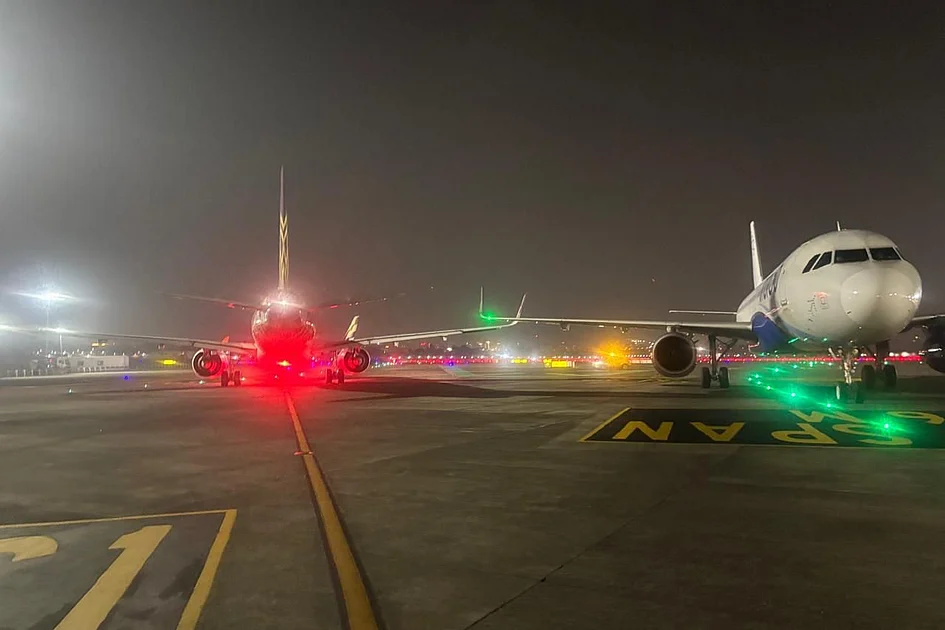
    A ground collision involving two commercial aircraft occurred at Mumbai’s Chhatrapati Shivaji Maharaj International Airport on Tuesday evening, resulting in significant wingtip damage to both planes. The incident unfolded when an Air India flight AI2732, preparing for departure to Coimbatore, was taxiing from position C1 toward M4 while an IndiGo flight was simultaneously arriving and joining at position B1.

    According to India’s Directorate General of Civil Aviation, the simultaneous movements caused the right wingtips of both aircraft to make physical contact during taxi operations. Both aircraft immediately returned to their respective bays for comprehensive safety inspections following the collision.

    Air India confirmed substantial damage to their aircraft’s wingtip structure and subsequently grounded the plane for detailed technical evaluation. All passengers were safely disembarked without injury, with airline representatives arranging alternative travel arrangements to minimize disruption to their journeys.

    The incident has been formally reported to aviation regulators, marking another significant event in India’s aviation sector that will likely prompt review of ground movement procedures at major airports. This occurrence follows previous aviation incidents in the country, including a recent event where an Air India plane engine sustained damage from cargo container ingestion.

  • 6.0-magnitude earthquake hits Myanmar, tremors felt in parts of India

    6.0-magnitude earthquake hits Myanmar, tremors felt in parts of India

    A substantial seismic event measuring 6.0 on the Richter scale struck Myanmar on Tuesday, according to data released by the German Research Center for Geosciences (GFZ). The earthquake originated at a relatively shallow depth of 10 kilometers (approximately 6.21 miles) beneath the Earth’s surface, potentially amplifying its impact across the region.

    The tremors extended beyond Myanmar’s borders, with multiple Indian media outlets reporting strongly perceptible shaking throughout eastern India. The metropolitan area of Kolkata experienced particularly noticeable tremors, though initial reports indicate no immediate structural damage or casualties within Indian territory.

    This seismic activity occurs within the broader context of the seismically active Southeast Asian region, which frequently experiences tectonic movements due to the complex interaction of the Indian and Eurasian plates. The relatively shallow depth of this earthquake contributed to its widespread perceptibility across national boundaries.

    Seismologists continue to monitor aftershock potential while emergency response teams in both Myanmar and India remain on alert. The event follows recent seismic activity in neighboring Indonesia, where a 6.3 magnitude earthquake was recorded, highlighting the region’s ongoing geological volatility.

  • US tanker approached by Iranian gunboats in Strait of Hormuz

    US tanker approached by Iranian gunboats in Strait of Hormuz

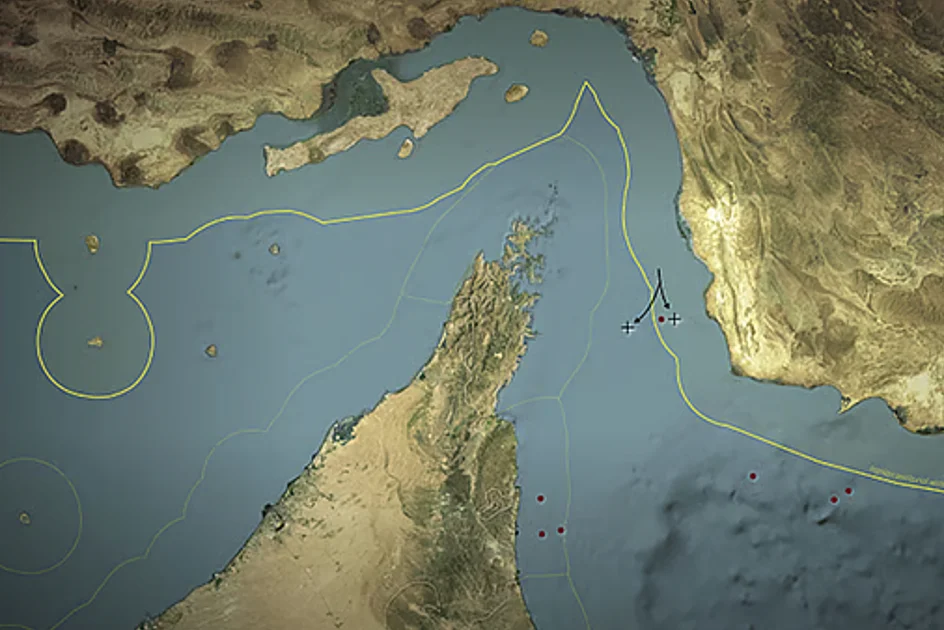
    In a tense maritime encounter on Tuesday, February 3rd, 2026, a U.S.-flagged commercial tanker successfully resisted an interception attempt by Iranian Revolutionary Guard gunboats while navigating the strategically vital Strait of Hormuz. According to a detailed report from British maritime security firm Vanguard Tech, the vessel Stena Imperative was transiting approximately 16 nautical miles north of Omani waters when it was approached by three pairs of small, armed Iranian patrol boats.

    The Iranian forces initiated radio contact, issuing a direct command for the tanker’s captain to halt engines and prepare for a boarding operation. Defying these orders, the captain instead increased speed and held the ship’s original course, a move that ultimately prevented the boarding. Vanguard Tech emphasized that the Stena Imperative at no point entered Iranian territorial waters during the incident, operating solely in international shipping lanes.

    The situation was subsequently de-escalated with the arrival of a U.S. warship, which commenced escort duties for the commercial tanker. This event echoes previous tensions in the chokepoint, a critical artery for global oil and liquefied natural gas (LNG) transport. The confrontation occurs against a backdrop of heightened rhetoric; just last week, a senior Iranian naval official from the Revolutionary Guards publicly threatened to block the strait in retaliation for any potential U.S. military action. The UK Maritime Trade Operations (UKMTO) agency also acknowledged an incident in the area but did not disclose the identities of the vessels involved.

  • Fourteen migrants dead after collision with Greek coastguard boat

    Fourteen migrants dead after collision with Greek coastguard boat

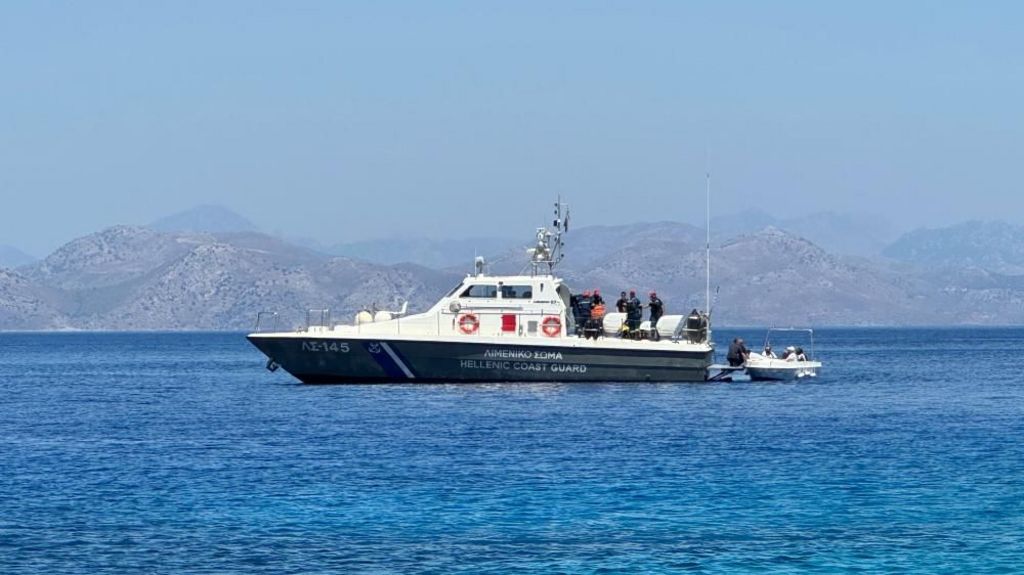
    A devastating maritime incident has resulted in the deaths of at least 14 migrants after their speedboat collided with a Hellenic Coast Guard vessel near the Greek island of Chios on Tuesday evening. The tragedy occurred in the turbulent waters of the Chios Strait, close to the coastal village of Vrontades, during what authorities describe as a high-risk pursuit operation.

    According to official statements from Greek maritime authorities, the migrant vessel was executing dangerous maneuvers attempting to evade interception when the collision occurred. The circumstances leading to the impact remain under investigation as the coastguard has not yet released comprehensive details about the sequence of events.

    Search and rescue operations continued through the night with an extensive deployment of resources. The mission involved four coastguard vessels, a privately owned boat carrying civilian divers, and a helicopter scouring the area for survivors. Twenty-four individuals were successfully rescued from the waters, though many sustained serious injuries requiring immediate medical attention. Authorities indicate that additional passengers remain unaccounted for, suggesting the final death toll may rise.

    Among the injured are seven children, a pregnant woman, and two coastguard officers, according to reports from Greece’s state broadcaster ERT. The death count was initially reported at four fatalities but escalated dramatically when ten additional bodies were recovered approximately two hours after the incident, bringing the confirmed mortality to 14.

    This tragedy represents one of the deadliest recent incidents in the ongoing European migrant crisis, highlighting the extreme dangers faced by those attempting irregular sea crossings to reach European territory. The Aegean Sea route between Turkey and Greece remains a particularly perilous passage despite increased surveillance and interception efforts by European authorities.

  • Prosecutors investigating Epstein files after claims Turkish girls were trafficked

    Prosecutors investigating Epstein files after claims Turkish girls were trafficked

    Turkish judicial authorities have launched a comprehensive examination of millions of newly released documents concerning convicted sex offender Jeffrey Epstein, focusing specifically on potential connections to child trafficking operations within Turkey. The Ankara Public Prosecutor’s Office initiated this formal investigation in December following parliamentary inquiries from opposition lawmakers.

    The probe gained significant momentum after the U.S. Department of Justice released approximately three million documents last Friday, providing Turkish prosecutors with substantial new evidence to review. This development comes amid growing political pressure for an extensive parliamentary investigation into whether Turkish children were among Epstein’s victims.

    Bugra Kavuncu, spokesperson for the opposition Iyi Party, emphasized the urgency of establishing a special parliamentary commission. “We propose the urgent establishment of a parliamentary commission to investigate whether there are any Turkish children who were victims in the Epstein case,” Kavuncu stated, adding that such matters transcend political considerations and represent fundamental humanitarian concerns.

    The investigation has drawn attention to alarming domestic statistics cited by Dogan Bekin, a parliamentarian from the right-wing Yeniden Refah party. Official data from the Turkish Statistical Institute indicates that between 2008 and 2016, some 104,531 children were reported missing nationwide, with young girls constituting the majority of these cases.

    Bekin has submitted formal inquiries to multiple government ministries, demanding clarification on whether any children were victimized by Epstein’s criminal network and what inspection measures have been implemented in schools and orphanages to identify potential victims. The lawmaker also questioned whether Epstein had established contacts with Turkish politicians, administrators, or high-ranking officials.

    The document release has revealed several connections between Epstein and Turkish political figures, though no evidence suggests involvement in wrongdoing. Emails from American businessman Tom Pritzker indicate he facilitated communication between Epstein and then-Foreign Minister Ahmet Davutoglu in 2010. However, representatives from Davutoglu’s Future Party have denied any substantive relationship, characterizing the interaction as a brief encounter related to diplomatic affairs.

    Additional correspondence shows Epstein mentioning potential contact with President Recep Tayyip Erdogan in 2011, though other emails reveal the financier’s critical views of the Turkish leader, leaving the seriousness of this reference uncertain.

    The unfolding investigation represents Turkey’s response to the global repercussions of the Epstein document release, which has triggered political turmoil and resignations internationally as numerous public figures face scrutiny over their associations with the convicted sex offender.