分类: world

  • Closing statements begin in war crimes trial for Kosovo ex-president

    Closing statements begin in war crimes trial for Kosovo ex-president

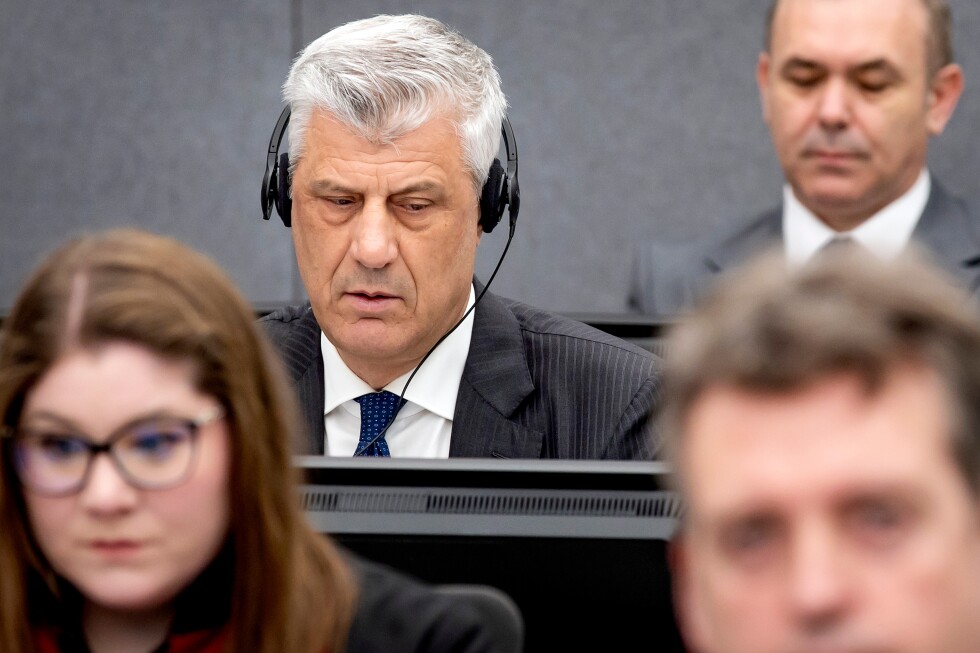
    THE HAGUE, Netherlands — Prosecutors at the Kosovo Specialist Chambers delivered a powerful closing statement Monday, asserting they possess “overwhelming evidence” demonstrating former Kosovo President Hashim Thaci and three co-defendants orchestrated a systematic campaign of murder and torture against perceived traitors during the nation’s independence conflict.

    Thaci, who resigned from presidential office in 2020 to face justice, stands accused alongside Kadri Veseli, Rexhep Selimi, and Jakup Krasniq on ten counts of war crimes and crimes against humanity committed during the 1998-99 war for independence from Serbia. The defendants, all former commanders of the Kosovo Liberation Army (KLA), allegedly targeted political opponents and civilians suspected of collaboration.

    Prosecutor Kimberly West revealed that witnesses and victims demonstrated extraordinary courage by testifying despite operating in a “climate of intimidation.” Their testimonies, she argued, paint a consistent picture of a coordinated policy to eliminate perceived enemies through extrajudicial means.

    The court, which operates within Kosovo’s legal system but is based in the Netherlands with predominantly international staff, was established with EU backing amid concerns about witness safety. These concerns proved justified when, in 2022, two leaders of a Kosovo war veterans’ association were convicted for witness intimidation through leaking confidential documents.

    Prosecutors are seeking 45-year prison sentences for all four defendants, who have maintained their innocence throughout the proceedings. Thaci, known by his wartime nickname “The Snake,” declared himself “fully not guilty” when the trial commenced in 2023, with his co-defendants echoing similar pleas.

    The case represents a complex chapter in Kosovo’s history. Thaci, once celebrated by Western leaders as a freedom fighter who helped negotiate the 1999 peace agreement, now faces justice for alleged atrocities committed during that same conflict. Many Kosovars view the tribunal as a historical injustice that attempts to equate their liberation struggle with Serbian aggression, which resulted in approximately 13,000 deaths—mostly ethnic Albanians—and the displacement of nearly one million people before NATO intervention ended the conflict.

  • Israel’s president visits Sydney’s Bondi Beach massacre site and meets victims’ families

    Israel’s president visits Sydney’s Bondi Beach massacre site and meets victims’ families

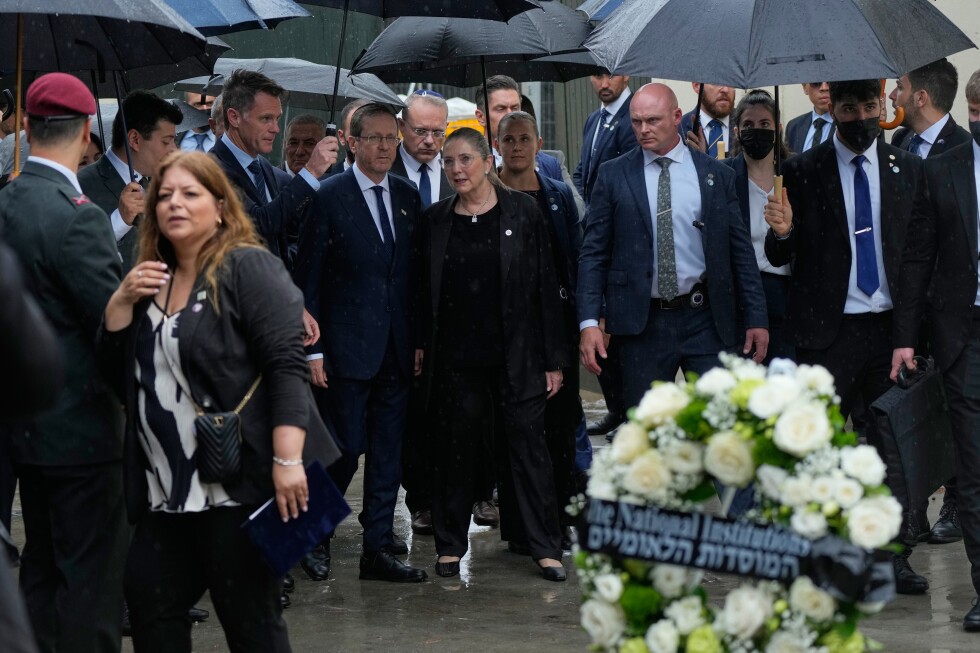
    SYDNEY, Australia — Israeli President Isaac Herzog commenced a politically charged state visit to Australia on Monday, arriving at Bondi Beach to honor victims of December’s antisemitic massacre that claimed 15 lives. The ceremonial visit, occurring amid heightened security with police snipers visible on rooftops, served both as an act of condolence and a diplomatic effort to strengthen bilateral relations.

    Herzog met privately with families of those killed in the December 14 attack at a Jewish festival, where alleged gunman Naveed Akram perpetrated Australia’s deadliest mass shooting in nearly three decades. The president laid a wreath and two stones brought from Jerusalem at Bondi Pavilion, which had spontaneously transformed into a memorial site following the tragedy.

    ‘Our heart missed a beat, like all Israelis and all Jews,’ Herzog told reporters. ‘I’m here to express solidarity, friendship, and love.’ He emphasized that the stones would remain as permanent memorials, symbolizing global unity against terrorism.

    The visit occurs against a backdrop of significant political friction. While mainstream Jewish groups welcomed Herzog, the Jewish Council of Australia published full-page advertisements in major newspapers declaring ‘Herzog does not speak for us and is NOT WELCOME HERE.’ The council’s executive officer Sarah Schwartz accused Herzog’s rhetoric of contributing to ‘illegal annexation of the West Bank’ and inciting ‘genocide against Palestinians in Gaza.’

    Tensions between the Australian and Israeli governments have been escalating since Prime Minister Anthony Albanese announced plans six months ago to recognize Palestinian statehood. Herzog’s visit—initiated by Governor-General Sam Mostyn at Albanese’s request—represents an attempt to bridge diplomatic divides while addressing shared security concerns.

    The Israeli president praised Australia’s recent legislative responses to the attack, including rushed legislation lowering thresholds for banning hate groups and establishing a royal commission to investigate antisemitism. However, Herzog acknowledged shared frustrations regarding preventive measures: ‘These frustrations were shared by many, many of us, including myself.’

    Security measures intensified throughout Sydney, with police extending protest restrictions for additional two-week periods following the terrorist designation of the Bondi attack. Demonstrators risk arrest at planned protests organized by the Palestine Action Group, which Herzog characterized as attempts to ‘undermine and delegitimize Israel’s right to exist.’

    The president’s itinerary includes visits to Melbourne and Canberra before departing Thursday, with both cities housing approximately 85% of Australia’s Jewish population.

  • UAE clarifies flights to Algeria not impacted despite end of agreement

    UAE clarifies flights to Algeria not impacted despite end of agreement

    The United Arab Emirates has moved swiftly to reassure travelers and airlines that flight operations to Algeria will continue without disruption, despite receiving formal notification from Algerian authorities regarding the termination of their bilateral air services agreement.

    In an official statement released on Sunday, February 8, 2026, the General Civil Aviation Authority (GCAA) emphasized that the existing agreement remains fully operational during the legally mandated notice period. The authority clarified that Algeria’s decision falls within established international aviation protocols, characterizing the development as a procedural matter rather than an immediate operational concern.

    ‘Flight operations between the two countries will continue as normal,’ the GCAA affirmed, adding that it is coordinating with all relevant entities through official diplomatic channels to address the situation with professional responsibility.

    The air services agreement in question was originally signed in Abu Dhabi in 2013, establishing the framework for commercial air transportation between the two nations. While Algeria initiated the cancellation process on Saturday, no specific rationale was provided for this diplomatic move.

    Aviation experts note that such agreements typically include termination clauses requiring advance notice, often ranging from several months to a year, during which all provisions remain enforceable. The UAE’s response indicates confidence in maintaining air connectivity while navigating the diplomatic process through appropriate legal and international frameworks.

  • How off-the-shelf drones are changing jihadist warfare in West Africa

    How off-the-shelf drones are changing jihadist warfare in West Africa

    West Africa faces an emerging security crisis as jihadist organizations increasingly deploy armed drone technology, transforming the regional conflict landscape through aerial warfare capabilities. Monitoring group Acled documents at least 89 confirmed drone strikes since 2023, with al-Qaeda affiliate Jama’at Nusrat al-Islam wal-Muslimin (JNIM) responsible for 69 attacks across Mali and Burkina Faso, while Islamic State affiliates Islamic State West Africa Province (ISWAP) and Islamic State Sahel Province (ISSP) have conducted approximately 20 combined operations primarily in Nigeria.

    The tactical evolution represents a significant shift in militant capabilities, with groups utilizing commercially available quadcopter drones rigged with explosives for both surveillance and direct attacks. According to Acled senior Africa analyst Ladd Serwat, these inexpensive unmanned systems lower operational costs while enabling intelligence gathering with minimal risk to militants.

    A January 29th dual assault in Nigeria’s Borno state exemplifies this new threat paradigm, where ISWAP coordinated armed drones with ground fighters against a military base, resulting in nine soldier fatalities. That same day, ISSP targeted Niamey’s international airport and adjacent military installations in Niger, though conflicting reports exist regarding drone deployment in this incident.

    Security analyst Audu Bulama Bukarti notes the concerning progression: “Drones allow militants to gather intelligence with minimal risk and enable strikes on military targets that were previously harder to reach.” Despite import restrictions across the region, jihadists exploit porous borders and smuggling networks to acquire these technologies, according to Good Governance Africa researcher Malik Samuel.

    JNIM has demonstrated particularly advanced capabilities, incorporating first-person view (FPV) drones—similar to those used in Ukraine—for precision targeting. In February 2025, the group deployed FPV systems to drop improvised explosives on Burkinabe military positions in Djibo, marking a technical escalation.

    While most attacks target military and allied militia positions, civilian casualties have occurred. Acled reports JNIM has struck markets in communities perceived as government-aligned, while ISWAP’s sole documented civilian attack killed two pastoralists in northern Cameroon in June 2025.

    Experts warn that without enhanced countermeasures including jamming technology, air defense systems, and preemptive strikes against drone facilities, jihadist groups could further develop capabilities for high-impact assaults that exacerbate regional instability.

  • Residential building collapses in Lebanon’s Tripoli, trapping people, sources say

    Residential building collapses in Lebanon’s Tripoli, trapping people, sources say

    TRIPOLI, LEBANON – A major rescue operation continues in northern Lebanon after a residential building catastrophically collapsed in Tripoli on Sunday, February 8, 2026. The five-story structure in the Bab al-Tabbaneh neighborhood crumbled, leaving an undetermined number of residents trapped beneath heavy debris.

    According to security sources cited by Reuters, the incident prompted an immediate emergency response. Lebanon’s National News Agency confirmed that rescue teams, working alongside local citizens in a collaborative effort, have successfully extracted three survivors from the wreckage. Their current medical condition remains undisclosed.

    The precise cause of the structural failure is not yet known and is subject to investigation. Building collapses in Lebanon have been historically linked to aging infrastructure, inadequate maintenance, and the use of substandard construction materials. This disaster occurs amidst the nation’s prolonged economic crisis, which has severely hampered public services and infrastructure investment.

    The collapse has drawn parallels to recent global structural failures, including a separate incident in Kota, India, where a building collapse resulted in fatalities. The response in Tripoli highlights the critical importance of community mobilization and emergency preparedness in urban disaster scenarios. International observers are monitoring the situation as rescue efforts continue against the clock to locate any additional victims.

  • Three deadly attacks on health centres in Sudan’s South Kordofan in past week: WHO

    Three deadly attacks on health centres in Sudan’s South Kordofan in past week: WHO

    The World Health Organization has issued a grave condemnation following a series of devastating assaults on medical facilities in Sudan’s conflict-ravaged South Kordofan region. WHO Director-General Tedros Adhanom Ghebreyesus confirmed Sunday that three separate attacks on health centers within a single week have resulted in over 30 fatalities, marking a severe escalation in the targeting of medical infrastructure.

    The violence began on February 3rd when a primary health center was assaulted, claiming eight lives including five children and three women, while leaving eleven others injured. Mere hours later, a hospital attack resulted in one additional fatality. The most devastating strike occurred on February 5th when another hospital was targeted, killing 22 individuals—including four healthcare workers—and wounding eight more.

    This alarming pattern of violence against medical facilities unfolds against the backdrop of Sudan’s devastating civil conflict, which has pitted the national army against the paramilitary Rapid Support Forces since April 2023. The ongoing warfare has already claimed tens of thousands of lives, displaced millions, and created one of the world’s most severe humanitarian catastrophes.

    The central Kordofan region, now the epicenter of hostilities, faces a collapsed healthcare system further crippled by these systematic attacks. Tedros emphasized that these assaults are particularly devastating for a population already suffering from acute malnutrition and limited access to medical care.

    The WHO chief issued an urgent global appeal, stating: ‘The whole world should get behind Sudan’s peace initiative to end violence, protect the people and rebuild the health system.’ He underscored that ‘the best medicine is peace’ in a region where healthcare infrastructure has become both a casualty and a frontline in the ongoing conflict.

  • Aerial footage shows flooded cities as storms hit Spain

    Aerial footage shows flooded cities as storms hit Spain

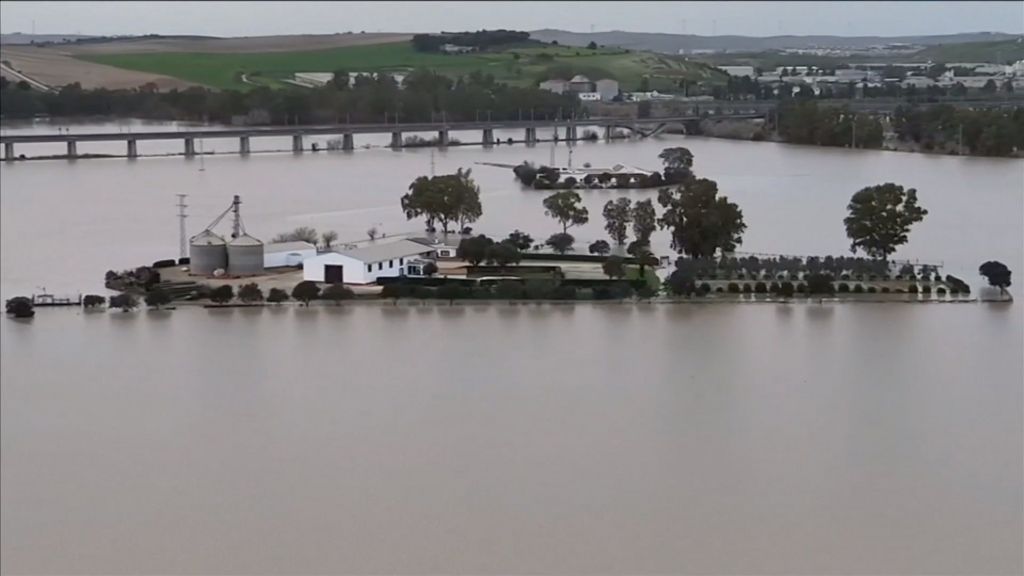
    Eastern and southeastern regions of Spain are confronting a severe humanitarian and environmental crisis following the devastating impact of two powerful storm systems, Marta and Leonardo. Successive bouts of torrential rainfall have transformed urban landscapes into expansive waterways, with aerial reconnaissance revealing the staggering scale of inundation across multiple provinces.

    The meteorological turmoil initiated with Storm Marta, which saturated the ground and overwhelmed drainage infrastructure. Before communities could initiate recovery, Storm Leonardo delivered a second, more intense deluge, resulting in cumulative precipitation totals far exceeding seasonal averages. This one-two punch from the Atlantic systems caused rivers to burst their banks and flash floods to surge through city streets with immense force.

    Emergency services have undertaken large-scale operations, executing thousands of rescues to evacuate residents trapped in homes and vehicles. Preliminary estimates from regional governments indicate several thousand individuals have been displaced, seeking temporary shelter in designated relief centers. The material damage is extensive, encompassing submerged vehicles, ruined businesses, and critically damaged public infrastructure, including roads and bridges compromised by floodwaters.

    Beyond immediate human impact, the event signals broader climatic concerns. Spanish meteorological authorities are analyzing whether the intensity and sequential nature of these storms represent a new pattern linked to changing climate dynamics in the Mediterranean region. The disaster has triggered a coordinated response from national and regional agencies, focusing on both immediate relief efforts and assessing the long-term requirements for rebuilding and reinforcing flood defenses in vulnerable areas.

  • Memorial for Swiss bar fire victims goes up in flames, police report

    Memorial for Swiss bar fire victims goes up in flames, police report

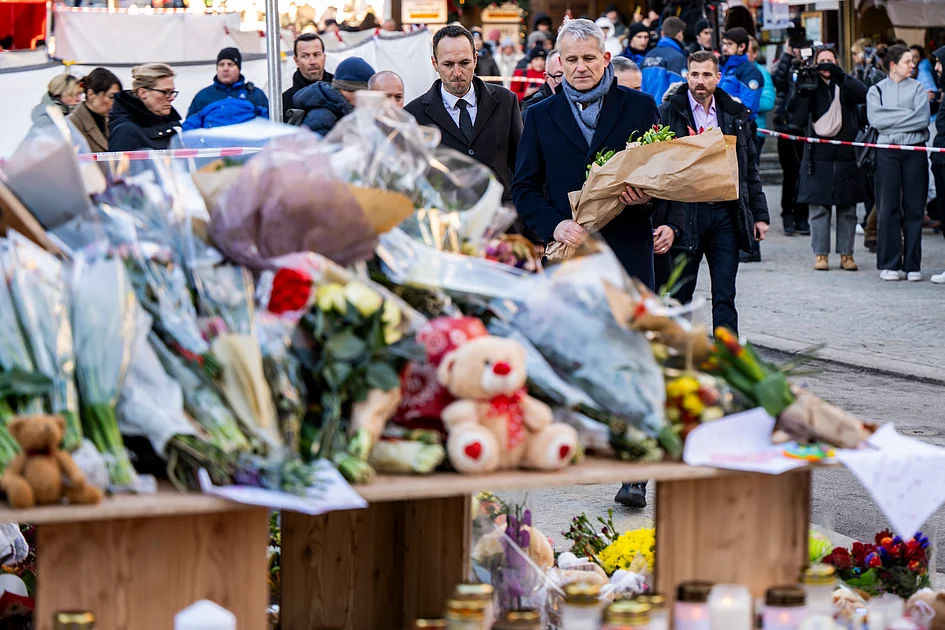
    A memorial established to honor victims of Switzerland’s devastating New Year’s bar fire has itself been consumed by flames, according to local authorities. The incident occurred early Sunday morning in the alpine resort town of Crans-Montana, where the original tragedy claimed 41 lives and left 115 injured just over a month ago.

    Regional police confirmed the makeshift memorial, containing floral tributes, candles, and handwritten condolence messages, ignited approximately at 6:00 AM local time (0500 GMT). Fire suppression teams responded promptly and successfully contained the blaze before it could spread further. Authorities have initiated a formal investigation to determine the ignition source and circumstances surrounding this secondary fire.

    The memorial had been positioned adjacent to the charred remains of Le Constellation bar, the site of the January 1st catastrophe that predominantly affected teenagers and young adults celebrating the holiday. Recent relocation had placed the tribute at a slightly greater distance from the destroyed venue prior to Sunday’s incident.

    Swiss national broadcaster RTS aired footage showing the fire-damaged structure, revealing a blackened protective tarpaulin—originally installed as weather shielding—now visible behind police cordons. This protective covering had been designed in an igloo-like configuration to shelter the emotional tribute from harsh winter conditions.

    The original incident remains one of Switzerland’s deadliest fire disasters in recent decades, with the subsequent memorial blaze adding further distress to a community still processing profound grief. Investigation findings regarding both fires remain pending as forensic experts continue examining evidence from both locations.

  • Bugs in food and sickness haunt immigrants held in Texas

    Bugs in food and sickness haunt immigrants held in Texas

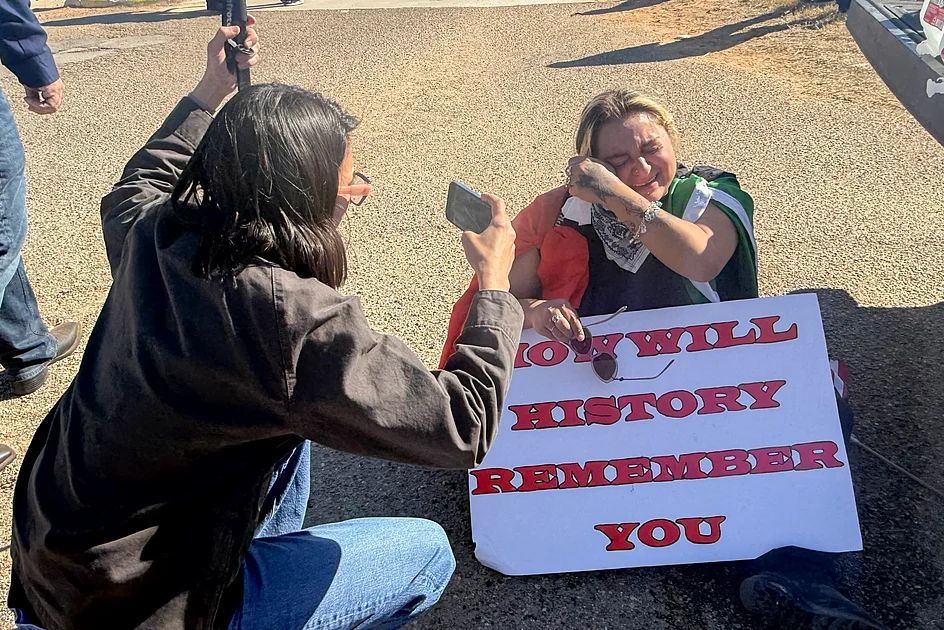
    A controversial immigrant detention center in rural Texas has emerged as a focal point of the ongoing immigration policy debate, with numerous allegations of substandard conditions and questionable detention practices coming to light. The Dilley Immigration Processing Center, located approximately 85 miles from the Mexican border in a town of just 3,200 residents, has drawn international attention for its treatment of detainees, including families who entered the United States through legal channels.

    According to legal advocacy groups and firsthand accounts, the facility has been the scene of multiple protests regarding food quality after insects were discovered in meals served to detainees. Additionally, around-the-clock lighting has made adequate sleep nearly impossible for those held at the center. The situation escalated when Texas health authorities identified two measles cases within the facility, prompting quarantine measures.

    The legal director of RAICES (Refugee and Immigrant Center for Education and Legal Services), Javier Hidalgo, characterized the detained families as ‘political pawns,’ noting that many were in the midst of legitimate asylum processes with scheduled court dates when they were apprehended. CoreCivic, the private contractor operating the facility, maintains that ‘the health and safety of those entrusted to our care is our top priority.’

    Among the detained are several high-profile cases, including the family of Mohamed Sabry Soliman, an Egyptian national accused of firebombing a protest in Colorado. Despite no evidence implicating his wife and five children, they have been held for months while authorities investigate their potential knowledge of the attack. In a concerning development, the family’s 18-year-old daughter was separated from them months after her birthday, despite previous inaction regarding her age status.

    Medical neglect allegations further compound the facility’s troubles. Lawyers report instances where children with serious medical conditions, including appendicitis and Hirschsprung’s disease, received inadequate care and were told to simply ‘take a Tylenol and get over it.’ These accounts paint a picture of a system where vulnerable populations face significant challenges to their wellbeing and legal rights.

  • Russian airstrike on Ukrainian city kills 1 as US pushes June deadline for peace deal

    Russian airstrike on Ukrainian city kills 1 as US pushes June deadline for peace deal

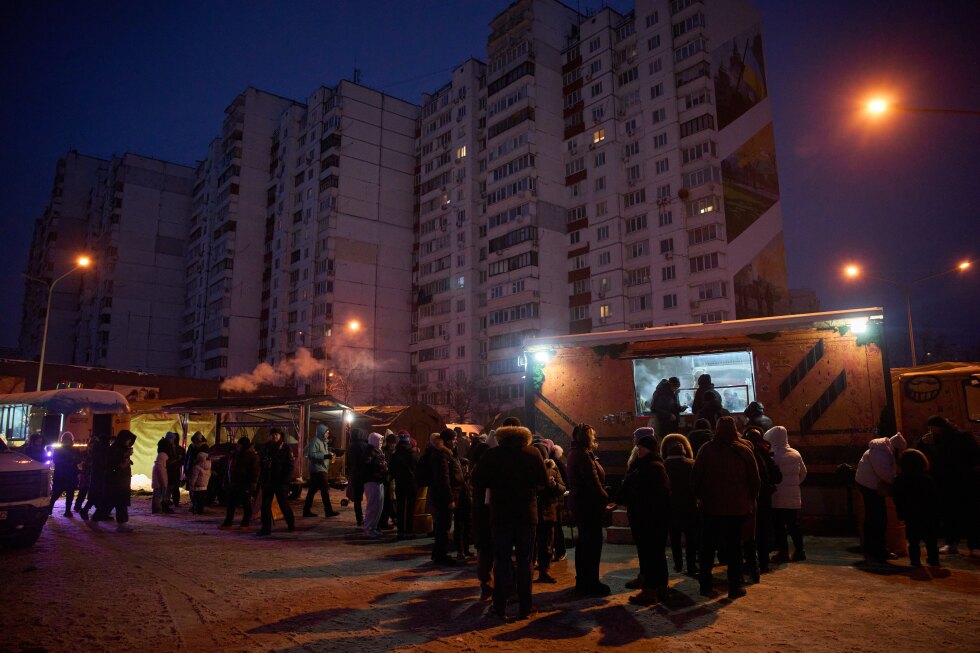
    KYIV, Ukraine — In a significant escalation of hostilities, Russian forces launched airstrikes on civilian infrastructure in eastern Ukraine this Sunday, resulting in one fatality and multiple injuries. The assault targeted a residential sector in Kramatorsk, Donetsk region, igniting a substantial fire within a nine-story apartment complex that required emergency response teams to contain.

    Concurrently, energy facilities in Ukraine’s Poltava region came under attack overnight, as confirmed by Serhii Koretskyi, head of Ukraine’s state-owned energy conglomerate Naftogaz. This continued targeting of critical power infrastructure represents Moscow’s strategic effort to demoralize Ukrainian resistance through what Kyiv officials term ‘weaponizing winter’ tactics—a pattern sustained throughout the nearly four-year conflict.

    The military offensive coincides with revealing statements from Ukrainian President Volodymyr Zelenskyy regarding diplomatic developments. Speaking to journalists on Friday, Zelenskyy disclosed that American officials have established a June deadline for Ukraine and Russia to negotiate a peace agreement. According to the Ukrainian leader, failure to achieve a settlement by summer would likely trigger increased pressure from the Trump administration on both conflicting parties.

    Zelenskyy elaborated: ‘The Americans are proposing the parties end the war by the beginning of this summer and will probably put pressure on the parties precisely according to this schedule. They indicate intentions to accomplish everything by June and will undertake all necessary measures to terminate hostilities, demanding a clear timeline of events.’

    The proposed deadline follows inconclusive trilateral negotiations mediated by the United States in Abu Dhabi, where opposing positions remained irreconcilable. Moscow continues to insist on Ukraine’s withdrawal from the Donbas region—a condition categorically rejected by Kyiv. Further diplomatic engagement is anticipated, with the United States suggesting subsequent talks be held on American soil, potentially in Miami, next week. Zelenskyy confirmed Ukraine’s participation in these forthcoming discussions.