分类: world

  • 5 dead, thousands displaced as Typhoon Penha triggers floods, landslides in Philippines

    5 dead, thousands displaced as Typhoon Penha triggers floods, landslides in Philippines

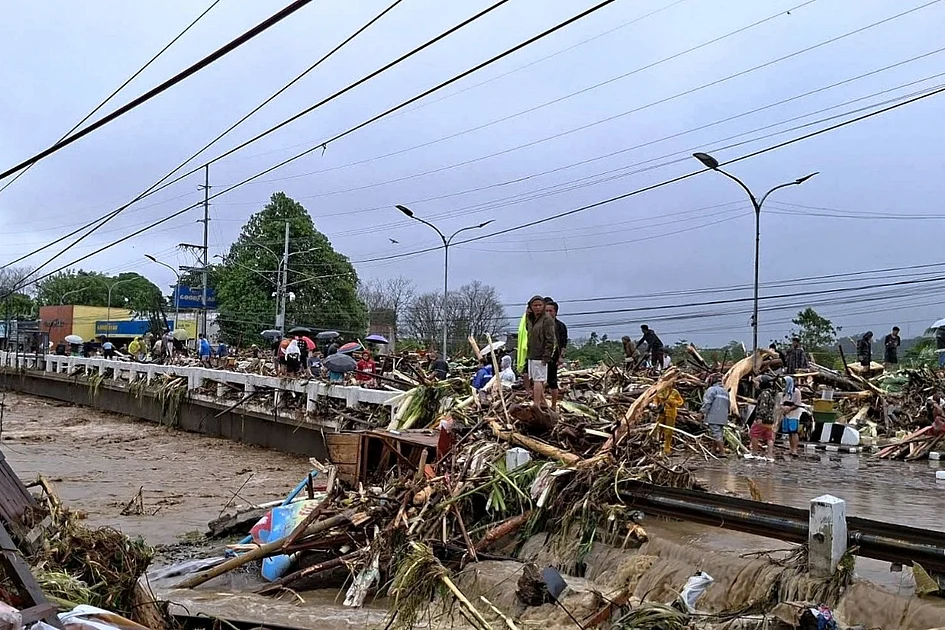
    Northern Mindanao in the Philippines has been struck by devastating floods and lethal landslides triggered by Typhoon Penha, internationally recognized while locally named Basyang. This catastrophic event marks the nation’s first major disaster of the year, resulting in five confirmed fatalities and multiple injuries according to the Philippine Office of Civil Defense (OCD).

    A particularly tragic incident occurred in Barangay Agusan, where a rain-induced landslide near a quarry site completely buried a family of four, killing all members. Three additional individuals sustained injuries from falling debris in a neighboring municipality, as confirmed by OCD spokesperson Junie Castillo.

    The storm’s impact extended severely to Iligan City, where widespread flooding submerged residential areas under water and coated extensive urban sections with thick mud. The calamity claimed the life of local radio broadcaster Creselyn Baterna Velasco, who suffered cardiac arrest after floodwaters invaded her apartment. Emergency response teams worked continuously through Thursday night executing rescue operations for residents trapped by the overflowing Tubod River.

    Official statistics reveal the typhoon has displaced approximately 21,000 individuals across northeastern and northern Mindanao, with 6,384 families currently sheltering in activated evacuation centers. Disaster management authorities established 197 emergency shelters, including 32 facilities utilized for preemptive evacuations prior to the storm’s arrival. Overall impact assessments indicate approximately 100,375 people across 27,572 families have been affected, including communities in the Visayas region and Bacolod City on Negros Island.

    The typhoon initially caused significant power disruptions across 28 areas, though utility providers successfully restored electricity to all affected locations by Saturday morning. The Philippines typically experiences 20-25 tropical cyclones annually, with scientific evidence indicating these weather systems are growing progressively more destructive due to climate change effects.


  • Spiritual ties of ousted Venezuelan President Maduro and successor include guru Sathya Sai Baba

    Spiritual ties of ousted Venezuelan President Maduro and successor include guru Sathya Sai Baba

    In a nation where 90% of citizens identify as Christian, Venezuela’s political leadership demonstrates a remarkably syncretic approach to spirituality. Both former President Nicolás Maduro and current Acting President Delcy Rodríguez, despite their Catholic upbringing, maintain profound devotion to Sathya Sai Baba, the Indian spiritual leader who passed away in 2011.

    This religious pluralism reflects Venezuela’s complex spiritual landscape, where blending multiple faith traditions remains commonplace. For the nation’s leaders, this synthesis incorporates Sai Baba’s teachings emphasizing universal love, spiritual unity, and transcendence of social barriers—a philosophy that has attracted global followers for over half a century.

    Maduro frequently framed his government’s challenges as spiritual battles during his presidency, invoking Christian imagery while simultaneously honoring the Indian guru. Weeks before his dramatic capture by U.S. forces on January 3, he celebrated Sai Baba’s centenary on social media, expressing hope that the teacher’s wisdom would guide Venezuela toward becoming “a homeland of love, peace and high spirituality.”

    Rodríguez’s spiritual connection appears equally profound. During her 2024 visit to Sai Baba’s ashram in Andhra Pradesh, India—her second pilgrimage in as many years—she described sensing the guru’s protective presence during times of personal and national crisis. “Many times, when I was in danger, I felt Baba with me,” she revealed in a 2023 interview.

    The leadership’s devotion manifests visibly in government spaces. Multiple reports confirm Maduro displayed a large, framed photograph of Sai Baba in his Miraflores Palace office alongside portraits of Simón Bolívar and Hugo Chávez—a symbolic trinity representing spiritual, historical, and political guidance.

    Sai Baba’s organization established roots in Venezuela decades before current political affiliations, opening Latin America’s first center in Caracas in 1974. Today, the movement maintains significant influence with an estimated 200,000 Venezuelan followers and operates a “Human Values School” in Táchira state.

    Academic experts note that such spiritual syncretism reflects Venezuela’s distinctive religious ecology. Professor Andrew Chesnut of Virginia Commonwealth University observes that while Catholicism remains dominant, it comfortably coexists with evangelical Protestantism, Afro-Indigenous traditions, and transnational figures like Sai Baba without requiring exclusive allegiance.

    However, the political embrace of Sai Baba comes with complexities. The guru, while revered by millions worldwide for his message of universal love and charitable works, faced persistent allegations of fraud and sexual abuse during his lifetime—accusations his followers dismiss as slander.

    The Venezuelan leadership’s spiritual practices appear primarily rhetorical rather than policy-directing, according to analysts. Chesnut suggests engagements with figures like Sai Baba “carry symbolic and performative weight rather than serving as drivers of political ideology or decision-making” in Venezuela’s complex political landscape.

  • US wants Russia and Ukraine to end war by June, says Zelensky

    US wants Russia and Ukraine to end war by June, says Zelensky

    Amid escalating military aggression, diplomatic efforts to resolve the Ukraine conflict have entered a critical phase with the United States proposing direct negotiations between Ukrainian and Russian delegations in Miami. President Volodymyr Zelensky confirmed Ukraine’s participation in the proposed talks scheduled for next week, marking the first American-hosted peace initiative since the conflict began.

    The diplomatic development follows inconclusive US-mediated discussions in Abu Dhabi that concluded Friday without breakthrough on core contentious issues, particularly territorial concessions. Zelensky characterized the negotiations as addressing ‘difficult issues [that] remained difficult,’ while revealing Washington’s apparent urgency to reach settlement before June, potentially influenced by domestic political considerations.

    Concurrently, Russia has intensified its bombardment campaign targeting Ukraine’s energy infrastructure, executing what energy company DTEK described as ‘the most powerful blow’ this year. Friday night’s coordinated assault involved over 400 drones and 40 missiles targeting critical power generation facilities and distribution substations across at least four regions.

    Energy Minister Denys Shmyhal reported severe damage to backbone grid components, prompting emergency power requests to Poland. The Dobrotvir and Burshtyn thermal plants in western regions sustained direct hits, leaving thousands without electricity amid freezing temperatures. This represents the tenth massive attack on DTEK facilities since October 2025, with cumulative attacks exceeding 220 incidents since the invasion began.

    Civilian impacts have been severe, with Kyiv residents resorting to metro station shelters and reporting inhumane conditions without heating or electricity. Regional authorities confirmed one fatality in Rivne, multiple injuries in Zaporizhzhia, and significant damage to residential and critical infrastructure. A separate drone strike ignited major warehouse fires in Yahotyn.

    Moscow justified resumed attacks after a week-long humanitarian pause requested by President Trump, with Foreign Minister Lavrov simultaneously accusing Ukraine of sabotaging negotiations through alleged assassinations of military officials. The conflict’s human cost continues mounting, with Zelensky acknowledging approximately 55,000 Ukrainian military fatalities and BBC verifying nearly 160,000 Russian combatant deaths.

  • Report finds declining Chinese tourists in Japan

    Report finds declining Chinese tourists in Japan

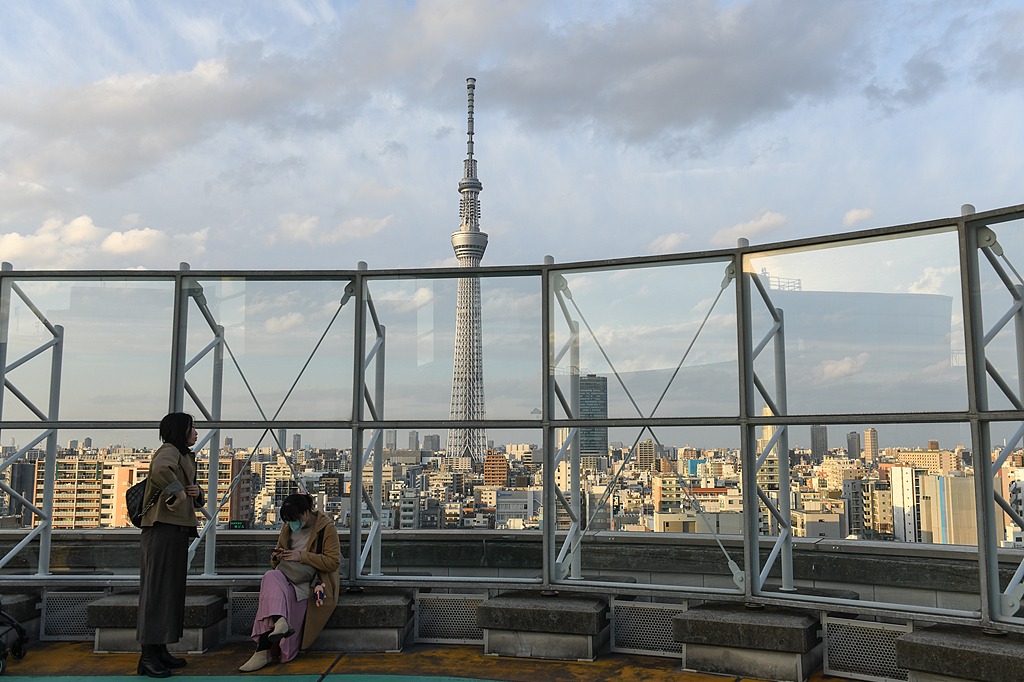
    Japan’s tourism-dependent retail sector faces mounting pressure as a significant decline in Chinese visitors threatens to reshape the country’s economic landscape. The downturn follows diplomatic tensions stemming from Japanese Prime Minister Sanae Takaichi’s controversial remarks on Taiwan in November 2025, which triggered a chain reaction affecting bilateral relations.

    Industry data reveals a stark picture: mainland Chinese arrivals plummeted 45.3% year-on-year in December 2025 to just 330,400 visitors, continuing a downward trajectory from 562,600 in November. The Japan National Tourism Organization’s January report indicates this trend may intensify during the crucial Spring Festival period (February 15-23, 2026), traditionally a peak season for Chinese tourism.

    The economic implications are substantial. Chinese tourists historically contributed 21% of Japan’s 8.12 trillion yen ($51.7 billion) in 2024 visitor spending, particularly favoring luxury goods, cosmetics, and high-end jewelry. The Japan Research Institute projects potential losses reaching 1.2 trillion yen ($7.64 billion) annually if relations continue deteriorating.

    Retail institutions are already feeling the impact. Yoshiharu Nishisaka, executive director of the Japan Department Stores Association, reports approximately 40% declines in both Chinese visitor numbers and sales. ‘The negative impact is so large that gains in other regions cannot fully offset it,’ he noted.

    Profit forecasts paint a concerning picture for luxury retailers. J. Front Retailing anticipates a 53% operating profit decline, while Matsuya Department Store projects an 81% drop. Overall, department stores face an estimated 24% profit reduction for the December-February period according to Nikkei Asia analysis.

    Beyond immediate financial consequences, industry experts warn of longer-term cultural and commercial ramifications. Kenta Maruyama of Mitsubishi UFJ Research notes that reduced tourism diminishes the ‘gateway effect’ through which Chinese visitors develop appreciation for Japanese cuisine and products, ultimately driving demand for Japanese brands within China.

    The situation has prompted official responses. China’s Foreign Ministry issued travel advisories on January 26, 2026, warning citizens to avoid Japan during Spring Festival. Major Chinese airlines concurrently offered flexible rebooking options for Japan-bound flights, facilitating the travel reduction.

    Industry leaders like Hiroyuki Takahashi, chairman of the Japan Association of Travel Agents, express hope for diplomatic resolution, recognizing that restored people-to-people exchanges are essential for both economic recovery and sustained cultural influence.

  • Islamic State affiliate claims suicide bombing that killed 31 at Shiite mosque in Pakistani capital

    Islamic State affiliate claims suicide bombing that killed 31 at Shiite mosque in Pakistani capital

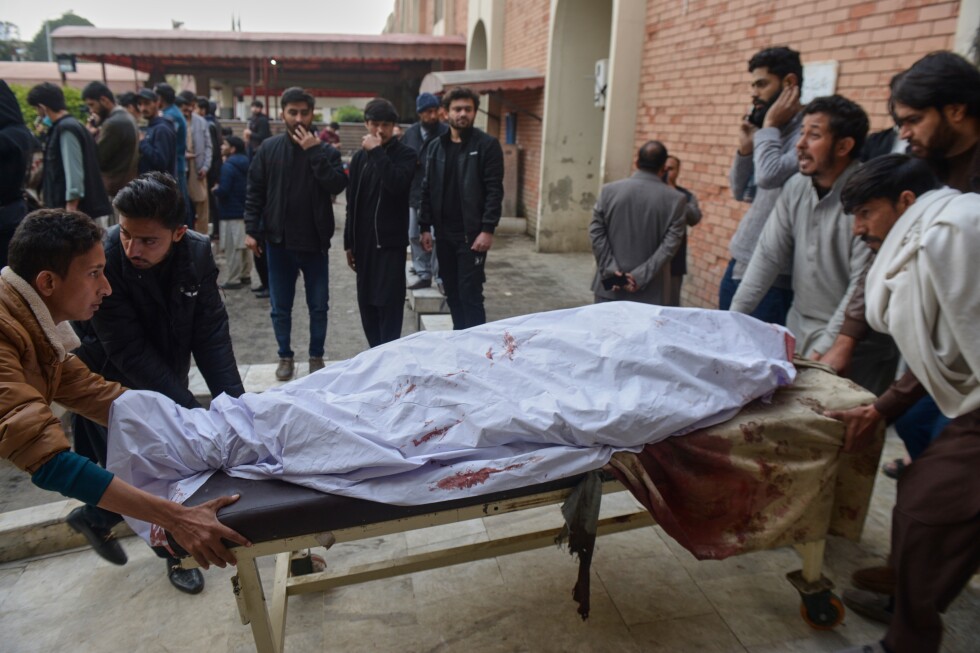
    A suicide bombing at a Shiite mosque on the outskirts of Islamabad has resulted in a devastating death toll of 31 individuals, with 169 others wounded, marking the deadliest attack in the Pakistani capital in over a decade. The regional affiliate of the Islamic State group, known as Islamic State in Pakistan, has officially claimed responsibility for the assault in a statement released through its Amaq News Agency.

    According to the terrorist group’s account, the attacker initiated the violence by opening fire on security personnel at the mosque’s main entrance before detonating his explosive vest at the inner gate. The ISIS statement contained explicitly sectarian language, referring to Pakistani Shiites as a ‘human reservoir’ providing recruits to Shiite militias opposing ISIS in Syria, thereby justifying them as legitimate targets.

    This tragic incident represents the most severe bombing in Islamabad since the 2008 Marriott Hotel attack that killed 63 people. The bombing occurs amid a significant surge in militant violence across Pakistan, creating substantial security challenges for Prime Minister Shehbaz Sharif’s government. Pakistani authorities have identified the bomber as a Pakistani national who had recently traveled to Afghanistan.

    In response to the attack, security forces conducted overnight raids in Islamabad and northwestern Pakistan, resulting in multiple arrests including the brother, mother, and other relatives of the suicide bomber. Tragically, one police officer lost his life during these operations.

    On Saturday, more than 2,000 grief-stricken mourners gathered under tight security at the same mosque for funeral services. Senior government officials and Shiite community leaders attended ceremonies for approximately a dozen victims, with remaining funerals scheduled to take place in the victims’ hometowns.

    The attack has drawn strong international condemnation from the United States, Russia, the European Union, and other nations. Prime Minister Sharif expressed gratitude for the global support following what he described as a ‘heart-wrenching suicide attack,’ emphasizing that international cooperation remains crucial to Pakistan’s counterterrorism efforts.

    The bombing has also heightened tensions between Pakistan and Afghanistan’s Taliban government. Pakistan’s Defense Minister Khawaja Mohammad Asif suggested that Pakistan-based militants operating from Afghanistan were responsible for the attack, drawing a sharp response from Afghan authorities who condemned the minister’s remarks as ‘irresponsible.’ Pakistan has repeatedly accused Afghanistan of harboring militants, including members of the Pakistani Taliban (TTP), allegations that Kabul consistently denies.

  • Report: China’s world heritage sites thriving

    Report: China’s world heritage sites thriving

    China’s comprehensive system for protecting its World Heritage sites has yielded exceptional results, with all natural heritage locations maintaining excellent condition while simultaneously driving economic benefits for local communities, according to a landmark assessment report released by the National Forestry and Grassland Administration.

    The extensive evaluation, covering four decades of conservation efforts from 1985 to 2025, reveals that China’s 15 natural heritage sites and 4 mixed cultural-natural sites have experienced no severe human-caused damage or threats to their outstanding universal value. These protected areas span approximately 80,000 square kilometers across 20 provincial regions, encompassing extraordinarily diverse ecosystems ranging from mountains and forests to wetlands, deserts, and coastal zones.

    At a recent press conference, Liu Jiaqi, an academician with the Chinese Academy of Sciences, emphasized that China has achieved remarkable success through its protected areas system, particularly in institutional development, regulatory frameworks, heritage value presentation, and public awareness initiatives. The country has pioneered distinctive governance models that integrate nature and culture, implement regionally coordinated management, promote sustainable tourism development, and establish community co-governance structures.

    International conservation assessments corroborate China’s positive trajectory. According to Yuan Jiming, director of the administration’s nature reserve management department, four editions of the IUCN World Heritage Outlook published between 2014 and 2025 consistently demonstrate that China’s natural and mixed heritage sites outperform global averages in conservation effectiveness.

    Beyond strict protection measures, China has actively developed mechanisms to transform ecological value into sustainable community benefits. Through eco-cultural tourism, nature education programs, study tours, and under-forest non-timber economies, heritage sites have become engines of local development. Notably, over 90% of these sites prioritize employing local residents in conservation roles, while tourism has emerged as a pillar industry in numerous regions.

    In 2024 alone, these heritage destinations attracted more than 180 million tourist visits, generating approximately 184.3 billion yuan ($26.6 billion) in consumption. At iconic locations like Jiuzhaigou, Huangshan Mountain, and Wulingyuan, tourism-related revenue constitutes over 50% of local GDP.

    The administration has pledged to continue enhancing protection measures while promoting sustainable utilization of these natural treasures. Future strategies will focus on ecological conservation and green development, with particular emphasis on building diversified ecological product systems that meet public aspirations for improved quality of life while advancing regional economic, social, and cultural progress.

  • Pakistan mosque explosion: where the attack unfolded

    Pakistan mosque explosion: where the attack unfolded

    A devastating suicide bombing targeted a Shia mosque in Pakistan, resulting in a catastrophic loss of life and sending shockwaves through the community. Local police authorities confirmed that at least 31 worshippers were killed when an attacker detonated an explosive device within the mosque’s premises during prayers.

    The assault represents one of the most severe sectarian attacks in recent memory, striking at the heart of a religious gathering and exposing persistent security vulnerabilities. The explosion unfolded during a period of heightened congregational worship, maximizing casualties and creating scenes of chaos and devastation.

    Emergency response teams rushed to the scene immediately following the blast, transporting casualties to nearby medical facilities where medical personnel declared a state of emergency. The attack has drawn widespread condemnation from government officials and religious leaders across sectarian divides, with promises of thorough investigation and heightened security measures.

    This tragedy occurs against a backdrop of longstanding sectarian tensions in the region and raises serious concerns about the protection of religious minorities. Counterterrorism units have launched an intensive investigation to identify the perpetrators and determine the precise methodology behind the attack. The international community has begun issuing statements of solidarity with Pakistan while urging strengthened counterterrorism cooperation.

  • India rejects ‘baseless’ allegations of involvement in Pakistan mosque bombing

    India rejects ‘baseless’ allegations of involvement in Pakistan mosque bombing

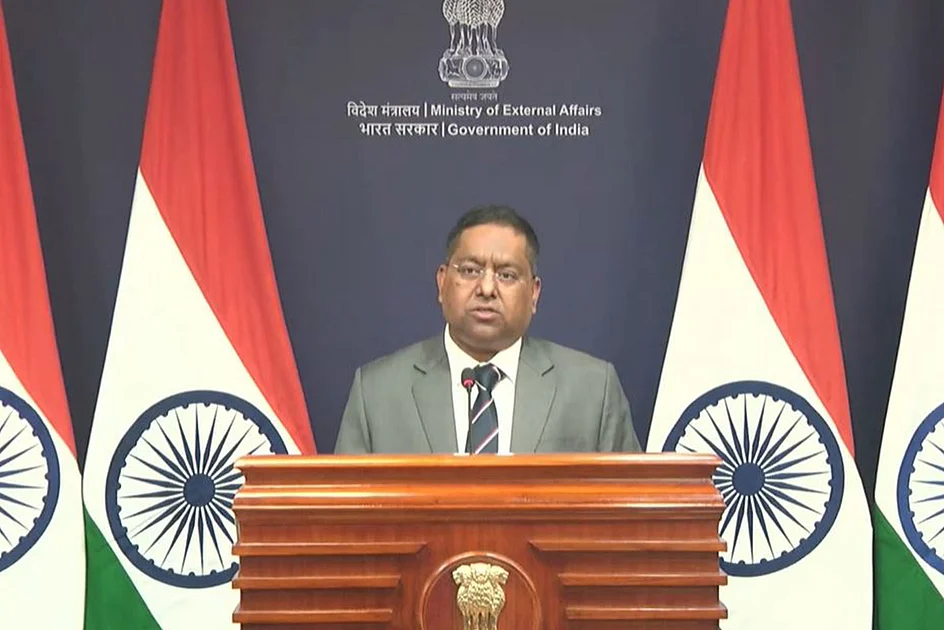
    India has issued a formal rejection of allegations linking it to Friday’s devastating suicide bombing at an Islamabad mosque that resulted in 31 fatalities and over 170 injuries. The Ministry of External Affairs characterized the accusations as “baseless and pointless” while simultaneously condemning the attack and expressing condolences for the loss of life.

    The deadly assault unfolded when an attacker opened fire at the gates of the Khadija Tul Kubra Imambargah mosque before detonating explosives among worshippers. Pakistani Defense Minister Khawaja Asif identified the bomber as having traveled to Afghanistan and directly accused India of sponsoring the terrorist operation. This represents the most severe attack in Pakistan’s capital in over a decade.

    Eyewitness accounts and images from the scene depicted horrific carnage, with bloodied bodies scattered across the mosque’s carpeted floors amid shattered glass and debris. Panicked survivors tended to the wounded in the compound’s gardens as emergency services struggled to respond to the scale of the tragedy.

    The bombing has further strained relations between the nuclear-armed neighbors, with India’s swift denial reflecting the sensitive nature of cross-border terrorism allegations. The incident occurs against a backdrop of longstanding tensions between India and Pakistan, though direct accusations of state-sponsored terrorism remain relatively uncommon in recent diplomatic exchanges.

  • Death toll in illegal Indian ‘rat-hole’ coal mine blast climbs to 23: Official

    Death toll in illegal Indian ‘rat-hole’ coal mine blast climbs to 23: Official

    A catastrophic explosion has ripped through an illicit coal mining operation in northeastern India, claiming the lives of 23 individuals and casting renewed scrutiny on the persistent dangers of outlawed extraction practices. The tragedy unfolded Thursday in Meghalaya’s East Jaintia Hills district, where rescue teams worked tirelessly to recover victims from the devastating blast.

    Senior district official Manish Kumar confirmed the rising death toll to AFP on Friday, stating: ‘Today we recovered four more bodies. We will resume rescue operations again tomorrow.’ Among the fatalities was one injured individual who succumbed to wounds while receiving medical treatment.

    The disaster occurred in what locals term a ‘rat-hole’ mine – a hazardous configuration of deep vertical shafts branching into narrow, claustrophobic tunnels where workers risk their lives extracting coal and minerals. Despite a comprehensive ban imposed by India’s federal environment court in 2014, these illegal operations continue to proliferate across Meghalaya, particularly in the mineral-rich East Jaintia Hills region.

    District police chief Vikash Kumar indicated preliminary investigations suggest the explosion likely resulted from improperly handled dynamite, a common tool in these unregulated mining activities. The 2014 prohibition came after sustained complaints from local communities about severe water source contamination and perpetual safety hazards endangering both miners and residents.

    This incident echoes similar mining tragedies globally, including a recent massive landslide in DR Congo that reportedly claimed hundreds of lives, highlighting the universal dangers of unregulated resource extraction practices that prioritize profit over human safety.

  • Global Sumud Flotilla announces ‘historic’ mission to Gaza on March 29

    Global Sumud Flotilla announces ‘historic’ mission to Gaza on March 29

    A coalition of international activists has declared plans to launch what they term the largest coordinated humanitarian intervention for Palestine in history. The Global Sumud Flotilla, comprising participants from over 100 countries, will depart from multiple Mediterranean ports including Barcelona and Tunis on March 29, 2026.

    This maritime initiative follows a previous attempt in October 2025 when activists attempted to deliver aid to Gaza by sea. That mission concluded with Israeli forces intercepting the vessels, detaining participants, and subsequently deporting them. Israel maintains strict control over all border crossings and aid entering the coastal territory.

    Organizers describe the flotilla as a non-violent response to what they characterize as genocide, siege conditions, widespread starvation, and the systematic destruction of civilian infrastructure in Gaza. Brazilian activist Thiago Avila confirmed additional departure points would remain undisclosed for security reasons.

    Concurrently, an overland convoy will embark toward Gaza on the same date, though organizers have not revealed its starting location. The coordinated effort represents an unprecedented scale of civilian-led humanitarian mobilization aimed at breaking the long-standing blockade of the Palestinian territory.