A series of devastating snowstorms and a catastrophic avalanche in Nepal’s Himalayan region have resulted in the deaths of nine individuals, including five Italian climbers. The incidents occurred over several days, with the most severe event taking place on Monday at the base camp of the 5,630-meter Yalung Ri peak near the Chinese border. An avalanche struck a group of 12 climbers, claiming the lives of seven, including three Italians, two Nepalis, a German, and a French national. The remaining five survivors were rescued and airlifted to Kathmandu for medical treatment. Survivors described the terrifying moment when massive ice slabs descended upon them, burying some under the snow. In a separate incident, two Italian climbers lost their lives while attempting to scale the 6,887-meter Panbari mountain in western Nepal. The climbers had been missing since Friday and were confirmed dead by local authorities. Nepal, home to eight of the world’s ten highest peaks, including Mount Everest, attracts hundreds of climbers and trekkers annually. The autumn season, though less popular than spring, still sees significant expedition activity despite the challenging conditions. Last week, Cyclone Montha brought heavy rain and snowfall, stranding many trekkers on popular routes. According to the Himalayan Database, avalanches have been responsible for nearly a third of the 1,093 recorded deaths on Himalayan peaks since 1950.
分类: world
-

Zelensky visits troops near embattled front line town of Pokrovsk
Ukrainian President Volodymyr Zelensky recently visited troops near the embattled town of Pokrovsk, a key strategic location in the ongoing conflict between Russia and Ukraine. Accompanied by Commander-in-Chief Oleksandr Syrskyi, Zelensky met with soldiers at a command post in the Dobropillya sector, approximately 20 kilometers north of Pokrovsk in the Donetsk region. The visit underscores the town’s critical importance as a logistical hub and frontline stronghold in the war-torn Donbas region.
-

Narco-sub carrying 1.7 tonnes of cocaine seized in Atlantic
In a significant maritime operation, Portuguese authorities have intercepted a semi-submersible vessel transporting over 1.7 tonnes of cocaine in the mid-Atlantic, approximately 1,000 nautical miles off the coast of Lisbon. The vessel, en route to the Iberian Peninsula, was seized in a coordinated effort involving the Portuguese police, navy, and international agencies, including the UK’s National Crime Agency and the US Drug Enforcement Administration. Four crew members, identified as two Ecuadorians, a Venezuelan, and a Colombian, were arrested and remanded in pre-trial custody following their court appearance in the Azores. Vítor Ananias, head of Portugal’s drug trafficking police unit, highlighted the multinational nature of the operation, suggesting the involvement of a transnational criminal organization. The narco-sub, deemed too fragile to tow back to shore due to adverse weather conditions, eventually sank in the open sea. This incident follows a similar seizure in March, where a vessel carrying 6.5 tonnes of cocaine was intercepted 1,200 nautical miles from Lisbon. Meanwhile, the Trump administration has intensified its crackdown on drug smuggling, with recent strikes on alleged drug vessels in the Caribbean drawing criticism from Latin American leaders over their legality and human rights implications.
-

India sends recovery plane to Mongolia after Air India flight makes precautionary landing
In a swift response to an unexpected aviation incident, the Embassy of India in Mongolia has extended critical support to passengers and crew of Air India Flight AI 174, which made a precautionary landing at Ulaanbaatar International Airport on November 3, 2025. The flight, en route from San Francisco to New Delhi via Kolkata, was diverted due to a suspected technical issue detected mid-flight. All 228 passengers and crew members were safely disembarked and provided with hotel accommodations, food, and necessary immigration assistance through the coordinated efforts of the Indian Embassy and Mongolian authorities. Air India promptly dispatched a recovery aircraft from India, expected to arrive in Ulaanbaatar by Monday evening, to facilitate the passengers’ return to India. The airline expressed regret for the inconvenience caused but emphasized that the diversion was undertaken solely to ensure passenger safety. This incident follows a recent cancellation of another Air India flight on October 17 due to technical issues, underscoring the airline’s commitment to prioritizing safety. The Embassy of India has assured that it is providing all possible assistance to the affected individuals and working closely with Air India to resolve the situation swiftly.
-

2 French nationals freed from Iranian prison after more than 3 years in detention
In a significant diplomatic breakthrough, French President Emmanuel Macron announced on Tuesday the release of two French citizens, Cécile Kohler, 41, and Jacques Paris, 72, from an Iranian prison after over three years of detention. The pair had been held on espionage charges, which France consistently labeled as baseless. Macron expressed profound relief, describing the release as a “first step” and emphasizing ongoing dialogue with Iranian authorities to facilitate their swift return to France. French Foreign Minister Jean-Noël Barrot confirmed that Kohler and Paris are currently safe at the French Residence in Tehran, awaiting their final release. The couple was arrested in May 2022 during a visit to Iran, with Paris condemning their detention as unjustified. Relatives recently shared their anguish after a rare phone call revealed the detainees’ despair. Last month, Iranian media reported that a Revolutionary Court in Tehran had sentenced the pair to a cumulative 63 years in prison on charges of espionage and alleged cooperation with Israel. Western nations have long accused Iran of using foreign prisoners as leverage in diplomatic negotiations, a claim Tehran denies.
-

Australia mushroom murderer to appeal verdict, says media
Erin Patterson, the Australian woman convicted of murdering three family members with a poisonous mushroom-laced meal, has filed an appeal to overturn her guilty verdict, according to local media reports. Patterson, 51, was sentenced to life in prison with parole eligibility after 33 years for serving a toxic beef Wellington dish to her estranged husband’s parents, aunt, and uncle during a lunch at her home in 2023. The meal resulted in the deaths of three victims, while one survived. The case, which garnered global attention, saw Patterson maintain her innocence, claiming the mushrooms were accidentally included in the dish. However, a jury found her guilty of three counts of murder and one count of attempted murder in July. Patterson’s legal team has not disclosed the grounds for the appeal, but they previously argued that the notoriety of the case would lead to her prolonged isolation in prison. Meanwhile, the prosecution has challenged the sentence as ‘manifestly inadequate.’ The tragic incident unfolded amid a strained relationship between Patterson and her husband, Simon, who had declined the invitation to the fatal meal. Survivor Ian Wilkinson, whose wife was among the victims, described the profound grief and silence left in the wake of the crime. Death cap mushrooms, the lethal fungi used in the poisoning, are known for their deceptive sweetness and resemblance to edible varieties.
-

Gaza Strip faces a severe water shortage, despite ceasefire
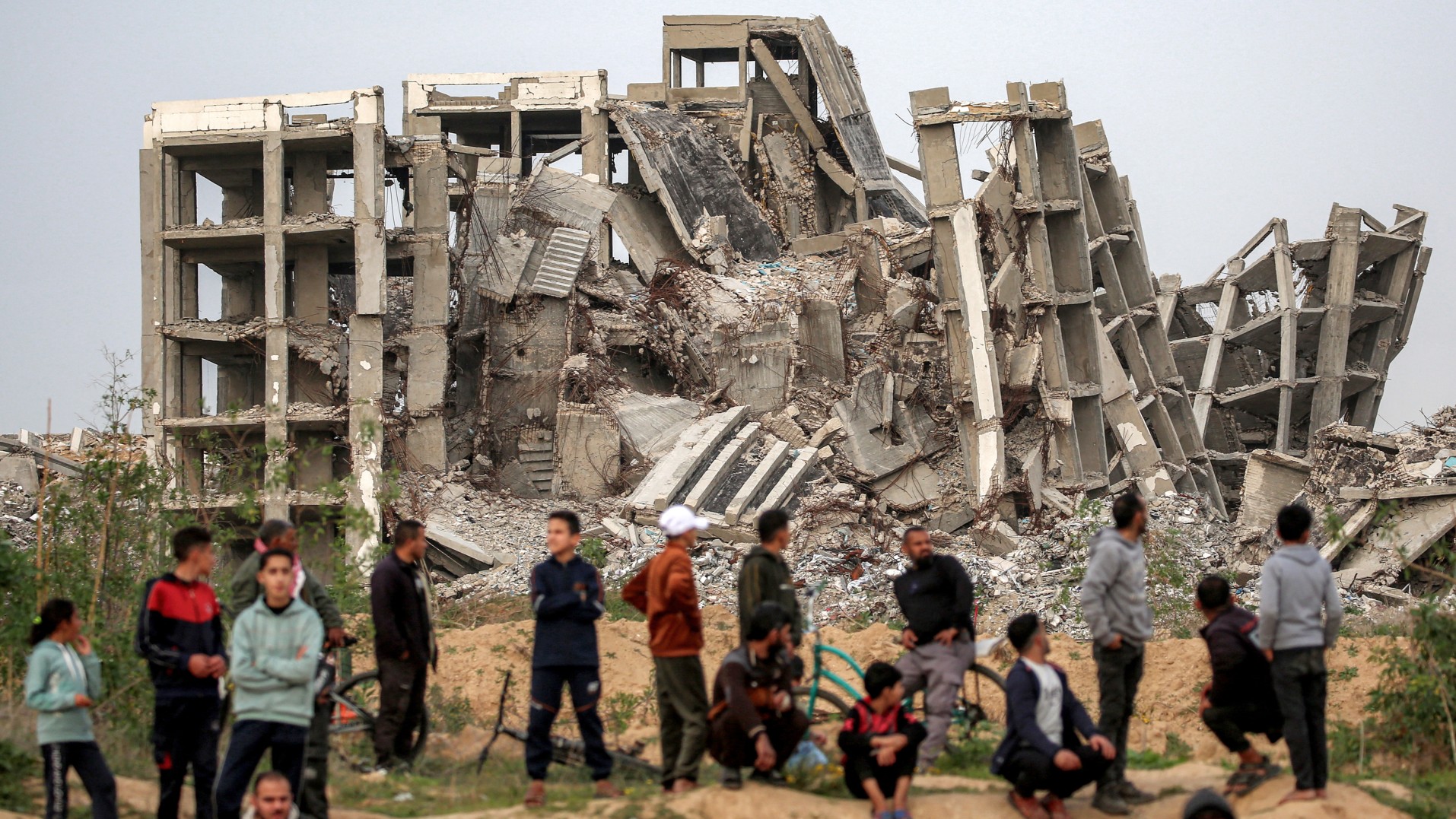
The Gaza Strip remains in the grip of a severe water crisis, exacerbated by the aftermath of Israel’s two-year military campaign and the persistent blockade, even after a ceasefire was declared. Local officials report that the region’s water supply is critically insufficient, meeting only 15% of the daily needs of its over two million residents. Hosni Muhanna, spokesperson for the Gaza City Municipality, revealed that the current supply amounts to roughly 100,000 cubic meters per day, far below the required levels. The destruction of vital infrastructure during the conflict, including wells and the central desalination plant, has left only 17 out of 88 wells operational. Gaza now relies heavily on the Mekorot water line, Israel’s national water company, which provides a meager 15,000 cubic meters daily. Even before the war, the Israeli blockade had rendered most of Gaza’s water undrinkable, with UNICEF estimating in 2020 that only 10% of the population had access to clean water. The crisis has forced hundreds of thousands of households to purchase water for drinking and bathing, while the lack of fuel and essential equipment hampers recovery efforts. Additionally, the accumulation of 260,000 tonnes of waste and millions of tonnes of rubble further complicates the situation, posing significant environmental and health risks. The United Nations Environment Programme (UNEP) has warned that the ongoing environmental destruction could have long-term consequences for Gaza’s residents. The Israeli army’s reported disposal of construction waste within Gaza has added to the crisis, as documented by Israeli news outlet Haaretz. The Gaza City Municipality has called for urgent international assistance to restore basic services and prevent further deterioration of living conditions.
-

Typhoon Kalmaegi death toll jumps to 26 in Philippines
The devastating impact of Typhoon Kalmaegi has left at least 26 people dead in the central Philippines, according to the country’s civil defence office. The storm, which caused widespread flooding, has particularly affected Cebu province, where 21 of the fatalities were reported. Rafaelito Alejandro, the deputy administrator of civil defence, confirmed that most of the victims succumbed to drowning. ‘Based on the information we have, most of them died from drowning,’ Alejandro stated in a phone interview with AFP. The typhoon has inundated multiple towns, leaving communities grappling with the aftermath. Rescue and relief operations are underway as authorities work to assist those affected by the disaster. The incident underscores the vulnerability of the Philippines to extreme weather events, which are becoming increasingly frequent and severe due to climate change.
-

Sudan’s Rapid Support Forces: What to know about the paramilitary group
Since April 2023, Sudan has been engulfed in a brutal civil war between the Sudanese Armed Forces (SAF) and the paramilitary Rapid Support Forces (RSF). The conflict has displaced approximately 14 million people out of Sudan’s 51 million population, with unofficial death toll estimates surpassing 200,000. The RSF, once part of the SAF, has received significant support from the United Arab Emirates (UAE), which supplies the paramilitary group through routes in Somalia, Libya, and Chad. The SAF is led by General Abdel Fattah al-Burhan, while the RSF is commanded by General Mohamed Hamdan Dagalo, known as Hemedti. Hemedti, a former Janjaweed commander, rose to prominence under the regime of Omar al-Bashir, who ruled Sudan from 1989 to 2019. The Janjaweed, notorious for war crimes in Darfur, was transformed into the RSF in 2013. The RSF has since expanded its influence into civilian affairs, including border control and tax collection. The conflict escalated in 2023 when negotiations to integrate or dissolve the RSF failed. The RSF has been accused of widespread atrocities, including mass killings, sexual violence, and genocide, particularly in Darfur. Despite UAE denials, evidence suggests continued and intensified support for the RSF. The fall of el-Fasher in October 2025 marked another grim chapter in the war, with reports of 2,000 civilians killed in the first two days. The international community, including the US and Saudi Arabia, has struggled to mediate a resolution, leaving Sudan’s future uncertain.
-

Oman: Nine arrested for stealing gas extraction tools
In a significant crackdown on workplace theft, Oman’s Oil and Gas Installations Security Police Headquarters has apprehended nine individuals accused of attempting to steal gas extraction tools and equipment. The suspects, all of Asian nationality, were allegedly targeting their employer’s facility within a petroleum concession area. The arrest underscores Oman’s stringent measures to safeguard its critical energy infrastructure and combat illicit activities in the sector. Legal proceedings are now underway against the accused. This incident follows a recent major drug bust by Oman’s Royal Police, where five members of an international drug gang were arrested, highlighting the country’s broader efforts to tackle organized crime. The arrests were part of a coordinated operation by the General Directorate for Combating Drugs and Psychotropic Substances, demonstrating Oman’s commitment to maintaining security and order.