The Guangdong-Hong Kong-Macao Greater Bay Area (GBA), a visionary national strategy conceived and championed by President Xi Jinping, has evolved from a bold blueprint into a thriving reality. This transformative initiative, which began to take shape in 2012, aims to create a world-class city cluster with enhanced global competitiveness. The GBA encompasses two Special Administrative Regions (SARs)—Hong Kong and Macao—and nine cities in Guangdong’s Pearl River Delta, including Shenzhen and Zhuhai. It is often compared to other major global bay areas such as San Francisco, Tokyo, and New York. The region, home to over 80 million people, contributes approximately one-ninth of China’s GDP, with its economic output reaching 14.79 trillion yuan ($2.09 trillion) last year. The development of the GBA has been marked by significant milestones, including the signing of the framework agreement in 2017 and the unveiling of the outline development plan in 2019. These efforts have fostered deeper regional integration, with coordinated policies in infrastructure, innovation, industrial support, and public services. The recent joint hosting of the 15th National Games by Guangdong, Hong Kong, and Macao exemplifies the growing synergy among the regions. This event not only highlights the progress of the GBA’s development but also serves as a model for future collaboration in areas such as food safety, tourism, education, and healthcare. The GBA’s success is a testament to the effective implementation of the ‘one country, two systems’ principle and its potential to drive Chinese modernization and global engagement.
分类: world
-

Thailand extradites owner of Myanmar scam city to China
She Zhijiang, a Chinese national accused of orchestrating a sprawling illegal gambling and cyberscam network across Southeast Asia, has been extradited to China, marking the end of a prolonged legal battle. Detained in Thailand since 2022 following an Interpol request from China, She was accused of running illicit online gambling operations. A Thai court recently upheld the extradition decision, and he was escorted to a Bangkok airport on Wednesday by security officials. His extradition coincides with a historic state visit by Thailand’s king to Beijing, signaling strengthened bilateral ties. She’s case highlights the growing crackdown on transnational crime networks in the region. She is one of the most prominent figures linked to cyberscam hubs in Southeast Asia, which have ensnared thousands of Chinese nationals. His most infamous project, Shwe Kokko City in Myanmar, near the Thai border, has been marketed as a luxury resort but is allegedly a hub for fraud, money laundering, and human trafficking. Despite She’s claims that his company, Yatai, does not condone scams, investigations reveal that Shwe Kokko remains a haven for illegal activities. Born in 1982 in a poor village in China’s Hunan province, She dropped out of school at 14 and later ventured into online gambling, which is illegal in China. He expanded his operations across Southeast Asia, acquiring Cambodian and Myanmar citizenship. The UN estimates that hundreds of thousands of people, many of them Chinese nationals, are trapped in scam centers in the region, lured by fake job offers and forced into fraudulent activities. China has intensified its efforts to dismantle these networks, recently sentencing several members of Chinese organized crime families to death.
-

Houthis signal end of attacks on Israel and vessels in Red Sea after Gaza ceasefire
In a significant development, Yemen’s Houthi movement has indicated a potential halt to its attacks on Israel and vessels in the Red Sea, contingent on a sustained ceasefire in Gaza. This stance was articulated in a letter posted on X (formerly Twitter) by the group, marking a potential shift in their two-year-long conflict strategy. The letter, addressed to Hamas by Major General Yusuf Hassan al-Madani, the Houthi military’s chief of staff, praised Hamas for its resilience and claimed victory over ‘the strongest empires of money, faith, and technology.’ The undated letter, shared on Sunday, also expressed gratitude for Hamas’s condolences following the death of the Houthis’ military chief of staff, Major General Mohammed Abdul Karim al-Ghamari, who was reportedly killed in an Israeli airstrike. While the exact timing of the attack remains unclear, Israeli officials suggested it occurred in August. The letter emphasized that the Houthis would resume military operations against Israel and reinstate the ban on Israeli navigation in the Red and Arabian Seas if hostilities in Gaza resumed. The Houthis began targeting Israel after its invasion of Gaza in response to the Hamas-led October 7, 2023, attacks. By late 2023, the group expanded its attacks to include vessels in the Red Sea, initially focusing on Israeli ships but later broadening their scope to include US and Western-linked vessels. Experts noted that the Houthis used ship-tracking data to avoid targeting Gulf-linked ships and those associated with Russia and China. Russia reportedly saw an opportunity to support the Houthis, deploying advisors and considering the provision of advanced anti-ship cruise missiles. Iran, a key backer of the Houthis, has provided arms and training, aligning the group with the so-called ‘axis of resistance’ alongside Lebanon’s Hezbollah and Iraqi militias. The Houthis briefly ceased maritime attacks during a short-lived Gaza truce in January but resumed missile strikes on Israel after the ceasefire collapsed in March. US President Donald Trump launched a bombing campaign against the Houthis, which ended on May 6 following Saudi Arabia’s lobbying efforts. Saudi Arabia, currently in a fragile truce with the Houthis, is negotiating a political settlement, including discussions on paying salaries for government employees in Houthi-controlled territories. The Houthis shared the letter on X just days before Saudi Crown Prince Mohammed bin Salman’s scheduled visit to Washington, signaling a broader commitment to de-escalation. While the group has adhered to its ceasefire with the US, it continued attacks on Israel until the Gaza ceasefire was signed in October. Maritime attacks in the Red Sea intensified in the summer following Israeli strikes on Iran, with the Houthis sinking two vessels with tertiary links to Israel. The Eternity C, one of the targeted ships, lost its war risk coverage from its US-based insurer, Travelers, before its ill-fated passage.
-

All 20 personnel on a Turkish military cargo plane that crashed in Georgia died
In a devastating incident, all 20 military personnel aboard a Turkish C-130 cargo plane lost their lives when the aircraft crashed in Georgia on November 11, 2025. The plane, which had departed from Azerbaijan, was en route to Turkey when the tragedy occurred near the Georgia-Azerbaijan border in the Sighnaghi municipality. Turkish Defense Minister Yasar Guler confirmed the fatalities in a heartfelt message posted on X, accompanied by photographs of the fallen soldiers. Minister Guler referred to the deceased as ‘heroic comrades-in-arms’ who were ‘martyred’ in the line of duty. Authorities have launched an investigation to determine the cause of the crash, which has sent shockwaves through the military community and beyond. The incident underscores the inherent risks faced by military personnel during operational missions.
-

Taiwan evacuates 8,300 and shuts schools before tropical storm brushes island
Taiwan has initiated large-scale evacuations and school closures as Tropical Storm Fung-wong approaches the island’s southern region. Over 8,300 residents, primarily from the eastern Hualien County, have been relocated to safer areas. This precautionary measure follows the devastation caused by a previous typhoon in September, which claimed 18 lives in the same region. Fung-wong, which previously wreaked havoc in the Philippines as a super typhoon, has weakened but still poses significant threats. As of Wednesday morning, the storm was located approximately 140 kilometers southwest of Taiwan, moving northeast at 16 kph. It is expected to graze southern Taiwan before exiting from the southeastern side. Heavy rains and flooding have already injured at least 51 people, according to the National Fire Agency. Authorities have urged residents to avoid coastal areas, where waves could reach heights of 3 to 5 meters. In the Philippines, over 623,300 people remain in evacuation centers following the storm’s earlier impact, which caused landslides, power outages, and at least 27 deaths. The Cordillera region, known for its scenic landscapes, was particularly affected by landslides. Schools and offices in central and southern Taiwan, including major cities like Kaohsiung and Tainan, have been closed, while the capital, Taipei, continues normal operations.
-

Red Fort blast: UAE condemns Delhi explosion, offers condolences to victims’ families
The United Arab Emirates (UAE) has issued a strong condemnation of the devastating explosion that occurred near the historic Red Fort in New Delhi, India, on Monday evening. The blast, which took place at a busy traffic signal, claimed the lives of at least 12 individuals and left 20 others injured. In an official statement, the UAE Ministry of Foreign Affairs (MoFA) denounced the attack as a criminal act and reaffirmed its unwavering stance against all forms of violence and terrorism. The Ministry extended its heartfelt condolences to the families of the victims, the Indian government, and its people, while also wishing a swift recovery to those injured. The explosion, which occurred around 7 PM local time, caused significant damage to nearby vehicles and left a scene of chaos in one of Delhi’s most congested areas. The Red Fort, a UNESCO World Heritage Site and a symbol of India’s rich history, stands as a reminder of the city’s resilience. Authorities have heightened security measures across the country in response to the incident, which marks a rare act of violence in the heavily guarded capital.
-

Protesters break into COP30 venue in Brazil
In a dramatic turn of events at the COP30 climate talks in Belém, Brazil, protesters stormed the venue on Tuesday night, clashing with security personnel and causing minor injuries. Demonstrators, many appearing to be from indigenous groups and a left-wing Brazilian youth movement called Juntos, carried signs reading ‘our forests are not for sale’ and broke through initial security barriers. Videos on social media showed protesters in traditional indigenous attire chanting, kicking down doors, and engaging in physical altercations with guards. A security guard reportedly sustained a head injury after being struck by a drum thrown by a protester. The United Nations confirmed the incident, stating that two security staff were injured and there was limited damage to the venue. Brazilian and UN authorities are investigating the breach, which is highly unusual given the strict protocols at such international conferences. The location of COP30 in Belém, on the edge of the Amazon rainforest, has been contentious, with indigenous leaders criticizing environmental damage caused by deforestation and fossil fuel extraction. Brazilian President Luiz Inácio Lula da Silva emphasized the importance of the Amazon in climate solutions, calling COP30 ‘the COP of truth’ in an era of climate denialism. The event, dubbed ‘the Indigenous peoples COP,’ aims to center indigenous voices, with an estimated 3,000 indigenous participants from around the world. A recent UN report highlighted that indigenous communities safeguard 80% of the planet’s biodiversity but receive less than 1% of international climate funding. The protests underscore the growing tensions between environmental activists, indigenous groups, and global climate policies.
-

Watch: Protesters clash with security at COP30 climate talks in Brazil
Tensions flared at the COP30 climate summit in Brazil as demonstrators, including individuals adorned in traditional indigenous attire, forcefully breached security barriers. The incident occurred during the high-profile United Nations conference, where global leaders and delegates had gathered to address pressing environmental issues. Witnesses reported chaotic scenes as protesters clashed with security personnel, demanding more urgent and inclusive action on climate change. The demonstrators highlighted the disproportionate impact of environmental degradation on indigenous communities and called for greater representation in climate policy decisions. The breach has raised concerns about the security measures at international summits and the growing frustration among activists over the perceived slow progress in tackling the climate crisis. Authorities are now reviewing protocols to prevent similar disruptions in the future.
-

UAE condemns suicide bombing in Islamabad; offers condolences to victims
The United Arab Emirates (UAE) has issued a stern condemnation of the recent suicide bombing in Islamabad, Pakistan, which claimed the lives of 12 individuals and left several others injured. The attack occurred near the entrance of the Islamabad district court, a location frequently bustling with litigants. In a statement released by the Ministry of Foreign Affairs (MoFA), the UAE expressed its unwavering rejection of all forms of violence aimed at destabilizing security and stability. The statement also conveyed heartfelt condolences to the families of the victims, the Pakistani government, and its people, while wishing a swift recovery to those injured. Interior Minister Syed Mohsin Naqvi confirmed that the bomber attempted to enter the court building but detonated the device outside, close to a police vehicle, after waiting for 10 to 15 minutes. The blast caused significant casualties, with images and videos from local media showing bloodied victims near a police van. This incident follows another attack targeting a military college in South Waziristan, further highlighting the ongoing security challenges in the region.
-

European Union and Indian navies take over ship used by pirates off Somalia to seize tanker
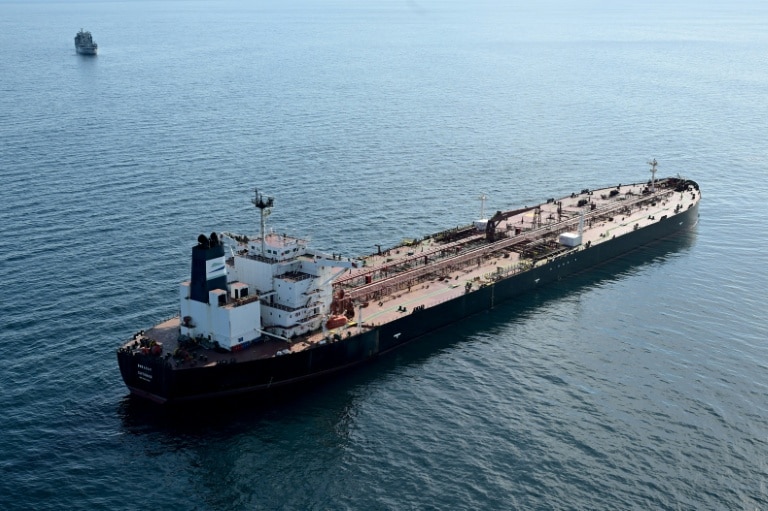
In a significant maritime operation, the European Union and Indian navies successfully intercepted a pirate-controlled vessel off the coast of Somalia. The Iranian fishing ship, Issamohamadi, had been repurposed by pirates as a ‘mother ship’ to facilitate a series of attacks, culminating in the seizure of the Malta-flagged tanker, Hellas Aphrodite. The tanker was en route from India to South Africa with a cargo of gasoline when it was hijacked last week. The EU naval force, Operation Atalanta, confirmed that the Issamohamadi had been abandoned by the pirates and was boarded by a team from the Spanish frigate ESPS Victoria. The original crew of the dhow was found in good health and freed. The EU force stated that the pirate group operating in the area has been ‘definitely disrupted,’ and evidence collected will be used to prosecute the perpetrators. Somali piracy, which peaked in 2011 with 237 attacks, had diminished due to international naval patrols and a stronger Somali government. However, pirate activity has resurged recently, partly due to instability caused by Houthi rebel attacks in the Red Sea. In 2024, there have been seven reported incidents off Somalia, with the Hellas Aphrodite being the first commercial ship seized since May 2024.