分类: world

  • Tourists seek shelter from cartel vengeance in Mexico

    Tourists seek shelter from cartel vengeance in Mexico

    A wave of retaliatory violence has engulfed popular Mexican tourist destinations following the death of the nation’s most-wanted drug lord, Nemesio Oseguera Cervantes, known as ‘El Mencho.’ Foreign visitors found themselves barricaded inside hotel rooms as cartel members unleashed a spree of attacks, setting businesses ablaze and creating widespread chaos in response to the kingpin’s demise.

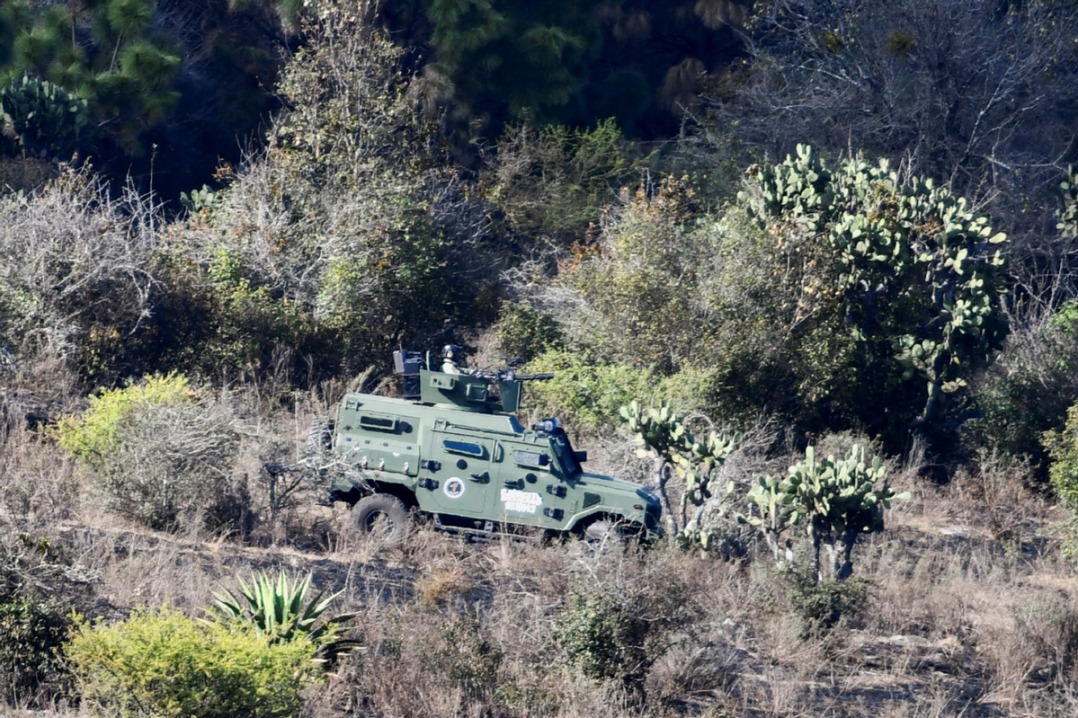
    The crisis erupted after Mexican special forces fatally wounded the leader of the Jalisco New Generation Cartel (CJNG) during a Sunday raid in Tapalpa, Jalisco. The operation, which resulted in El Mencho’s death en route to hospital, claimed the lives of 25 National Guard members and 30 criminal suspects, according to Security Minister García Harfuch. Authorities confiscated an arsenal of weaponry including armored vehicles and rocket launchers.

    International travel faced immediate disruption as major airlines including Delta, American, Alaska, and Air Canada suspended or redirected flights to Puerto Vallarta and Guadalajara airports. Viral footage depicted terrified travelers scrambling for cover at Guadalajara International Airport, abandoning luggage and sheltering behind check-in counters as violence spilled into public spaces.

    The United States government confirmed providing intelligence support for the operation, with White House Press Secretary Karoline Leavitt stating: ‘President Trump has been very clear—the United States will ensure narcoterrorists sending deadly drugs to our homeland are forced to face the wrath of justice they have long deserved.’ The CJNG has been designated a foreign terrorist organization by the Trump administration.

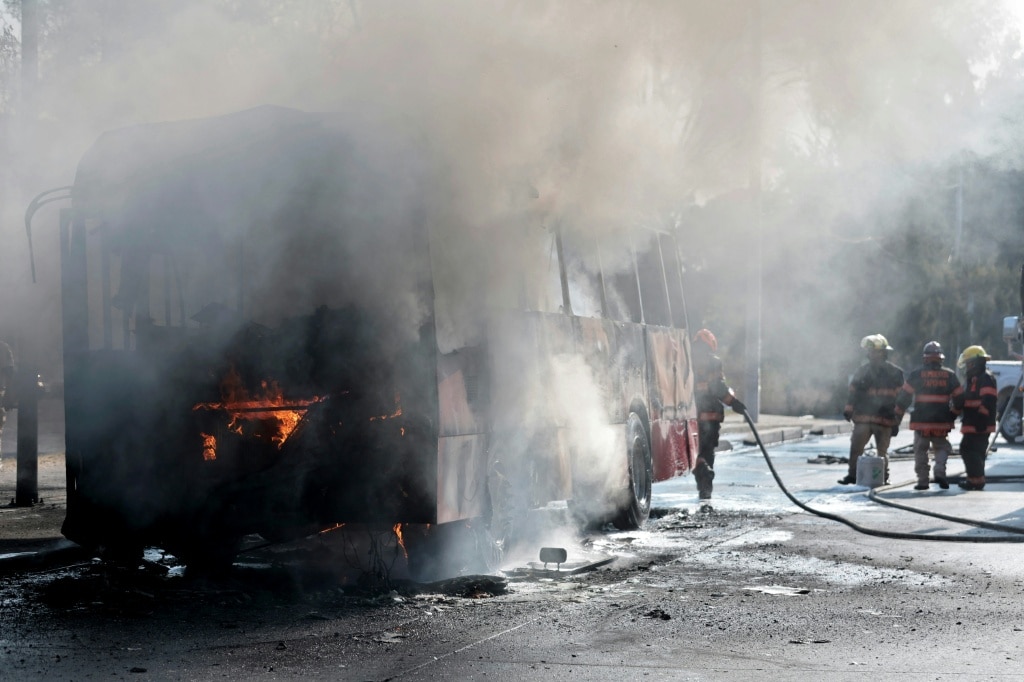
    Mexican President Claudia Sheinbaum praised security forces while urging calm, even as cartel members established over 250 roadblocks, burned vehicles, and engaged in open shootouts. Jalisco Governor Pablos Lemus Navarro activated a statewide ‘code red,’ suspending public transportation and advising residents to remain indoors.

    The Chinese Embassy in Mexico issued security alerts advising Chinese citizens to maintain heightened vigilance and follow local government directives. The diplomatic mission confirmed it was closely monitoring affected areas and urged immediate contact with authorities during emergencies.

    Security experts warned that the decapitation strike would not dismantle the criminal organization. Guadalupe Correa-Cabrera, a professor at George Mason University, noted: ‘The Jalisco Cartel does not have a single, critical leader. Leadership is fragmented—the cells have different leaders and political protection at the local level. Arrests or extraditions don’t destroy the organization; family members or successors usually step in.’

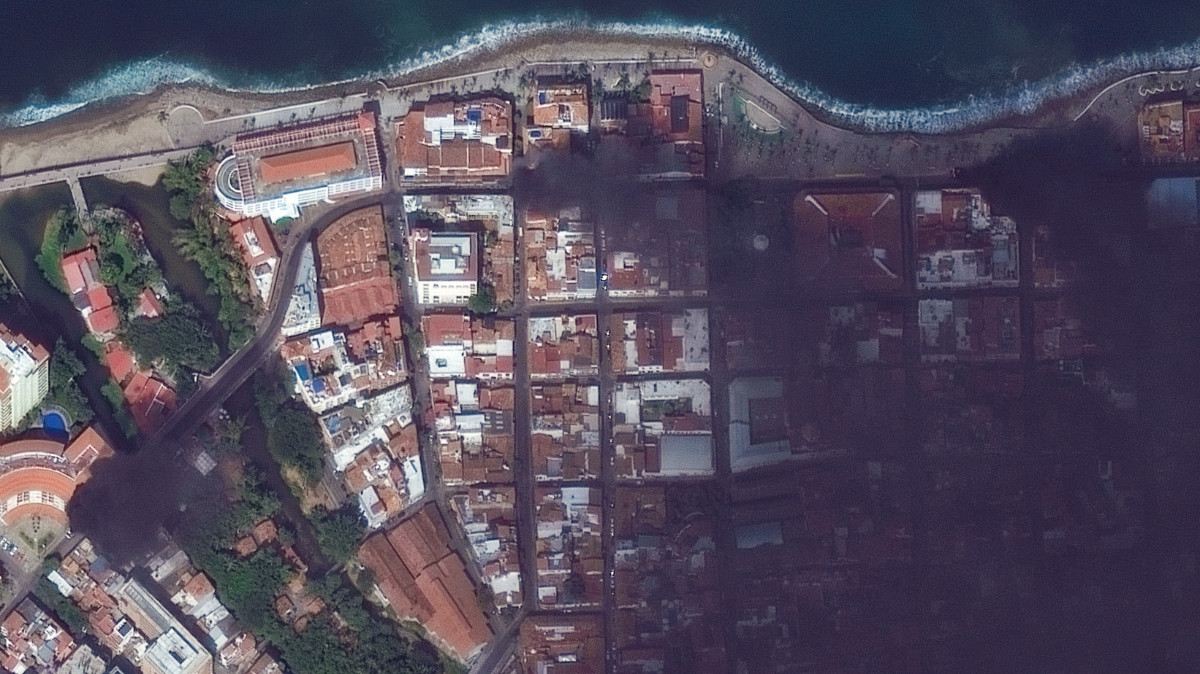
    The violence has shattered the perceived safety of Mexico’s tourist havens. Jim Beck, a Minnesota resident with two decades of travel experience in Puerto Vallarta, described watching twenty local businesses burn from his hotel rooftop: ‘Today, everybody was running down the streets in panic and terror as cars were blowing up all over the place. It’s just been so sad.’
  • Sudanese paramilitary forces kill at least 28 people in an attack in Darfur, group says

    Sudanese paramilitary forces kill at least 28 people in an attack in Darfur, group says

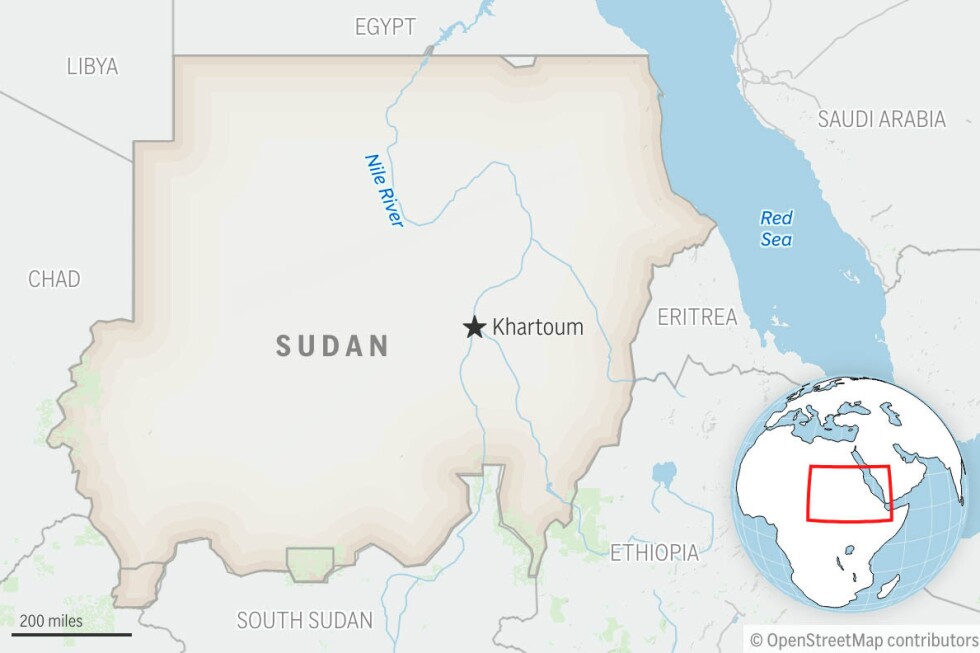
    CAIRO — A devastating assault by Sudan’s paramilitary Rapid Support Forces (RSF) on the North Darfur town of Misteriha has resulted in significant casualties, according to a Tuesday report from the Sudan Doctors Network. The medical organization, which monitors the nation’s ongoing conflict, confirmed at least 28 fatalities and 39 individuals wounded, including 10 women, during the Monday offensive.

    The town serves as a key stronghold for Arab tribal leader Musa Hilal, who shares ethnic ties with the majority Rizeigat Arab tribe of the RSF. The attack commenced over the weekend with drone strikes targeting Hilal’s guesthouse, escalating into a full-scale ground offensive on Monday that culminated in the RSF seizing control of Misteriha.

    In a particularly concerning development, the medical group reported that RSF shelling damaged the town’s healthcare facility. Following this, paramilitary fighters allegedly assaulted medical personnel and detained at least one staff member. This incident highlights the perilous conditions facing aid workers in the conflict zone.

    This violence emerges within the broader context of Sudan’s devastating war, which erupted in 2023 when tensions between the national army and the rival RSF escalated into open combat. Beginning in the capital Khartoum, the conflict has since spread nationwide, creating a humanitarian catastrophe characterized by thousands of deaths, mass displacement, disease outbreaks, and severe food insecurity.

    The capture of Misteriha solidifies RSF dominance across the Darfur region but risks inflaming longstanding tribal tensions in an area with a tragic history of violence and warfare.

  • European officials visit Ukraine to show support as country marks 4 years of Russia’s all-out war

    European officials visit Ukraine to show support as country marks 4 years of Russia’s all-out war

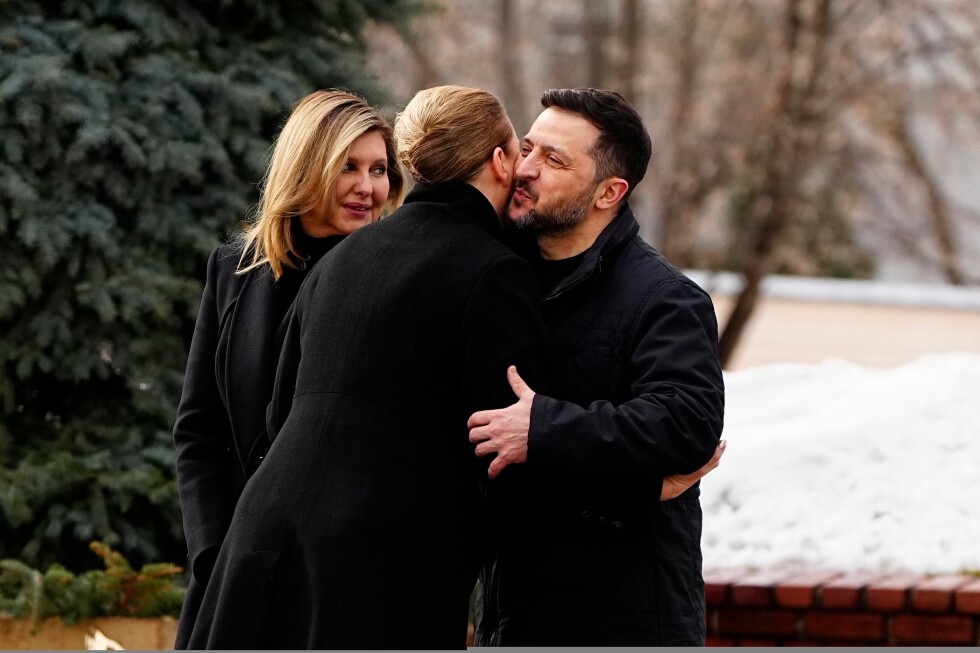
    KYIV, Ukraine — In a powerful demonstration of solidarity, more than a dozen high-ranking European officials converged on the Ukrainian capital Tuesday, marking the somber fourth anniversary of Russia’s full-scale invasion. The diplomatic delegation included European Council President Antonio Costa, European Commission President Ursula von der Leyen, Finnish President Alexander Stubb, along with seven prime ministers and three foreign ministers.

    Ukrainian President Volodymyr Zelenskyy declared that despite overwhelming odds, Ukraine has successfully preserved its sovereignty against Russia’s superior military forces. According to analysis from the Washington-based Institute for the Study of War, Russian forces captured merely 0.79% of Ukrainian territory over the past year of fighting. “We have defended our independence, we have not lost our statehood,” Zelenskyy stated via social media, emphasizing that President Vladimir Putin “has not achieved his goals” and “has not broken Ukrainians.”

    However, the conflict has evolved into a corrosive war of attrition with no diplomatic breakthrough in sight. U.S.-led peace initiatives remain stalled over critical issues including the status of the Russian-occupied Donbas region and post-war security arrangements demanded by Kyiv to prevent future invasions.

    The human cost continues to mount dramatically. A recent Center for Strategic and International Studies report estimates combined casualties on both sides could reach 2 million by spring, representing the highest troop mortality rate for any major power since World War II.

    European leaders increasingly view the conflict as directly impacting their own security. German Chancellor Friedrich Merz characterized the war as “a nightmare for us all” in a social media post, adding that “the fate of Ukraine is our fate.”

    The conflict has assumed global dimensions, with NATO countries providing military assistance while Russia receives support from North Korea (troops and artillery), Iran (drone technology), and China (machine tools and chips according to U.S. and analyst reports). This internationalization threatens to exacerbate shortages, hunger, and political instability across developing nations.

    With Ukraine dependent on foreign assistance to continue resisting Russian aggression, NATO members have stepped up weapons procurement following the Trump administration’s policy shift away from direct arms donations. The European Union has provided financial aid, though occasionally facing resistance from member states Hungary and Slovakia.

    The staggering reconstruction costs for Ukraine are now estimated at nearly $588 billion over the next decade—almost triple the country’s nominal GDP for last year, according to a joint report from the World Bank, European Commission, United Nations, and Ukrainian government.

  • ‘Anyone who runs is shot’: Watch Russian soldiers describe killings of troops who refuse orders

    ‘Anyone who runs is shot’: Watch Russian soldiers describe killings of troops who refuse orders

    In a harrowing firsthand account, Russian soldiers who have fled their units are providing unprecedented testimony about systematic executions and extreme brutality within the Russian military ranks in Ukraine. These defectors, now in hiding for their safety, describe a command structure that employs lethal force to maintain discipline, creating an environment of terror among troops.

    The soldiers report that any attempt to retreat or disobey orders results in immediate execution by specialized barrier troops—dedicated units operating behind front-line forces. These ‘blocking units’ function as military police with shoot-to-kill authority against their own comrades, effectively eliminating any possibility of surrender or retreat for ordinary soldiers.

    Beyond these executions, the defectors describe widespread atrocities against Ukrainian civilians and prisoners of war, painting a picture of complete moral collapse within Russian units. The accounts suggest these war crimes are not isolated incidents but rather systematic behaviors encouraged or tolerated by command structures. The testimonies emerge as international investigators continue gathering evidence of potential crimes against humanity committed during Russia’s invasion of Ukraine.

  • Mexico’s violence-hit Guadalajara to host World Cup games

    Mexico’s violence-hit Guadalajara to host World Cup games

    Guadalajara, the capital of Mexico’s Jalisco state, faces unprecedented security challenges as it prepares to host four World Cup matches this summer. The city’s preparations occur against a grim backdrop of escalating cartel violence triggered by the military operation that killed Nemesio ‘El Mencho’ Oseguera, leader of the Jalisco New Generation Cartel, this past weekend.

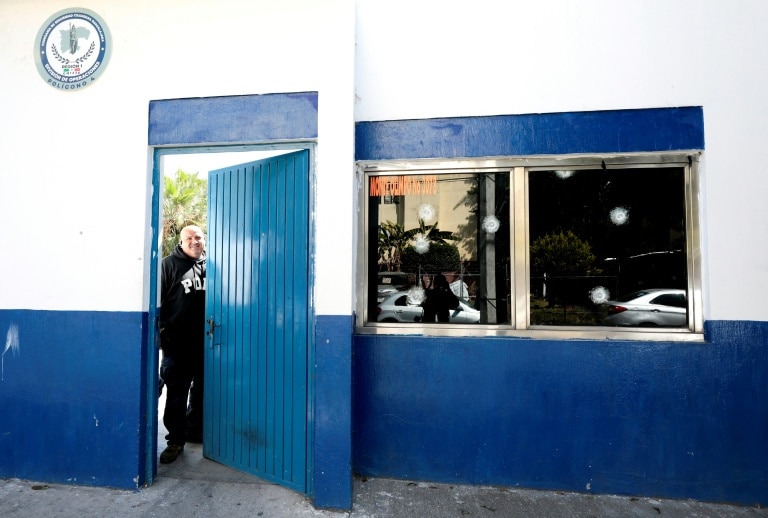
    The lethal confrontation between security forces and cartel members resulted in at least 57 fatalities nationwide, alongside widespread highway blockades across 20 Mexican states. The violence forced temporary suspension of football games in Guadalajara and Queretaro, raising concerns about safety during the upcoming global tournament that Mexico is co-hosting with the United States and Canada.

    Authorities are implementing advanced technological solutions to ensure security, including drone surveillance systems, anti-drone equipment, and AI-powered video monitoring. These measures address both immediate threats and the deeper security crisis in Jalisco, which leads Mexico in disappearances with 12,575 reported cases—over half from Guadalajara’s metropolitan area.

    The human toll of the violence is profound. Families of the disappeared have uncovered hundreds of clandestine graves while searching for loved ones. Activists like Carmen Ponce, whose brother disappeared in 2020, criticize the World Cup hosting as ‘grotesque’ amid ongoing tragedies. The economic impact is already being felt, with local tour guide Missael Robles reporting 25 cancelled tours since Sunday’s violence.

    Security concerns extend to tournament venues, with authorities discovering criminal properties just kilometers from the Akron Stadium. The proximity was underscored by a recent kidnapping-related raid less than two kilometers from the sporting complex. Families of the disappeared fear tourists might become targets, with security camera network supervisor Juan Carlos Contreras warning of potential protests by citizens searching for missing relatives.

    FIFA has declined comment on the security situation, while the city remains emotionally and economically impacted by violence that contrasts sharply with officials’ recent claims of peace.

  • BBC’s Will Grant on the atmosphere in Mexico following unrest

    BBC’s Will Grant on the atmosphere in Mexico following unrest

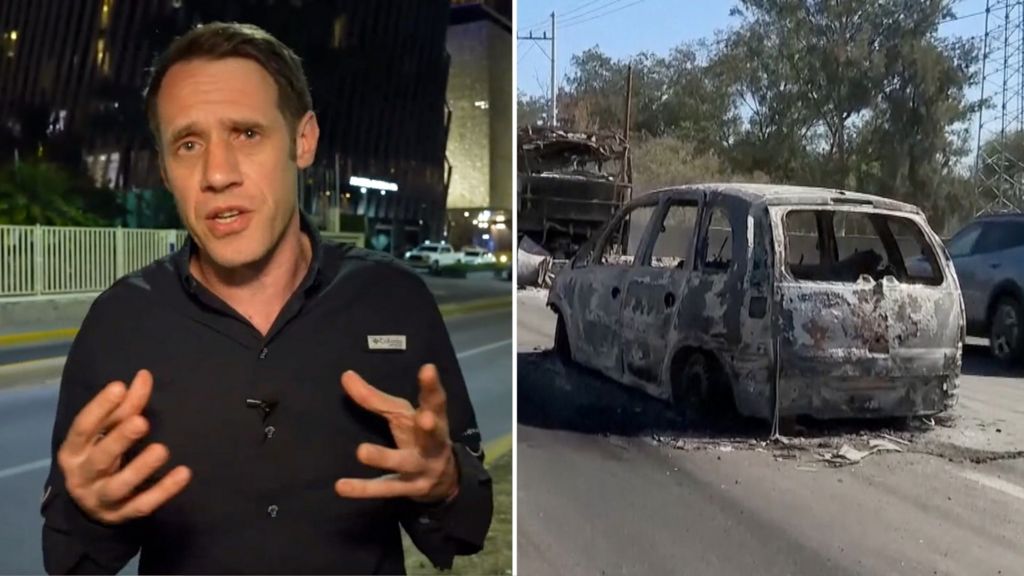
    A palpable sense of apprehension lingers in Guadalajara, the bustling capital of Mexico’s Jalisco state, in the aftermath of a significant eruption of public violence. According to firsthand reporting from the BBC’s Will Grant, the city’s normally vibrant atmosphere has been subdued, replaced by a collective wariness among its citizens. The recent unrest has not only disrupted daily life but has also cast a shadow over the community’s sense of security. Local authorities are reportedly increasing patrols and presence in an effort to restore calm and reassure the public. The incident has sparked conversations about public safety and the underlying social tensions within the region. While businesses are gradually reopening, the memory of the turmoil continues to influence the rhythm of the city, with many residents opting for caution in their daily routines. This event highlights the ongoing challenges faced by communities when civil order is unexpectedly fractured.

  • Bowen: Why Ukraine remains defiant and does not feel close to defeat

    Bowen: Why Ukraine remains defiant and does not feel close to defeat

    Beneath the eerie glow of headlights in eastern Ukraine’s Donetsk region, miles of suspended fishing nets create a shimmering canopy over strategic roadways—a surreal defense against explosive drones that now define modern warfare. These improvised barriers, donated by European fishermen including 280 tonnes of Scottish salmon nets, represent Ukraine’s ingenious adaptation to the deadly drone warfare that has transformed this conflict.

    The battlefield’s most feared weapons are FPV (first-person view) drones, capable of transmitting real-time footage to operators 40km away while delivering precision strikes. Both Ukrainian and Russian forces have revolutionized their use, transitioning from radio-controlled systems to fiber-optic guidance to counter electronic warfare tactics. In hidden command centers within shattered buildings, Ukrainian analysts monitor banks of screens, directing ground operations with terrifying accuracy.

    This technological arms race has expanded traditional front lines into vast “kill zones” stretching 20km beyond forward positions. Rear areas once considered safe now face equal peril as surveillance drones saturate the skies. The economic asymmetry is staggering: a $1,000 drone can destroy a $30 million tank, making skilled pilots invaluable assets. Both nations have become global leaders in drone warfare, with NATO forces struggling to match their operational experience.

    The conflict’s technological evolution occurs against persistent geopolitical pressures. Russian President Vladimir Putin demands Ukrainian surrender of Donetsk’s remaining 20% under Ukrainian control, along with portions of Zaporizhzhia and Kherson regions. Despite American pressure for a ceasefire—including direct appeals from the Trump administration—President Zelensky maintains he will never relinquish unconquered territory, fearing renewed Russian aggression following any temporary pause.

    In Slovyansk, designated a “fortress city” with extensive anti-tank defenses, civilian life persists amid constant danger. Residents hurry through snow-covered streets, aware that nowhere in Donetsk remains truly safe. Local humanitarian efforts continue against impossible odds, with figures like Pastor Oleh Tkachenko delivering 17,000 weekly bread loaves to frontline communities while evacuating those who can no longer endure the danger.

    The human cost remains staggering, with Zelensky acknowledging 55,000 military deaths and countless civilians displaced. Recruitment challenges mount as veterans describe the horrors of months-long deployments in underground bunkers. Yet polling indicates most Ukrainians believe continued resistance remains necessary against what they perceive as existential threats to their nationhood.

    As winter persists, Russia systematically targets energy infrastructure, creating humanitarian crises in already devastated communities. Evacuation trains continue transporting civilians westward, their passengers carrying minimal belongings and maximum trauma. Through it all, Ukraine demonstrates remarkable resilience—maintaining functional cities despite constant attacks while developing domestic military production capabilities.

    The war’s conclusion appears distant as both sides maintain fundamentally incompatible positions. International mediation efforts continue, but appear more focused on diplomatic appearances than genuine breakthrough. With spring approaching, Ukraine prepares for renewed hostilities while advocating for increased European support, determined to prevent what many citizens describe as the repetition of historical mistakes made against previous aggressors.

  • Russia soldiers tell BBC they saw fellow troops executed on commanders’ orders

    Russia soldiers tell BBC they saw fellow troops executed on commanders’ orders

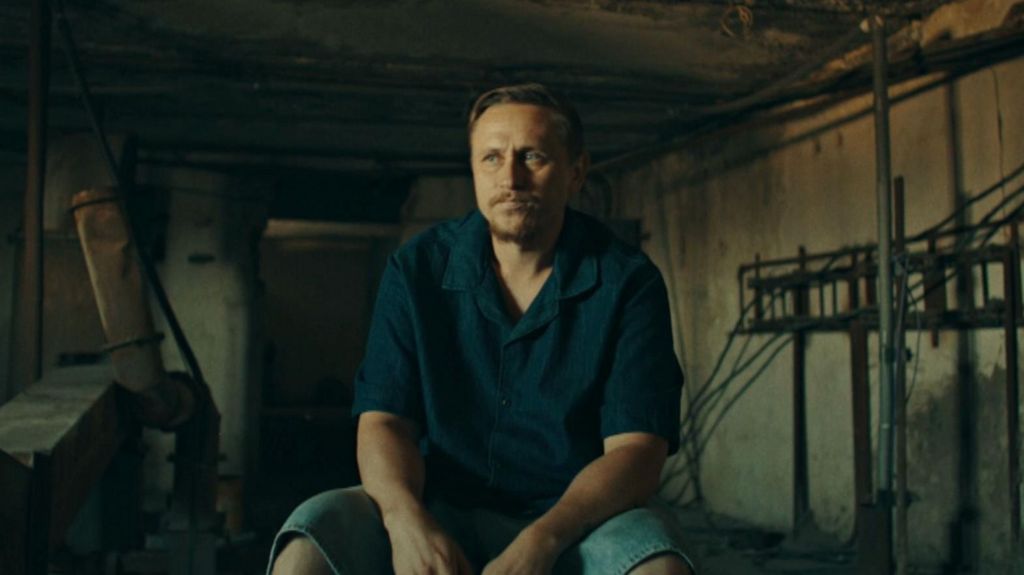
    In a groundbreaking documentary titled “The Zero Line: Inside Russia’s War,” four Russian soldiers have provided chilling firsthand accounts of systematic brutality within their own military ranks in Ukraine. These testimonies, recorded at an undisclosed location outside Russia, reveal a pattern of executions, torture, and dehumanizing treatment ordered by commanders against their own troops.

    The soldiers describe witnessing point-blank executions of comrades who refused orders to participate in what they term “meat storms” – relentless frontal assaults designed to overwhelm Ukrainian defenses through sheer numbers. One soldier, Ilya, a former special needs teacher from the Ural Mountains, recounted watching a commander execute four soldiers who had fled the front lines. “I remember one of them screaming ‘Don’t shoot, I’ll do anything!’ but he zeroed them anyway,” Ilya stated, using the Russian military slang for executing one’s own soldiers.

    Dima, a 34-year-old former dishwasher repairman from Moscow, described witnessing his commander, Alexei Ksenofontov – later decorated as a “Hero of Russia” – personally execute soldiers at close range. “I see it – just two metres, three metres. Just murders, just click, clack, bang. It’s not a drama, it’s not a movie, it’s real life,” he recalled. Dima also reported discovering 20 bodies of recently arrived ex-convict soldiers in a ditch, apparently executed for their bank cards.

    The documentary reveals how commanders employed extreme brutality to maintain discipline, including electrocution, starvation, and public humiliation. Ilya described being tied to a tree, beaten with a baton, and urinated on after refusing to participate in an assault. Denis, another soldier, showed documentation of having his teeth knocked out by superiors for refusing to search for a missing drone.

    These accounts are substantiated by a former senior staff officer with 17 years of military service who described speaking with a member of a “liquidation squad” tasked with eliminating high-ranking officers. The UK Ministry of Defence estimates 900-1,500 Russian casualties daily in 2025, with total casualties exceeding 1.2 million since the full-scale invasion began.

    The Russian government maintains that its armed forces “operate with utmost restraint” and that allegations of violations are “duly investigated.” However, these testimonies suggest a complete breakdown of military discipline and international humanitarian law on the Russian front lines.

  • Mexico’s Jalisco cautiously tries returning to normal after cartel violence

    Mexico’s Jalisco cautiously tries returning to normal after cartel violence

    The Mexican state of Jalisco is experiencing a fragile return to daily routines following a devastating wave of cartel violence that erupted over the weekend. This surge in retaliatory attacks came immediately after authorities confirmed the death of Nemesio “El Mencho” Oseguera, the formidable leader of the Jalisco New Generation Cartel (CJNG), during a military confrontation on Sunday.

    In Guadalajara, the state capital, residents tentatively emerged from their homes on Monday after being confined indoors amidst widespread terror. The city presented a scene of cautious movement rather than normalcy—schools remained shuttered, many businesses kept doors locked, and public transportation operated with notably few passengers. Those venturing outside primarily sought essential supplies, forming extensive queues at supermarkets amid concerns that cartel members might resume road blockades and arson attacks against vehicles and commercial establishments.

    Matias Mora, a local taxi driver, described the palpable fear that kept him indoors after witnessing a pharmacy being burned down. Similarly, retiree Juan Soler reported critical shortages and enormous lines at the few open stores, while Maria de Jesus Gonzalez recounted being “locked inside, terrified” before joining the supermarket queue. The demand was so intense that shopping carts ran out, forcing some customers to use laundry baskets for their groceries.

    While authorities worked to clear the streets of charred, twisted vehicle wreckage, the violence persisted in certain areas. On the road to Tapalpa, where Oseguera made his final stand, cartel members continued to maintain roadblocks despite official claims that the worst violence had subsided nationwide.

    The government deployed approximately 10,000 troops across 20 of Mexico’s 32 states to restore order, including in the international tourist destination Puerto Vallarta. Oseguera, 59, represented the last of Mexico’s old-guard drug lords operating with the brutal tactics reminiscent of imprisoned kingpins like “El Chapo” Guzman. As a founding member of CJNG since 2009, he built one of Mexico’s most violent criminal organizations.

    Official reports indicate the raid that killed Oseguera and subsequent clashes resulted in at least 27 security force casualties, 46 suspected cartel members dead, and one civilian fatality. While his elimination marks a significant victory for Mexican authorities, security experts warn that the absence of clear succession within CJNG could create a dangerous power vacuum, potentially triggering further violent internal conflicts.

  • Violence engulfs Mexico after killing of notorious cartel leader

    Violence engulfs Mexico after killing of notorious cartel leader

    Mexico descended into widespread chaos and violence following the confirmed death of Nemesio Oseguera Cervantes, the formidable leader of the Jalisco New Generation Cartel (CJNG), in a military raid. The operation, which resulted in Oseguera’s fatal wounding during a shootout in Tapalpa, Jalisco state, triggered an immediate and ferocious response from the cartel’s ranks, plunging cities across the nation into scenes resembling a war zone.

    The stark socioeconomic divide within the country was laid bare as luxury tourist destinations, typically insulated from such violence, became unexpected battlegrounds. The Pacific coast resort of Puerto Vallarta, a popular enclave for American retirees and tourists, witnessed intense carnage. Vehicles and buildings were set ablaze, shrouding the city in thick black smoke, with the destruction captured on video from the balconies of upscale condominiums and beachfronts. Social media circulated contrasting imagery of tourists observing the turmoil from pools and beach chairs, cocktail in hand.

    This offensive marks the most significant action to date by Mexican President Claudia Sheinbaum, who had previously pledged a historic crackdown on drug cartels. The operation was conducted with crucial intelligence support from the United States, which had listed ‘El Mencho’ as its most-wanted drug trafficker with a $15 million bounty. Despite this major victory, U.S. political pressure persists, with calls for Mexico to intensify its efforts.

    The death of Oseguera, 59, represents the fall of a figure who operated with brazen impunity. His cartel, known for its militarized ‘elite’ divisions equipped with armored vehicles and heavy weaponry, was responsible for audacious attacks, including the downing of a military helicopter and a high-profile assassination attempt on Mexico City’s then-police chief. Having emigrated to the U.S. in his youth, where he was jailed and deported for heroin trafficking, Oseguera rose through cartel infighting, eventually founding the CJNG, which grew to surpass even the Sinaloa cartel in power and territorial control.

    By Monday, President Sheinbaum announced that the most severe violence had subsided and that active roadblocks had been cleared. However, the event underscores the profound and enduring challenge that powerful cartels continue to pose to the Mexican state, controlling vast territories and providing parallel governance in impoverished areas neglected by the central government.