分类: world

  • Saudi bus carrying Indian pilgrims crashes; over 40 feared dead

    Saudi bus carrying Indian pilgrims crashes; over 40 feared dead

    A devastating bus accident in Saudi Arabia has resulted in the deaths of over 40 Indian pilgrims, with many more feared injured. The incident occurred late at night when the bus, en route from Makkah to Madinah, collided with a diesel tanker. The majority of the passengers were from the Indian state of Telangana, according to reports from Indian media.

    The Indian Consulate in Jeddah and the Embassy in Riyadh have swiftly responded to the crisis, coordinating with Saudi authorities and local Umrah operators. A dedicated team of consulate staff and community volunteers has been deployed to hospitals and shelters to assist the victims and their families. Emergency helpline numbers have been established to provide support and information to those affected.

    Indian Prime Minister Narendra Modi expressed his deep sorrow over the tragedy, stating, ‘My thoughts are with the families who have lost their loved ones.’ He assured that Indian officials are in close contact with Saudi authorities to ensure all necessary measures are taken. India’s Minister of External Affairs, Dr. S. Jaishankar, also conveyed his shock and pledged full support to the affected families.

    Telangana Chief Minister A. Revanth Reddy has ordered an immediate investigation into the accident and directed authorities to coordinate with the Ministry of External Affairs and the Saudi Embassy to expedite relief efforts. Hyderabad MP Asaduddin Owaisi revealed that 42 Hajj pilgrims were on the bus at the time of the crash and has requested the repatriation of the deceased and proper medical care for the injured.

    The Indian Consulate in Jeddah has set up a 24×7 control room to assist those in need, with toll-free and WhatsApp helpline numbers available for immediate contact. This tragic incident has cast a shadow over the pilgrimage, with the Indian community rallying together to support the victims and their families during this difficult time.

  • ICC prosecutors seek life sentence for Janjaweed leader convicted of Darfur crimes

    ICC prosecutors seek life sentence for Janjaweed leader convicted of Darfur crimes

    In a landmark case at the International Criminal Court (ICC) in The Hague, prosecutors have demanded a life sentence for Ali Muhammad Ali Abd-Al-Rahman, a senior leader of the notorious Janjaweed militia. Abd-Al-Rahman, also known as Ali Kushayb, was convicted last month on 27 counts of war crimes and crimes against humanity, including mass executions, rapes, and the brutal ax murders of two prisoners during the Darfur conflict in 2003-2004. This marks the first ICC conviction related to the Darfur atrocities. Prosecutor Julian Nicholls emphasized the defendant’s active and enthusiastic participation in these crimes, stating, “You literally have an axe murderer before you.” Abd-Al-Rahman, who surrendered in 2020, initially pleaded innocent, claiming mistaken identity, but judges dismissed his defense, citing evidence of his self-identification in a video. His defense team has requested a seven-year sentence, which could see the 76-year-old released within 18 months due to time served. The Darfur conflict, sparked by an insurgency against the Arab-dominated Sudanese government, led to widespread violence, with up to 300,000 deaths and 2.7 million displaced. Former President Omar al-Bashir, also charged by the ICC, remains unextradited. The sentencing hearing coincides with renewed violence in Sudan, where clashes between the military and paramilitary Rapid Support Forces have claimed over 40,000 lives and displaced 12 million people since 2023.

  • Ukraine to import US liquefied natural gas via Greece

    Ukraine to import US liquefied natural gas via Greece

    In a significant move to enhance Ukraine’s energy resilience during the ongoing conflict, vital supplies of US liquefied natural gas (LNG) are set to flow into the war-torn nation this winter via a pipeline traversing the Balkans. This development follows a high-profile meeting between Ukrainian President Volodymyr Zelensky and Greek Prime Minister Kyriakos Mitsotakis in Athens on Sunday. Mitsotakis emphasized Greece’s role in increasing the influx of American LNG to its terminals, aiming to ‘replace Russian gas in the region.’

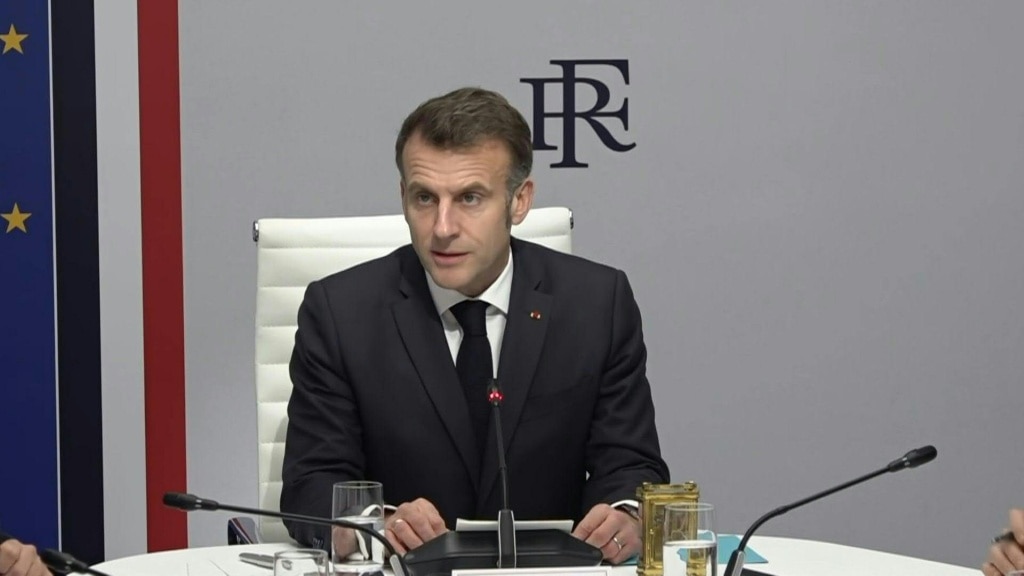
    The European Commission has outlined plans to completely halt Russian gas imports to EU member states by the end of 2027, citing concerns that such revenues fund Russia’s military operations in Ukraine. Meanwhile, Zelensky has shifted his focus to France, engaging in discussions with President Emmanuel Macron regarding a major air defense hardware deal.

    Amid these diplomatic efforts, the conflict on the ground remains intense. Overnight, Russian attacks in the Kharkiv, Kherson, and Donetsk regions reportedly claimed six lives, while Russia’s military announced the capture of three additional Ukrainian villages. These reports, however, remain unverified.

    Speaking in Athens, Zelensky revealed that American LNG deliveries are scheduled to commence in January. ‘We rebuild each time the Russians destroy, but this requires significant time, effort, and resources,’ he stated. Mitsotakis affirmed Greece’s commitment, declaring, ‘Greece is becoming an energy security provider for your homeland.’

    According to Reuters, Ukraine has allocated nearly €2 billion to cover gas imports through March, leveraging funds from European partners, banks under European Commission guarantees, and Ukrainian financial institutions. Since 2015, Ukraine has relied on EU states for gas supplies, bypassing direct purchases from Russia. The Soviet-era Trans-Balkan pipeline, linking Ukraine to Greek LNG terminals via Moldova, Romania, and Bulgaria, plays a pivotal role in this arrangement.

    On Monday, Zelensky’s visit to France included an inspection of Rafale fighter jets, the SAMP-T air defense system, and several drone systems at Villacoublay airbase near Paris. He also reviewed the nascent headquarters of a planned multinational force, which may eventually oversee a Ukraine-Russia ceasefire.

    The conflict, which began with Russia’s full-scale invasion in February 2022, has resulted in tens of thousands of casualties, predominantly soldiers, and displaced millions of civilians. As Ukraine continues to navigate the dual challenges of war and energy security, international support remains crucial.

  • Delhi’s alleged car bomb attacker named by investigators

    Delhi’s alleged car bomb attacker named by investigators

    In a tragic incident last Monday, a car explosion near Delhi’s iconic Red Fort monument claimed 10 lives and left 32 others injured. Indian counter-terrorism agency, the National Investigation Agency (NIA), has identified Umar Un Nabi, an assistant professor at Al-Falah University in Faridabad, as the alleged suicide bomber. Umar, a doctor from Indian-administered Kashmir, was reportedly driving the vehicle involved in the blast. The NIA confirmed his identity through forensic analysis, though his family denies any knowledge of his involvement. Umar’s father and sister-in-law expressed shock, stating they were unaware of the car used in the attack. The explosion occurred shortly after Kashmir police announced the arrest of seven individuals and the seizure of 2,900kg of explosives in Faridabad, where Umar resided. The NIA is investigating potential links between the blast and these arrests. Umar’s family has faced severe repercussions, including the demolition of their home in Pulwama district by security forces. Four family members were detained, and their house was razed late Thursday night, leaving them homeless as winter approaches. The family, including Umar’s parents and a pregnant sister-in-law, is now sheltering with relatives. The Kashmir police and Special Investigating Agency (SIA) have declined to comment, citing the ongoing investigation. Umar’s relatives and neighbors remain in shock, grappling with the devastating impact of the incident.

  • South African man seen at neo-Nazi rally has Australian visa revoked

    South African man seen at neo-Nazi rally has Australian visa revoked

    Matthew Gruter, a South African national who relocated to Australia in 2022, has had his visa revoked after being identified at a neo-Nazi rally outside the New South Wales parliament. The protest, organized by the National Socialist Network on November 8, featured approximately 60 men dressed in black, with Gruter prominently positioned in the front row. The group displayed a banner reading ‘Abolish the Jewish lobby’ and chanted slogans associated with the Hitler Youth, such as ‘blood and honour.’ The event, which lasted less than 20 minutes, was legally authorized but has sparked widespread condemnation. Australia’s Home Affairs Minister Tony Burke emphasized that visa holders are guests in the country and must adhere to its values. Gruter, a civil engineer and senior member of the National Socialist Network in New South Wales, now faces deportation. This incident highlights the growing concern over right-wing extremism in Australia, which recently criminalized the Nazi salute with mandatory prison terms.

  • Global energy challenges targeted through China-UN collaboration

    Global energy challenges targeted through China-UN collaboration

    In a groundbreaking initiative to address global energy transition challenges, a Chinese international NGO, the Global Energy Interconnection Development and Cooperation Organization (GEIDCO), has partnered with United Nations agencies to launch a comprehensive research program. Announced during the COP30 climate conference in Belem, Brazil, this collaboration aims to identify capacity gaps and training needs across different regions to foster a just and inclusive energy transition. GEIDCO, established in 2016 as China’s first international energy organization, brings extensive experience in capacity-building, having trained over 10,000 participants from 80+ countries through 30+ international programs. The research will focus on energy policies, technologies, talent development, and financing, with a particular emphasis on regional disparities. For instance, African participants prioritize distributed renewable energy and project financing, while West Asian stakeholders are more interested in emerging technologies like hydrogen energy. The program, developed in collaboration with the UN Framework Convention on Climate Change and the Paris Committee on Capacity-building, seeks to create targeted training initiatives to bridge these gaps. Gloria Alvarenga of the Latin American Energy Organization praised the initiative, highlighting the importance of shared experiences and collaborative mechanisms in accelerating climate action. Riad Meddeb of the UN Development Programme emphasized the urgency of addressing capacity gaps to ensure a just transition, noting that 60% of global energy production remains inefficient. He also underscored the role of digitalization in transforming clean energy systems, while pointing out the stark digital divide, with only 27% of people in low-income countries having internet access. The initiative reflects a growing global consensus to limit temperature rise to 1.5°C, as outlined in the Paris Agreement, to avoid catastrophic climate impacts.

  • Engulfed by water

    Engulfed by water

    As global leaders convene at COP30 to address climate challenges, Bangladesh continues to grapple with the devastating effects of river erosion. On a somber morning in Kurigram, Nurun Nabi prepares to relocate his family for the second time in a year. His home, constructed just twelve months ago on the precarious Char Youthnet island in the Brahmaputra River, is now threatened by the encroaching waters. ‘The river is coming closer every day,’ Nabi lamented, his voice heavy with fatigue. ‘We are born to suffer. Our struggle is never-ending. I’ve lost count of how many times the river took my home.’

    The plight of Nabi and countless others underscores the urgent need for effective climate solutions. The Brahmaputra River, a lifeline for many, has become a source of relentless destruction, swallowing homes, schools, and livelihoods. The only school on Char Youthnet island, where children continue their education amidst the crisis, stands as a fragile symbol of resilience.

    As nations gather to strategize at COP30, the situation in Bangladesh serves as a stark reminder of the human cost of climate change. The country, already vulnerable to rising sea levels and extreme weather events, faces an existential threat from river erosion. The international community’s response will be crucial in determining whether nations like Bangladesh can adapt and survive in an increasingly unstable climate.

  • Polish prime minister says weekend rail line explosion near Warsaw was act of ‘sabotage’

    Polish prime minister says weekend rail line explosion near Warsaw was act of ‘sabotage’

    WARSAW, Poland — A critical railway line connecting Warsaw to southeastern Poland was severely damaged by an explosion on Sunday, which authorities have labeled as an act of sabotage. Prime Minister Donald Tusk confirmed the incident on Monday, stating that the explosion occurred on the Warsaw-Lublin route near the village of Mika, approximately 100 kilometers (62 miles) southeast of the capital. The blast destroyed a section of the railway track, disrupting train services. Fortunately, no injuries were reported among the two passengers and several staff members aboard the train at the time. The incident was first detected by a train driver who reported irregularities on the track around 7:40 a.m. Sunday. Subsequent investigations revealed damage at multiple locations along the route. Tusk vowed to apprehend the perpetrators, calling the act ‘unprecedented’ and emphasizing that justice would be served ‘regardless of who is behind them.’ This incident adds to a series of suspected sabotage and espionage cases in Poland since Russia’s invasion of Ukraine in February 2022, with dozens of individuals detained in connection with these activities.

  • Climate protesters seek action at COP30

    Climate protesters seek action at COP30

    Thousands of climate activists gathered in Belem, Brazil, on Saturday, staging a vibrant and peaceful protest to demand stronger global action against climate change. The demonstration, dubbed the ‘Great People’s March,’ coincided with the halfway point of the COP30 climate conference, where negotiations have stalled amid disagreements among nations. Protesters, including indigenous leaders and environmental advocates, marched through the city under the scorching sun, chanting slogans and rolling a massive inflatable globe to symbolize the planet’s fragility. Some participants staged a symbolic funeral procession for fossil fuels, carrying coffins labeled ‘coal,’ ‘oil,’ and ‘gas’ to highlight the need for a transition to renewable energy. Indigenous leader Txai Surui, 28, emphasized the urgency of the situation, stating, ‘We are here to pressure countries to fulfill their promises and prevent any regression.’ The march concluded near the COP30 venue, where security forces were deployed to maintain order. Inside the conference, COP30 President Andre Correa do Lago acknowledged the lack of progress in negotiations and urged delegates to prioritize meaningful dialogue over procedural delays. He pledged to release a summary of key positions on Sunday to guide ministers in the final week of talks. The protesters’ demands include reparations for environmental damage caused by corporations and governments, particularly to marginalized communities, and greater representation of indigenous voices in climate discussions.

  • First winter rains soak makeshift Gaza tents

    First winter rains soak makeshift Gaza tents

    The first heavy rains of winter have inundated the Mawasi tent camp in Gaza, exacerbating the already dire living conditions for displaced Palestinians. On Saturday, torrential downpours flooded the makeshift shelters, forcing residents to dig trenches in a desperate attempt to divert water from their tents. The rains, which began on Friday, seeped through torn tarpaulins and fragile structures, soaking the meager belongings of families. Strong winds further threatened to topple tents and disrupt the already scarce food and supply distribution.

    Bassil Naggar, a resident who recently purchased a new tent for $712 on the black market, described the relentless struggle to keep his shelter dry. ‘I spent all of Friday pushing water out of my tent,’ he said, noting that his neighbors’ tents and possessions were also ruined. ‘Water puddles are inches high, and there is no proper drainage.’

    The United Nations reports that Mawasi housed up to 425,000 displaced Palestinians earlier this year, most of whom are living in temporary tents after being displaced by Israel’s military campaign. While the Israeli defense body overseeing humanitarian aid claims to be allowing winter supplies like blankets and tarpaulins into Gaza, aid organizations argue that these efforts are insufficient as temperatures drop and winds intensify.

    Amid the worsening humanitarian crisis, international efforts to stabilize Gaza are underway. The UN Security Council is set to vote on a U.S. proposal for a UN-mandated stabilization force, which would operate independently of the UN and maintain Israel’s control over Gaza’s security perimeter. Meanwhile, Russia has introduced a competing resolution advocating for a UN-led stabilization force, opposing territorial changes in Gaza and urging a two-state solution.

    On Saturday, Russian President Vladimir Putin and Israeli Prime Minister Benjamin Netanyahu discussed the Gaza ceasefire, Iran’s nuclear program, and stability in Syria during a phone call. As the first stage of the Gaza ceasefire agreement nears its end, the focus shifts to the more challenging task of establishing a governing body and deploying an international stabilization force.