The British Broadcasting Corporation (BBC), a cornerstone of the UK’s media landscape, finds itself embroiled in a heated debate over its role in an increasingly polarized political and social environment. Accusations of bias and challenges to its impartiality have placed the BBC under unprecedented scrutiny, particularly following a controversial documentary that allegedly misrepresented a speech by former US President Donald Trump. The broadcaster, funded by the public, is often used as a political football, criticized for its coverage of contentious issues ranging from climate change to Brexit. Despite these challenges, the BBC remains the most popular news source in the UK, according to media watchdog Ofcom. However, a recent YouGov poll reveals a divided public opinion, with 31% perceiving the BBC as too left-wing and 19% as too right-wing. BBC Chairman Samir Shah has defended the organization’s commitment to impartiality, emphasizing its ‘sacred job’ of upholding the truth. Yet, the BBC continues to face criticism from both ends of the political spectrum, with Conservative lawmakers accusing it of focusing excessively on liberal and urban issues, while others praise its role in countering misinformation. The BBC’s international World Service, which reaches over 318 million people weekly, remains a beacon of reliable journalism globally. However, growing distrust in traditional media and the rise of sensationalist platforms like GB News pose significant challenges to the BBC’s influence, particularly among younger audiences. As the broadcaster navigates these turbulent waters, its ability to maintain public trust and adapt to evolving media consumption habits will be critical to its future.
分类: world
-

Sichuan amphibious ship returns after maiden sea trial
China’s largest and most advanced amphibious assault ship, the CNS Sichuan, has successfully concluded its maiden sea trial, marking a significant milestone in the nation’s naval capabilities. The vessel, which set sail on Friday morning from the Hudong-Zhonghua Shipbuilding yard in Shanghai, returned to its home port on Sunday afternoon after a three-day voyage. During the trial, engineers meticulously tested and verified the reliability and performance of the ship’s electric, propulsion, and other critical systems, achieving the desired results. The People’s Liberation Army Navy (PLAN) confirmed that follow-up tests will be conducted in accordance with the ship’s construction plan. The Sichuan, the first in the Type 076 class, boasts a displacement of over 40,000 metric tons and is equipped with an electromagnetic launch system, making it the first Chinese amphibious assault ship capable of deploying fixed-wing drones. This technology was previously seen only on the CNS Fujian aircraft carrier. Once commissioned, the Sichuan will be capable of supporting a wide range of military operations, including amphibious landings, airstrikes, and airborne missions. The PLAN currently operates four Type 075 amphibious assault ships, each with a full displacement of nearly 40,000 tons, capable of carrying multiple helicopters, landing craft, and armored vehicles.
-

Ecuadorian drug gang leader captured in Spain years after faking his death
In a significant breakthrough in the fight against organized crime, Ecuadorian authorities, in collaboration with Spanish police, apprehended Wilmer Chavarria, alias “Pipo,” one of Ecuador’s most wanted drug traffickers, in Malaga, Spain. Chavarria, the alleged leader of the notorious drug cartel Los Lobos, had faked his death in 2021 during the COVID-19 pandemic, assumed a new identity, and relocated to Spain, where he continued to orchestrate drug shipments, order assassinations, and extort gold mines in Ecuador. President Daniel Noboa confirmed the arrest, highlighting its importance in curbing the escalating drug-related violence in the country. Los Lobos, a group with approximately 8,000 members, was recently classified as a terrorist organization by the United States due to its involvement in political assassinations and its alleged collaboration with Mexico’s Jalisco New Generation Cartel. Ecuador, once considered one of South America’s most peaceful nations, has seen a surge in violent crimes as it has become a major transit hub for cocaine produced in neighboring Colombia and Peru. Drug cartels have targeted presidential candidates, local officials, and journalists in their bid to control ports and coastal cities. Chavarria’s capture coincides with a pivotal referendum in Ecuador, where citizens are voting on constitutional amendments to allow foreign military bases in the country. President Noboa argues that this reform is essential to enhance anti-drug cooperation with international partners like the United States and intensify pressure on drug traffickers.
-

Israel says Gazans who landed in S. Africa unexpectedly had third-country approval
A group of 153 Palestinians from Gaza unexpectedly arrived in South Africa, sparking inquiries from President Cyril Ramaphosa. Israeli authorities confirmed that the individuals had received entry approval from an unnamed third country, allowing their departure from Gaza. Shimi Zuaretz, a spokesperson for COGAT, the Israeli body overseeing civil affairs in Palestinian territories, stated that the group was permitted to leave only after receiving third-country approval. Upon landing in Johannesburg, the passengers were detained on their plane for 12 hours due to the absence of Israeli departure stamps in their passports. South African border police reported that the home affairs ministry eventually allowed the group to disembark after an NGO, Gift of the Givers, offered to provide accommodation. The NGO clarified that it was unaware of who had chartered the flight or a previous one that brought 176 Gazans to South Africa on October 28. An unidentified Israeli official revealed that the organization coordinating the transfer had submitted third-country visas to COGAT for all evacuees. President Ramaphosa expressed concern, suggesting it appeared as though the individuals were being ‘flushed out.’ South Africa’s home affairs ministry confirmed that 130 of the group entered the country, while 23 continued to other destinations. Zuaretz emphasized that COGAT facilitates the departure of Gaza residents for medical treatment, dual citizens, and those with third-country visas, based solely on foreign country requests. Since the October 7, 2023, attack on Israel, over 40,000 Gaza residents have been assisted in leaving. South Africa, home to sub-Saharan Africa’s largest Jewish community, has historically supported the Palestinian cause, even filing a genocide case against Israel at the International Court of Justice in 2023.
-

Lebanon to complain to UN over wall construction denied by Israel
Lebanon has announced its intention to lodge a formal complaint with the United Nations Security Council, accusing Israel of constructing a concrete wall that encroaches on Lebanese territory. The Lebanese presidency revealed this decision on Saturday, following a report by the United Nations Interim Force in Lebanon (UNIFIL) that the wall crosses the UN-demarcated Blue Line, the de facto border between the two nations. According to UNIFIL, the structure, identified as a concrete T-wall, has rendered over 4,000 square meters of Lebanese land inaccessible to its citizens. The Israeli military, however, has denied the allegations, asserting that the wall does not cross the Blue Line. President Joseph Aoun has directed officials to submit the complaint alongside UN reports refuting Israel’s denial. UNIFIL’s investigations in October and November confirmed that sections of the wall near Yaroun violate Lebanon’s sovereignty. The force has urged the Israeli army to relocate the wall. This dispute arises amidst ongoing tensions following a November 2024 ceasefire intended to end hostilities between Israel and Hezbollah. Israel maintains that the wall is part of a broader military strategy initiated in 2022, aimed at reinforcing its northern border. Despite the truce, Israel continues to conduct strikes in Lebanon, primarily targeting Hezbollah.
-

Iran begins cloud seeding operations as severe drought bites
Iran has commenced cloud seeding operations in response to an unprecedented drought, marking a critical step in its battle against water scarcity. The country, which has long endured chronic dry spells and heat waves exacerbated by climate change, is now facing its most severe drought in decades. The first cloud seeding flight of the current water year, which began in September, was conducted over the Urmia Lake basin, as reported by the official IRNA news agency. Urmia, once Iran’s largest lake, has largely dried up, transforming into a vast salt bed. Further operations are planned for the provinces of East and West Azerbaijan. Cloud seeding involves dispersing particles like silver iodide and salt into clouds to induce rainfall. Iran has developed its own technology for this practice, which has also been employed by neighboring countries such as the United Arab Emirates. Recent reports indicate rainfall in several western and northwestern provinces, though overall precipitation has decreased by 89% compared to the long-term average. Tehran, the capital, is experiencing its lowest rainfall in a century, with half of Iran’s provinces remaining rainless for months. President Masoud Pezeshkian has warned of potential evacuations in Tehran if rain does not arrive before winter. The situation underscores the urgent need for innovative solutions to address the escalating water crisis in the region.
-

Man arrested over deadly Delhi car bomb attack
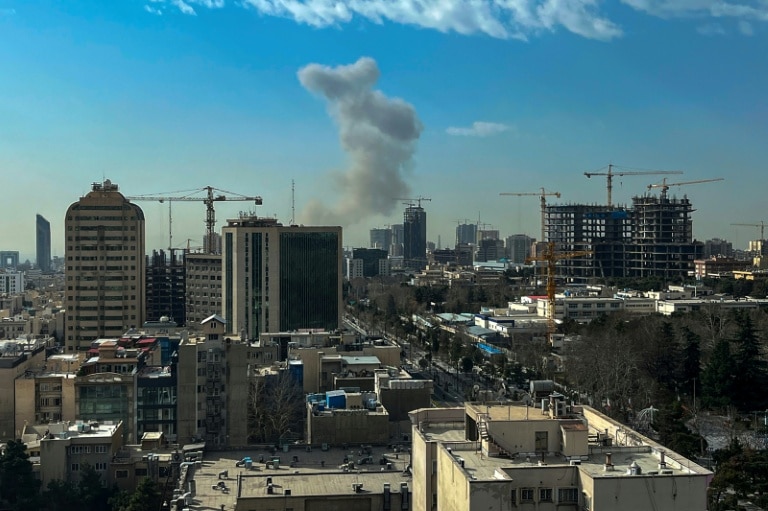
Authorities in Delhi have apprehended a man linked to a devastating car bomb attack that claimed eight lives and left 20 others injured last week. The National Investigation Agency (NIA) revealed that the vehicle used in the attack, which the government has labeled a ‘terrorist incident,’ was registered under the suspect’s name. The individual, a resident of Indian-administered Kashmir, is accused of conspiring with the alleged suicide bomber. The explosion occurred near a metro station adjacent to the Red Fort, a prominent historical landmark in Delhi. The NIA has seized another vehicle believed to belong to the suicide bomber for further examination and has interrogated 73 witnesses, including those injured in the blast. This marks the first such explosion in the heavily guarded city since 2011. The attack took place on Monday evening at 18:52 local time (13:22 GMT) when a slow-moving vehicle stopped at a busy traffic signal and detonated. Home Minister Amit Shah confirmed the explosion involved a white Hyundai i20, with footage from the scene showing the charred remains of the car and other vehicles. Prime Minister Narendra Modi condemned the attack as a ‘conspiracy,’ pledging to bring the perpetrators to justice. Opposition leader Rahul Gandhi expressed deep sorrow over the incident. Police are investigating potential links to recent arrests in Indian-administered Kashmir and the seizure of 2,900kg of explosives from a Delhi suburb. The Red Fort, a 17th-century Mughal fortress, is a major tourist attraction and the site of India’s annual Independence Day speeches.
-

Clashes erupt in Mexico City anti-crime protests, injuring 120
A massive anti-crime protest in Mexico City turned violent on Saturday, resulting in over 100 injuries and 20 arrests, according to local government officials. Thousands of demonstrators, predominantly young Mexicans connected to a global wave of Generation Z activism, gathered at the historic Zocalo square. The protest was also fueled by the domestic ‘Sombrero Movement,’ which emerged following the recent assassination of Carlos Manzo, a mayor known for his fight against organized crime in Michoacan state. Participants of all ages rallied in front of the National Palace, where President Claudia Sheinbaum resides. The demonstration initially remained peaceful until a group of masked individuals began toppling metal barriers and hurling paving stones at riot police, who responded with tear gas. Mexico City’s security chief, Pablo Vazquez, reported that 20 protesters and 100 police officers were injured, with 40 officers hospitalized. Police arrested 20 individuals for theft and assault and launched an investigation into the alleged assault of a journalist from La Jornada newspaper. President Sheinbaum, who has faced criticism over her security policies, dismissed the protest as ‘inorganic’ and ‘paid for,’ suggesting foreign influence. Protesters displayed banners honoring Carlos Manzo and the pirate flag from the Japanese manga One Piece, a global symbol of youth resistance. The widow of the slain mayor distanced her husband’s movement from the protest, while demonstrators accused the government of failing to protect Manzo.
-

China’s major airlines offer refunds and rebooking for Japan-bound passengers amid security alert
In response to heightened security concerns and political tensions, China’s leading airlines have introduced special measures to assist passengers traveling to Japan. On Saturday, November 16, 2025, major carriers including Air China, China Southern Airlines, China Eastern Airlines, Hainan Airlines, Sichuan Airlines, and Xiamen Airlines announced free refunds and rebooking options for eligible Japan-bound tickets. This initiative follows a security alert issued by China’s Ministry of Foreign Affairs and its embassies in Japan, urging Chinese citizens to avoid travel to the country due to escalating safety risks. The advisory cited increased public security issues, such as violent incidents involving Chinese nationals and unresolved cases, as well as provocative statements by Japanese leaders regarding Taiwan, which have strained bilateral relations. Passengers who purchased or reissued tickets before midday on Saturday and have unused travel segments to or from major Japanese cities—including Tokyo, Osaka, Nagoya, Fukuoka, Sapporo, Hiroshima, and Okinawa—can apply for free refunds or itinerary changes until December 31, 2025. The policy covers both standard and mileage-redemption tickets for flights operated by the airlines and certain codeshare services. Requests must be submitted after 00:00 on Saturday, in accordance with each airline’s specific conditions. The airlines emphasized that these temporary arrangements aim to provide flexibility for passengers adjusting their travel plans in light of the government’s warning. Chinese authorities also advised citizens currently in Japan to remain vigilant, enhance personal safety measures, and seek assistance from local police or Chinese diplomatic missions if needed.
-

‘Generation Z’ protests spread in Mexico, fuelled by mayor’s murder
Mexico witnessed widespread unrest on Saturday as thousands of demonstrators, rallying under the banner of ‘Generation Z,’ took to the streets to protest escalating violence in the country. The protests were sparked by the brutal public assassination of Uruapan Mayor Carlos Manzo on November 1, during a Day of the Dead event. In Mexico City, tensions escalated when a group of hooded protesters dismantled fences surrounding the National Palace, the residence of President Claudia Sheinbaum. The confrontation with riot police led to the deployment of tear gas, resulting in injuries to 100 police officers, 40 of whom required hospitalization, and 20 civilians, according to local officials. Public Safety Secretary Pablo Vazquez confirmed the casualties and reported that 20 individuals were arrested, with another 20 facing administrative charges. Protests also erupted in other regions, including Michoacan, where anger over Manzo’s murder remains palpable. Demonstrators in Mexico City directed their frustration at Sheinbaum’s political party, Morena, chanting slogans such as ‘Out, Morena’ and demanding stronger government action against crime. A group identifying as ‘Generation Z Mexico,’ which organized the protests, described itself as non-partisan and representative of Mexican youth disillusioned with violence, corruption, and abuse of power. The term ‘Generation Z’ refers to individuals born between 1997 and 2012, who have increasingly mobilized for social and political change globally. Sheinbaum’s administration, however, questioned the protests’ authenticity, suggesting they were largely orchestrated by right-leaning political opponents and amplified by social media bots.