分类: world

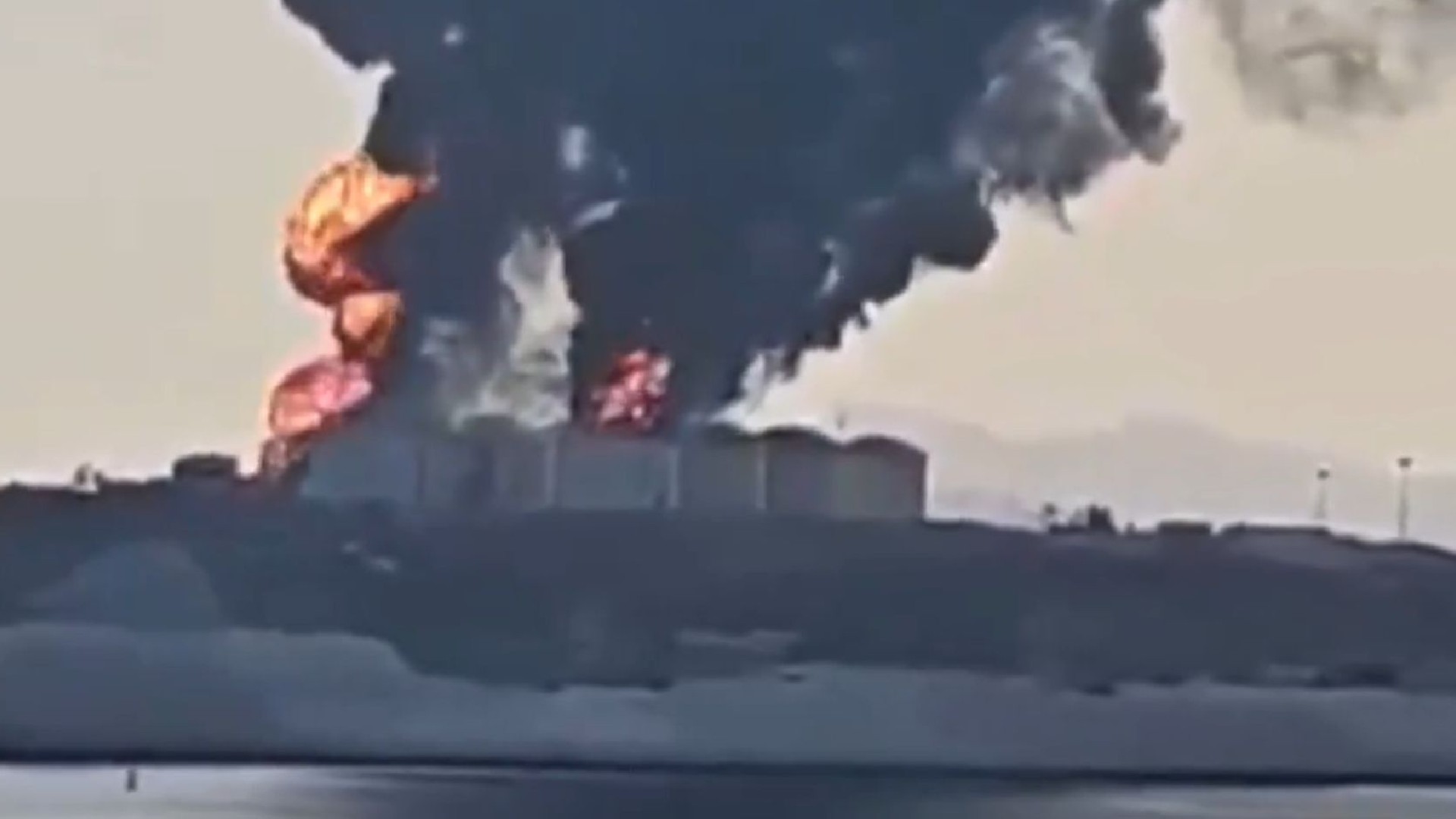
  • Watch: Huge fireball as tanker explodes on Italian motorway

    Watch: Huge fireball as tanker explodes on Italian motorway

    A dramatic and intense explosion involving a fuel tanker occurred on a motorway in Italy, creating a massive fireball that illuminated the sky. The incident, which unfolded following an initial traffic collision, prompted an immediate and large-scale emergency response. Authorities had successfully executed a precautionary evacuation of the surrounding area prior to the detonation, a critical safety measure that ensured no injuries were reported from the blast itself.

    The explosion caused significant disruption, leading to the complete closure of the affected highway section to facilitate emergency operations and subsequent investigation. Specialized firefighting teams were deployed to combat the intense blaze, which posed considerable challenges due to the nature of the fuel fire. The incident highlights the severe dangers associated with transporting hazardous materials and underscores the effectiveness of coordinated emergency protocols in preventing civilian casualties. An investigation into the precise cause of the initial crash and the subsequent explosion is ongoing.

  • Libya’s top military chief, four other officials killed in plane crash in Turkey

    Libya’s top military chief, four other officials killed in plane crash in Turkey

    In a devastating aviation disaster, Libya’s highest-ranking military officer Lieutenant General Mohammed al-Haddad and seven others were killed when their business jet crashed near Ankara on Tuesday evening. The Falcon 50 aircraft, carrying four senior Libyan officials and three crew members, went down approximately 45 miles from the Turkish capital following reported electrical failure.

    The tragedy unfolded shortly after the delegation’s diplomatic meetings with Turkish defense leadership. Turkish Interior Minister Ali Yerlikaya confirmed the aircraft departed Esenboga airport at 17:10 GMT and lost contact 42 minutes into the flight. According to official statements, the pilots reported critical electrical system malfunction 16 minutes after takeoff and requested emergency landing procedures before communications terminated abruptly.

    Eyewitnesses near the crash site in Haymana district described a massive explosion illuminating the night sky. “I heard a tremendous explosion sound—it resembled a detonating bomb,” recounted local resident Burhan Cicek to AFP correspondents. Turkish security forces rapidly located the wreckage and initiated comprehensive investigation procedures under the Ankara chief prosecutor’s supervision.

    The deceased delegation included Major General Al-Fitouri Ghraibil, Major General Mohammed Jumaa, and senior advisor Mohammed Al-Assawi, representing devastating losses to Libya’s military leadership structure. Libyan Prime Minister Abdulhamid Dbeibah expressed profound grief on social media, acknowledging the immense tragedy for the nation’s armed forces.

    This catastrophe occurs amid Libya’s protracted political division between the UN-recognized government in Tripoli and Khalifa Haftar’s eastern administration. Turkey maintains significant military and economic ties with the Tripoli government while recently engaging in diplomatic overtures to eastern factions, highlighting the complex geopolitical landscape surrounding this incident.

  • British boy, 13, fatally stabbed in Portugal, reports say

    British boy, 13, fatally stabbed in Portugal, reports say

    Portuguese authorities are investigating a devastating incident that resulted in the death of 13-year-old British national Alfie Hallett in central Portugal. The tragedy occurred Tuesday in the parish of Casais in Tomar, where the teenager was discovered with multiple fatal wounds from a bladed weapon.

    According to official reports from Portugal’s National Republican Guard (GNR), a suspect was located with similar injuries and subsequently died in what investigators believe was a possible gas explosion. The incident also left one GNR officer injured during response operations.

    The victim’s mother was found restrained and showing signs of assault, requiring hospitalization for her injuries. Police spokesperson revealed that the alleged perpetrator had previously served prison time for aggravated homicide and had been flagged following domestic violence cases registered in both 2022 and 2023.

    Alfie’s basketball club, Sport Club Operario Cem Soldos (SCOCS), published an emotional tribute on Facebook, stating: “SCOCS BASKETBALL has just become poorer today. Our athlete Alfie passed away at the age of 13. He played his last game on Saturday, performing so exceptionally that it seemed he knew it would be his final game, though we could never have imagined this outcome.”

    The UK Foreign Office confirmed it is “in contact with local authorities following an incident in Portugal” as the Criminal Investigation Department of Leiria assumes leadership of the complex investigation into both deaths. While Portuguese television reported both mother and child as British nationals, authorities confirmed the suspect was a Portuguese citizen.

  • Will it snow in UAE? What expert says after rare snowfall in Saudi Arabia

    Will it snow in UAE? What expert says after rare snowfall in Saudi Arabia

    The recent occurrence of snowfall in Saudi Arabia has sparked widespread curiosity among UAE residents regarding the possibility of similar winter phenomena in their own country. Meteorologists confirm that while not impossible, snowfall requires exceptionally specific atmospheric conditions that rarely align in the region.

    According to meteorological reports, several areas in Saudi Arabia experienced unusual snowfall on December 18th following the arrival of a cold air mass. The Saudi Press Agency documented snow accumulation in Al Majmaah and Al Ghat governorates north of Riyadh, with higher elevation areas including Jabal Al Lawz in the northwest similarly affected. The National Centre of Meteorology attributed this event to dramatically dropping temperatures—some falling below zero degrees Celsius—combined with precipitation-bearing thunderclouds.

    Dr. Ahmed Habib from the UAE’s National Centre of Meteorology explained that snowfall demands particularly stringent conditions: “Snow formation necessitates very specific circumstances, primarily occurring in high elevation zones when atmospheric temperatures at upper levels decrease significantly. Within the UAE, such conditions remain uncommon, with hail representing the more typical winter precipitation.”

    Historical records indicate that the UAE has witnessed actual snowfall on rare occasions. The most notable event occurred on January 24, 2009, when Jebel Jais in Ras Al Khaimah experienced substantial snow accumulation following temperatures plunging to minus three degrees Celsius. Mountain peaks approximately 5,700 feet high were covered with snow extending over five kilometers, reaching depths up to 20 centimeters in certain areas. Another similar event was documented in December 2004, though with lesser intensity, and minor snowfall was again reported on Jebel Jais in 2020.

    Recent winter conditions have produced visually similar phenomena across the UAE. Icy rains have deposited hail across desert landscapes, creating snow-like blankets of white, while temperatures in Al Ain and Ras Al Khaimah have approached freezing points. These conditions have inspired ‘ice chasing’ trends where residents visit mountainous areas to observe frost formations.

    Meteorological authorities emphasize that current weather patterns predominantly generate rain, thunderstorms, and hail during winter months. While snowfall remains theoretically possible under precisely aligned conditions at high elevations, it continues to represent an exceptional meteorological occurrence rather than expected winter weather in the region.

  • China deposits with UN its instrument of ratification of agreement on marine biological diversity

    China deposits with UN its instrument of ratification of agreement on marine biological diversity

    In a significant move for global ocean conservation, China has formally deposited its instrument of ratification for the United Nations Agreement on Marine Biological Diversity with UN Secretary-General Antonio Guterres. The deposition occurred on December 15, 2025, according to official documents published on the UN website this Tuesday.

    The groundbreaking international treaty, established under the United Nations Convention on the Law of the Sea, creates comprehensive legal frameworks for conserving and sustainably using marine biological diversity beyond national jurisdictions. The agreement specifically addresses critical areas including deep-sea genetic resources, establishment of marine protected areas, environmental impact assessments, and international capacity building initiatives.

    This diplomatic achievement culminates a extensive negotiation process that began in 2004, involving more than 190 nations. The agreement reached consensus adoption on June 19, 2023, and opened for signatures that September. To date, 144 countries and the European Union have signed the accord, with 80 nations and the EU having completed their ratification processes.

    China demonstrated its commitment to the agreement by signing on the first day it became available for signature. The country’s formal ratification was completed on October 28, 2025, when the 18th session of the Standing Committee of the 14th National People’s Congress approved the decision. China will officially become a contracting party when the agreement takes effect on January 17, 2026.

    UN Secretary-General Guterres has hailed the ratification milestone as a “historic achievement for the ocean and for multilateralism,” recognizing the agreement’s significance in establishing international legal norms for deep-sea and open-ocean activities that will profoundly influence the global maritime order.

  • Research: Israel expanding military outposts to prolong presence in Gaza

    Research: Israel expanding military outposts to prolong presence in Gaza

    A comprehensive investigation by London-based research agency Forensic Architecture has revealed Israel’s systematic military expansion within the Gaza Strip, suggesting preparations for a permanent territorial division. The research, documented by Drop Site News, indicates Israel has established at least 13 new military outposts while consolidating existing infrastructure and constructing extensive road networks throughout the enclave.

    The findings detail how Gaza has been effectively partitioned by a ‘yellow line’ since the October ceasefire took effect. Eastern areas beyond this demarcation have been designated as ‘combat zones’ under Israeli military control, where forces reportedly shoot anyone approaching. Western regions remain under Hamas’s de facto governance, creating a stark territorial division.

    Forensic Architecture’s analysis identified significant discrepancies between officially mapped boundaries and physical military placements. Researchers documented 27 yellow block markers positioned up to 940 meters beyond the officially indicated line, demonstrating gradual encroachment into Gazan territory. The report concludes this infrastructure expansion effectively institutionalizes ethnic cleansing across 53% of Gaza.

    Despite the ceasefire agreement, the research indicates continued targeting of civilian structures and homes. Palestinian news agency WAFA reported renewed aerial bombardments across Gaza this week, with attacks targeting eastern Gaza City and the Tuffah neighborhood. These developments align with B’Tselem’s recent report on forced displacement, which found no meaningful change in Israel’s conduct post-ceasefire.

    The military campaign has produced devastating infrastructure damage, with over 90% of homes destroyed, 70% of all structures compromised, and 81% of road networks rendered unusable. University of Malaya research fellow Belal Alakhras characterized Israel’s strategy as ‘calculated dominance masquerading as security,’ noting that military supremacy is being leveraged to entrench control rather than pursue genuine stability.

    Alakhras further argued that this approach exposes fundamental contradictions in the occupation while deepening international complicity. ‘What Israel is engineering is not stability, but institutionalized fragility that further undermines its own regional standing,’ he stated, describing the situation as ‘colonial logic’ that manages subjugation rather than pursuing safety.

  • Border villagers abducted and taken to Russia, says Ukraine

    Border villagers abducted and taken to Russia, says Ukraine

    In a significant escalation of tactics along Ukraine’s northeastern border, Russian forces have conducted an unprecedented cross-border raid resulting in the capture of 52 civilians and 13 Ukrainian soldiers from the village of Hrabovske in Sumy region. The nighttime assault occurred on Saturday when approximately 100 Russian troops stormed the border settlement, according to Ukrainian military spokesperson Viktor Trehubov.

    The operation marked a disturbing departure from previous Russian military behavior, as invading forces transported civilians across the international border before establishing firm control over the territory. Eyewitness accounts describe how Russian soldiers rounded up villagers in a local church before forcibly relocating them to Russia. Ukrainian officials report the detainees were likely transported to Belgorod, a major regional center located approximately 80 kilometers inside Russian territory.

    Volodymyr Bitsak, a member of Sumy’s regional council, revealed the personal impact: ‘My friends’ mother has been taken there. There is no way of contacting her even though they tried. As far as I know, they’ve been taken to the city of Belgorod and are being held at an unknown location.’

    While fighting initially continued in southern Hrabovske, battlefield monitoring group Deep State confirmed Russian forces ultimately captured the entire village. The Russian defense ministry acknowledged striking Ukrainian forces in Hrabovske and several other Sumy region villages but remained silent regarding the civilian detainees.

    The incident highlights the ongoing challenges of civilian evacuations in border areas. According to deputy regional administrator Viktor Babych, 56% of residents in Sumy’s border regions refuse to leave, with approximately 32,000 civilians including 604 children remaining in potential danger zones. Most of those captured in Hrabovske were elderly residents who had declined official evacuation orders.

    Ukrainian President Volodymyr Zelensky expressed shock that children were among those detained, stating: ‘I’m simply surprised that parents treated their children like that. I think they simply did not expect to be taken to Russia by Russian military.’

    Human rights ombudsman Dmytro Lubinets condemned the operation as a ‘serious violation of international humanitarian law,’ noting that civilians were ‘held incommunicado and in improper conditions’ before being forcibly removed from Ukraine. The event represents a concerning evolution in Russian military tactics along the vulnerable northeastern border region.

  • Explosion in Russian capital kills 3

    Explosion in Russian capital kills 3

    A deadly explosion in Moscow has resulted in three fatalities, including two traffic police officers, according to official statements from Russian investigative authorities on Wednesday. The incident occurred when the officers approached an individual deemed suspicious, triggering an explosive device that proved fatal for both law enforcement personnel and a civilian bystander.

    Investigative Committee spokesperson Svetlana Petrenko confirmed that specialized teams including investigators and forensic experts have been deployed to conduct comprehensive examinations at the blast site. The explosion represents the latest in a series of violent incidents to shake the Russian capital this week.

    The location of Wednesday’s explosion bears significant geographical proximity to where Lieutenant General Fanil Sarvarov, a high-ranking military official, was assassinated by a car bomb just two days prior. General Sarvarov, who served as head of the Operational Training Directorate within the Russian Armed Forces’ General Staff, died when an explosive device detonated beneath his vehicle in southern Moscow.

    Russian investigators have indicated possible Ukrainian involvement in the general’s assassination, marking what would be the third killing of a senior military officer within approximately a year if confirmed. The close temporal and spatial proximity of these incidents has raised concerns about security vulnerabilities within the capital city, though official statements have not established a definitive connection between Wednesday’s explosion and the earlier assassination.

  • Search teams probe wreckage after Libyan army chief and 7 others are killed in Turkey plane crash

    Search teams probe wreckage after Libyan army chief and 7 others are killed in Turkey plane crash

    ANKARA, Turkey — Recovery teams successfully retrieved both cockpit voice and flight data recorders on Wednesday from the wreckage of a Falcon 50 business jet that crashed near Ankara, claiming the lives of Libya’s highest-ranking military commander and seven others. The aircraft, carrying a high-level Libyan defense delegation, experienced catastrophic failure during an emergency landing attempt following reported electrical system malfunctions.

    Interior Minister Ali Yerlikaya confirmed the recovery operation at the crash site near Kesikkavak village, approximately 70 kilometers south of the Turkish capital. The minister noted the extensive debris field spanning three square kilometers has significantly complicated recovery efforts, with Turkish forensic teams working meticulously to identify remains amid challenging weather conditions that included heavy rain and fog.

    The Libyan delegation, led by General Muhammad Ali Ahmad al-Haddad, western Libya’s top military commander, had been conducting crucial defense talks with Turkish officials including Defense Minister Yasar Guler. Their discussions focused on enhancing military cooperation between the nations, occurring just one day after Turkey’s parliament approved a two-year extension for Turkish troops stationed in Libya.

    According to flight tracking data, the jet departed Ankara’s Esenboga Airport at 8:30 p.m. local time Tuesday before reporting electrical failure approximately 40 minutes into the flight. Air traffic controllers authorized an emergency return, but the aircraft vanished from radar during its descent. Libyan authorities have preliminarily attributed the tragedy to technical malfunction.

    The casualties include four additional senior officers: General Al-Fitouri Ghraibil (head of ground forces), Brigadier General Mahmoud Al-Qatawi (military manufacturing authority leader), Mohammed Al-Asawi Diab (advisor to the chief of staff), and Mohammed Omar Ahmed Mahjoub (military photographer). Three crew members’ identities remain undisclosed.

    Libyan Prime Minister Abdul-Hamid Dbeibah declared three days of national mourning, describing the incident as a ‘tragic accident’ and ‘great loss’ for the nation. The crash represents a significant blow to UN-brokered efforts to unify Libya’s divided military establishment, wherein General al-Haddad had played a pivotal role.

    Turkish investigation efforts involve four prosecutors and 408 personnel from multiple agencies, including the disaster management agency AFAD, which established a mobile coordination center at the remote crash site. A 22-member Libyan delegation including family members arrived Wednesday to assist with identification procedures.

  • Two police officers killed in explosion in Moscow

    Two police officers killed in explosion in Moscow

    A deadly explosion has rocked central Moscow, resulting in the fatalities of three individuals, including two traffic police officers. The incident occurred on Yeletskaya Street when officers identified a suspicious individual near a police vehicle. According to an official statement from Russia’s Investigative Committee, the suspect detonated an explosive device during attempted apprehension procedures, instantly killing both officers and a nearby civilian bystander.

    This violent event marks the second security breach in Russia’s capital within a 48-hour period, following Monday’s car bombing that claimed the life of Lieutenant General Fanil Sarvarov, a high-ranking military official. In that prior incident, an explosive device had been strategically planted beneath the vehicle prior to detonation.

    Svetlana Petrenko, spokesperson for the Investigative Committee, confirmed via Telegram that authorities have initiated a criminal investigation into what is being treated as a targeted attempt on the lives of law enforcement personnel. The consecutive attacks suggest a potential escalation of militant activities within Moscow’s city limits, raising serious concerns about public safety and security preparedness.

    Security forces have cordoned off the explosion site as forensic experts continue evidence collection and analysis. While no group has yet claimed responsibility for either attack, the methodology indicates possible coordination between perpetrators. The Russian government has vowed to pursue those responsible with the full extent of counterterrorism measures.