分类: world

  • Pope opens 2026 with plea for peace in countries bloodied by war, families wounded by violence

    Pope opens 2026 with plea for peace in countries bloodied by war, families wounded by violence

    VATICAN CITY — Commencing the new year with a profound spiritual message, Pope Leo XIV issued a powerful call for global peace during his January 1st address from the Apostolic Palace. Speaking to a packed St. Peter’s Square filled with pilgrims and tourists, the Pontiff specifically referenced nations “bloodied by conflict” and families suffering from domestic violence in his annual peace proclamation.

    The Pope’s address coincided with the Catholic Church’s World Day of Peace observance, marking the first major event of 2026. Following a traditional New Year’s Day Mass in St. Peter’s Basilica, Leo XIV delivered his noon prayer from his studio overlooking the square, using the platform to emphasize dual dimensions of peace—both international and domestic.

    After a brief period of rest following the intensive Christmas season, the Pontiff will resume his duties with the Epiphany celebration on January 6th. This event will also serve as the official conclusion to the 2025 Holy Year, the quarter-century tradition that attracted millions of religious travelers to Rome throughout the past year.

    In a significant administrative development, Pope Leo XIV will convene a comprehensive two-day gathering of the College of Cardinals immediately following the Holy Year closure. This assembly will include both cardinal-electors and those over age 80, representing a revival of the traditional consultative practice largely discontinued during Pope Francis’ papacy. The summit aims to collectively address governance strategies for the worldwide Catholic community of 1.4 billion faithful.

  • Russia says Ukrainian drone strike kills 24 in occupied Ukraine as tensions grow amid peace talks

    Russia says Ukrainian drone strike kills 24 in occupied Ukraine as tensions grow amid peace talks

    A deadly drone attack struck a Russian-occupied village in Ukraine’s Kherson region during New Year celebrations, resulting in 24 fatalities and over 50 injuries according to Moscow-installed officials. The assault targeted a cafe and hotel in the coastal town of Khorly, with one drone reportedly carrying incendiary materials that ignited a significant blaze.

    Russian-appointed administrator Vladimir Saldo detailed the incident via Telegram, though Ukrainian authorities have not immediately acknowledged the strike. The Associated Press could not independently verify the attack claims.

    The incident has drawn strong condemnation from Russian officials, with Federation Council Chair Valentina Matviyenko asserting the attack reinforces Moscow’s determination to achieve its military objectives in Ukraine. This development occurs alongside Moscow’s allegations that Ukraine targeted one of President Vladimir Putin’s official residences earlier this week—a claim Kyiv has dismissed as fabricated.

    Amid escalating violence, diplomatic efforts continue to advance. Ukrainian President Volodymyr Zelenskyy revealed in his New Year’s address that a peace agreement is approximately 90% complete, though critical territorial disputes remain unresolved. International mediators, including Trump envoy Steve Witkoff, report productive discussions with European and Ukrainian counterparts regarding security guarantees and conflict resolution mechanisms.

    Meanwhile, Russia launched extensive drone attacks against Ukraine’s Odesa region, targeting civilian infrastructure in multiple waves. Ukrainian air defenses reportedly intercepted 176 of 205 drones, with damage to residential buildings but no casualties reported. The ongoing exchanges highlight the intensifying nature of the conflict despite ongoing peace negotiations.

  • What we know about the Switzerland ski resort fire

    What we know about the Switzerland ski resort fire

    A catastrophic fire has engulfed a popular alpine nightclub in Switzerland’s Crans-Montana ski resort during New Year’s celebrations, resulting in one of Europe’s deadliest nightlife disasters in recent history. The blaze erupted at approximately 01:30 local time (00:30 GMT) on January 1, 2026, at Le Constellation bar, a well-established venue known for attracting both locals and international tourists.

    Swiss authorities have confirmed a devastating human toll, with preliminary estimates indicating approximately forty fatalities and over one hundred individuals sustaining injuries, predominantly severe burns. The scale of the emergency required an unprecedented response, including the deployment of ten medical helicopters, forty ambulances, and 150 emergency personnel to the scene. Medical facilities in the Valais region reported their intensive care units at full capacity as they struggled to treat the influx of critically injured patients.

    Chief Prosecutor Beatrice Pilloud has categorically ruled out criminal intent, stating the incident is being treated as a tragic accident with “no question of any attack.” Initial police reports mentioning a possible explosion have been revised, with investigators now focusing on accidental causes, including speculation about pyrotechnics potentially triggering the blaze. The exact ignition source remains undetermined as forensic experts continue their examination.

    The international dimension of the tragedy emerged as authorities confirmed victims hailed from multiple nationalities, reflecting Crans-Montana’s status as a premium winter destination during the peak holiday season. The UK Embassy and Italian Foreign Ministry both acknowledged the incident, with Rome officially citing Swiss police casualty figures. A dedicated helpline (+41 848 112 117) has been established for concerned families seeking information about loved ones.

    Le Constellation, described as a spacious but unpretentious establishment capable of accommodating up to 300 patrons, featured a dual-level layout with a football viewing area upstairs and a large dance floor and bar downstairs. The timing proved particularly tragic as the venue would typically be filled to capacity with revelers celebrating the new year, though the exact attendance at the time of the incident remains unknown.

    Regional Police Commander Frédéric Gisler detailed the emergency response, noting that the first responders arrived rapidly after smoke was detected emanating from the building. The operation has now transitioned to the complex process of victim identification and family notification, with Swiss authorities pledging to return remains to families as swiftly as possible.

  • UN faces turbulent year amid conflicts and calls for reform

    UN faces turbulent year amid conflicts and calls for reform

    The United Nations headquarters in New York witnessed a year of profound turbulence as the organization grappled with escalating global conflicts, deepening humanitarian emergencies, and intensifying geopolitical fractures. The multilateral system faced unprecedented strain throughout 2025, testing the institution’s capacity to maintain international peace and security.

    The Palestinian situation emerged as a dominant concern, culminating in the 80th UN General Assembly’s adoption of the ‘New York Declaration’ on September 12. This resolution, crafted through Franco-Saudi collaboration and supported by 142 nations, demanded an immediate ceasefire, prisoner releases, and the establishment of a sovereign Palestinian state. This diplomatic achievement coincided with a wave of recognitions, with the UK, Canada, Australia, and numerous other states formally acknowledging Palestinian statehood. By late September, an overwhelming 157 of 193 member states had extended recognition.

    November marked a significant breakthrough when the Security Council finally endorsed a US-proposed Gaza ceasefire plan after two years of deadlock. The resolution authorized an International Stabilization Force to support reconstruction efforts, representing a notable shift from previous American vetoes that had blocked similar measures. China’s UN ambassador Fu Cong emphasized the urgency, stating: ‘Gaza already faces famine with rapidly spreading disease. As a permanent member, the US must support the council’s duties rather than undermine UN authority.’

    The organization simultaneously confronted internal challenges, including a deepening liquidity crisis exacerbated by reduced contributions from the United States and other Western donors. President Donald Trump’s extended General Assembly speech criticized the UN’s operational framework, accusing the organization of funding migratory assaults on Western nations.

    Structural reform gained momentum with the December launch of the Group of Friends of Global Governance, comprising 43 founding members. China championed reforms that would enhance developing nations’ representation and reflect contemporary geopolitical realities. Ambassador Fu articulated this vision: ‘We must uphold the UN Charter’s principles, advance international relations democratization, and strengthen developing countries’ voice in global affairs.’

    The reform debate intensified when China opposed Japan’s Security Council aspirations, with Fu declaring Japan ‘totally unqualified’ following Prime Minister Takaichi’s comments regarding a potential ‘Taiwan contingency.’ China subsequently submitted formal objections to the Secretary-General reaffirming Taiwan as China’s internal affair.

    As the year concluded amidst ongoing conflicts, Secretary-General António Guterres delivered a poignant New Year’s message urging global leaders to ‘choose people and planet over pain,’ acknowledging that ‘chaos and uncertainty surround us’ as the world stands at a critical crossroads.

  • US military says five killed in latest strike on alleged drug boats

    US military says five killed in latest strike on alleged drug boats

    The US Southern Command has confirmed a new series of lethal maritime engagements as part of its intensified counter-narcotics operations. On Wednesday, US forces conducted strikes on two vessels allegedly involved in drug trafficking, resulting in the deaths of five individuals aboard. This action follows another targeted operation just one day prior, where US military assets engaged what they described as a three-vessel narco-trafficking convoy, killing at least three people.

    These recent strikes represent the latest escalation in a controversial campaign that began on September 2nd, with over thirty vessels targeted and more than 110 fatalities recorded to date. The operations extend across international waters in the Caribbean and eastern Pacific regions, areas known for narcotics smuggling routes.

    The Trump administration has framed these operations as part of a non-international armed conflict against drug traffickers. However, this characterization has drawn scrutiny from legal experts who question its compliance with international laws governing armed conflict. Particularly controversial is the emergence of ‘double-tap’ strike patterns, where targets are engaged multiple times in quick succession.

    The initial September attack has come under particular congressional scrutiny after revelations that US forces struck the same vessel twice. Two survivors who had been clinging to the hull following the first strike were killed in the second engagement, raising concerns about potential violations of rules of engagement.

    In its most recent statement regarding the December 30th convoy engagement, US Southern Command reported that several individuals abandoned their vessels before subsequent engagements sank the boats. The command stated that the US Coast Guard was immediately notified to search for survivors, with Reuters reporting an anonymous US official confirming eight individuals were being sought. The current status of these survivors remains unknown.

    The military justification for these strikes rests on intelligence claims that targeted vessels were transiting known narco-trafficking routes and engaged in illegal activities, though concrete evidence of drug cargo has not been publicly provided despite repeated insistences from Southern Command.

  • BBC reports from the scene of Swiss resort bar fire

    BBC reports from the scene of Swiss resort bar fire

    A devastating fire erupted at a popular Swiss alpine resort during New Year’s Eve festivities, resulting in what authorities fear to be dozens of fatalities. The blaze tore through a crowded bar area where revelers had gathered to welcome the new year, transforming celebrations into tragedy within moments.

    Emergency responders from multiple jurisdictions rushed to the scene amid chaotic conditions, battling both the flames and challenging winter weather. Witnesses described scenes of panic as smoke rapidly filled the establishment, with some patrons attempting to escape through windows and emergency exits.

    The resort, located in the picturesque Alps region, typically draws international visitors during the holiday season. Local authorities have launched a comprehensive investigation into the fire’s origins while international assistance has been offered to help identify victims and support grieving families.

    This incident represents one of Europe’s most significant fire tragedies in recent years, raising urgent questions about safety protocols in seasonal entertainment venues. The Swiss government has announced plans for a nationwide review of fire safety standards at public gathering places following the catastrophic event.

  • Concerns voiced over situation in Gaza

    Concerns voiced over situation in Gaza

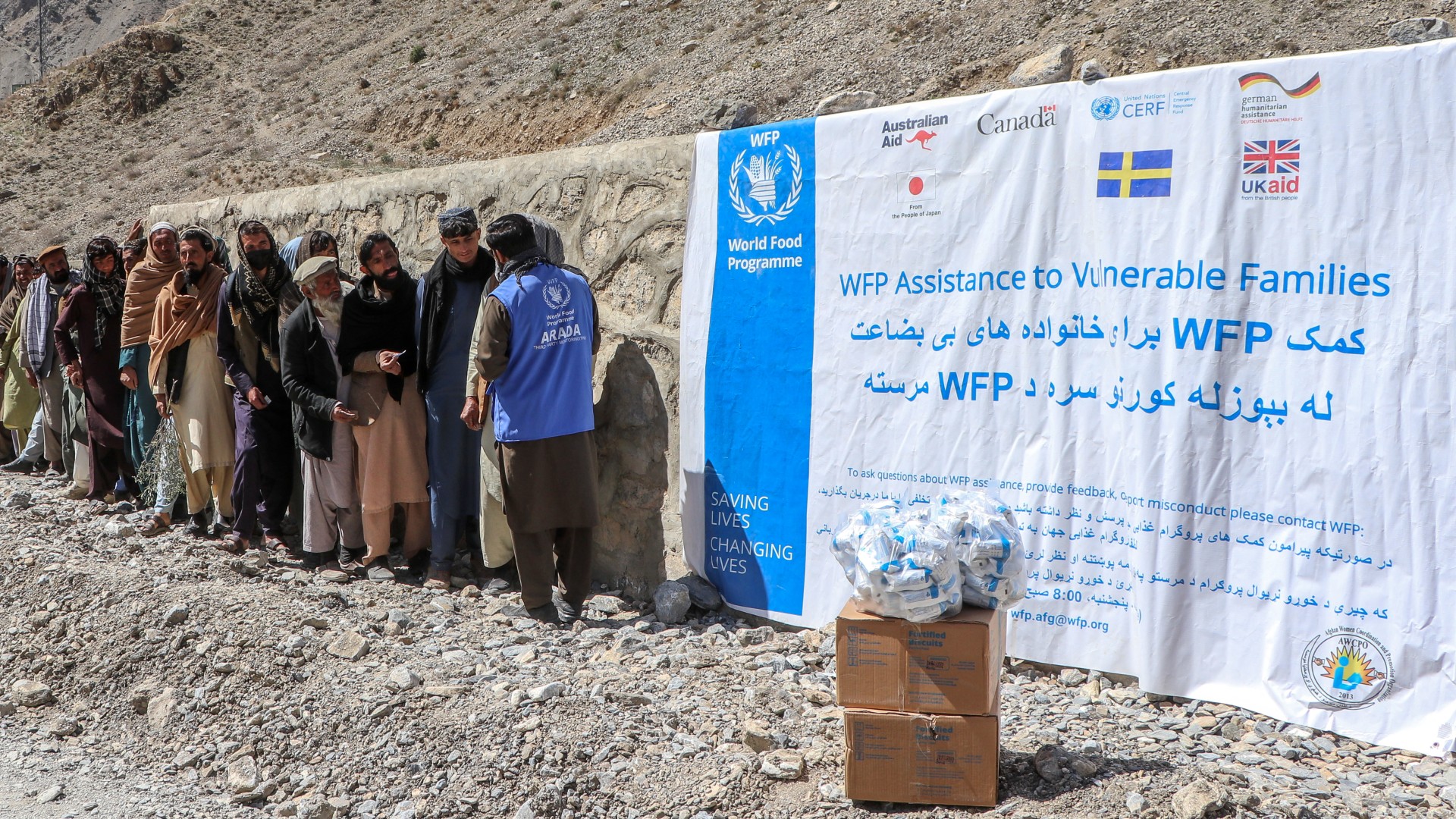
    A coalition of ten nations has issued a stark warning regarding the rapidly deteriorating humanitarian conditions in the Gaza Strip. The foreign ministers of Canada, Denmark, Finland, France, Iceland, Japan, Norway, Sweden, Switzerland, and the United Kingdom collectively expressed grave concerns about the catastrophic situation unfolding in the region.

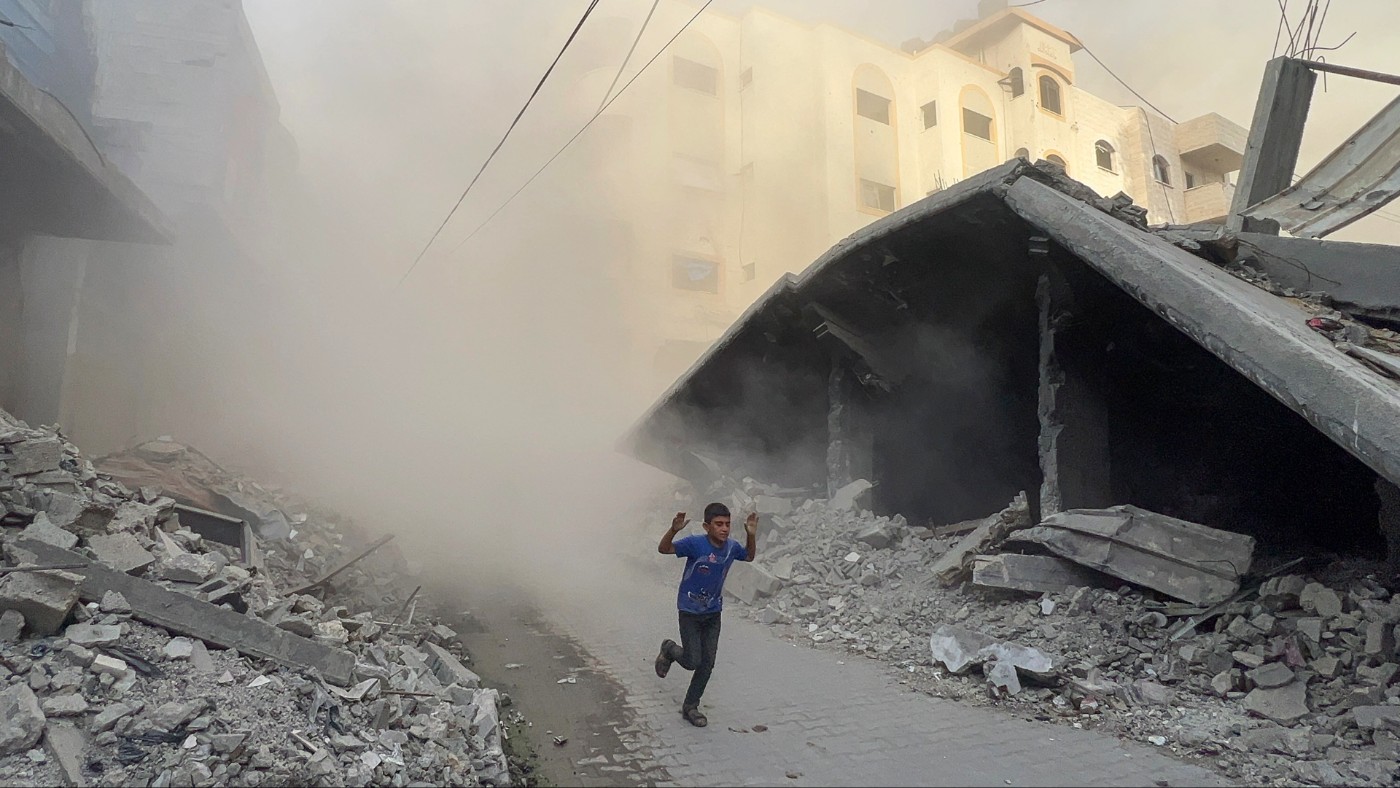
    According to the joint statement released through the British Foreign Office, civilians in Gaza are enduring appalling living conditions exacerbated by harsh winter weather. Heavy rainfall and dropping temperatures have created additional hardships for a population already suffering from severe shortages of food and inadequate access to healthcare facilities.

    The ministerial coalition called upon the Israeli government to ensure sustained and predictable operations for international non-governmental organizations working in Gaza. They emphasized the critical need for the United Nations and its partner agencies to maintain uninterrupted aid delivery throughout the territory. Specific demands included lifting restrictions on dual-use imports and opening additional border crossings to facilitate humanitarian assistance.

    Meanwhile, the Palestinian government has urgently appealed to international organizations and UN agencies to implement immediate protective measures for Gaza residents facing successive winter storms and extreme weather conditions. Officials in Ramallah specifically requested the entry of mobile homes and emergency shelter supplies into the territory.

    In a separate development, medical charity Doctors Without Borders faces potential expulsion from Gaza for non-compliance with new Israeli registration requirements for relief agencies. The organization, which provided medical care to approximately 500,000 people during the two-year Gaza conflict, warns that deregistration would eliminate life-saving medical assistance for hundreds of thousands of Palestinians.

    The Israeli military agency COGAT, which coordinates aid operations, stated that the charity refused to provide employee lists to Israel’s Ministry for Diaspora Affairs and Combating Antisemitism. The ministry claims individuals affiliated with the organization have links to Hamas and Palestinian Islamic Jihad, allegations that Doctors Without Borders vehemently denies as unsubstantiated.

    The Gaza situation reflects broader global concerns expressed by outgoing UN refugee chief Filippo Grandi, who warned that increasing geopolitical fragmentation is fueling conflicts worldwide and exacerbating hostility toward refugees. Grandi noted that the world has become ‘totally unable to make peace,’ creating dangerous repercussions for vulnerable populations fleeing violence.

  • In pictures: New Year welcomed around the world

    In pictures: New Year welcomed around the world

    As the world transitioned into 2026, nations across the globe welcomed the new year with breathtaking pyrotechnic displays and diverse cultural traditions, while some celebrations carried poignant moments of remembrance.

    The Pacific atoll of Kiritimati in Kiribati became the first inhabited place to enter the new year, with one tourist describing a uniquely isolated celebration on a beach devoid of artificial light, surrounded only by natural darkness and countless crabs.

    Major global cities orchestrated spectacular visual festivities. Sydney’s iconic harbour illuminated with its famous fireworks display over the Opera House and Harbour Bridge, though celebrations were tempered by a solemn tribute to the victims of December’s Bondi Beach attack. At 11 PM local time, the harbour fell silent for a minute of reflection, with crowds holding up lights and projections of “Peace, Unity” and a Jewish menorah appearing on the bridge pylons.

    Rio de Janeiro mounted an especially ambitious pyrotechnic show attempting to surpass its own 2024 Guinness World Record, while New York’s Times Square witnessed its traditional ball drop ceremony presided over by Mayor Eric Adams before an estimated million-strong crowd.

    European capitals showcased their distinctive celebrations: London’s skies dazzled with fireworks above the London Eye and Big Ben, Edinburgh maintained its Hogmanay traditions despite weather warnings, Berlin illuminated the Brandenburg Gate, and Paris presented a light show on the Arc de Triomphe.

    Asian metropolises contributed vibrant displays, with Singapore’s Marina Bay, Manila’s skyscraper-matched pyrotechnics, Bangkok’s riverfront gatherings, Dubai’s Burj Khalifa spectacle, Hong Kong’s live performances, Beijing’s Great Wall illumination, and Seoul’s laser shows over the Lotte World Tower.

    Beyond urban fireworks, unique cultural traditions marked the transition. Southern France witnessed a traditional sea dip at a nudist beach, Copenhagen swimmers braved icy waters for the Nytaarsbad tradition, Dutch residents practiced carbide shooting with milk cans, Japanese women in kimonos performed Shinto rituals, Polish runners participated in a New Year’s race through Krakow’s Old Town, and Balinese performers conducted traditional dances to welcome the new sun.

  • Waiting for New Year: It’s still 2025 in these countries

    Waiting for New Year: It’s still 2025 in these countries

    While the United Arab Emirates spectacularly welcomed 2026 with breathtaking fireworks and drone displays, numerous nations worldwide remained immersed in the final hours of 2025 due to global time zone variations. This temporal disparity creates a fascinating, staggered celebration pattern across the planet.

    Qatar, Russia, and Turkey, all operating in the UTC+3 time zone, celebrated precisely one hour after the UAE. Qatar marked the occasion with dazzling events at Lusail Boulevard and The Pearl-Qatar. Russia, for whom New Year is the most significant holiday, commenced an extended festive period from January 1st to 8th, characterized by lavish feasts, the iconic Kremlin chimes at midnight, and traditional activities like ice skating. Turkey celebrated with unique customs, including wearing red for good luck and purchasing lottery tickets, alongside large family dinners and fireworks over Istanbul.

    Egypt, two hours behind the UAE (UTC+2), welcomed the new year with vibrant parties in Cairo and coastal resorts, featuring traditional dishes such as stuffed pigeon. In Europe, France and Germany, both in the UTC+1 zone, celebrated three hours after the UAE. While France scaled back some public events for security reasons, Germany continued its tradition of grand firework displays and sharing lucky charms like marzipan pigs.

    Serbia, also on UTC+1, made the significant decision to cancel some public events in Belgrade due to safety concerns, particularly for children. The United Kingdom, observing UTC+0, celebrated four hours after the UAE with iconic traditions like singing ‘Auld Lang Syne’ and the Scottish custom of ‘first-footing’.

    The Americas witnessed the most delayed celebrations. Canada and the United States, operating across multiple time zones, began their festivities nine hours after the UAE. Cities like Vancouver were among the last to enter 2026. Mexico, ten hours behind, celebrated with symbolic rituals including eating twelve grapes at midnight and wearing colored underwear for luck, highlighting the diverse and rich global tapestry of New Year traditions.

  • What are Russians hoping for in 2026, asks Steve Rosenberg

    What are Russians hoping for in 2026, asks Steve Rosenberg

    As the conflict in Ukraine approaches its fourth consecutive year, BBC Russia Editor Steve Rosenberg has conducted a series of ground-level interviews across Russia to gauge public sentiment about the nation’s future. The extensive reporting reveals a complex tapestry of expectations among Russian citizens as they look toward 2026.

    The investigation captures diverse perspectives ranging from economic concerns to geopolitical expectations. Many interviewees express profound anxiety about the prolonged duration of the military engagement and its cascading effects on daily life, international relations, and economic stability. Contrary to monolithic Western perceptions, Rosenberg’s findings illustrate significant variance in how ordinary Russians conceptualize their personal and national future.

    Economic stability emerges as a predominant concern, with citizens highlighting worries about inflation, currency valuation, and access to imported goods. The reporting also identifies nuanced perspectives on international isolation, with some expressing hope for normalized relations while others anticipate continued geopolitical tensions. Personal aspirations intertwine with national destiny in unexpected ways, creating a multifaceted portrait of a society navigating unprecedented circumstances.

    The temporal focus on 2026 provides a strategic midpoint perspective, allowing citizens to project beyond immediate wartime realities toward medium-term outcomes. Rosenberg’s methodology emphasizes authentic street-level conversations rather than official narratives, capturing voices often absent from international coverage. This approach reveals surprising resilience in some quarters alongside deep apprehension in others, presenting a more complete picture of the Russian psyche during this historical moment.

    The reporting concludes without definitive predictions, instead presenting the array of hopes and concerns as Russia continues to adapt to economic transformations and global repositioning. This ground-level account provides valuable insight into how geopolitical events translate into personal expectations for the future.