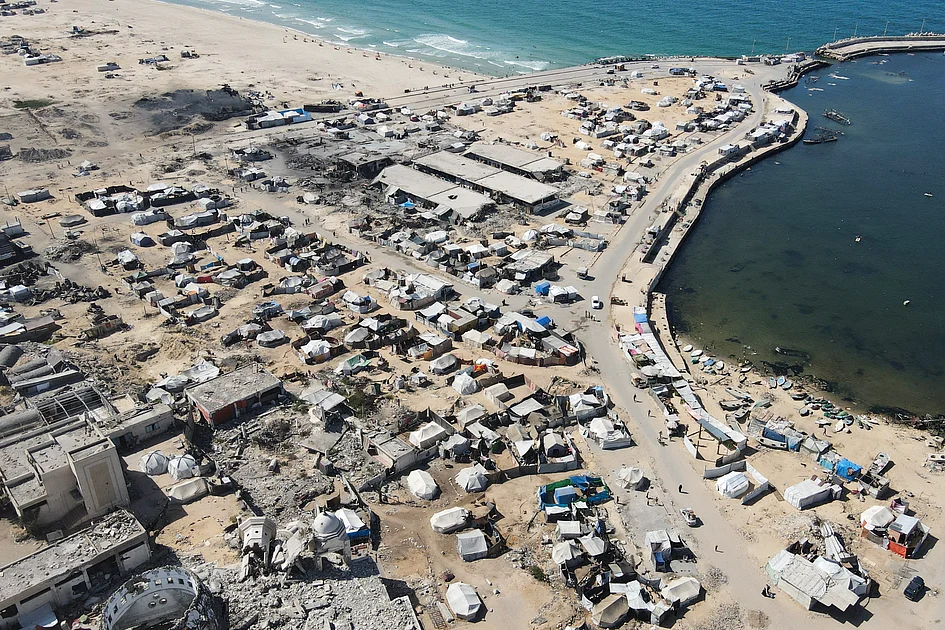
The Palestinian movement Hamas announced on Tuesday that its newly established Radea security unit had successfully targeted and dismantled an armed group accused of collaborating with Israel in the Gaza Strip. The operation, carried out in the early hours of Tuesday morning in southern Gaza, focused on the militia led by Yasser Abu Shabab, a fugitive leader whose group Hamas alleges has been involved in subversive activities. According to a statement released by Hamas, the Radea unit arrested several members of Abu Shabab’s Popular Forces and seized military equipment used in their operations. The Radea unit, whose name translates to ‘deterrence,’ was recently created by Hamas with the stated purpose of enforcing order and combating treasonous activities. This recent operation follows clashes last week in Gaza City’s Shujaiya neighborhood between the Radea force and various armed groups, including Abu Shabab’s militia, which Hamas accuses of looting and receiving weapons from Israel. Abu Shabab’s group initially operated in Gaza’s southern Rafah governorate and has been accused of aid looting. In July, Abu Shabab claimed his group had the freedom to operate in areas under Israeli military control and communicated their activities in advance. Israeli authorities acknowledged in June that they had armed Palestinian groups opposed to Hamas, though they did not specifically name Abu Shabab’s militia. The recent operation is part of Hamas’ broader efforts to reassert control over Gaza following the October 10 ceasefire agreement with Israel. Last week, Hamas’ official television channel broadcast footage of the execution of eight alleged collaborators in Gaza City, further underscoring its efforts to eliminate perceived threats. Israeli Prime Minister Benjamin Netanyahu reiterated on Saturday that the war in Gaza would not end until Hamas disarms, as stipulated in the US-brokered ceasefire deal. Hamas has yet to directly address the disarmament issue since US President Donald Trump presented the plan two weeks ago.
分类: world
-

Dozens of Israeli soldiers identified in ICC complaint on killing of Hind Rajab
The Hind Rajab Foundation (HRF) has escalated its pursuit of justice by identifying an additional two dozen Israeli soldiers allegedly involved in the death of Hind Rajab, a five-year-old Palestinian girl killed during Israel’s military operations in Gaza. The foundation is referring these soldiers to the International Criminal Court (ICC) for their roles in what it describes as war crimes, crimes against humanity, and genocide. Among those named are three high-ranking commanders: Colonel Beni Aharon, Lieutenant Colonel Daniel Ella, and Major Sean Glass, with Ella and Glass believed to have directly overseen the killings. The HRF plans to progressively disclose the identities of 22 other soldiers as it files national-level complaints in various jurisdictions. The foundation’s efforts follow the release of an hour-long documentary on Al Jazeera Arabic, which highlighted the case. HRF has submitted a 120-page Article 15 filing to the ICC, supported by digital, satellite, and forensic evidence, alleging that Israeli forces knowingly targeted Hind and her family, as well as the ambulance sent to rescue her. The HRF’s legal team asserts that these actions violate Articles 6, 7, and 8 of the Rome Statute. The foundation has also initiated a criminal case in Argentina against Itay Cukierkopf, a tank crew member named in its ICC complaint. HRF’s strategy includes leveraging social media posts by Israeli soldiers boasting of their operations in Gaza as evidence in its global legal campaign. By early 2025, the foundation had amassed over 8,000 pieces of evidence related to alleged war crimes. HRF President Dyab Abou Jahjah emphasized the foundation’s commitment to holding war criminals accountable, stating, ‘We are going after war criminals wherever they go.’ Hind Rajab’s death on January 29, 2024, has become emblematic of the broader violations of international humanitarian law committed by Israeli forces. An investigation revealed that Hind and her family were struck by 335 bullets as they attempted to flee northern Gaza. Hind’s final phone call, in which she pleaded for help, has since been released, capturing global attention. A feature film about her ordeal is expected to compete for an Oscar next year. The ongoing conflict in Gaza has claimed over 67,000 Palestinian lives.
-
Ukraine hits Russian chemical plant with UK-made Storm Shadow missiles
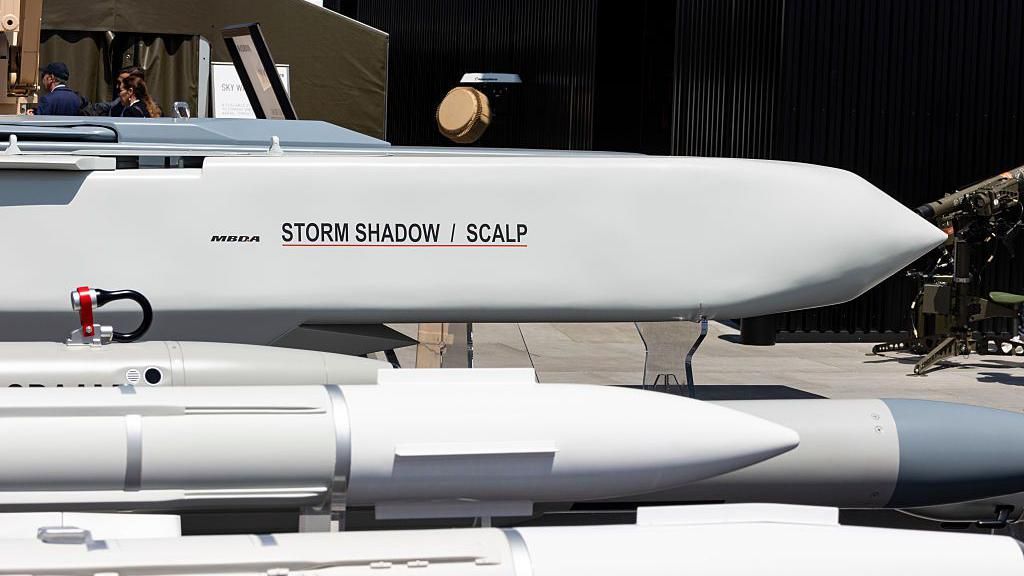
In a significant escalation of the ongoing conflict, Ukraine has successfully targeted a Russian chemical plant using UK-supplied Storm Shadow missiles, according to a statement from the Ukrainian military on Tuesday. The strike, described as a ‘successful hit,’ reportedly breached Russian air defenses, marking a critical development in Ukraine’s efforts to disrupt Moscow’s military-industrial capabilities. The Bryansk Chemical Plant, identified as a key facility producing gunpowder, explosives, and rocket fuel components, was the focus of this ‘massive combined missile and air strike.’ The Ukrainian military emphasized the plant’s role in supplying materials for ammunition and missiles used against Ukrainian territory. While Moscow has yet to comment on the attack, the strike underscores Kyiv’s determination to target strategic Russian assets despite Kremlin warnings against Western military aid. The attack coincided with a joint statement from UK Prime Minister Sir Keir Starmer and other European leaders, pledging to intensify economic and defense industry pressure on Russia until President Vladimir Putin agrees to peace negotiations. Meanwhile, tensions remain high as Russia launched an overnight air attack on Kyiv, with witnesses reporting explosions consistent with air defense operations. The latest developments follow a recent meeting between former US President Donald Trump and Ukrainian President Volodymyr Zelensky, during which Trump expressed reluctance to supply Tomahawk cruise missiles to Ukraine. Trump’s proposed talks with Putin in Budapest were also postponed, citing concerns over a ‘wasted meeting.’ As the war continues, Russia currently controls approximately 20% of Ukrainian territory, including Crimea, annexed in 2014.
-

North Korea has fired ballistic missiles toward the east, Seoul says
North Korea has resumed its ballistic missile testing activities after a five-month hiatus, launching multiple suspected short-range missiles on Wednesday. The missiles were fired from a location south of Pyongyang, the North Korean capital, according to South Korea’s Joint Chiefs of Staff. While the exact trajectory and landing points remain undisclosed, the launches were directed northeastward, raising regional tensions just days before the Asia-Pacific Economic Cooperation (APEC) summit in South Korea. The APEC summit, scheduled for October 30 to November 1, focuses on economic integration and trade, with no military agenda. However, North Korea’s actions have drawn significant attention, as experts suggest the tests may be a strategic move to assert its nuclear capabilities and demand international recognition as a nuclear weapons state. South Korea has heightened its surveillance and is collaborating closely with the U.S. and Japan to monitor the situation. Japan’s Prime Minister Sanae Takaichi confirmed that the missiles did not enter Japan’s territorial waters or exclusive economic zone. This marks the first ballistic missile test since South Korean President Lee Jae Myung took office in June, pledging to restore peace on the Korean Peninsula. North Korean leader Kim Jong Un has intensified weapons development since his nuclear diplomacy with former U.S. President Donald Trump collapsed in 2019. Despite recent hints at resuming talks, Kim’s display of a new intercontinental ballistic missile (ICBM) at a military parade earlier this month underscores his commitment to expanding North Korea’s nuclear arsenal. The Hwasong-20 ICBM, described as the country’s most powerful nuclear weapon system, could be test-launched in the coming months, further escalating tensions in the region.
-

Britain removes terrorism designation for Syria’s HTS
In a significant policy shift, the British government has removed Hay’at Tahrir Al Sham (HTS) from its list of banned terrorist organizations. This decision, announced on Tuesday, October 21, 2025, marks a pivotal moment in the UK’s approach to Syria. HTS, a former Al Qaeda affiliate, was initially proscribed in 2017, making it illegal to support or join the group. The move aligns with broader international efforts to engage with Syria’s new government, led by President Ahmed Al Sharaa, who assumed power following the ousting of long-time leader Bashar Al Assad. The UK government emphasized that this decision would facilitate closer collaboration with Syria, particularly in dismantling Assad’s chemical weapons program and restoring regional stability. This development follows the U.S. revocation of HTS’s foreign terrorist organization designation in July 2025. Meanwhile, Syria’s Economy Minister, Mohammad Nidal al-Shaar, expressed optimism at a London conference that U.S. sanctions against Syria could be lifted in the near future.
-
‘Cruellest violation’: Saudi Arabia executes second child offender in two months
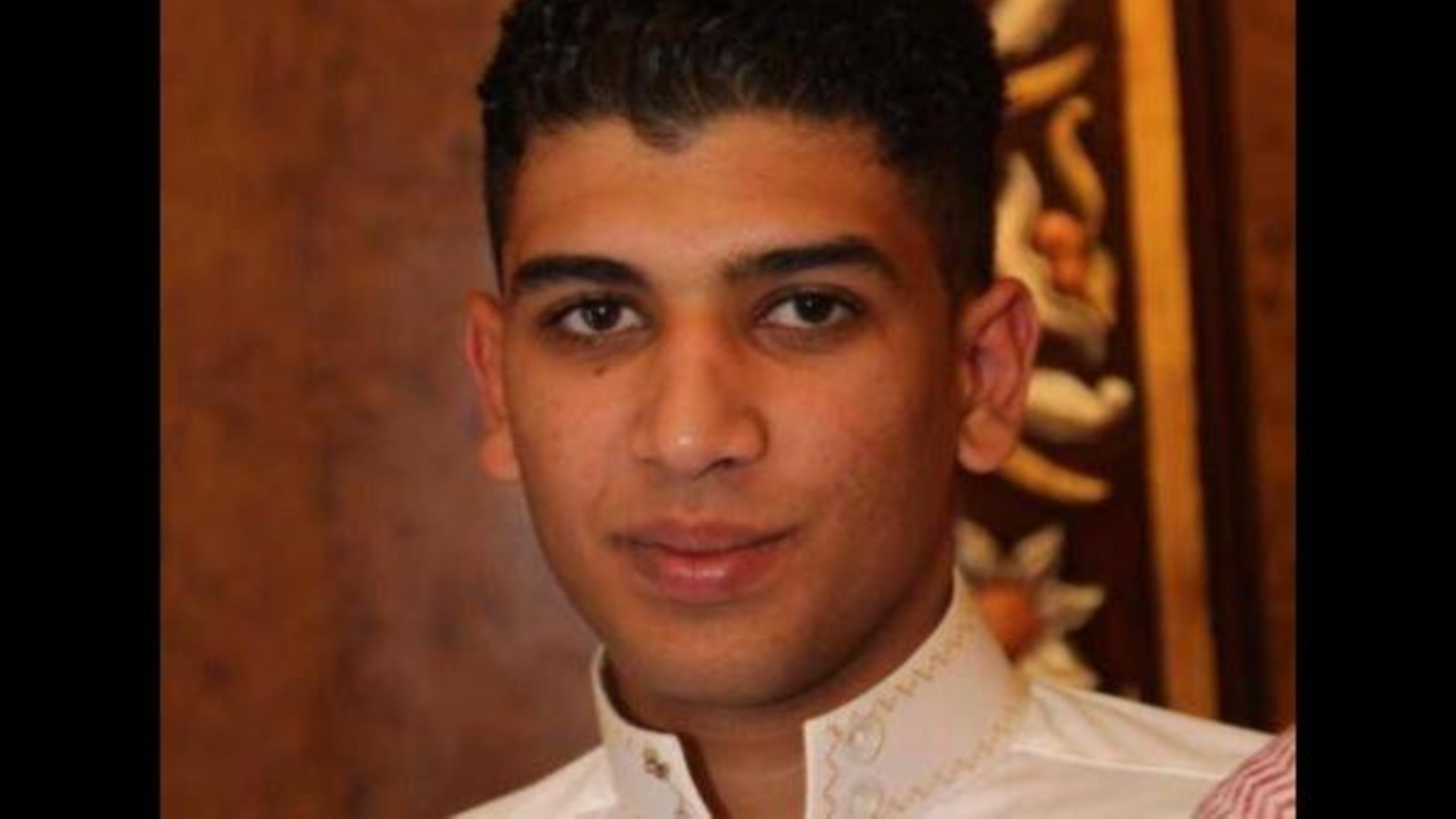
Saudi Arabia has once again drawn international condemnation after executing Abdullah al-Derazi, a man who was a minor at the time of the alleged crimes he committed. Derazi’s execution on Monday marks the second such case in two months, following the execution of Jalal Labbad in August. Both cases highlight Saudi Arabia’s ongoing violation of international human rights laws, including the UN Convention on the Rights of the Child, which prohibits the death penalty for individuals under 18 at the time of their offenses. Derazi was arrested in 2014 during protests against the treatment of Saudi Arabia’s Shia minority. He was accused of targeting security personnel and throwing Molotov cocktails. After a trial in 2018, he was sentenced to death. Rights groups have criticized the trial as unfair and secretive, with Derazi allegedly subjected to torture and forced confessions. His family was denied the opportunity to bid him farewell and only learned of his execution through media reports. Despite a 2020 royal order pledging to end the death penalty for juvenile offenders, Saudi Arabia has continued to execute individuals who committed crimes as minors. Alqst, a UK-based rights group, has identified at least five other child offenders at imminent risk of execution. The kingdom’s execution rate has surged, with 302 executions recorded so far in 2025, a 30% increase compared to the same period in 2024. Many of these executions involve non-lethal drug offenses and vague terrorism charges, potentially violating international law, which restricts the death penalty to the most serious crimes involving intentional killings. Nadyeen Abdulaziz of Alqst stated, ‘With Derazi’s execution, Saudi authorities lay bare the emptiness of their reform claims and their chilling disregard for international law.’
-

Bocholt group visits Wuxi to honor friendship
In a significant gesture to honor four decades of friendship, a delegation from Bocholt, Germany, led by Vice Mayor Gudrun Koppers, visited Wuxi, Jiangsu Province, on October 20, 2025. The visit centered around a special photo exhibition at the Wuxi Museum, which showcased the rich history of cultural and economic exchanges between the two cities. This milestone event not only highlighted the enduring bond between Wuxi and Bocholt but also underscored their commitment to fostering deeper collaboration in the years to come. The delegation’s visit served as a testament to the strength of international partnerships and the shared vision for mutual growth and understanding. For more insights into the delegation’s impressions and their aspirations for future cooperation, viewers are encouraged to explore the accompanying video.
-

Ukrainian city in total blackout after ‘massive’ Russian assault
Russia has intensified its assault on Ukraine’s energy infrastructure, resulting in widespread power outages and significant civilian suffering. The city of Chernihiv, located in northern Ukraine, was plunged into a total blackout following a massive missile and drone attack. Hundreds of thousands of residents were affected, with four fatalities reported in the nearby town of Novhorod-Siverskyi and ten others injured, including a 10-year-old girl. This attack is part of a broader strategy by Russia to target civilian infrastructure, including energy supplies, railways, homes, and businesses, as the full-scale invasion of Ukraine continues. Oleksandr Babich, a 55-year-old Chernihiv resident, described the harrowing experience of hearing Iranian-designed Shahed drones overhead, a sound increasingly familiar to Ukrainians far from the front lines. The Chernihiv region, which borders both Russia and Belarus, is particularly vulnerable due to its proximity to hostile territories. The recent assault involved over 100 Shahed drones and six ballistic missiles, directly hitting Chernihiv’s electricity-generating facilities and leaving the city and surrounding areas without power. Andriy Podorvan, deputy head of the Chernihiv Regional Military Administration, noted that such targeted strikes on energy infrastructure have become more frequent over the past six months, with a significant escalation in the last two months. He emphasized that these attacks are aimed at civilian infrastructure, including petrol stations, rather than military targets. The loss of power has also disrupted water pumping stations, forcing residents to rely on bottled water or emergency deliveries. Despite the ongoing attacks, electrical engineers have begun efforts to restore power, though the intensity of Russia’s bombardment threatens to deplete Ukraine’s energy resilience. The country’s energy companies have been working tirelessly to repair the damage, but the limited supply of replacement equipment poses a significant challenge. Ukrainian President Volodymyr Zelensky’s recent meetings with US energy companies have reportedly been successful in securing support for modernizing Ukraine’s energy sector. However, the estimated $16 billion in damage to Ukraine’s energy infrastructure underscores the severity of the crisis. Despite the hardships, Ukrainian citizens remain resilient, with high morale and a strong sense of unity in the face of adversity.
-
Drone attack hits Sudan’s Khartoum airport area ahead of reopening, witnesses say
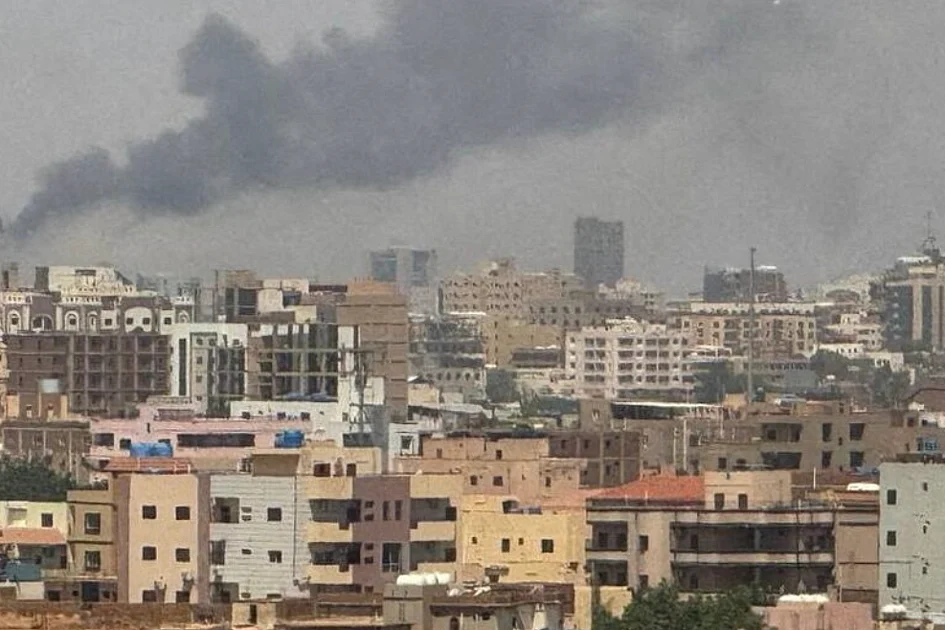
A drone attack targeted the vicinity of Khartoum International Airport early Tuesday, just one day before the facility was scheduled to reopen for domestic flights after a two-year closure. Witnesses reported hearing drones and explosions in central and southern Khartoum between 4am and 6am local time. The airport has been shut since April 2023, when violent clashes erupted between the Sudanese army and the paramilitary Rapid Support Forces (RSF), causing extensive damage to infrastructure across the capital. Despite the army’s recent recapture of Khartoum and efforts to restore normalcy, drone attacks have persisted, with the RSF frequently accused of targeting military and civilian sites. No group has claimed responsibility for the latest strike, and details on casualties or damage remain unclear. This incident marks the third drone attack on Khartoum in a week, following strikes on two army bases last week. While the army has intercepted most drones, the attacks have exacerbated challenges in rebuilding the war-torn city. Over 800,000 people have returned to Khartoum since the army regained control, but large parts of the capital remain in ruins, with millions enduring frequent blackouts linked to RSF drone activity. Meanwhile, the conflict has intensified in western Sudan, where RSF forces are attempting to seize El-Fasher, the last major city in Darfur not under their control. The UN has warned of escalating violence in North and West Darfur, as the wider war in Sudan continues to devastate the nation, claiming tens of thousands of lives and displacing nearly 12 million people.
-
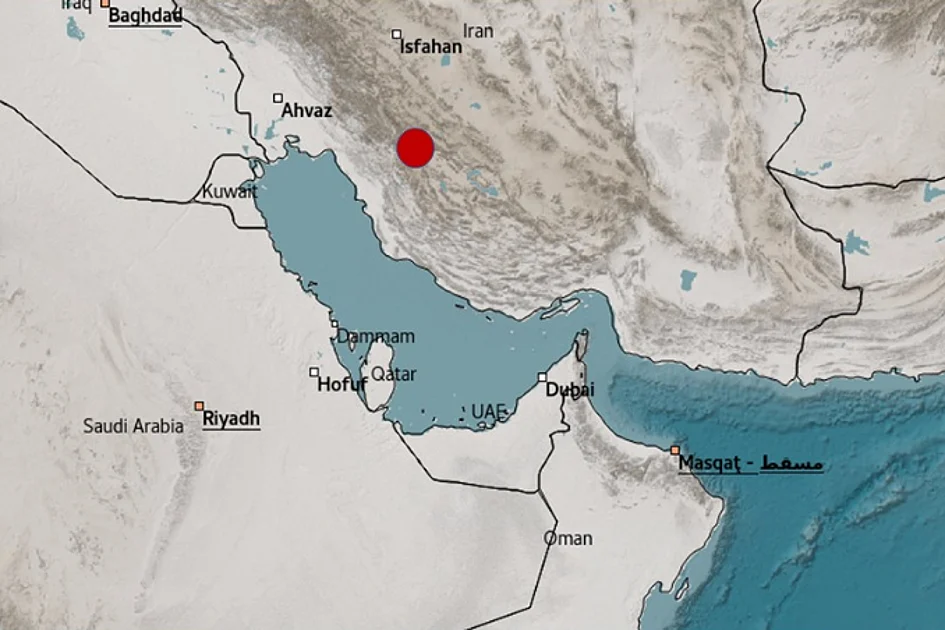
Magnitude 5.3 earthquake hits south Iran; no effect in UAE
A moderate earthquake with a magnitude of 5.3 struck southern Iran on Tuesday, October 21, 2025, according to the National Seismic Network of the National Centre of Meteorology (NCM). The tremor occurred at 12:02 PM UAE time, with its epicenter located at a depth of 10 kilometers. Despite the significant magnitude, the quake was not felt by residents in the United Arab Emirates (UAE), and no adverse effects were reported in the region. The NCM confirmed that the seismic activity had no impact on the UAE, ensuring public safety and normalcy. This event follows a series of recent earthquakes in Iran, including a 5.5-magnitude quake on September 13 and a 5.2-magnitude tremor on September 14. Additionally, a more substantial 5.9-magnitude earthquake had shaken southern Iran in August, with tremors felt as far north as the country’s northern regions. Authorities continue to monitor seismic activity closely, emphasizing preparedness and public awareness.