
China’s Global Governance Initiative (GGI), launched in September 2025 at the ‘Shanghai Cooperation Organization Plus’ Meeting in Tianjin, is poised to reshape Africa’s role in the global landscape. Rooted in principles of sovereignty, equality, and multilateralism, the GGI seeks to reform global governance systems, particularly in climate, technology, and institutional representation. Experts believe this initiative offers African nations unprecedented opportunities to assert their independence and foster sustainable development. Warwick Powell, an adjunct professor at Australia’s Queensland University of Technology, emphasized that the GGI moves beyond the hierarchical structures of the post-war Western-dominated order, enabling African countries to advocate for reforms in global institutions like the United Nations, IMF, and World Bank. Powell highlighted key areas of focus, including energy sovereignty, data sovereignty, and financial independence, urging African nations to invest in local infrastructure and adopt mechanisms like currency swaps with China’s central bank. James Shikwati, director of the Inter Region Economic Network, noted that the GGI aligns with Africa’s long-standing aspirations to reshape international finance and governance. Thomas Namwambah, a senior lecturer at Kenya’s Kenyatta University, praised China’s approach for its emphasis on equality and justice. As Africa navigates the challenges of colonial legacies and external pressures, the GGI provides a framework for collective security, regional cooperation, and shared prosperity, positioning the continent to seize its moment on the global stage.
分类: world
-
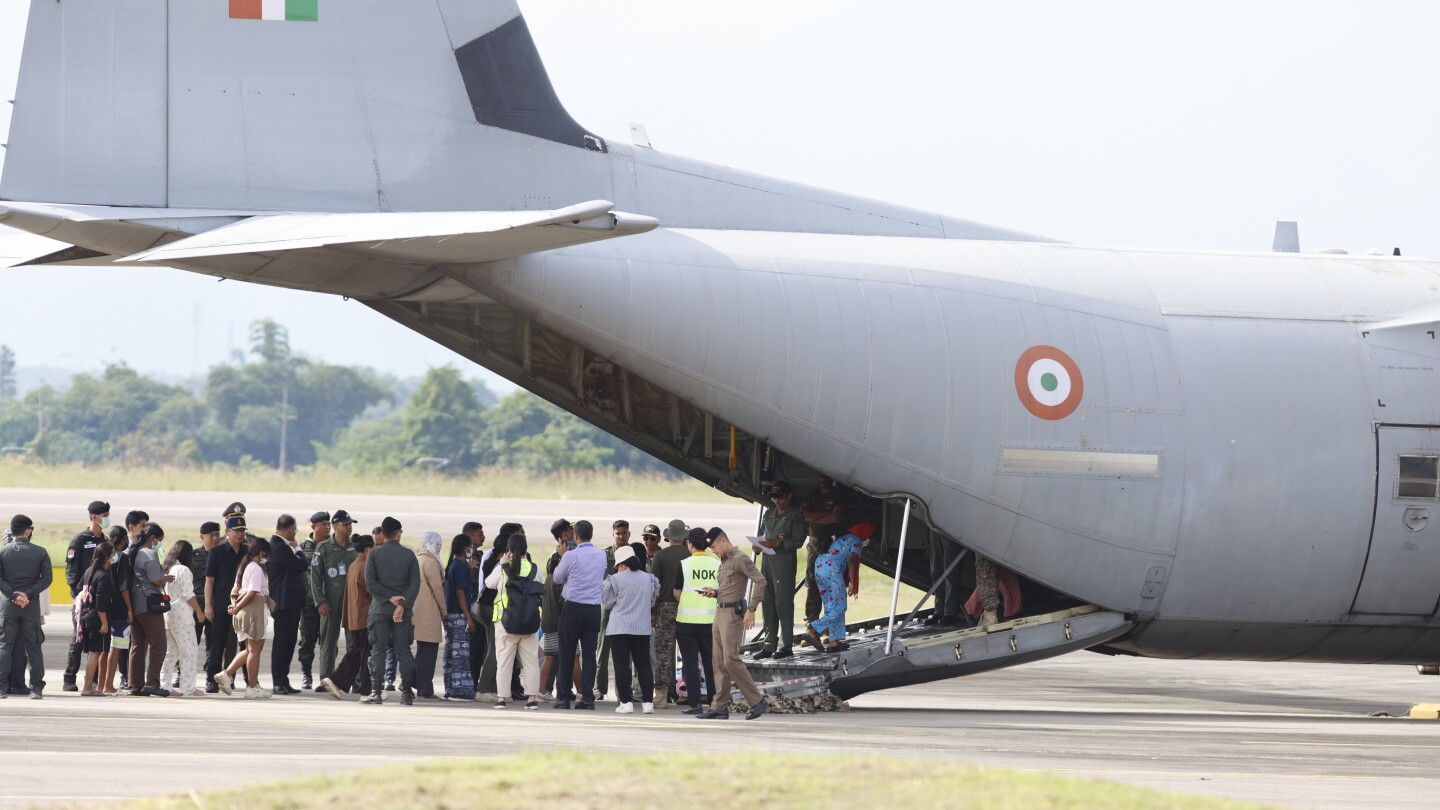
Indians who fled a Myanmar cyberscam center are being flown home from Thailand
India has initiated the repatriation of hundreds of its nationals who fled Myanmar last month, where many were employed at a notorious cybercrime center known as KK Park. Located near the border city of Myawaddy, the facility was raided by Myanmar’s military in mid-October to combat cross-border online scams and illegal gambling. An Indian Air Force transport plane departed Thailand on Thursday, carrying approximately 270 of the 465 Indians slated for repatriation, with the remainder scheduled to leave next Monday, according to Maj. Gen. Maitree Chupreecha, commander of the Thai army’s northern region Naresuan Task Force. This marks the second such operation this year, following the repatriation of 549 Indians in March after a similar crackdown on cybercrime operations at the Myanmar-Thai border. The current repatriation effort includes individuals from over 28 nations, totaling more than 1,500 people who escaped the Myawaddy raid. Thai authorities in Mae Sot have established temporary facilities to house and process refugees, including Chinese, Filipinos, Vietnamese, Ethiopians, and Kenyans. Southeast Asia remains a global hotspot for online scams, with hundreds of thousands of individuals lured to work in Myanmar, Cambodia, and Laos, often under false pretenses. Many are coerced into participating in fraudulent schemes, including fake romances, investment scams, and illegal gambling. Human trafficking is a significant issue, as workers are frequently deceived into accepting legitimate-sounding jobs, only to find themselves trapped in exploitative conditions. The raid on KK Park, part of Myanmar’s broader anti-scam operations, reportedly led to the demolition of parts of the facility. However, independent media reports suggest that organized cybercrime continues to thrive in the Myawaddy area. The global cybercrime problem gained renewed attention last month when the U.S. and Britain imposed sanctions on a major Cambodian cyberscam gang, with its alleged leader indicted in a U.S. federal court. Meanwhile, South Korea has been shaken by the case of a young man who died after being lured to work at a Cambodian cyberscam operation.
-
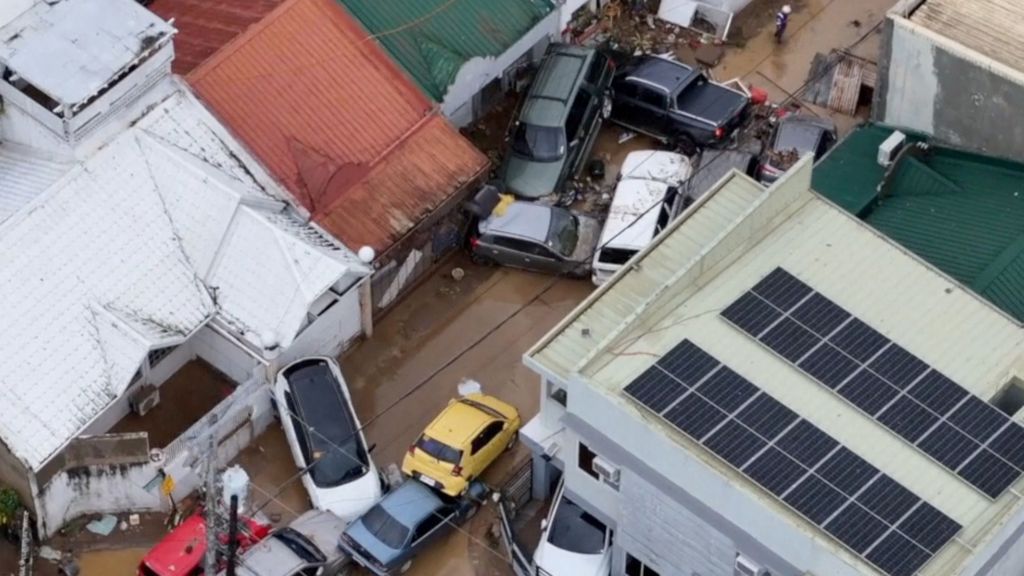
Watch: Cars pile up on Philippines streets after typhoon
In the wake of a devastating typhoon, the Philippines has been left grappling with catastrophic flooding that has claimed the lives of at least 85 individuals, with 75 more still unaccounted for. The calamity has transformed urban landscapes into scenes of chaos, with vehicles piled up on streets submerged under water. Rescue operations are in full swing as emergency teams work tirelessly to locate survivors and provide aid to affected communities. The typhoon’s torrential rains have overwhelmed infrastructure, leaving towns inundated and residents stranded. Authorities have issued warnings for continued heavy rainfall, urging citizens to remain vigilant. This disaster underscores the increasing vulnerability of the region to extreme weather events, exacerbated by climate change.
-
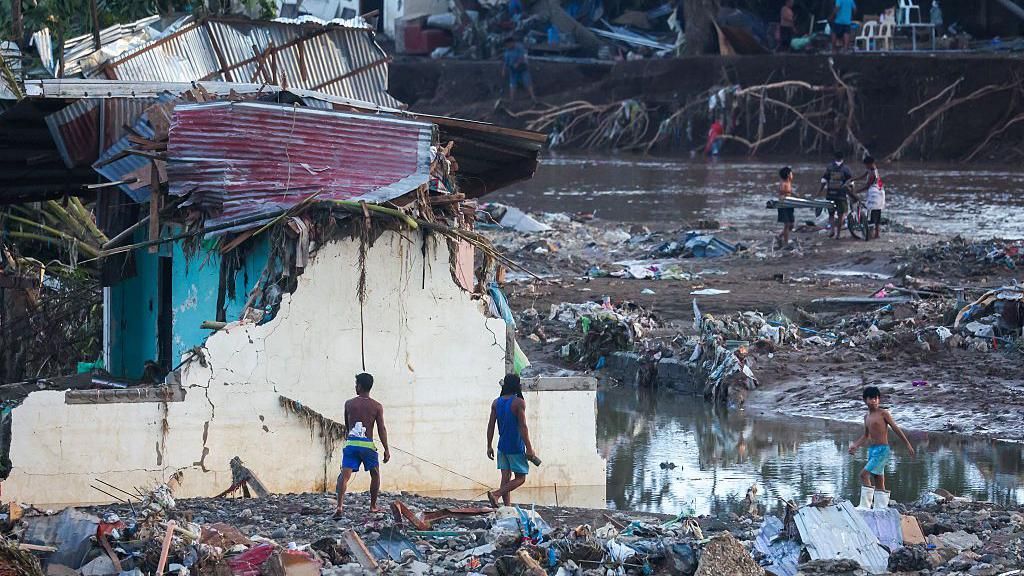
At least 114 dead as Philippines reels from Typhoon Kalmaegi
The Philippines is grappling with the aftermath of Typhoon Kalmaegi, one of the most powerful storms to hit the region this year. As of Thursday, the death toll has climbed to at least 114, with 127 people still missing and 82 injured, according to authorities. The typhoon caused catastrophic flooding across Cebu, the country’s most populous island, where 71 fatalities were reported. Provincial authorities in Cebu have confirmed an additional 28 deaths, which were not included in the national civil defense office’s initial tally. Kalmaegi has since exited the Philippines and is now heading toward central Vietnam, where residents are already dealing with severe flooding that has claimed dozens of lives. The storm unleashed torrents of muddy water, sweeping through towns and cities, leaving behind widespread destruction. Residential areas in Cebu were particularly hard-hit, with many small buildings destroyed and thick layers of mud covering the landscape. Local officials described the devastation as ‘unprecedented.’ Residents returning to their homes are struggling to cope with the aftermath. Jel-an Moira Servas, a business owner from Mandaue city, recounted her harrowing experience of being waist-deep in water within minutes and evacuating with her family. ‘Our houses are filled with mud, and everything is in shambles,’ she said. ‘We don’t even know where to start cleaning.’ The national disaster agency reported that over 400,000 people have been displaced in Cebu, home to 2.5 million residents. The death toll also includes six crew members of a military helicopter that crashed during relief operations on Mindanao island. Volunteer rescuer Carlos Jose Lañas described the situation as the worst flood he has ever witnessed, with emergency responders overwhelmed by the scale of the disaster. Kalmaegi, locally known as Tino, is the 20th tropical cyclone to strike the Philippines this year, a country frequently battered by powerful storms. This disaster follows closely on the heels of back-to-back typhoons in September that killed over a dozen people and caused significant damage to infrastructure and crops. The region has also faced an unusually wet monsoon season, exacerbating the crisis and sparking public outrage over inadequate flood control systems. As Kalmaegi strengthens, with winds reaching 155 km/h, it is expected to make landfall in central Vietnam on Friday, where more than 50 flights have already been canceled or rescheduled. Thailand is also preparing for potential impacts, including flash floods and landslides.
-

Man arrested after groping Mexican President Claudia Sheinbaum
Mexican President Claudia Sheinbaum has called for nationwide criminalization of sexual harassment following an unsettling incident where a man groped and attempted to kiss her. The event took place on Tuesday as Sheinbaum, Mexico’s first female president, was walking to an event near the presidential palace. Videos circulating on social media captured the moment when the man, appearing intoxicated, approached her from behind, placed his arm around her shoulder, and touched her inappropriately while trying to kiss her neck. A member of the presidential security detail swiftly intervened, removing the man from the scene. Despite the violation, Sheinbaum maintained her composure, agreeing to take a photo with the man and even patting him on the back. However, upon realizing that the man continued to harass other women, she decided to file a formal complaint with the police. Authorities later confirmed the man’s arrest. Sheinbaum emphasized the broader implications of the incident during her morning press conference, stating, ‘If they do this to the president, what will happen to all women in our country?’ She announced plans for a government review to ensure that such behavior is classified as a criminal offense across all 32 federal districts, as current laws vary. The incident has also drawn criticism of the president’s security team and highlighted pervasive ‘macho’ attitudes that normalize violations of women’s personal space. According to UN Women, approximately 70% of Mexican women aged 15 and over have experienced at least one incident of sexual harassment in their lives.
-

Are Christians being persecuted in Nigeria as Trump claims?
The recent claims of widespread Christian persecution in Nigeria, amplified by U.S. political figures and media personalities, have sparked intense debate. President Donald Trump’s threat to intervene in Nigeria “guns-a-blazing” to halt the alleged killings of Christians has drawn attention to the issue, but the accuracy of the data fueling these assertions remains questionable. Campaigners and politicians, including Senator Ted Cruz and comedian Bill Maher, have cited figures suggesting that over 100,000 Christians have been killed since 2009, with thousands of churches destroyed. However, the Nigerian government and independent analysts dispute these claims, labeling them as a “gross misrepresentation of reality.”
Much of the data cited by U.S. figures originates from the International Society for Civil Liberties and Rule of Law (InterSociety), a Nigerian NGO. InterSociety’s reports claim that jihadist groups, including Boko Haram and Fulani herders, have systematically targeted Christians. Yet, the organization’s methodology has been criticized for its lack of transparency and reliance on unverified sources. For instance, while InterSociety cites media reports as evidence, many of these reports do not specify the religious identity of victims. The BBC’s analysis of InterSociety’s data found significant discrepancies, with the total number of deaths reported by the NGO far exceeding verifiable figures.
Nigerian officials argue that the violence is not religiously motivated but rather part of a broader security crisis involving jihadist groups, criminal networks, and ethnic tensions. Security analyst Christian Ani emphasized that while Christians have been victims of attacks, there is no evidence to support claims of deliberate targeting. Similarly, other monitoring groups, such as Acled, report that the majority of victims in Nigeria’s political violence are Muslims, not Christians.
The controversy has significant political implications, with U.S. politicians using the issue to criticize Nigeria’s government and advocate for intervention. However, Nigerian authorities have welcomed international support, provided it is not unilateral. The debate also highlights the complexities of Nigeria’s security challenges, which include jihadist insurgencies, ethnic conflicts, and criminal activities. As the discourse continues, the need for accurate, verifiable data remains critical to understanding and addressing the situation.
-

Indian pilgrims find ‘warm welcome’ in Pakistan despite tensions
In a remarkable display of cross-border unity, approximately 40,000 Sikh pilgrims from India were warmly welcomed in Nankana Sahib, Pakistan, to celebrate the 556th birth anniversary of Guru Nanak, the founder of Sikhism. This pilgrimage marks the first major religious gathering since deadly clashes in May 2025 temporarily closed the land border between the two nuclear-armed neighbors. Despite ongoing political tensions, the atmosphere in Nankana Sahib was one of devotion and camaraderie. The streets were meticulously cleaned, and banners adorned the city, creating a festive ambiance. Pilgrims expressed their gratitude for the hospitality, with many noting the stark contrast between the warmth of the people and the strained relations between their governments. Inside the shrine complex, marigold flowers decorated the walls, and the air resonated with religious hymns. Devotees prayed fervently, some performing ritual dips in a sacred pond. The event also witnessed emotional reunions, such as the heartfelt meeting between 90-year-old Muhammad Bashir and Sharda Singh, whose families had been separated during the 1947 partition. The festival, which continues through November, serves as a powerful reminder of shared humanity and the potential for peace amidst political discord.
-
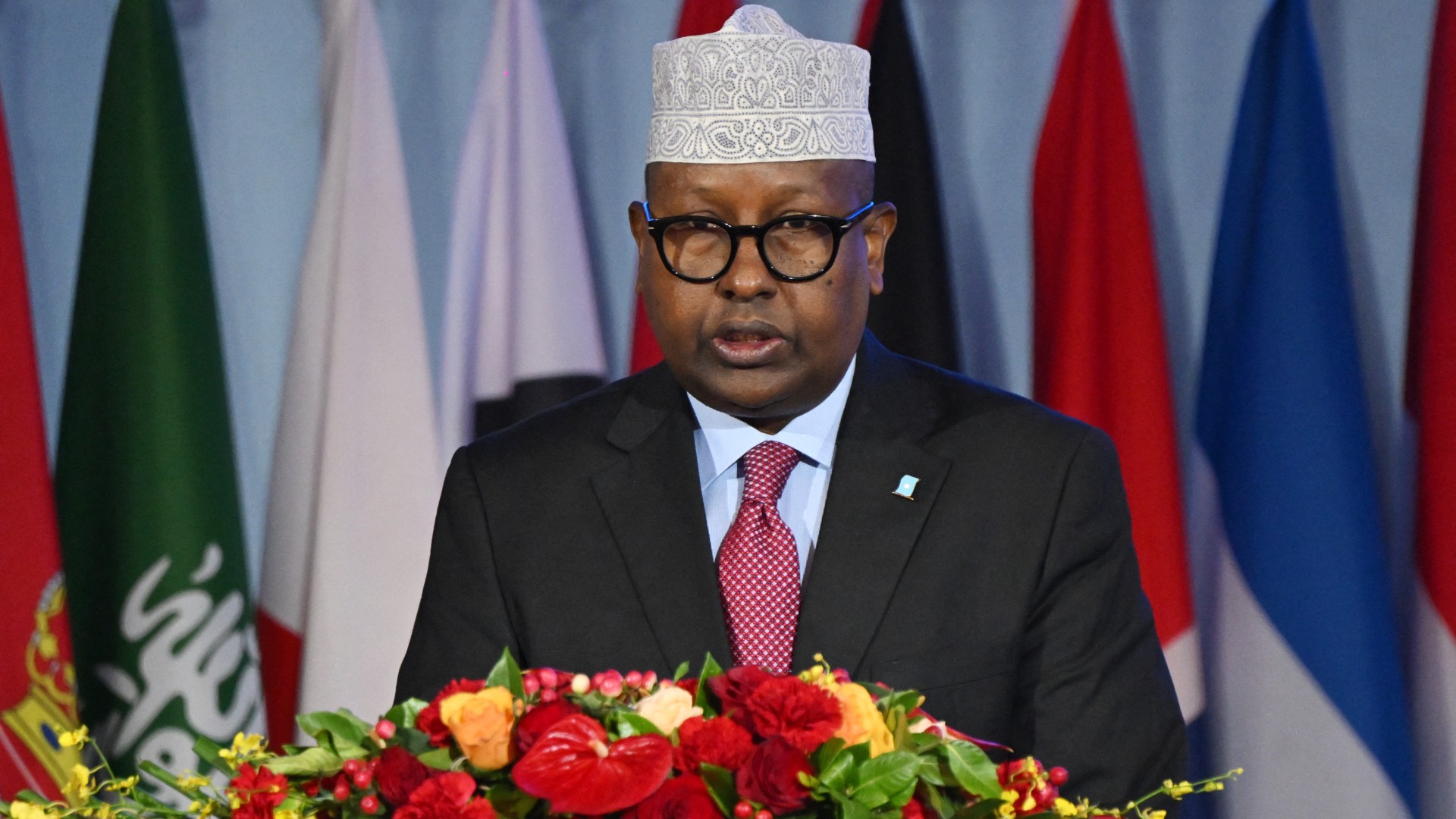
Somali defence minister confirms MEE report of flights from Bosaso to Sudan
Somalia’s Defence Minister, Ahmed Moallim Fiqi, has confirmed that transport aircraft carrying undisclosed cargo have been flying between Bosaso Airport in Somalia’s Puntland region and western Sudan. This admission follows a Middle East Eye (MEE) report last week, which detailed the use of Bosaso Airport by the United Arab Emirates (UAE) to support Sudan’s paramilitary Rapid Support Forces (RSF). The RSF has been engaged in a brutal conflict with the Sudanese Armed Forces (SAF) since April 2023, with allegations of genocide and widespread human rights abuses, including rape and murder of civilians in North Darfur’s el-Fasher city. MEE’s investigation revealed that heavy logistical materials were offloaded at Bosaso Airport before being transported to Sudan via neighboring countries. Additionally, Colombian mercenaries, reportedly fighting alongside the RSF, have been observed transiting through Bosaso Airport. Flight tracking data and satellite imagery suggest the UAE as the origin of these operations. The UAE has long funded Puntland’s regional security forces, and the semi-autonomous region maintains close ties with Abu Dhabi. Somalia’s federal government, which controls the country’s airspace, has not openly confronted the UAE over its activities in Puntland. Former Somali Foreign Minister Abdisaid Muse Ali accused Somalia of complicity in the genocide in Sudan, stating that the use of Bosaso as a logistical hub implicates Somalia in sustaining the RSF’s operations. The report has sparked widespread debate in Somali and regional media, with prominent figures condemning the alleged involvement of Bosaso Airport in Sudan’s conflict. Despite historical support from Sudan, including scholarships for Somali students, Somalia’s role in the war has drawn criticism and calls for accountability.
-

At least 9 dead in cargo plane crash in US state Kentucky
A tragic cargo plane crash near Louisville International Airport in Kentucky has resulted in the deaths of at least nine individuals, with fears that the toll may rise as investigations proceed. Louisville Mayor Craig Greenberg disclosed the grim details during a Wednesday morning interview with local media. Kentucky Governor Andy Beshear had earlier indicated on social media that at least seven fatalities and 11 injuries were reported. The incident involved a UPS cargo plane en route to Honolulu, which crashed around 5:15 pm (2215 GMT) on Tuesday. The National Transportation Safety Board has been tasked with leading the investigation into the crash, as confirmed by the Federal Aviation Administration. Meanwhile, Louisville International Airport has resumed passenger flights, according to its official website.
-
Seven Italian climbers still missing in Nepal
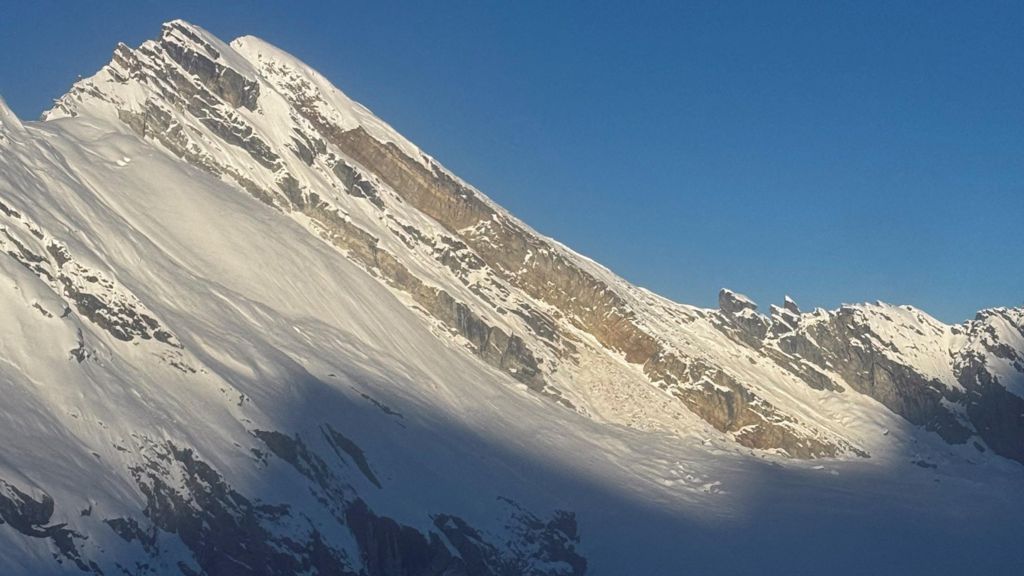
A devastating avalanche in Nepal’s Himalayan region has left seven Italian climbers missing and three confirmed dead, according to Italian and Nepalese authorities. The incident occurred near the Dolma Khang peak, which stands at 6,332 meters (20,774 feet) in the Dolakha district. The Italian team was stationed at the base camp when the avalanche struck earlier this week, claiming the lives of three climbers. Among the missing are Marco Di Marcello and Markus Kircheler, who were reportedly in the Yalung Ri area, where the avalanche hit. Italian diplomat Paolo Cocco was among the seven climbers confirmed dead near the Yalung Ri base camp. The Italian foreign ministry has dispatched a senior diplomat from neighboring India to Kathmandu to coordinate with Nepalese authorities and search teams. Nepal has been grappling with severe weather conditions, including avalanches and storms, which have disrupted climbing expeditions and claimed lives. Ram Krishna Lamichhane, a Nepali tourism official, stated that five individuals, including three foreign climbers and two Nepali guides, are missing in the Dolma Khang base camp area. Conflicting reports have emerged regarding the number of casualties and missing persons, complicating rescue efforts. The Italian climbers were part of an expedition organized by a trekking agency, which is now assisting in the search. In a separate incident, the bodies of Stefano Farronato and Alessandro Caputo, who went missing while attempting to scale the Panbari peak in western Nepal, have been recovered. Autumn is typically a popular season for mountaineering in Nepal due to favorable weather conditions, but the risk of avalanches and severe weather remains high. Last week, Cyclone Montha brought heavy rain and snowfall, stranding climbers in the Himalayas.