分类: world

  • Danish veterans of US wars feel betrayed by Trump’s threats against Greenland

    Danish veterans of US wars feel betrayed by Trump’s threats against Greenland

    COPENHAGEN, Denmark — The profound bond forged between American and Danish soldiers on the battlefields of Afghanistan now stands in stark contrast to the diplomatic crisis unfolding over U.S. threats to acquire Greenland. Danish veterans who fought alongside U.S. troops express deep feelings of betrayal as the Trump administration escalates its campaign to seize the strategic Arctic territory.

    Martin Tamm Andersen, a 46-year-old former platoon commander, vividly recalls the moment in 2010 when his armored vehicle struck an improvised explosive device in Helmand Province. Amid the chaos and dust, American Marines immediately halted their firefight with Taliban forces to secure the area and evacuate the wounded Danish soldiers. “When America needed us after 9/11 we were there,” Andersen stated in an interview at the Danish War Museum, where his destroyed vehicle is now displayed.

    The current diplomatic tension stems from President Trump’s repeated assertions that the United States must take control of mineral-rich Greenland, even suggesting military force as a viable option. This stance has generated widespread shock across Europe, particularly among Danish military personnel who sacrificed greatly in joint operations with American forces.

    Denmark, a NATO member since 1949, suffered the highest per capita casualties among coalition forces in Afghanistan, with 44 soldiers killed. An additional eight died during operations in Iraq. Søren Knudsen, a 65-year-old veteran who served two tours in Afghanistan, described the situation as “surreal” and “like a bad joke.” The deputy president of the Danish Veterans Association has personally packed away his U.S. Bronze Star medal and American flag—gifts from his service alongside U.S. troops—until the alliance is restored.

    Both veterans emphasized that Denmark remains committed to regional security through existing agreements, including the 1951 defense pact that already grants the U.S. military access to Greenland’s Pituffik Space Base. They assert that their wartime experiences created unbreakable bonds with American comrades, whom they believe do not share the administration’s confrontational approach toward Denmark.

    The potential seizure of Greenland would represent, in Knudsen’s words, “the final moments of the NATO alliance” and the end of his “admiration and love of what has been the American experiment for 250 years.”

  • Japan bids farewell as pandas set to return home

    Japan bids farewell as pandas set to return home

    Tokyo’s Ueno Zoo is witnessing emotional farewells as Japan prepares to return its last remaining giant pandas to China, marking the end of a five-decade tradition. The twin cubs Xiao Xiao and Lei Lei, born in June 2021, will depart on January 27 under the terms of the China-Japan panda loan agreement expiration, leaving Japan without pandas for the first time since 1972.

    The zoo has implemented sophisticated crowd management measures to accommodate overwhelming public interest. Since December 16, visitor numbers have been restricted, with an online reservation system introduced on December 23. The final viewing period from January 14-25 utilized a lottery system that attracted intense competition, with approximately 24.6 applications for each available slot. The zoo estimates 178,000 visitors will have viewed the pandas during this farewell period.

    Japanese visitors have expressed deep emotional connections to the departing pandas. Tokyo resident Tezuka, though unsuccessful in securing a viewing slot, still visited the zoo to participate in the collective farewell experience. ‘I couldn’t see the pandas, but I still came,’ she told China Daily. ‘Watching photos taken by others and helping visitors take pictures made me feel part of the farewell.’

    Another visitor, Shirakuma, who identifies as part of Japan’s ‘panda generation,’ secured access through persistent online applications. She recalled childhood visits to see the original pandas Kang Kang and Lan Lan with her father, noting how pandas have provided ‘fond memories at different stages of her life.’

    Ueno Zoo has organized extensive farewell activities including commemorative photo spots, developmental photo exhibitions, keeper message displays, and an online message board where Japanese netizens have posted heartfelt messages such as ‘Thank you for your companionship all this time’ and ‘Thank you, lovely pandas, for healing me.’

    The pandas will undergo quarantine at China’s Ya’an Bifengxia base upon arrival. This panda diplomacy program, initiated in 1972 to commemorate normalized diplomatic relations, has been widely regarded as successful, yielding significant progress in breeding techniques, veterinary care, and public education. Over 30 pandas have been loaned to Japan or born there during this cooperation period.

  • Japan to restart world’s biggest nuclear plant Wednesday

    Japan to restart world’s biggest nuclear plant Wednesday

    Japan is poised to reactivate the world’s largest nuclear power facility on Wednesday, marking a historic milestone in the nation’s energy policy since the 2011 Fukushima catastrophe. The Kashiwazaki-Kariwa plant in Niigata province, operated by Tokyo Electric Power (TEPCO), will initiate reactor operations after receiving final regulatory approval, despite significant public safety concerns and ongoing protests.

    The restart follows Niigata Governor’s endorsement last month, though regional surveys indicate 60% of residents oppose the reactivation while only 37% support it. The facility has undergone substantial safety enhancements including a 15-meter tsunami wall and elevated emergency power systems. However, critics highlight TEPCO’s problematic track record—including recent alarm system failures and data falsification scandals—as evidence of ongoing operational risks.

    Japan’s push for nuclear revival stems from energy security needs and climate commitments. As the fifth-largest global carbon emitter, Japan aims to achieve carbon neutrality by 2050 and reduce fossil fuel dependency from nearly 70% to 30-40% of its energy mix. Nuclear power is projected to supply 20% of national energy by 2040, up from current 8.5% levels.

    The restart represents TEPCO’s first nuclear reactivation since the Fukushima disaster, where decommissioning efforts continue after 15 years. While 14 reactors have resumed operations under stricter safety protocols nationwide, Kashiwazaki-Kariwa’s revival remains contentious due to its location on active seismic faults and evacuation plan inadequacies highlighted by local residents.

  • Climate change fuels disasters, but deaths don’t add up

    Climate change fuels disasters, but deaths don’t add up

    While climate change unequivocally amplifies the frequency and intensity of global weather catastrophes, the corresponding human mortality rates present a complex and counterintuitive statistical picture. Recent data reveals a paradoxical trend: despite a documented escalation in extreme weather events fueled by record-breaking global temperatures, overall disaster-related fatalities have actually declined over recent decades.

    According to an analysis of the EM-DAT global disaster database, weather-related events claimed over 2.3 million lives between 1970 and 2025. However, the death toll from 2015 to 2025 stood at 305,156, marking a decrease from the 354,428 recorded in the preceding decade. This decline occurs against a backdrop of the three hottest years on record since the pre-industrial era, driven predominantly by continued fossil fuel consumption.

    Experts emphasize that this mortality reduction stems not from diminished hazard intensity but from vastly improved human adaptation strategies. Marina Romanello, Executive Director of the Lancet Countdown, notes that enhanced early warning systems, fortified infrastructure, and advanced building codes have significantly increased societal resilience. Tobias Grimm, Chief Climate Scientist at Munich Re, corroborates this, stating that while weather perils remain extremely high, protective systems are saving lives.

    The exception to this trend is heatwaves, which are emerging as a particularly lethal climate threat. Termed the ‘silent killer,’ heat-related mortality is notoriously difficult to calculate due to delayed reporting and undercounting. The Lancet Countdown estimates global heat-related deaths averaged 546,000 annually between 2012-2021—a staggering 63% increase from 1990-1999. Recent EM-DAT figures show approximately 61,800 heatwave deaths in 2022, dropping to 48,000 in 2023 before rising again to 66,825 in 2024, though improved European data collection post-pandemic partially explains these fluctuations.

    The regional disparity in climate vulnerability remains stark. Populations in low-income nations face disproportionately higher risks compared to wealthier regions with better resources for disaster preparedness and response. Furthermore, scientists warn that there are limits to adaptation effectiveness. As Romanello cautions, when catastrophic events occur in rapid succession without adequate recovery time, even the most robust infrastructure systems can be overwhelmed, potentially reversing the current positive mortality trend in the future.

  • UN chief condemns Israeli demolition of UN compound in East Jerusalem

    UN chief condemns Israeli demolition of UN compound in East Jerusalem

    United Nations Secretary-General Antonio Guterres has issued a forceful condemnation of Israel’s demolition of a United Nations facility in East Jerusalem, characterizing the action as a severe breach of international law. Through deputy spokesperson Farhan Haq, Guterres denounced the destruction of the Sheikh Jarrah compound operated by the UN Relief and Works Agency for Palestine Refugees (UNRWA) in the strongest possible terms.

    The demolition, which occurred on January 20, 2026, targeted a facility that the UN chief had previously identified as inviolable United Nations premises enjoying full diplomatic immunity. Guterres referenced his prior communication to the Israeli Prime Minister dated January 8, 2026, in which he explicitly affirmed the compound’s protected status under international agreements.

    The Secretary-General demanded the immediate cessation of any further demolition activities and called for the complete restoration of the destroyed compound and other UNRWA facilities to their original condition without delay. He characterized the escalating actions against UNRWA as fundamentally unacceptable and inconsistent with Israel’s obligations under multiple international legal frameworks, including the UN Charter and the Convention on the Privileges and Immunities of the United Nations.

    The incident represents a significant escalation in tensions between Israeli authorities and international organizations operating in contested territories, raising serious concerns about the protection of diplomatic premises and humanitarian operations in the region.

  • UN report declares global state of ‘water bankruptcy’

    UN report declares global state of ‘water bankruptcy’

    A groundbreaking United Nations report has declared that humanity has entered an unprecedented era of “global water bankruptcy,” marking a critical turning point in the planetary freshwater crisis. The comprehensive assessment from the UN University Institute for Water, Environment and Health (UNU-INWEH) reveals that decades of systematic overuse, pollution, and environmental destruction have pushed the world’s water systems beyond recovery thresholds.

    The research institute asserts that conventional terms like “water stress” and “water crisis” have become inadequate to describe the current emergency. These previously used descriptors implied a future scenario that could still be prevented, whereas the world has already transitioned into a new phase of irreversible damage to aquatic ecosystems.

    Water bankruptcy, as defined by the report, represents a condition where long-term water consumption drastically exceeds natural replenishment rates, causing such severe ecological damage that restoration to previous levels becomes virtually impossible. This alarming state manifests through multiple indicators: the dramatic shrinkage of major lakes worldwide, increasingly frequent instances of major rivers failing to reach oceans during dry seasons, and the disappearance of approximately 410 million hectares of wetlands over the past fifty years—an area nearly equivalent to the entire European Union.

    Groundwater depletion presents another critical symptom, with about 70% of major aquifers essential for drinking water and agriculture showing persistent long-term declines. This has led to rising occurrences of “day zero” scenarios where urban demand completely outstrips available supply.

    Climate change exacerbates the crisis, having driven the loss of over 30% of global glacier mass since 1970. This melting threatens the seasonal meltwater relied upon by hundreds of millions of people for survival and agriculture.

    UNU-INWEH Director Kaveh Madani emphasized that while not every nation individually faces water bankruptcy, the consequences are visible across all inhabited continents. He urged governments to confront this “bitter reality” immediately and implement policy overhauls rather than treating water scarcity as a temporary challenge. The report advocates for adopting the bankruptcy framework to facilitate honest assessment and prompt action before further irreversible damage occurs.

    The findings, drawn from extensive existing data and statistics, will be formally proposed in a peer-reviewed paper scheduled for publication in Water Resources Management journal. While some scientists not involved in the report acknowledge the value of highlighting water emergencies, they caution that a blanket global declaration might overlook significant progress being made at local levels to address water management challenges.

  • US forces seize seventh sanctioned tanker linked to Venezuela in Trump’s effort to control its oil

    US forces seize seventh sanctioned tanker linked to Venezuela in Trump’s effort to control its oil

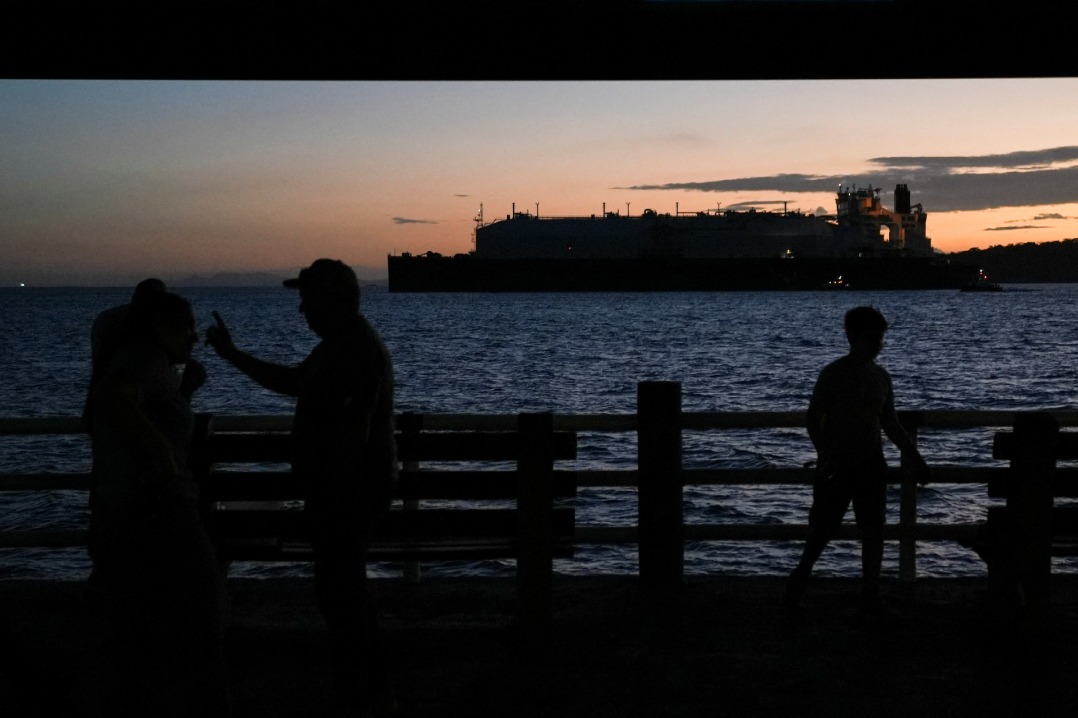
    U.S. military forces have executed another maritime interception operation, taking control of a Liberian-flagged oil tanker in the Caribbean Sea on Tuesday. The vessel, identified as Motor Vessel Sagitta, was apprehended without incident according to U.S. Southern Command, marking the seventh such seizure in the ongoing enforcement of sanctions against Venezuela’s oil exports.

    The operation forms part of the Trump administration’s comprehensive strategy to restrict Venezuela’s oil trade, with officials claiming the Sagitta had loaded petroleum from Venezuelan sources in defiance of established sanctions. Although registered under Liberian flag status with ownership and management ties to a Hong Kong-based company, the tanker had previously been sanctioned by the U.S. Treasury Department under executive orders related to Russia’s 2022 invasion of Ukraine.

    Unlike previous interdiction operations documented through dramatic aerial footage showing helicopter deployments and deck landings, this seizure was announced through social media channels with minimal operational details. The military command’s statement emphasized the enforcement of President Trump’s ‘established quarantine of sanctioned vessels in the Caribbean,’ though specific details regarding the participating forces were withheld.

    The vessel’s last transmitted location was recorded over two months ago while exiting the Baltic Sea in northern Europe, raising questions about its routing and cargo origins. The Pentagon declined to provide immediate additional details when queried about the operational specifics.

    President Trump addressed reporters at the White House just hours before the announcement, claiming the administration had already diverted approximately 50 million barrels of Venezuelan oil to open markets. ‘We’ve got millions of barrels of oil left,’ Trump stated. ‘We’re selling it on the open market. We’re bringing down oil prices incredibly.’

    The continued seizures demonstrate the administration’s persistent approach to applying maximum economic pressure on Venezuela’s oil sector, which represents the country’s primary revenue source.

  • Israel raids Hebron amid fears for Ibrahimi Mosque and settlement expansion

    Israel raids Hebron amid fears for Ibrahimi Mosque and settlement expansion

    A major Israeli military operation has entered its second day in the occupied West Bank city of Hebron, imposing severe restrictions on Palestinian residents while raising concerns about long-term displacement objectives. The extensive assault involves road closures, home raids, and a comprehensive curfew affecting approximately 18,750 Palestinians across multiple southern neighborhoods including Khilat al-Qubba, Jabal Jawhar, and al-Sahla.

    The Israeli military announced the operation would continue for several days, warning residents to expect increased troop movements and audible explosions. According to official statements, the raid aims to confiscate weapons and enhance security through coordinated efforts between the army, police, and border guard units.

    Residents report extreme measures including the deployment of military vehicles and bulldozers creating barriers with earth mounds, iron gates, and even repurposed civilian vehicles. A security cordon encompassing approximately four square kilometers has effectively isolated the targeted areas, with concrete blocks and checkpoints sealing all access points.

    Local accounts describe intensive house raids, arbitrary arrests, and the occupation of Palestinian homes as military barracks. Farid Burqan, a Jabal Jawhar resident, revealed that the army informed locals of an eight-day curfew minimum, preventing them from leaving their homes. Educational institutions have been shuttered since the operation’s inception, while access to basic necessities and freedom of movement remain severely constrained.

    The industrial zone containing several major factories has ceased operations, disrupting livelihoods and economic activity. Lafi Ghaith, a stone factory employee, reported being unable to reach his workplace while his family endured home invasions and property destruction. Many residents interpret the operation as part of a broader strategy to facilitate settlement expansion and Palestinian displacement.

    Hebron’s political complexity adds significance to the operation. Under the 1997 Hebron Agreement, the city remains divided into H1 (Palestinian Authority control) and H2 (full Israeli control, including the Old City and Ibrahimi Mosque). For over 25 years, Israel has maintained approximately 120 checkpoints and gates around the mosque area, which houses both Palestinian residents and settlement outposts.

    Deputy Mayor Asma Sharabati emphasized the operation targets a densely populated area containing 12 government schools and four municipal service centers. She warned that the assault extends beyond immediate security concerns to broader political objectives, including altering the architectural character of the Ibrahimi Mosque and expanding settlement infrastructure connecting to Kiryat Arba.

    The timing coincides with unprecedented restrictions barring the Ibrahimi Mosque’s director and head custodian from entering the holy site for 15 days—a move reminiscent of Jerusalem’s Al-Aqsa Mosque restrictions. This development suggests potential efforts to transfer administrative control from Hebron Municipality to the religious council of Kiryat Arba settlement.

    Youth Against Settlements coordinator Issa Amr identified the operation’s core objective as separating eastern and southern areas from central Hebron while depopulating the industrial zone. The absence of arrests targeting known lawbreakers in the area further reinforces concerns about ulterior motives behind the military action.

    Local authorities are calling for urgent intervention from the Palestinian Authority and international community, emphasizing Hebron’s unique vulnerability as a city containing settlement outposts within its urban fabric. Any expansion of these outposts could trigger significant Palestinian displacement and complicate territorial control indefinitely.

  • B’Tselem says at least 84 Palestinians killed in Israeli torture camps

    B’Tselem says at least 84 Palestinians killed in Israeli torture camps

    A damning investigation by Israeli human rights organization B’Tselem has exposed the nation’s prison system as a coordinated network of facilities engaging in systematic torture against Palestinian detainees. The report, released Tuesday, documents widespread abuse, deaths in custody, and what the group identifies as a deliberate state-sanctioned policy of violence.

    According to the findings, at least 84 Palestinians have died in Israeli detention facilities since October 2023, with the actual number believed to be significantly higher due to unverified and concealed cases. The victims include 50 from Gaza, 31 from the occupied West Bank, and three Palestinian citizens of Israel, alongside one child. Israeli authorities are additionally withholding the bodies of 80 Palestinians, refusing to return them to families as of January 2026.

    Disturbing testimonies from released detainees describe systematic physical and psychological violence, inhuman conditions, deliberate starvation, and denial of medical treatment. Several former prisoners reported experiencing or witnessing sexual violence while in custody.

    B’Tselem’s Executive Director Yuli Novak characterized the findings as evidence of a coordinated campaign against Palestinians as a collective people. “The Israeli regime has turned its prisons into a network of torture camps for Palestinians,” Novak stated, connecting the prison conditions to broader policies of “genocide in Gaza and ethnic cleansing in the West Bank.”

    The report concludes that the abuse represents declared, deliberate policy originating from the highest levels of government, with political backing and institutional protection. National Security Minister Itamar Ben Gvir, who oversees the prison service, has publicly boasted about the treatment of Palestinian detainees.

    Parallel findings from Palestinian rights organizations reinforce these conclusions, documenting at least 100 Palestinian deaths in custody since October 2023. As of September 2025, approximately 10,900 Palestinians were held in Israeli prisons under conditions described as appalling, with the number dropping to around 9,200 by January 2026 following prisoner exchanges.

    The organizations emphasize that Israel’s mass incarceration of Palestinians—over 800,000 detained over decades, many without charge or trial—represents a central pillar of its system of control, designed to fragment Palestinian society through fear, violence, and collective punishment.

  • Exclusive: UAE flights linked to Sudan war tracked from Israel to Ethiopia

    Exclusive: UAE flights linked to Sudan war tracked from Israel to Ethiopia

    Recent flight-tracking data reveals a pattern of strategic cargo movements by a UAE-linked aircraft across multiple conflict zones, highlighting the intensifying regional power struggle between the United Arab Emirates and Saudi Arabia. An Antonov An-124 transport plane (tail number UR-ZYD), operated by Abu Dhabi-based Maximus Air, has conducted repeated flights between military bases in Abu Dhabi, Ethiopia, Bahrain, and Israel throughout January.

    The aircraft’s movements coincide with a dramatic shift in regional alliances following Saudi Arabia’s successful military campaign against UAE-backed forces in Aden, Yemen. This development forced Emirati forces to withdraw from their strategic base in Bosaso, Somalia, while simultaneously facing diplomatic challenges from Somalia’s cancellation of all security agreements with the UAE.

    Analysts identify Ethiopia as becoming increasingly crucial to UAE’s regional strategy. Prime Minister Abiy Ahmed appears to be aligning Ethiopia firmly with the UAE alliance rather than alternative options, according to sources familiar with Ethiopian foreign policy. This alignment potentially includes Ethiopia’s anticipated recognition of Somaliland in exchange for access to the port of Berbera.

    The ongoing Sudan conflict has become central to this regional power struggle, with Saudi Arabia, Egypt, and Turkey increasing military support to the Sudanese Armed Forces (SAF) to counter the UAE’s longstanding support for the paramilitary Rapid Support Forces (RSF). Evidence suggests the UAE has been supplying weapons to the RSF through multiple channels, including via Ethiopia and eastern Libya under General Khalifa Haftar’s control.

    Flight data shows UR-ZYD made three round trips between Bahrain’s Sheikh Isa Air Base and Israel’s Ovda Air Force base in late December before commencing its Ethiopia shuttle operations in January. The aircraft’s significant cargo capacity—capable of transporting 21 Toyota Land Cruisers or 4 Mi-17 helicopters—raises concerns about potential weapons transfers.

    Yale’s Humanitarian Research Lab executive director Nathaniel Raymond expressed global concern about these developments: ‘Evidence that an An-124 has been making repeated sorties between Abu Dhabi and this airfield near an area seeing increased uptick in RSF presence and operations should be of global concern.’

    The aircraft’s operations have previously attracted UN scrutiny for violating arms embargoes in Libya, with investigations identifying current UAE President Mohammed bin Zayed as the beneficial owner of UR-ZYD. Despite the airline’s description of humanitarian missions, its client list includes multiple UAE government entities including the Armed Forces GHQ and Crown Prince Court.

    As Saudi pressure mounts on Haftar forces to cease supporting UAE’s RSF operations, and with Egypt bombing RSF supply convoys near its border, the temporary closure of al-Kufra airbase in Libya appears designed to provide diplomatic breathing space. Regional analysts conclude that the Horn of Africa has become subject to Gulf power dynamics, with local nations increasingly forced to choose sides in the Riyadh-Abu Dhabi rivalry.