分类: world

  • How Soviet urban planning is helping Russia freeze Ukraine

    How Soviet urban planning is helping Russia freeze Ukraine

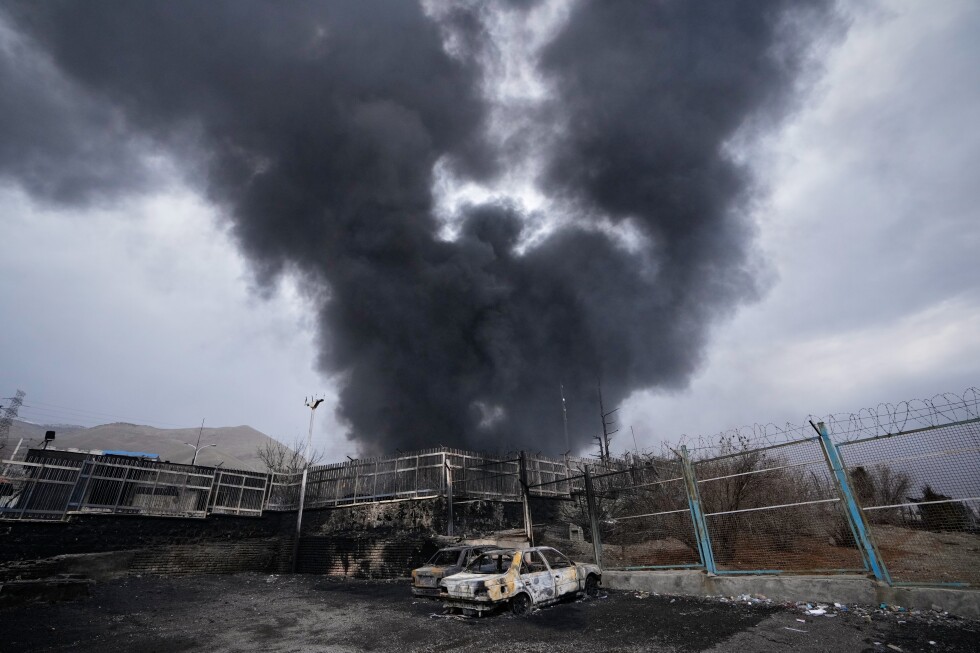
    Ukraine is enduring its most severe winter in modern history as Russia systematically targets centralized heating infrastructure, leaving approximately one million residents without heat during temperatures plunging below -15°C. The capital city of Kyiv has become the primary focus of these attacks, with the January 24th bombardment marking the third major assault on heating systems in just over two weeks.

    According to Kyiv Mayor Vitaly Klitschko, nearly 6,000 apartment buildings lost heating capabilities following the latest overnight attack. This strategic targeting exploits Ukraine’s Soviet-era dependency on communal heating systems where water is heated at centralized plants before being distributed to residential radiators. The scale of these facilities means single attacks can affect thousands of households simultaneously.

    Urban residents describe increasingly desperate conditions. “Living in Kyiv is a bit of a gamble these days,” explained local resident Rita. “If you have heating and gas, there’s no electricity and water. If you have electricity and water, there’s no heating. Coming home is like playing a guessing game every day.” Many report sleeping in multiple clothing layers and hats to combat the freezing temperatures.

    Energy expert Yuriy Korolchuk reveals that approximately 11 million Ukrainian households relied on centralized heating before Russia’s 2022 invasion, compared to just seven million with autonomous systems. This infrastructure legacy stems from Soviet mass housing initiatives that produced ubiquitous prefabricated concrete apartment blocks known as ‘panelki’ and ‘khrushchevki’.

    The vulnerability of these systems represents a new tactical approach in Russia’s campaign. Korolchuk notes that “during previous winters, there were no such strikes against the heating system. They happened only occasionally, and they didn’t directly target heating plants.” He suggests these attacks may constitute negotiation pressure tactics.

    Ukrainian authorities have established warming tents for displaced residents, while the government plans long-term solutions including mandatory individual heating points for apartment complexes. However, reversing decades of Soviet urban planning remains a formidable challenge that will require significant time and resources to implement effectively.

  • Iran will treat any attack as ‘all-out war against us,’ says senior Iran official

    Iran will treat any attack as ‘all-out war against us,’ says senior Iran official

    Iran has declared it will interpret any form of military strike as a declaration of total war, according to a high-ranking official speaking anonymously on Friday. The warning comes amid escalating tensions as a US aircraft carrier strike group approaches the Middle East region.

    The senior Iranian official emphasized that the nation’s military remains on maximum alert, prepared for worst-case scenarios despite hopes that the American naval buildup isn’t intended for actual combat operations. “This time we will treat any attack—whether limited, unlimited, surgical, kinetic, or whatever terminology they employ—as comprehensive warfare against our sovereignty,” the official stated. “We will counter with the most severe measures available to resolve this confrontation.”

    The heightened rhetoric follows US President Donald Trump’s Thursday remarks about an American “armada” en route to the region, coupled with renewed warnings against Tehran regarding protest suppression and nuclear program advancement. The Iranian official maintained that any violation of Iran’s territorial integrity would prompt immediate retaliation, though specific response mechanisms remained unspecified.

    Historical context reveals the US military has previously augmented Middle Eastern presence during tense periods, typically for defensive purposes. However, last year’s significant force accumulation preceded June strikes targeting Iran’s nuclear facilities, indicating potential offensive capabilities.

    The anonymous official concluded that nations facing persistent military threats must utilize all available resources to deter aggression and reestablish strategic equilibrium against potential attackers.

  • Air France suspends service to Dubai; KLM halts Middle East flights

    Air France suspends service to Dubai; KLM halts Middle East flights

    Two major European carriers have announced significant flight suspensions to Middle Eastern destinations as geopolitical tensions escalate in the region. Air France has temporarily halted all services to Dubai, while KLM Royal Dutch Airlines has suspended flights to multiple Middle Eastern cities and restricted airspace transit through several countries.

    Air France confirmed the suspension in an official statement, citing the ‘current situation in the Middle East’ as the primary reason for the decision. The French national carrier emphasized its continuous monitoring of geopolitical developments across its service routes and overflight territories to maintain the highest safety standards for its operations. The airline has committed to providing regular updates regarding schedule adjustments as the situation evolves.

    Meanwhile, KLM has implemented a broader suspension affecting services to Tel Aviv, Dubai, Dammam, and Riyadh until further notice. The Dutch carrier has additionally prohibited flights through the airspace of Iraq, Iran, Israel, and several Gulf nations. According to reports from Netherlands’ public broadcaster NOS, KLM is maintaining close coordination with Dutch authorities regarding these operational changes, though the airline has not explicitly detailed the specific reasons behind each route suspension.

    The flight disruptions coincide with heightened military posturing from the United States. President Donald Trump confirmed on Thursday that substantial naval forces are advancing toward the Gulf region, stating ‘We have a big force going toward Iran’ while simultaneously suggesting that Tehran appears interested in diplomatic discussions. This development follows weeks of tension regarding potential U.S. military action against Iran, which had appeared to diminish after reports that Iran halted planned executions of demonstrators involved in recent protests.

    The aviation industry’s response reflects growing concerns about regional stability and flight safety, with carriers taking precautionary measures despite the absence of immediate threats to civilian aircraft. The situation remains fluid, with airlines monitoring developments closely to determine when normal operations might resume.

  • Africa looks to diversify markets amid uncertainty

    Africa looks to diversify markets amid uncertainty

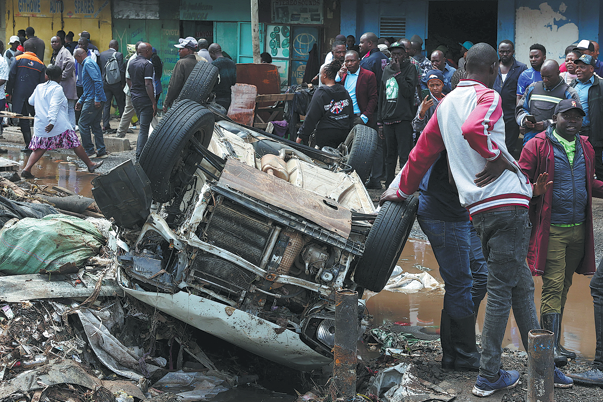
    Against a backdrop of deepening global geopolitical fractures, African nations are strategically repositioning their international economic alliances. The continent finds itself navigating between tightening Western restrictions and expanding Eastern opportunities, prompting a fundamental reassessment of its global engagement strategy.

    Stephen Nduvi, a Nairobi-based public policy expert, observes that Washington’s shift toward unilateralism—manifested through stricter visa regimes and reduced overseas aid—is significantly constraining African economies and mobility. Simultaneously, China is moving in the opposite direction, offering zero-tariff market access to 53 African nations, creating alternative trade corridors that are reshaping the continent’s external economic options.

    The immediate consequences of US policy changes are already materializing. Declining American assistance is straining health systems, humanitarian programs, and governance reforms that remain dependent on external financing. Furthermore, tightened visa policies are restricting business mobility, academic exchanges, and research collaboration. Nduvi characterizes these restrictions as ‘nontariff barriers’ that subtly undermine innovation, entrepreneurship, and access to global knowledge networks.

    Charles Onunaiju, Director of Nigeria’s Centre for China Studies, interprets Washington’s retreat not as a sudden shock but as the culmination of a long-running trend. He notes that Africa should have anticipated a more inward-looking US, referencing years of limited market access under initiatives like the African Growth and Opportunity Act, which frequently imposed political and ideological conditions.

    African nations have already initiated diversification efforts, particularly toward the Asia-Pacific region, which now accounts for nearly half of global trade. Growing ties with China, Southeast Asia, and emerging blocs like BRICS, coupled with efforts to boost intra-African trade, demonstrate the continent’s proactive approach to building buffers against external shocks.

    Both experts emphasize that China’s zero-tariff policy could prove transformative by not only expanding export earnings but also providing a pathway for structural economic transformation. Access to the Chinese market could incentivize local processing, manufacturing, and job creation, enabling African nations to ascend value chains rather than perpetuating raw material exports.

    However, external opportunities will only yield lasting benefits if matched by internal reforms. Nduvi stresses that reducing dependence on foreign aid requires shifting from consumption-led growth to production-driven development. Strengthening domestic resource mobilization through tax base expansion, digital systems, and reduced financial leakages is critical, alongside industrial policy aligned with infrastructure, finance, and skills development.

    Onunaiju adds that resilience in an increasingly volatile world will depend on state capacity and social consensus, emphasizing that strong institutions, inclusive governance, and regional connectivity are essential for absorbing geopolitical shocks.

    As African representatives engage at international forums like Davos, the continent is projected to demonstrate confidence, coherence, and strategic clarity. The future of Africa’s global partnerships will be defined less by aid and more by reciprocity, value addition, technology transfer, and mutual respect for sovereignty.

  • A landslide on Indonesia’s Java island kills at least 8 people and leaves more than 80 missing

    A landslide on Indonesia’s Java island kills at least 8 people and leaves more than 80 missing

    JAKARTA, Indonesia — A catastrophic landslide triggered by relentless torrential rains has claimed at least eight lives with 82 individuals remaining unaccounted for on Indonesia’s primary island of Java. The pre-dawn disaster struck Pasir Langu village in West Bandung district around 3 a.m. local time on Saturday, transforming the picturesque landscape into a scene of devastation.

    According to National Disaster Management Agency spokesperson Abdul Muhari, approximately 34 residential structures were completely buried under cascading mud, rocks, and uprooted vegetation. While 24 residents managed to escape the rapidly moving earth, rescue teams continue battling challenging conditions to locate those feared trapped beneath the debris.

    Television broadcasts depicted harrowing scenes of emergency personnel and local citizens digging through deep mud where roads and terraced rice fields once stood. The worst-impacted area, Pasir Kuning hamlet, has become the focal point of recovery operations as workers extract victims from the sludge.

    Teten Ali Mungku Engkun, director of West Java’s Disaster Management Office, emphasized the operational challenges: ‘Unstable soil conditions and continuing heavy precipitation significantly hinder search and rescue efforts.’ Authorities have executed rapid damage assessments and deployed emergency response units while evacuating families within 100 meters of the landslide zone due to ongoing geological instability.

    This tragedy echoes similar seasonal disasters across the Indonesian archipelago. In December, catastrophic flooding and landslides on Sumatra Island resulted in approximately 1,200 fatalities and over 7,000 injuries. The nation’s geographical vulnerability—with millions inhabiting mountainous regions and fertile floodplains—makes it particularly susceptible to such events during the October-April rainy season when high tides and precipitation frequently combine to create dangerous conditions.

    Officials have issued urgent advisories for residents in landslide-prone areas to remain vigilant for soil movement or unusual rumbling sounds and evacuate immediately if safety concerns arise.

  • Tropical Cyclone Luana smashes Western Australian coastline north of Broome

    Tropical Cyclone Luana smashes Western Australian coastline north of Broome

    Tropical Cyclone Luana has struck the Western Australian coastline, unleashing destructive weather conditions across the Kimberley region. The Category 2 system made landfall north of Broome approximately 2,000 kilometers north of Perth on Saturday afternoon, bringing with it sustained winds of 95 km/h and powerful gusts reaching 130 km/h.

    According to the Bureau of Meteorology (BoM), the cyclone is tracking east-southeast at 12 km/h, posing significant threats to communities throughout northern Australia. Meteorologist Jonathan How warned that Luana would continue generating dangerous weather patterns throughout the long weekend, including damaging winds up to 120 km/h and heavy rainfall likely to cause flash flooding.

    Emergency services have issued a Cyclone Emergency Warning for areas between Coulomb Point and Cape Leveque, emphasizing the immediate threat to lives and property. Evacuation centers have been activated at Broome Recreation and Aquatic Centre and Derby Civic Centre to accommodate residents fleeing the dangerous conditions.

    The weather system is expected to move southward, bringing substantial rainfall to Western Australia’s interior early next week. Current forecasts predict 150-200mm of precipitation for the West Kimberley region over the next 48 hours, with a flood watch remaining in effect across broad sections of the state. The cyclone is projected to weaken below tropical cyclone strength by Sunday morning as it moves further inland.

  • Russia strikes Ukraine as talks with US to end war continue

    Russia strikes Ukraine as talks with US to end war continue

    Amid ongoing trilateral peace discussions in Abu Dhabi, Russia escalated its military offensive against Ukraine with coordinated drone and missile strikes overnight, resulting in significant civilian casualties and infrastructure damage. The assault claimed at least one life and left 23 individuals wounded across multiple Ukrainian cities.

    Kyiv Mayor Vitali Klitschko reported through Telegram that the capital sustained a ‘massive enemy attack’ resulting in one fatality and four injuries, with three victims requiring hospitalization. The strikes targeted critical energy infrastructure, leaving approximately 6,000 buildings without heating amid sub-zero temperatures. President Volodymyr Zelensky confirmed that Russian forces specifically targeted energy systems, exacerbating the humanitarian crisis.

    Simultaneously, Kharkiv endured sustained bombardment that injured 19 civilians, with a maternity hospital and displacement hostel among the damaged civilian structures. Mayor Ihor Terekhov described the early morning assault as particularly severe.

    These developments occurred as diplomatic delegations from Russia, Ukraine, and the United States convened for their first trilateral talks since Russia’s full-scale invasion in 2022. While a BBC source indicated some procedural progress had been achieved, the fundamental dispute regarding territorial sovereignty remains unresolved. Russia currently occupies approximately 20% of Ukrainian territory, including significant portions of the Donbas region, and continues to demand formal cession of these captured lands—a condition Ukraine has consistently rejected.

    The timing of these military strikes during active peace negotiations underscores the complex dynamics between battlefield actions and diplomatic processes in the ongoing conflict.

  • Russian attacks on Ukraine kill 1 and wound 23 ahead of second day of peace talks

    Russian attacks on Ukraine kill 1 and wound 23 ahead of second day of peace talks

    As international diplomats convened for critical peace negotiations in Abu Dhabi, Russian forces launched renewed aerial assaults across Ukraine overnight Friday into Saturday. The attacks resulted in significant civilian casualties, with at least one fatality and 23 individuals wounded across multiple cities.

    In the capital Kyiv, drone strikes killed one person and left four injured, according to official statements from Kyiv City Military Administration head Tymur Tkachenko. The northeastern city of Kharkiv suffered even greater damage, with Mayor Ihor Terekhov reporting 19 civilians wounded in similar attacks.

    These developments occurred simultaneously with the second day of trilateral talks involving senior officials from Ukraine, Russia, and the United States in the United Arab Emirates. This meeting represents the first known instance of Trump administration envoys engaging directly with both warring parties as part of Washington’s intensified diplomatic initiative to resolve the nearly four-year conflict.

    The UAE Foreign Ministry characterized the discussions as part of ongoing efforts “to facilitate dialogue and explore political resolutions to the crisis.” White House officials described initial sessions as productive, despite the challenging context of continued violence.

    The diplomatic engagement occurs amid conflicting signals from leadership on both sides. Ukrainian President Volodymyr Zelenskyy suggested during the World Economic Forum in Davos that a potential peace agreement was “nearly ready,” while the Kremlin maintains that any settlement must include Ukrainian withdrawal from territories Russia has illegally annexed—a condition Kyiv has consistently rejected.

    The negotiations gain additional significance following revelations that Russian President Vladimir Putin engaged in marathon overnight discussions with Trump envoys Steve Witkoff and Jared Kushner just hours before the Abu Dhabi talks commenced.

  • Passengers of diverted flight transferred to hotels in China’s Lanzhou

    Passengers of diverted flight transferred to hotels in China’s Lanzhou

    A transnational flight operated by Azur Air was compelled to execute an emergency landing at Lanzhou Zhongchuan International Airport on Friday afternoon, January 23, 2026, following a technical failure. The aircraft, a Boeing 757-200 identified as flight ZF2998, was en route from the popular resort destination of Phuket, Thailand, to its final destination of Barnaul, Russia.

    Airport authorities confirmed the incident was triggered by a malfunction in the aircraft’s right engine, prompting the flight crew to declare an in-flight emergency. Despite the critical situation, the pilots successfully navigated the aircraft to a safe landing at 4:51 PM local time. All 246 individuals on board, comprising 239 passengers and 7 crew members, were reported to be safe and unharmed.

    Following standard safety protocols and assessment procedures, all passengers and crew have been temporarily relocated to local hotels in Lanzhou, the capital of Gansu province. Airport officials have arranged for their accommodation and necessities while maintenance crews inspect the aircraft and arrange for onward travel. The incident underscores the critical importance of rigorous safety protocols and pilot training in managing unforeseen technical failures during flight operations.

  • New Zealand calls off rescue efforts for six missing after landslide

    New Zealand calls off rescue efforts for six missing after landslide

    New Zealand authorities have officially terminated search and rescue operations for six individuals buried beneath a devastating landslide that struck a popular campground in Mount Maunganui on Thursday. Police Superintendent Tim Anderson confirmed the transition to recovery efforts, stating that locating survivors is no longer feasible.

    Human remains were discovered Friday evening beneath layers of dirt and debris at the sacred Māori site, which ranks among the nation’s most frequented camping destinations. The victims include two 15-year-olds from Auckland—Sharon Maccanico and Max Furse-Kee—alongside four adults: Lisa Anne Maclennan (50, Morrinsville), Måns Loke Bernhardsson (20, Sweden), Jacqualine Suzanne Wheeler (71, Rotorua), and Susan Doreen Knowles (71, Ngongotaha).

    In a separate but related incident, Radio New Zealand reported a grandmother and her grandchild perished in another landslide at nearby Welcome Bay. The region has endured days of torrential rainfall on North Island, with meteorological services forecasting additional precipitation through the weekend.

    Emergency crews labored through treacherous conditions described as “incredibly challenging” before formally transferring operations to police on Saturday. Chief Coroner Judge Anna Tutton acknowledged the identification process would be “complex” and “painstaking” while pledging to expedite familial reunification.

    Prime Minister Christopher Luxon visited the disaster zone Friday, noting the “inspiring” community response as locals assisted with debris clearance in flood-affected areas. The tragedy highlights growing concerns about repeated landslides at Mount Maunganui, which has experienced similar geotechnical events in recent years.