
In a tragic incident that has drawn international attention, the UAE President Sheikh Mohamed bin Zayed Al Nahyan has expressed his heartfelt condolences to Qatar’s Emir Sheikh Tamim bin Hamad Al Thani following the death of three Qatari diplomats in a fatal car crash. The accident occurred in the early hours of Sunday, October 12, in Sharm El Sheikh, Egypt. The deceased, identified as Saud bin Thamer Al Thani, Abdullah Ghanem Al Khayarin, and Hassan Jaber Al Jaber, were members of the Amiri Diwan, the administrative office of the Qatari Emir. Two other individuals, Abdullah Issa Al Kuwari and Mohammed Abdulaziz Al Buainain, were injured in the crash and are currently receiving treatment at Sharm El-Sheikh International Hospital. They are expected to be transferred to Doha for further medical care. The UAE Ministry of Foreign Affairs also extended its sympathies to the families of the victims and the Qatari leadership, government, and people, describing the incident as a ‘painful loss.’ The Qatari embassy in Cairo is coordinating with Egyptian authorities to ensure the repatriation of the deceased and the injured. This tragic event underscores the risks faced by diplomats in their line of duty and has prompted expressions of solidarity from across the region.
分类: world
-

Mali imposes $10,000 visa bond on US visitors in tit-for-tat move
In a significant diplomatic escalation, Mali has announced that US nationals visiting the West African country will be required to post a bond of up to $10,000 for business and tourist visas. This decision comes as a direct response to similar visa requirements imposed by the Trump administration on Malian citizens. The US embassy in Mali stated that the fee was introduced to reinforce Washington’s ‘commitment to protecting America’s borders and safeguarding US national security.’ Mali’s foreign ministry, however, described the US move as unilateral and justified its decision to ‘establish an identical visa programme’ for US citizens. This visa policy shift occurs despite recent efforts to improve diplomatic relations between the two countries. In July, US officials visited Mali to discuss counterterrorism cooperation and economic partnerships, including potential access to Mali’s gold and lithium reserves. Relations between the two nations have been strained since a 2021 coup in Mali brought General Assimi Goïta to power. Goïta pivoted Mali towards Russia to combat a growing jihadist insurgency, expelling French troops and bringing in mercenaries from Russia’s Wagner group, which has since been replaced by Africa Corps. The situation further deteriorated last week when Burkina Faso’s military government refused to accept deportees from the US, leading Washington to suspend visa issuances in the West African nation. Burkina Faso’s foreign affairs minister, Karamoko Jean-Marie Traoré, questioned whether the embassy’s decision was ‘blackmail’ after rejecting a US proposal to take in migrants from third countries. The Trump administration has increasingly turned to African countries as destinations for deporting migrants as part of its broader crackdown on immigration.
-
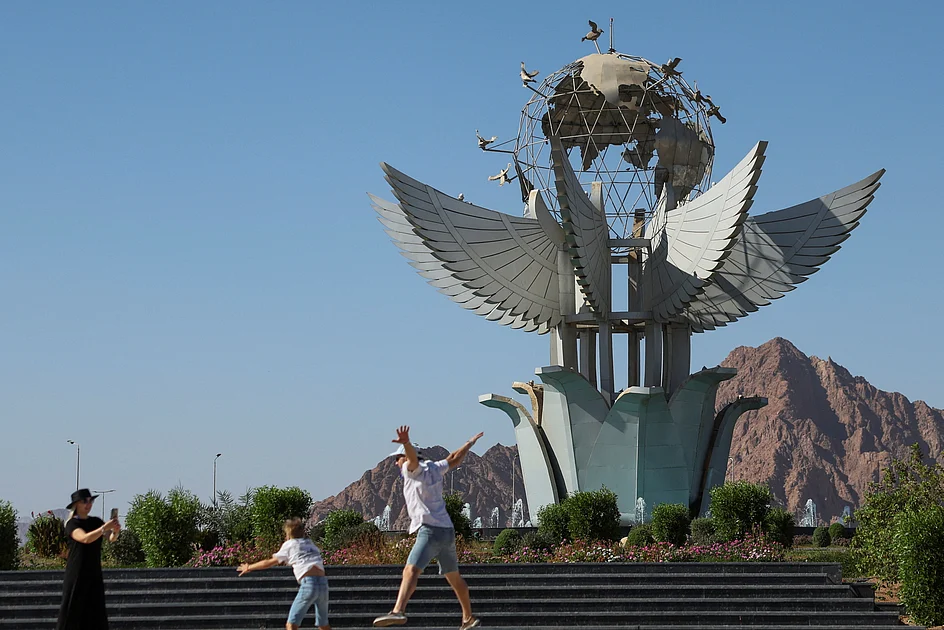
US embassy in Doha condoles death of 3 Qatari diplomats in Egypt’s Sharm El Sheikh
The US Embassy in Doha has expressed profound sorrow over the tragic deaths of three Qatari diplomats in a car accident in Sharm El Sheikh, Egypt. The incident, which occurred on Sunday, also left two members of Qatar’s Amiri Diwan injured. Both are currently receiving medical treatment at a local hospital. The bodies of the deceased and the injured individuals are expected to be repatriated to Doha later in the day. The embassy extended its heartfelt condolences to Qatari Emir Sheikh Tamim bin Hamad Al Thani, the Qatari people, and the families of the victims, emphasizing solidarity with Qatar during this difficult time. The victims were identified as Saud bin Thamer Al Thani, Abdullah Ghanem Al Khayarin, and Hassan Jaber Al Jaber, while the injured are Abdullah Issa Al Kuwari and Mohammed Abdulaziz Al Buainain. The accident comes as Sharm El Sheikh prepares to host a global summit on Monday, chaired by US President Donald Trump and Egyptian President Abdel Fattah al-Sisi, aimed at finalizing a significant international agreement.
-
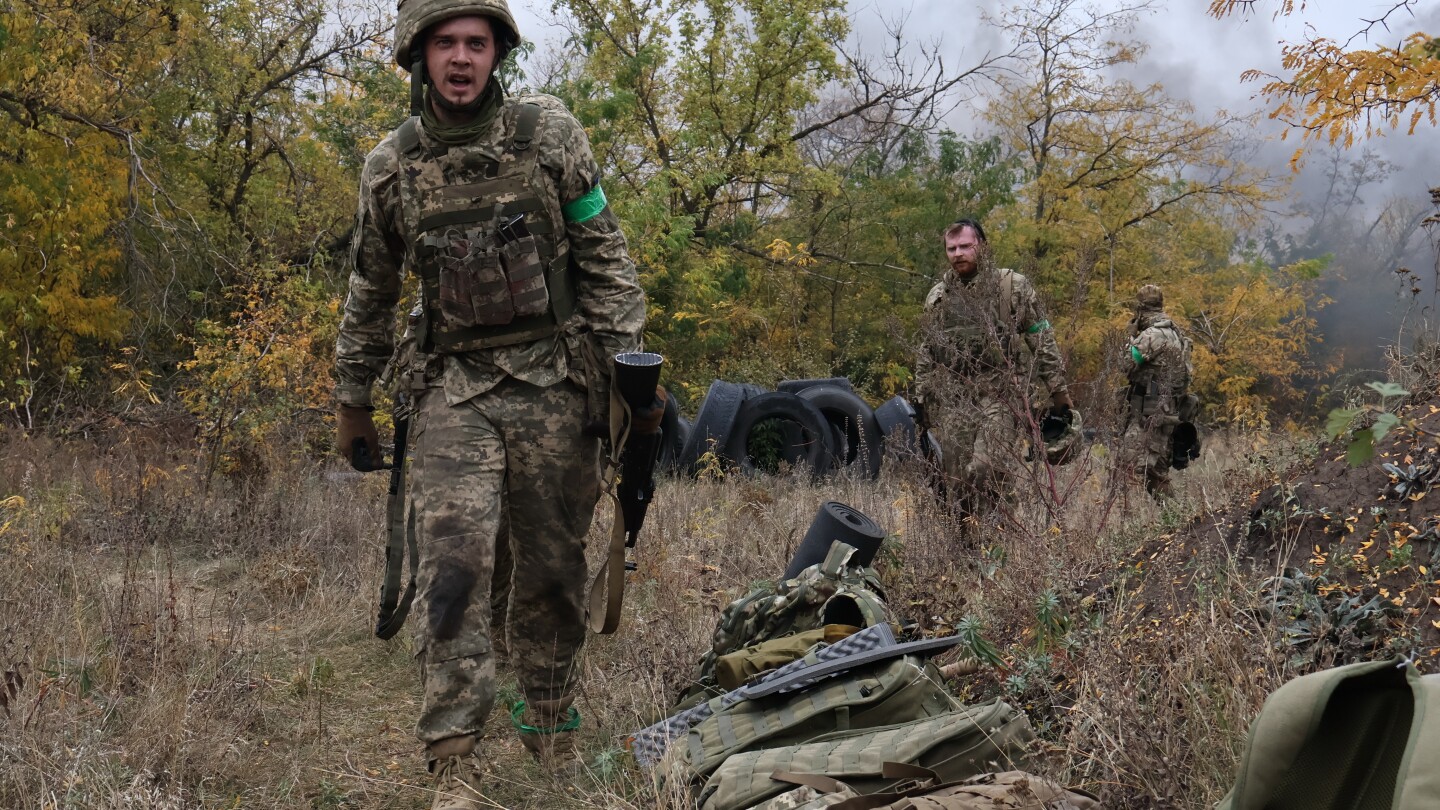
Russia attacks Ukraine’s power grid as Moscow worries over US Tomahawk missiles
Russia has escalated its assault on Ukraine’s energy infrastructure, launching a series of drone and missile strikes overnight into Sunday. This marks a continuation of its strategy to destabilize Ukraine’s power grid ahead of the harsh winter months. The attacks targeted critical energy facilities across multiple regions, including Donetsk, Odesa, and Chernihiv, leaving two employees of Ukraine’s largest private energy company, DTEK, wounded. Ukrainian President Volodymyr Zelenskyy condemned the strikes, labeling them as “aerial terror” and revealing that Russia had deployed over 3,100 drones, 92 missiles, and approximately 1,360 glide bombs in the past week alone. Zelenskyy also emphasized the need for stricter sanctions on buyers of Russian oil, stating that such measures are crucial to cutting off funding for the war. In a separate development, Zelenskyy reported a “very productive” phone call with U.S. President Donald Trump, during which they discussed bolstering Ukraine’s air defense, resilience, and long-range capabilities. The conversation also touched on potential U.S. military aid, including the provision of Tomahawk cruise missiles, a topic that has drawn “extreme concern” from the Kremlin. Belarusian President Alexander Lukashenko, a close ally of Russian President Vladimir Putin, expressed skepticism about the U.S. delivering such weapons, suggesting that Trump’s rhetoric might not translate into immediate action. Meanwhile, Ukraine’s energy sector remains a focal point of the conflict, with Russian strikes causing widespread damage and blackouts. Ukrainian officials have described the recent attacks as among the largest concentrated strikes on the country’s energy infrastructure. As winter approaches, Russia’s strategy appears aimed at undermining public morale by disrupting essential services. Ukraine’s air force reported intercepting or jamming 103 of 118 Russian drones launched overnight, while Russia claimed to have shot down 32 Ukrainian drones over its territory.
-
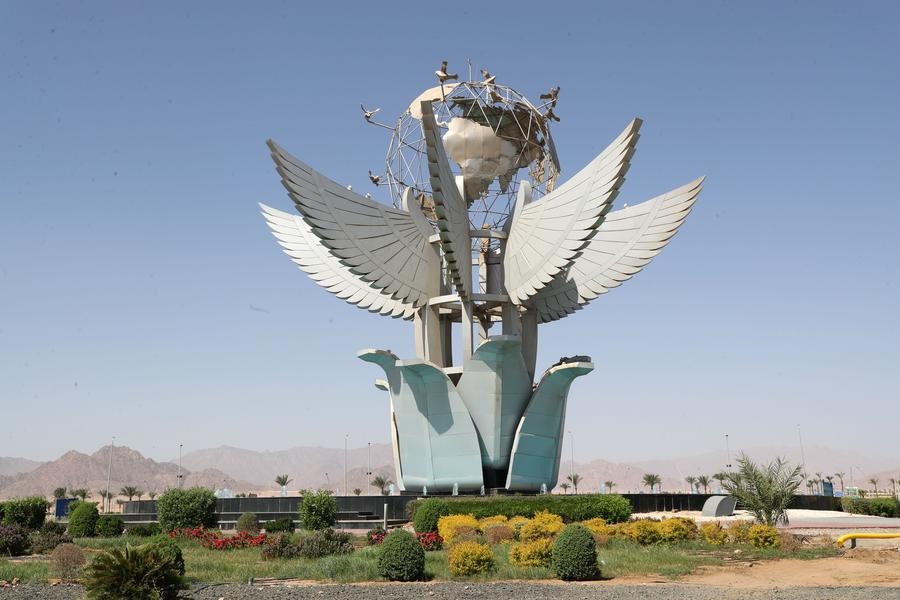
UN chief to attend Gaza peace summit in Egypt
UN Secretary-General Antonio Guterres is set to participate in the Sharm el-Sheikh Summit for Peace in Egypt on Monday, as confirmed by the Office of the Spokesperson for the UN Secretary-General on Saturday. The summit, hosted in the Red Sea resort town of Sharm el-Sheikh, aims to finalize an agreement to end the ongoing conflict in Gaza. Co-chaired by Egyptian President Abdel Fattah El-Sisi and U.S. President Donald Trump, the event will convene leaders from over 20 nations to address the crisis in the Gaza Strip, promote peace and stability in the Middle East, and establish a new era of regional security. Guterres is expected to return to UN Headquarters in New York by Wednesday. The Egyptian Presidency highlighted the summit’s significance in fostering collaborative efforts to resolve the conflict and enhance regional stability.
-
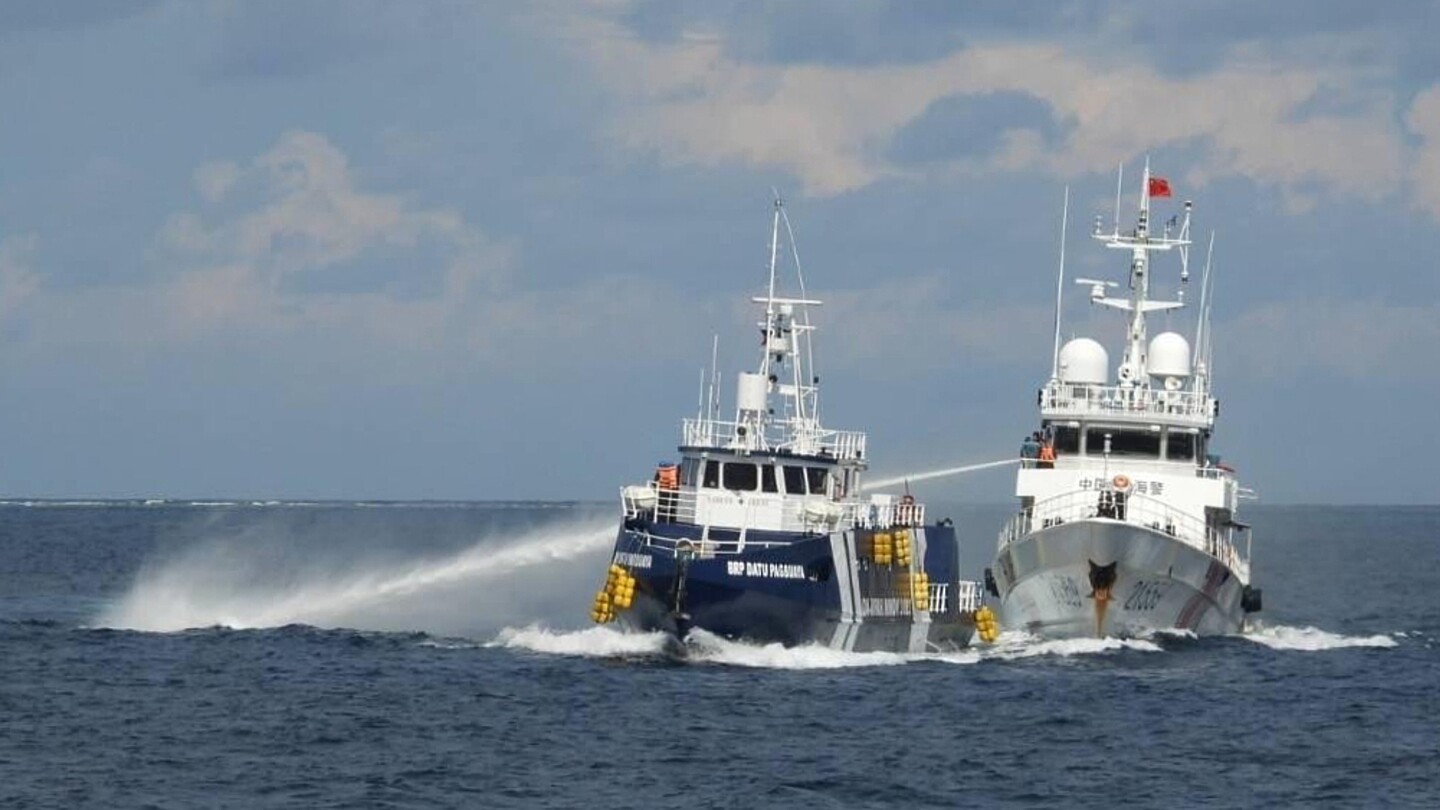
Chinese coast guard rams and damages a Philippine vessel off an island in the South China Sea
In a recent escalation of tensions in the disputed South China Sea, a Chinese coast guard vessel employed a high-pressure water cannon against a Philippine government ship anchored near Thitu Island, a territory occupied by the Philippines. The incident, which occurred on Sunday, resulted in minor structural damage to the Philippine vessel, BRP Datu Pagbuaya, though no injuries were reported among its crew. The Philippine coast guard condemned the act as a dangerous and provocative maneuver, emphasizing that such aggression would not deter their commitment to protecting national sovereignty.
The Chinese coast guard defended its actions, claiming that the Philippine vessels had illegally entered what it referred to as Chinese waters near Sandy Cay, a cluster of sandbars situated between Thitu Island and China’s artificial Subi Island base. According to Chinese authorities, the Philippine ships ignored repeated warnings, prompting the coast guard to take lawful measures to drive them away. Beijing reiterated its longstanding claim over virtually the entire South China Sea, despite a 2016 international arbitration ruling that invalidated such claims. The ruling, supported by the United States and its allies, has been consistently rejected by China.
The Philippine coast guard released video footage showing the Chinese vessel firing the water cannon at the BRP Datu Pagbuaya, striking both the ship and its flags. Commodore Jay Tarriela, a spokesperson for the Philippine coast guard, affirmed that such bullying tactics would not force Manila to relinquish any territory. Meanwhile, Chinese coast guard spokesperson Liu Dejun accused the Philippines of undermining regional peace and stability, placing full responsibility for the incident on the Philippine side.
Thitu Island, known as Pag-asa in the Philippines, is the largest of nine islands and reefs inhabited by Philippine forces in the Spratlys archipelago, a highly contested region of the South China Sea. China has transformed several barren reefs into militarized artificial islands, including Subi, which lies just over 20 kilometers from Thitu. The latest confrontation adds to the challenges faced by the Philippine government, which is also grappling with natural disasters, including recent earthquakes and typhoons that have devastated parts of the country.
Philippine coast guard commandant Admiral Ronnie Gil Gavan vowed that the harassment would only strengthen their resolve to protect Filipino fisherfolk and uphold national sovereignty. The incident underscores the ongoing territorial disputes in the South China Sea, involving multiple nations and raising concerns over regional stability.
-
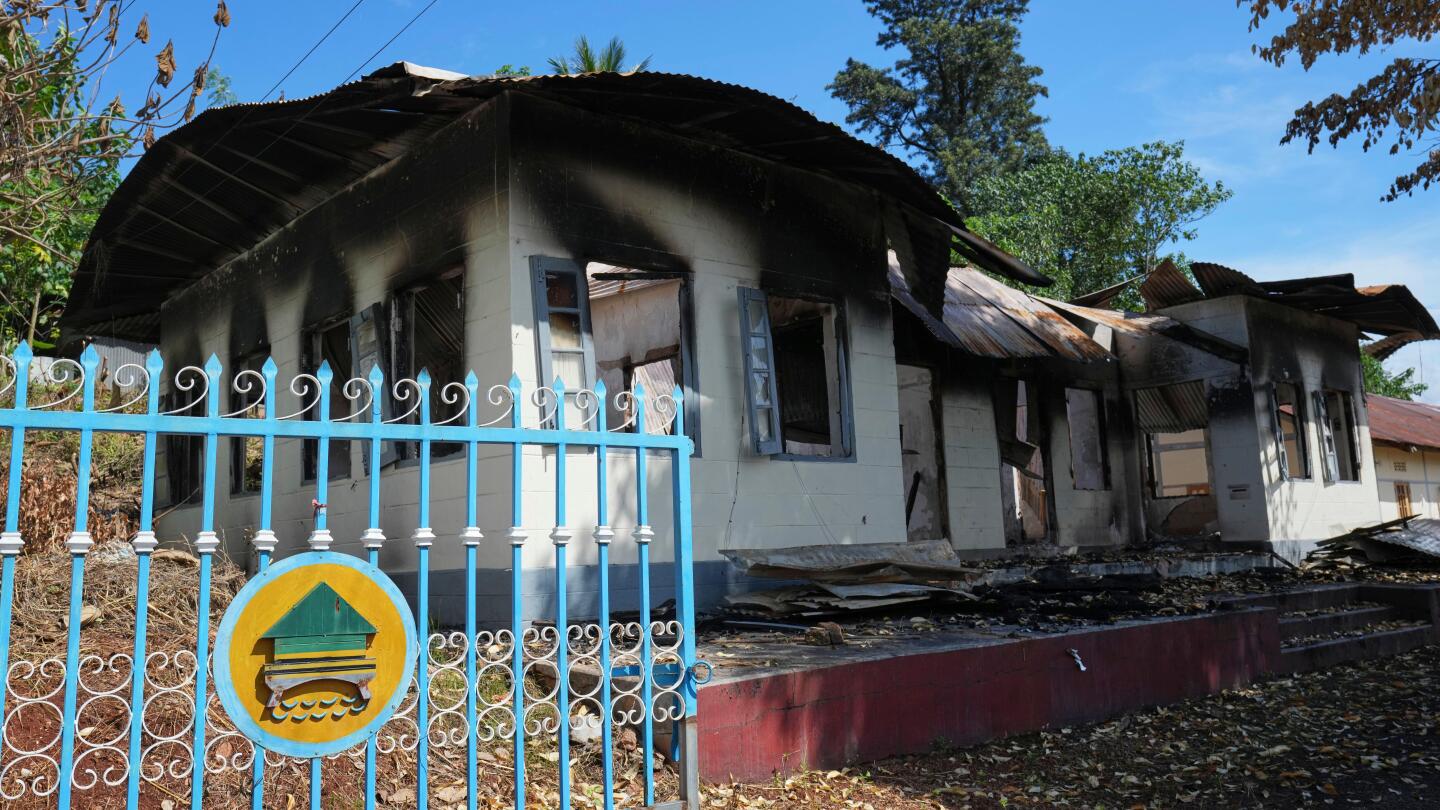
A Myanmar town lies in shambles as both sides in civil war vie for control
KYAUKME, Myanmar — Ten days after its recapture by Myanmar’s military government, the town of Kyaukme remains a ghostly shadow of its former self. Schools have reopened, but the once-bustling market is eerily empty, with vendors hastily closing their stalls at the sight of visiting journalists. The Associated Press, granted rare access to the war-torn area under military supervision, documented the devastation on Friday. The town, located in Shan State, is now a scene of charred wreckage, with official buildings such as the courthouse, police station, and government housing reduced to ruins. The hospital’s operations have been temporarily relocated to a nearby Chinese temple, and at least one fire engine lies burnt out. While civilian houses appear mostly unscathed, the majority of the town’s 46,000 residents have fled, leaving Kyaukme a desolate shell. The ethnic militia previously in control accused the military of causing the destruction through air strikes and heavy weapons, while government soldiers claim the militia destroyed structures during their retreat. Kyaukme’s strategic location on a highway connecting central Myanmar to China has made it a focal point in the ongoing civil war, which erupted after the military ousted Aung San Suu Kyi’s elected government in 2021. The town has changed hands twice since then, most recently falling back to the military on October 1 after a three-week battle. Army checkpoints now dot the road from Nawnghkio, a recently recaptured town, to Kyaukme, with unexploded ordnance and land mines posing ongoing threats. Locals who remain, unable to afford relocation, describe a town on the front lines of conflict, with residents unwilling to return until nearby areas are secured.
-
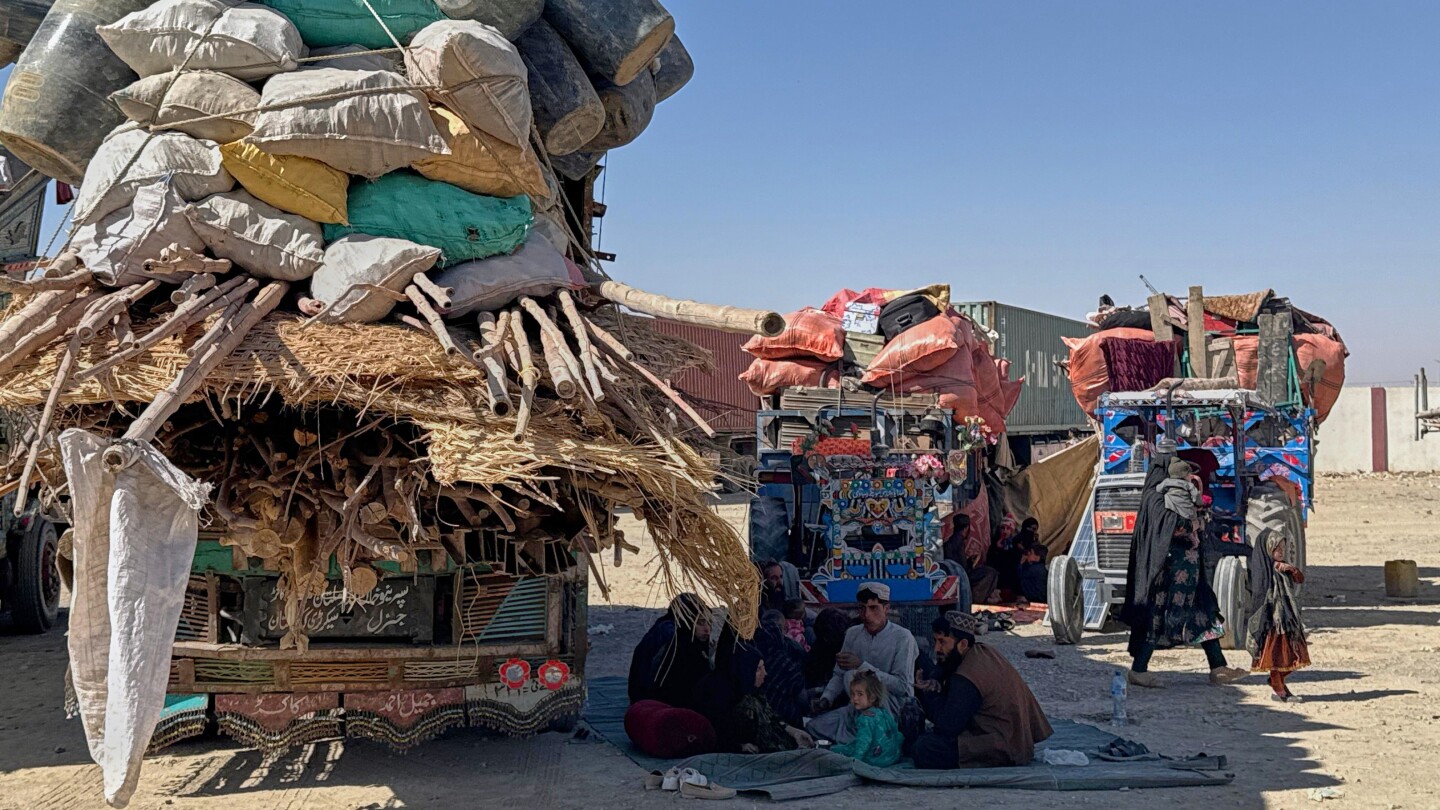
Afghanistan says it has killed 58 Pakistani soldiers in overnight border operations
In a dramatic escalation of tensions between neighboring nations, Afghanistan announced on Sunday that its forces had killed 58 Pakistani soldiers in overnight border operations. The Taliban government described the action as a retaliatory response to repeated violations of Afghan territory and airspace by Pakistan. Earlier in the week, Afghan authorities had accused Pakistan of bombing Kabul and a market in eastern Afghanistan, though Islamabad denied responsibility. The Taliban’s chief spokesman, Zabihullah Mujahid, claimed that Afghan forces had also captured 25 Pakistani army posts and wounded 30 soldiers. The Torkham border crossing, a vital trade route between the two countries, remained closed on Sunday, further straining relations. Pakistan, meanwhile, accused Afghanistan of harboring members of the banned Tehreek-i-Taliban Pakistan (TTP), a group Islamabad blames for deadly attacks within its borders. Kabul has consistently denied these allegations. Pakistani Prime Minister Shehbaz Sharif condemned the Afghan assault, asserting that Pakistan’s army had responded decisively, destroying several Afghan posts and forcing a retreat. Qatar’s Foreign Ministry expressed concern over the escalating tensions, urging both sides to prioritize dialogue and restraint. The conflict underscores the fragile security dynamics along the 2,611-kilometer Durand Line, a border Afghanistan has never formally recognized.
-

Indian student captured by Ukraine joined Russian army to avoid drug charges, says mother
In a startling development, Ukraine has detained an Indian national, Sahil Majothi, who is accused of fighting for Russian forces. This marks the first known instance of an Indian being captured in the ongoing Ukraine conflict. Sahil, a 22-year-old from Gujarat, initially traveled to Russia in January 2024 to pursue a degree in computer engineering. However, his journey took a tragic turn when he was allegedly framed in a drug case in April 2024, leading to his arrest and subsequent detention for six months. Facing a seven-year prison sentence, Sahil reportedly joined the Russian army to avoid incarceration, as revealed in a video released by Ukraine’s 63rd Mechanized Brigade. In the video, Sahil claims he was given the choice between military service or jail time, with promises of payment that never materialized. After undergoing 15 days of training in September 2024, he was deployed to the battlefield a year later. Sahil alleges that he deserted Russian forces following an altercation with his commander and sought help from Ukrainian troops. The Indian government has acknowledged the case and is investigating, though no formal communication has been received from Ukraine. Sahil’s mother, Hasina Majothi, has appealed for his safe return, stating that her son was coerced into joining the military. This incident highlights broader concerns over the recruitment of Indian nationals into the Russian army, with reports indicating that over 150 Indians have enlisted, some on student or visitor visas. The Indian government has repeatedly warned its citizens against participating in the Ukraine conflict, emphasizing the grave risks involved.
-

How the autumn climbing season turned deadly in the Himalayas
The autumn hiking season in the Himalayas, once characterized by clear skies and breathtaking views of snow-draped peaks, is now increasingly marred by extreme weather events. Meteorologists report that the monsoon season, traditionally ending by mid-September, now extends into October, bringing with it dangerous conditions. Last weekend, a sudden blizzard stranded hundreds of tourists near the eastern face of Mount Everest at an altitude of over 4,900 meters. Despite a well-coordinated rescue effort that saved nearly 600 trekkers, one person succumbed to hypothermia and altitude sickness. Similar incidents occurred on the Nepal side, where a South Korean mountaineer died on Mera Peak. Communication lines were severely disrupted by torrential rains and heavy snowfall, delaying the dissemination of information. Landslides and flash floods in Nepal have claimed around 60 lives in the past week. Riten Jangbu Sherpa, a mountain guide, noted that such extreme weather is highly unusual for October, a month typically known for clear skies. Archana Shrestha, deputy director general at Nepal’s department of hydrology and meteorology, highlighted that the past decade has seen monsoons lasting until the second week of October, a significant shift from historical patterns. The interaction between the monsoon and westerly disturbances, which bring cold air from the Mediterranean, is exacerbating these conditions. Scientists warn that this trend is likely to continue, making flexible scheduling and experienced leadership crucial for safe Himalayan expeditions.