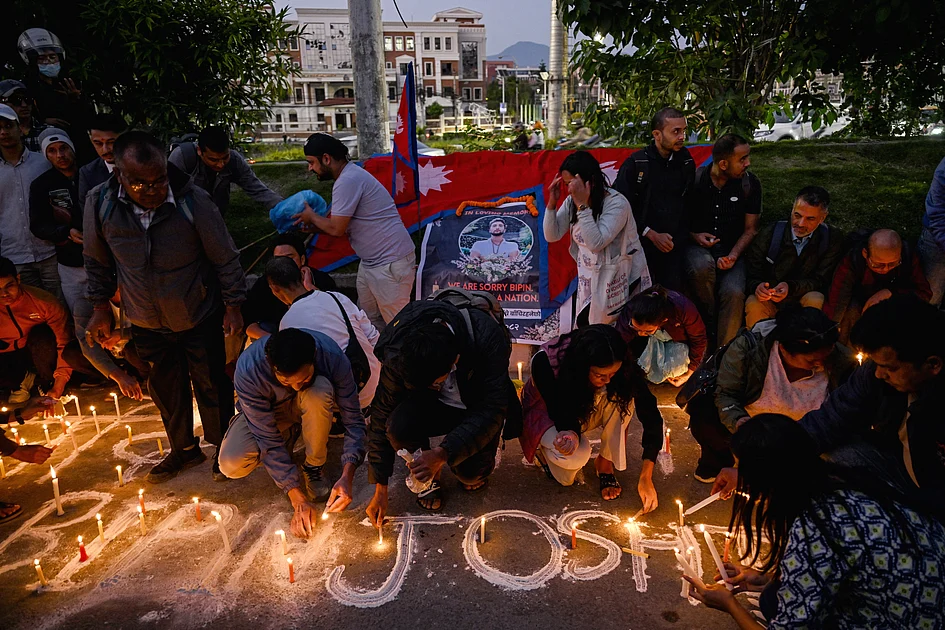
In a somber ceremony on Wednesday, Israel laid to rest Guy Iluz, a 26-year-old hostage whose remains were returned from Gaza as part of a US-backed ceasefire agreement. The funeral procession began in Rishon Lezion and concluded in Raanana, where Iluz had resided before being abducted during the Hamas-led attack on October 7, 2023. The attack, which targeted the Nova music festival in southern Israel, resulted in the deaths of at least 370 people and the abduction of 251 others, both living and deceased. Iluz, a guitarist and sound engineer, was among those taken captive. Reports indicate he attempted to flee the festival site and later hid in a tree, where he made his final contact with his parents before being captured. He died in captivity due to untreated injuries sustained during his abduction. The ceasefire deal, which took effect last Friday, mandated the release of all hostages within 72 hours. In exchange, Israel released nearly 2,000 Palestinian detainees. The return of Iluz’s body, along with three others on Monday and four more on Tuesday, marked a bittersweet moment for mourners. Amira, a woman in her sixties, expressed her grief, stating, ‘I’m sorry, sorry, sorry I could not save you!’ She emphasized the importance of having a grave for the family to mourn. Viki Lavi, another attendee, noted the duality of emotions, saying, ‘This is our life, crying and being happy.’ The ceremony underscored the ongoing trauma and resilience of those affected by the conflict.
分类: world
-

Sri Lankan PM highly praises China’s initiatives at Global Leaders’ Meeting on Women
During her visit to China for the Global Leaders’ Meeting on Women, Sri Lankan Prime Minister Harini Amarasuriya highlighted the concerning global decline in women’s rights, gender equality, and reproductive rights. In an exclusive interview with China Daily on Tuesday, she praised China’s steadfast support for gender equality and its proactive initiatives, which she described as a testament to the nation’s strong sense of international responsibility. Amarasuriya emphasized that China’s efforts stand out in a world where many countries are experiencing setbacks in these critical areas. Her remarks underscored the importance of global cooperation and leadership in advancing gender equality, particularly in the face of growing challenges. The Prime Minister’s comments also reflected the broader significance of the meeting, which brought together leaders from around the world to address pressing issues related to women’s rights and empowerment.
-
Cracked windscreen forces US defence secretary’s plane to land in UK
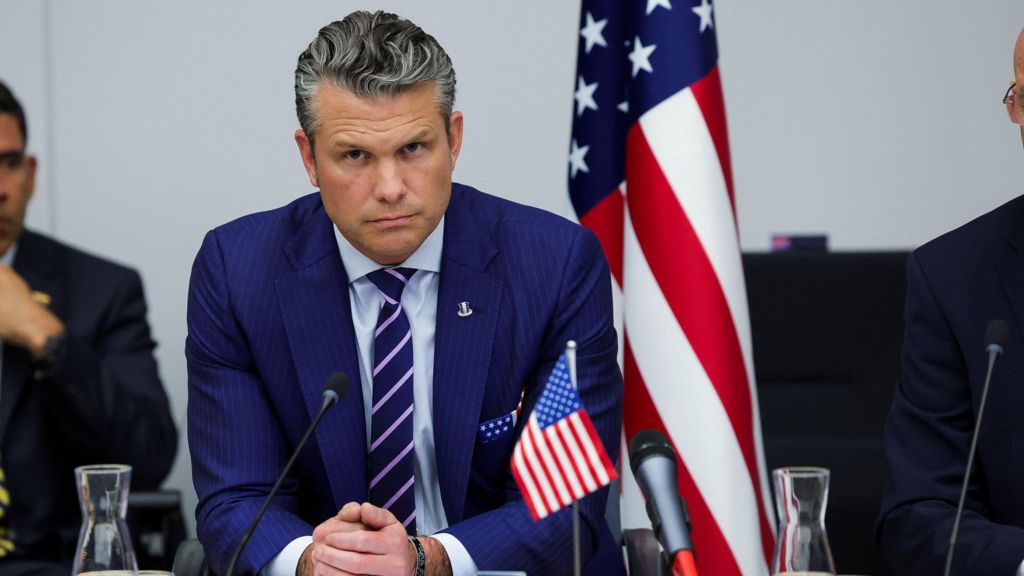
US Secretary of Defense Pete Hegseth’s aircraft was forced to make an unscheduled landing in the United Kingdom following the discovery of a crack in the windshield. The incident occurred during a return flight to the US after Hegseth attended a NATO Defense Minister meeting in Belgium. The Pentagon confirmed the event on X, stating that the landing was executed under standard safety protocols and that all passengers, including Secretary Hegseth, were unharmed. Hegseth later posted on social media, ‘All good. Thank God. Continue mission!’
BBC Verify, in collaboration with FlightRadar24, tracked the aircraft’s trajectory, revealing that it began descending off the southwest coast of Ireland before altering its course eastward. At an altitude of 10,000 feet, the plane transmitted a ‘7700 squawk code,’ an international signal indicating an onboard emergency. Such emergencies can range from mechanical failures to medical crises.
This incident follows a similar occurrence in February when a government plane carrying Secretary of State Marco Rubio had to abort its flight due to a cockpit window crack. The NATO meeting in Belgium, which Hegseth attended, focused on addressing security concerns in Ukraine. The emergency landing underscores the importance of stringent safety measures in aviation, particularly for high-profile government officials.
-
Ukraine imposes blackouts in most regions after Russian power grid attacks
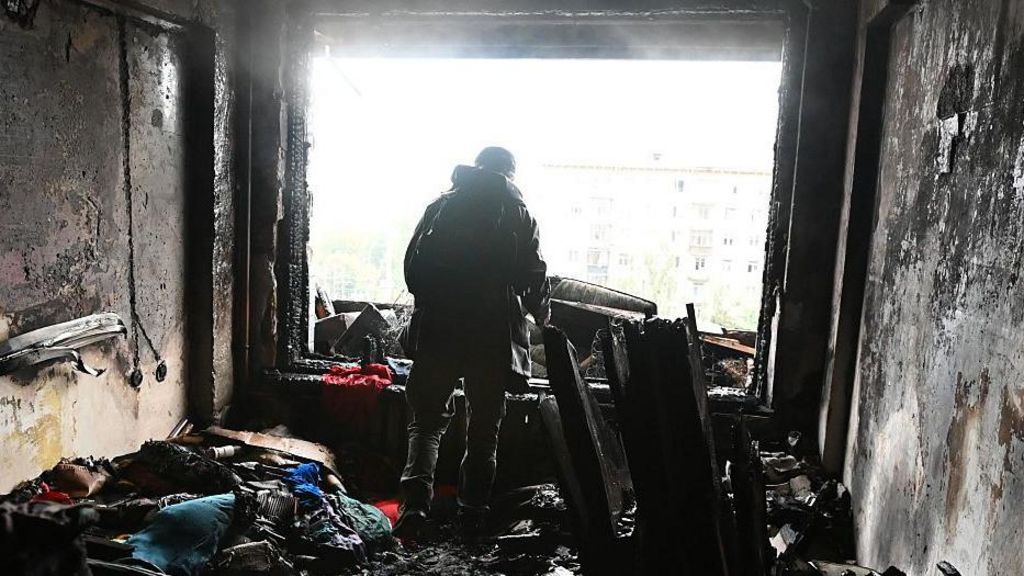
Ukraine is grappling with widespread power outages following a relentless barrage of Russian missile and drone attacks targeting its energy infrastructure. This marks the fourth consecutive winter of blackouts since Russia’s full-scale invasion began in February 2022. The Ukrainian Energy Ministry reported that nearly all regions, except for the war-torn Donetsk and the already struggling Chernihiv, are affected. Emergency measures have been implemented to manage the crisis, with grid operator Ukrenergo urging citizens to conserve electricity. Temperatures are expected to drop to 3°C, exacerbating the humanitarian impact.
In addition to energy infrastructure, Russia has intensified strikes on Ukraine’s railways, while Ukraine has retaliated with drone attacks on Russian oil refineries and depots. A significant fire at the Marine Oil Terminal in Feodosia, Crimea, has been burning for three days after a Ukrainian drone strike, disrupting fuel supplies crucial for Russian military operations. These attacks have reduced Russian fuel exports to their lowest levels since the war began, according to the International Energy Agency.
Ukrainian President Volodymyr Zelensky accused Moscow of aiming to ‘create chaos and apply psychological pressure’ through these strikes. Kyiv has sought long-range weapons from Western allies to target military installations deeper within Russia, though concerns over escalation have tempered support. Meanwhile, NATO countries have pledged additional military aid, with Germany committing $500 million and other nations collectively promising $1 billion.
Despite these efforts, military aid to Ukraine has declined by 43% compared to the first half of the year, according to the Kiel Institute. As the war drags on, the humanitarian and economic toll continues to mount, with civilians bearing the brunt of the crisis.
-
Aid trucks roll into Gaza as dispute over hostage bodies is paused
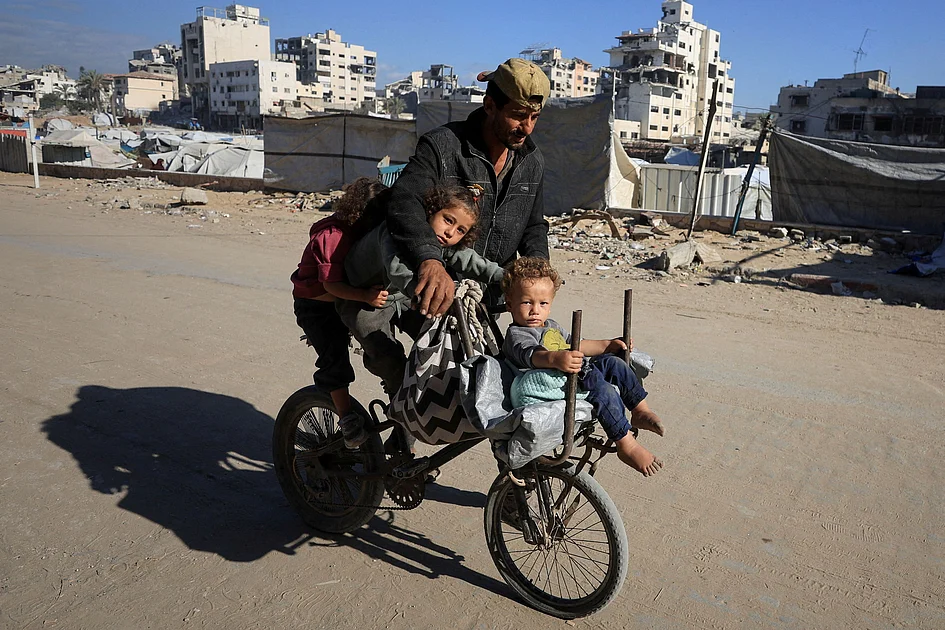
In a significant development amid the fragile ceasefire in Gaza, aid trucks began rolling into the war-torn enclave on Wednesday, while Israel resumed preparations to open the Rafah border crossing. The move followed a temporary resolution to the dispute over the return of bodies of dead hostages, which had threatened to derail the truce agreement with Hamas. Israel had previously threatened to keep the Rafah crossing closed and reduce aid supplies, citing Hamas’ slow return of hostage bodies. However, the militant group returned additional bodies overnight, easing tensions temporarily. The ceasefire, which ended two years of devastating conflict, has already secured the release of all living hostages held by Hamas. Despite this progress, the dispute over the return of bodies and other unresolved issues, such as Hamas’ refusal to disarm and cede power, continue to pose risks to the truce. The militant group has also intensified its security crackdown in Gaza, conducting public executions and clashing with local clans. Meanwhile, humanitarian aid, including food, medical supplies, fuel, and infrastructure repair equipment, is being delivered to Gaza through multiple crossings. The Rafah crossing is expected to open soon for Gazan citizens, though medical evacuees have yet to receive travel notifications. The ceasefire also envisions longer-term solutions, including governance in Gaza, the deployment of an international force, and steps toward Palestinian statehood. However, the path forward remains fraught with challenges, as evidenced by the ongoing violence and political opposition within Israel.
-

British antiques over a century old draw attention at Saudi International Falcons and Hunting Exhibition 2025
The Saudi International Falcons and Hunting Exhibition 2025, held at the Riyadh Exhibition and Convention Center in Malham, became a global stage for cultural exchange as British exhibitor Jameel Mansour showcased a remarkable collection of antique treasures. Mansour’s participation marked his debut in the Kingdom, offering visitors a glimpse into the rich tapestry of European history and artistry. His booth featured rare items, including a century-old English gramophone, a 70-year-old wooden eagle sculpture, and a curated selection of antique utensils and art pieces, each narrating a story of classical elegance and historical significance. Mansour described the event as an extraordinary opportunity to connect with an international audience, emphasizing the exhibition’s prestigious reputation. Beyond the exhibition, he expressed plans to explore Saudi Arabia’s cultural landmarks, particularly in Diriyah, praising the Kingdom’s architectural advancements and the hospitality of its people. The event, which concluded on October 11, hosted over 1,300 exhibitors from 45 countries, solidifying its position as the world’s largest gathering of its kind, blending tradition with innovation.
-
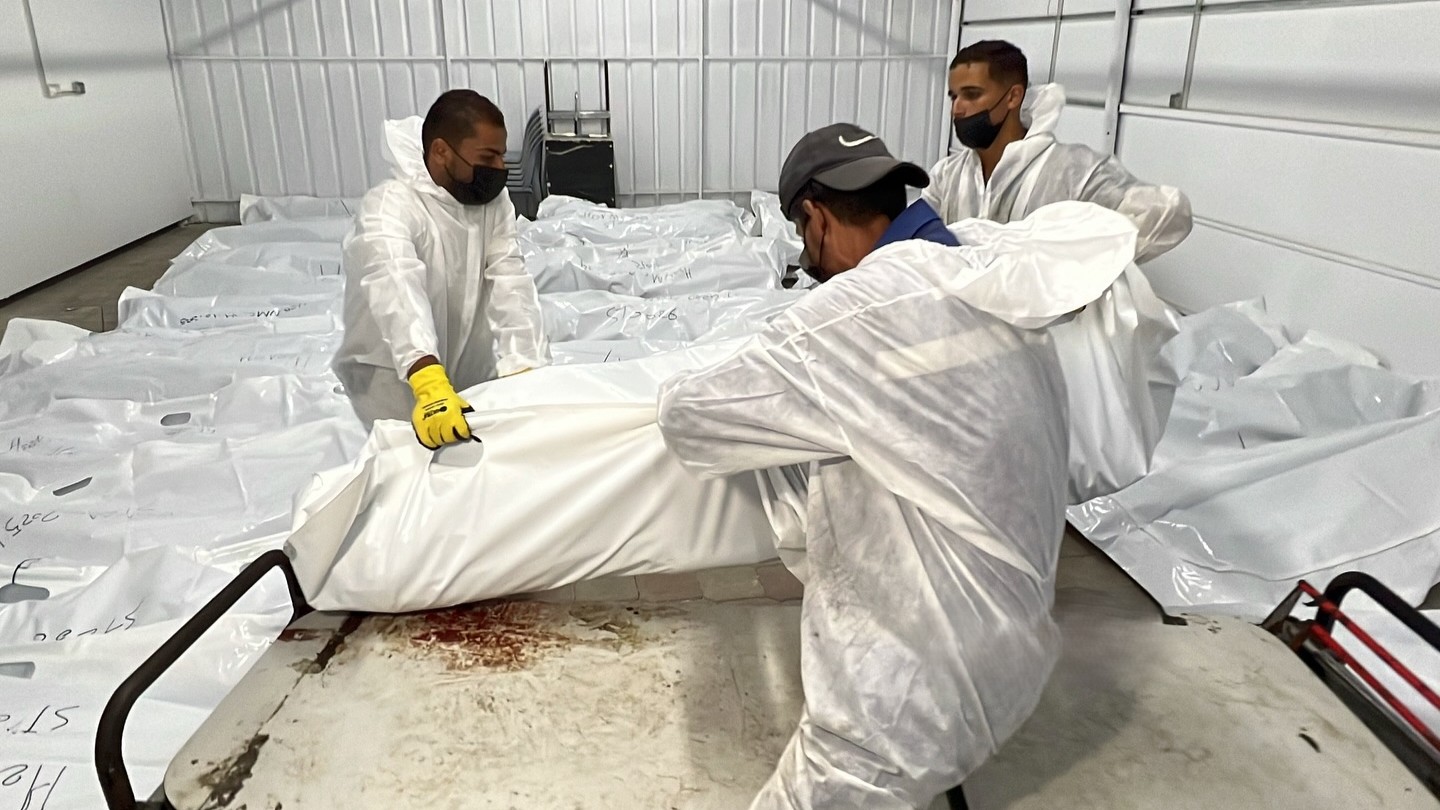
Israel returns Palestinian bodies showing signs of torture and execution
A disturbing pattern of abuse has emerged following the return of Palestinian bodies by Israeli authorities as part of the recent prisoner exchange agreement with Hamas. Medical personnel at Nasser Hospital in Khan Younis have documented extensive evidence of torture, execution-style killings, and mutilation among the approximately 45 remains received Tuesday via the International Committee of the Red Cross.
The hospital source revealed that the condition of the deceased varied significantly, with some showing recent signs of death while others arrived in advanced states of decomposition or as partial remains. Particularly alarming findings included bodies bearing clear indications of severe physical abuse, including ligature marks consistent with strangulation, multiple bone fractures, and various forms of mutilation. Several victims were discovered with their extremities bound and eyes covered with blindfolds, while others presented with missing limbs.
Medical authorities believe some of the remains belong to individuals killed during the October 7, 2023 attacks, apparently after being crushed by Israeli military tanks. An additional 45 bodies delivered Wednesday await comprehensive forensic examination according to the Palestinian Ministry of Health.
This exchange forms part of the ceasefire arrangement established Friday that has already facilitated Hamas’ release of 20 living Israeli captives in return for approximately 2,000 Palestinian prisoners. The Palestinian movement has additionally released seven deceased Israeli captives from a total of 28, with remaining transfers pending location and recovery operations.
Israel’s practice of retaining Palestinian bodies represents a longstanding policy dating to 1948, with dozens interred in anonymously marked ‘cemeteries of numbers.’ The National Campaign for the Retrieval of Palestinian and Arab War Victims’ Corpses estimates Israel currently holds at least 735 identified individuals, including 67 children and 10 women—among them a 13-year-old Palestinian killed by Israeli forces in 1968.
Recent developments have exacerbated concerns, with Palestinian health officials reporting Israeli forces have exhumed and removed at least 2,450 Palestinian bodies from graves during the Gaza conflict. Media investigations further indicate approximately 1,500 remains remain held at the Sde Teiman military detention camp since October 2023, identified solely by numerical codes.
Human rights organizations have consistently condemned Israel’s retention practices, demanding immediate release and repatriation of all remains to families. Although a 2018 amendment to Israel’s Counterterrorism Law—later validated by the Supreme Court—authorized withholding bodies of Palestinians alleged to have committed violent acts, this practice directly contravenes international humanitarian law. The Fourth Geneva Convention explicitly mandates dignified treatment of the deceased, requiring honorable burial according to religious customs and proper grave maintenance for future recognition.
-
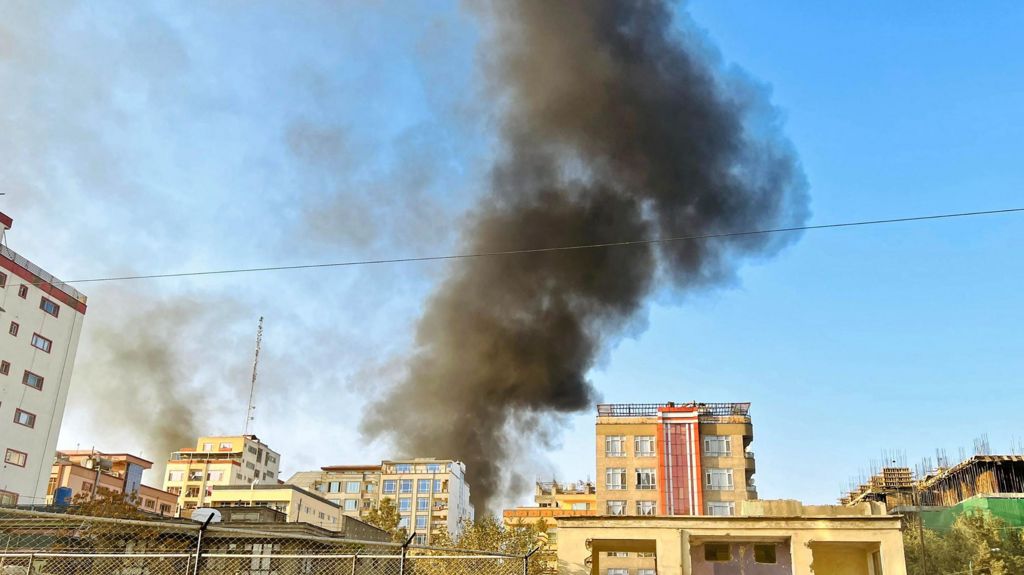
Afghan Taliban and Pakistan agree short truce after deadly clashes
In a tense turn of events, Pakistan and Afghanistan’s Taliban government have announced a temporary 48-hour ceasefire following a series of violent border clashes and reported Pakistani air strikes on Kabul and Kandahar. The ceasefire, which took effect at 13:00 GMT on Wednesday, was claimed by both sides as a mutual agreement to de-escalate hostilities. However, each accused the other of initiating the recent violence, with the Taliban reporting 12 civilian deaths and over 100 injuries due to Pakistani firing. Pakistan, in turn, claimed to have killed 15-20 Afghan Taliban fighters in the Spin Boldak border district. The clashes have shattered days of fragile peace, with both sides engaging in a war of narratives on social media to assert their dominance. Videos of the fighting and its aftermath have circulated online, though their authenticity remains unverified. The situation has drawn international concern, with calls for restraint from China, Russia, and the United Nations. UN Special Rapporteur Richard Bennett expressed deep concern over civilian casualties and displacement, urging all parties to adhere to international law. Pakistan has long accused the Afghan Taliban of harboring militants targeting its government, a claim the Taliban vehemently denies. The ceasefire offers a brief respite, but the underlying tensions remain unresolved, raising fears of further escalation.
-

US campus activists relieved – and anxious – after Gaza ceasefire deal
In 2023, pro-Palestinian protests erupted at Columbia University and rapidly spread across hundreds of US college campuses, as tens of thousands of students demanded an end to the Israel-Gaza war. The demonstrations, which peaked in spring 2024, included sit-ins, encampments, and, at times, violent clashes with law enforcement. Over 3,000 protesters were arrested during the unrest. The rallying cry, ‘Ceasefire now!’, echoed across campuses, culminating in a historic peace agreement brokered by US President Donald Trump in October 2025. While the deal brought relief to many, it also sparked mixed emotions among student activists. Khalid, a student at Earlham College, expressed relief for his family in Gaza but remained cautious about the future. Similarly, Ahmad from Georgetown University felt joy tempered by unease. Columbia University graduate student Thomas highlighted lingering tensions on campus, where discussions about Gaza remain fraught. Elisha Baker, a pro-Israel activist at Columbia, celebrated the return of hostages but lamented the release of Palestinian prisoners. Despite the ceasefire, concerns persist about the fragility of the peace plan. Israeli drone strikes in Gaza, which killed seven people shortly after the agreement, underscored these fears. Student activists like Jadd Hashem of the University of Texas emphasized the need for cross-cultural dialogue to prevent future conflicts. While the protests have waned, their impact endures, with students vowing to continue advocating for their respective causes.
-
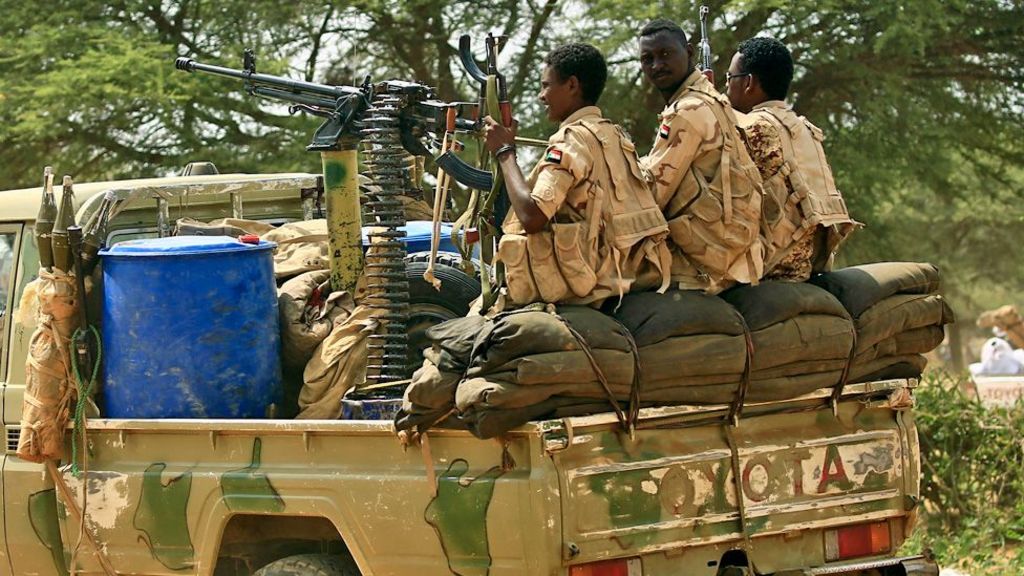
War crimes alert as food runs out in besieged Sudan city
The besieged city of el-Fasher in Sudan has become a grim testament to the escalating humanitarian crisis and alleged war crimes committed by the paramilitary Rapid Support Forces (RSF). Satellite imagery analyzed by Yale University’s Humanitarian Research Lab (HRL) reveals deliberate targeting of civilians, with over 60 new burial mounds appearing in just two weeks. Caitlin Howarth of HRL described the situation as ‘horrific,’ noting that munitions have been deployed to destroy shelters, mosques, hospitals, and markets, resulting in the deaths of at least 174 people and injuring 123 others. These actions, according to researchers, constitute prima facie war crimes and may rise to the level of crimes against humanity. The RSF, which originated from the notorious Janjaweed militia, has encircled the city with a 57-kilometer earthen wall, trapping an estimated 300,000 residents. Food supplies have completely run out, and even alternative sources like ‘ambaz,’ a peanut residue normally fed to animals, are unavailable. The resistance committee for el-Fasher has issued desperate pleas for international aid, but their calls seem to fall on deaf ears. With only four RSF-controlled exits remaining, civilians are forced into increasingly smaller zones of refuge, where they face repeated bombardments. The international community has yet to take significant action, leaving the city’s residents in a dire and life-threatening situation.