分类: world

  • Scores of Palestinians dead, regular arrests: Israel’s ceasefire violations in Gaza so far

    Scores of Palestinians dead, regular arrests: Israel’s ceasefire violations in Gaza so far

    As the conflict between Israel and Hamas intensifies, the fragile US-mediated ceasefire in Gaza is on the brink of collapse. On Sunday, Israel launched a series of devastating airstrikes across the besieged territory, claiming retaliation for an alleged Hamas attack on its troops in southern Rafah. The Israeli military reported that the assault involved rocket-propelled grenades and sniper fire, though Hamas’ armed wing, the Izz al-Din al-Qassam Brigades, denied any involvement and reaffirmed its commitment to the truce.

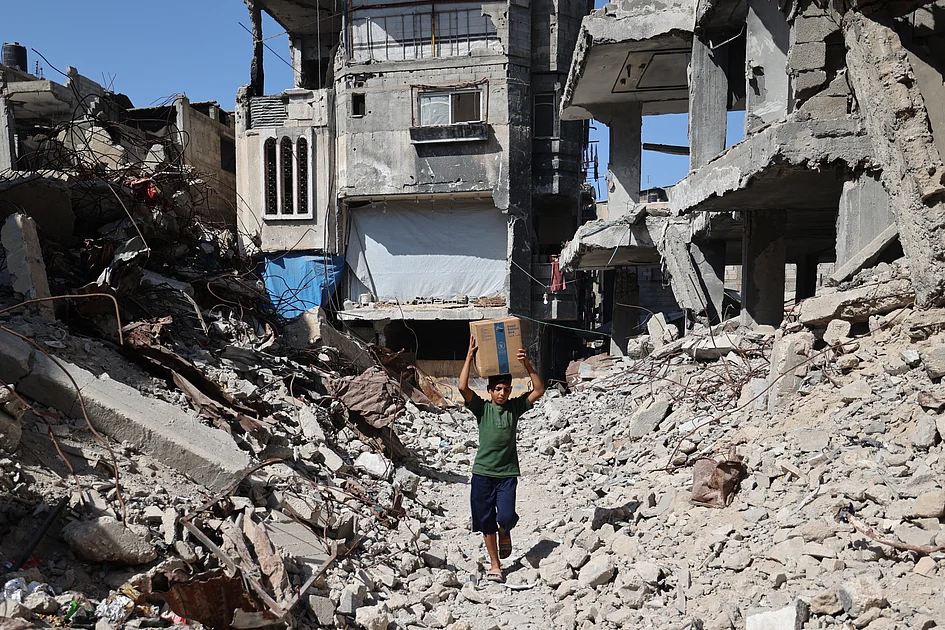
    Since the ceasefire took effect on October 11, Israeli forces have been accused of over 80 violations, including artillery fire, airstrikes, and the arrest of civilians. Palestinian authorities report that these breaches have resulted in the deaths of at least 97 people and injuries to over 230 others. The deadliest incident occurred on Sunday, with more than 100 airstrikes targeting areas such as Rafah, Khan Younis, Jabalia, and central Gaza. Among the casualties were civilians, journalists, and displaced families seeking refuge.

    Beyond the violence, Israel has also violated the ceasefire’s humanitarian provisions. Despite an ongoing prisoner exchange, Israeli forces have detained Palestinians in Gaza and the occupied West Bank. The Gaza media office reported that 14 individuals were arrested, with five released after enduring abuse. Additionally, Israel has restricted the entry of essential aid into Gaza, despite the agreement stipulating the daily delivery of 400 aid trucks, a figure far from being met.

    The situation has drawn widespread condemnation, with rights groups accusing Israel of exacerbating the humanitarian crisis in Gaza. The Government Media Office in Gaza described the aid entering the territory as a ‘drop in the ocean,’ insufficient for the 2.4 million residents. As the violence escalates and the ceasefire teeters, the international community faces mounting pressure to intervene and restore peace in the region.
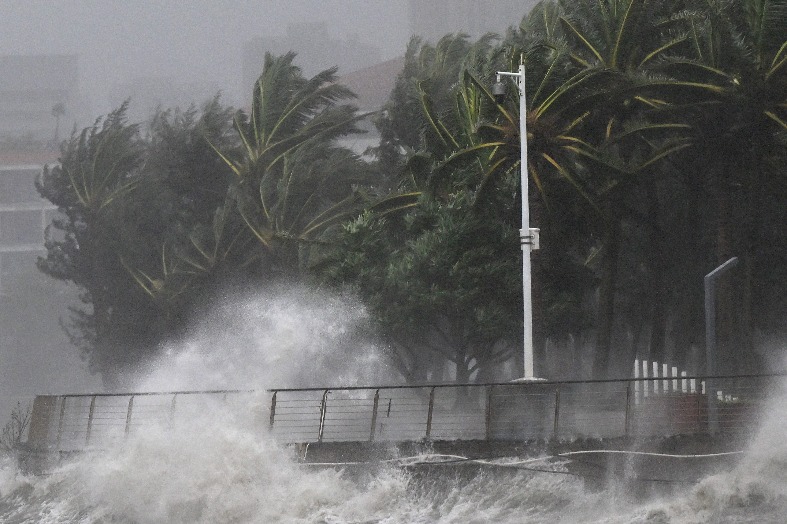

  • Blue alert issued for Fengshen, 24th typhoon of the year

    Blue alert issued for Fengshen, 24th typhoon of the year

    China’s National Meteorological Center has raised a blue alert for Typhoon Fengshen, the 24th typhoon of the year, as it gains strength over the South China Sea. As of 5 am on Monday, the storm’s center was positioned approximately 520 kilometers east of Sansha city in Hainan province. Currently classified as a tropical storm, Fengshen boasts maximum sustained winds of 23 meters per second, with its wind field extending 220 to 280 kilometers from the center. The typhoon is projected to move northwest at a speed of 20 to 25 kilometers per hour, potentially escalating into a severe tropical storm or even a full-fledged typhoon, with wind speeds reaching 30 to 35 meters per second. By Tuesday, a cold front is expected to redirect Fengshen southwestward toward the central coast of Vietnam, where it will likely weaken. Over the next three days, the storm is set to unleash heavy rainfall and strong winds across eastern and northern Taiwan, the coastal regions of Fujian and Guangdong provinces, Hainan Island, and the northern South China Sea. From 8 am Monday to 8 am Tuesday, northern Taiwan is forecast to experience torrential rains, with some areas receiving 100 to 200 millimeters of precipitation. Concurrently, a cold front will sweep across central and eastern China, causing temperatures to plummet by 4 to 6 degrees Celsius, with some regions experiencing drops of up to 8 degrees Celsius. The combined influence of the cold front and Typhoon Fengshen will also result in powerful winds across the southern East China Sea, Taiwan Strait, and northern and central South China Sea, with gusts reaching up to 36.9 meters per second, prompting the issuance of a yellow alert for strong winds.

  • New road linking Baltic states to Poland opens at a time of tensions with Russia

    New road linking Baltic states to Poland opens at a time of tensions with Russia

    In a significant development for regional connectivity and security, the Via Baltica, a major road linking the Baltic states to Poland, was inaugurated on Monday. This opening comes at a time of heightened tensions between Europe and Russia, particularly following recent incursions of Russian drones into Polish territory and fighter jets into Estonian airspace in September. The 970-kilometer (600-mile) route, which forms part of the European E67 highway, stretches from Warsaw, Poland, through Lithuania, Latvia, and Estonia, culminating in Tallinn. The road traverses the strategically sensitive Suwalki Gap, a narrow strip of land between Belarus and Russia’s Kaliningrad exclave, often cited as a potential flashpoint in any conflict involving NATO and Russia. At the inauguration ceremony on the Polish-Lithuanian border, Polish President Karol Nawrocki and Lithuanian President Gitanas Nausėda emphasized the dual significance of Via Baltica, highlighting its role in bolstering both economic growth and regional defense. Nawrocki stated, ‘This road has a dual purpose – it will help our economy and strengthen the defense capabilities of our region.’ Nausėda echoed these sentiments, describing the road as a symbol of ‘freedom, prosperity, and security,’ while underscoring its economic and logistical importance in connecting Lithuania to the broader European market. The four-lane A5 highway, linking Kaunas, Lithuania’s second-largest city, to Suwalki in Poland, is a key component of Via Baltica. However, some northbound sections remain two lanes and are slated for future expansion, according to Lithuania’s Transportation Ministry. The road’s strategic value lies in its potential to facilitate faster NATO troop movements in the event of a crisis, reinforcing the Baltics’ defense posture amidst ongoing regional instability.

  • India: Toxic haze chokes Delhi; pollution soars to over 16 times’ ideal levels

    India: Toxic haze chokes Delhi; pollution soars to over 16 times’ ideal levels

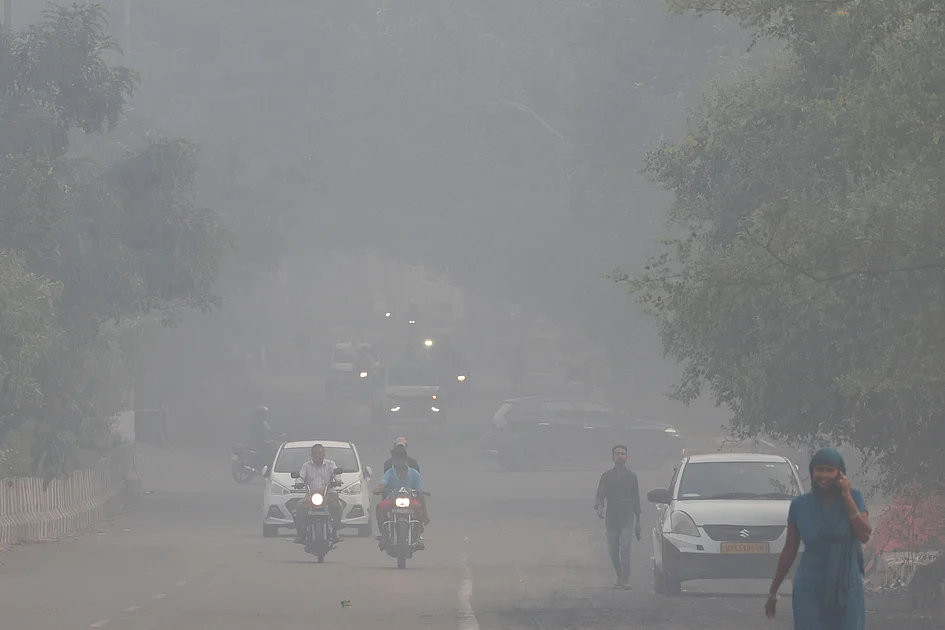
    New Delhi, India’s bustling capital, is grappling with an unprecedented environmental crisis as a thick, toxic haze envelops the city. On Monday, air pollution levels surged to over 16 times the World Health Organization’s recommended daily maximum, posing severe health risks to its 30 million residents. The city, already notorious for its poor air quality, faces a deadly combination of emissions from crop burning, industrial activities, and heavy vehicular traffic. The situation has been exacerbated by cooler air trapping pollutants close to the ground and the widespread use of fireworks during Diwali, the Hindu festival of lights. Despite the Supreme Court’s allowance of ‘green firecrackers’ designed to reduce pollution, the ban on traditional fireworks was largely ignored. Monitoring data from IQAir revealed PM2.5 levels reaching 248 micrograms per cubic meter in some areas—particles so small they can enter the bloodstream and cause cancer. The government’s Commission of Air Quality Management has warned of further deterioration in air quality and implemented measures such as ensuring uninterrupted power supply to curb diesel generator use. Additionally, Delhi authorities plan to trial cloud seeding this month, a technique to induce rain and clear the air. A Lancet Planetary Health study highlighted the grim reality, estimating 3.8 million deaths in India between 2009 and 2019 were linked to air pollution. The UN children’s agency has also raised alarms about the heightened risk of acute respiratory infections among children due to polluted air.

  • UNICEF Yemen chief among staff held by Houthis: UN official

    UNICEF Yemen chief among staff held by Houthis: UN official

    In a concerning development, Peter Hawkins, the UNICEF representative in Yemen, has been detained by Houthi rebels in the capital city of Sanaa. According to a UN official who spoke to AFP on Sunday, Hawkins is among 15 international United Nations employees held captive following a raid on a UN complex by the Houthis the previous day. The official, who requested anonymity, confirmed the detentions but did not provide further details regarding the circumstances or the reasons behind the raid. This incident highlights the escalating tensions in Yemen, where the Houthi rebels have been engaged in a prolonged conflict with the internationally recognized government. The detention of UN personnel, particularly high-profile figures like Hawkins, raises significant concerns about the safety of humanitarian workers in the region and the potential impact on critical aid operations. The UN has yet to issue an official statement on the matter, but the situation underscores the volatile environment in Yemen and the challenges faced by international organizations operating in the war-torn country.

  • Cambodia opens a new $2 billion airport to serve Phnom Penh

    Cambodia opens a new $2 billion airport to serve Phnom Penh

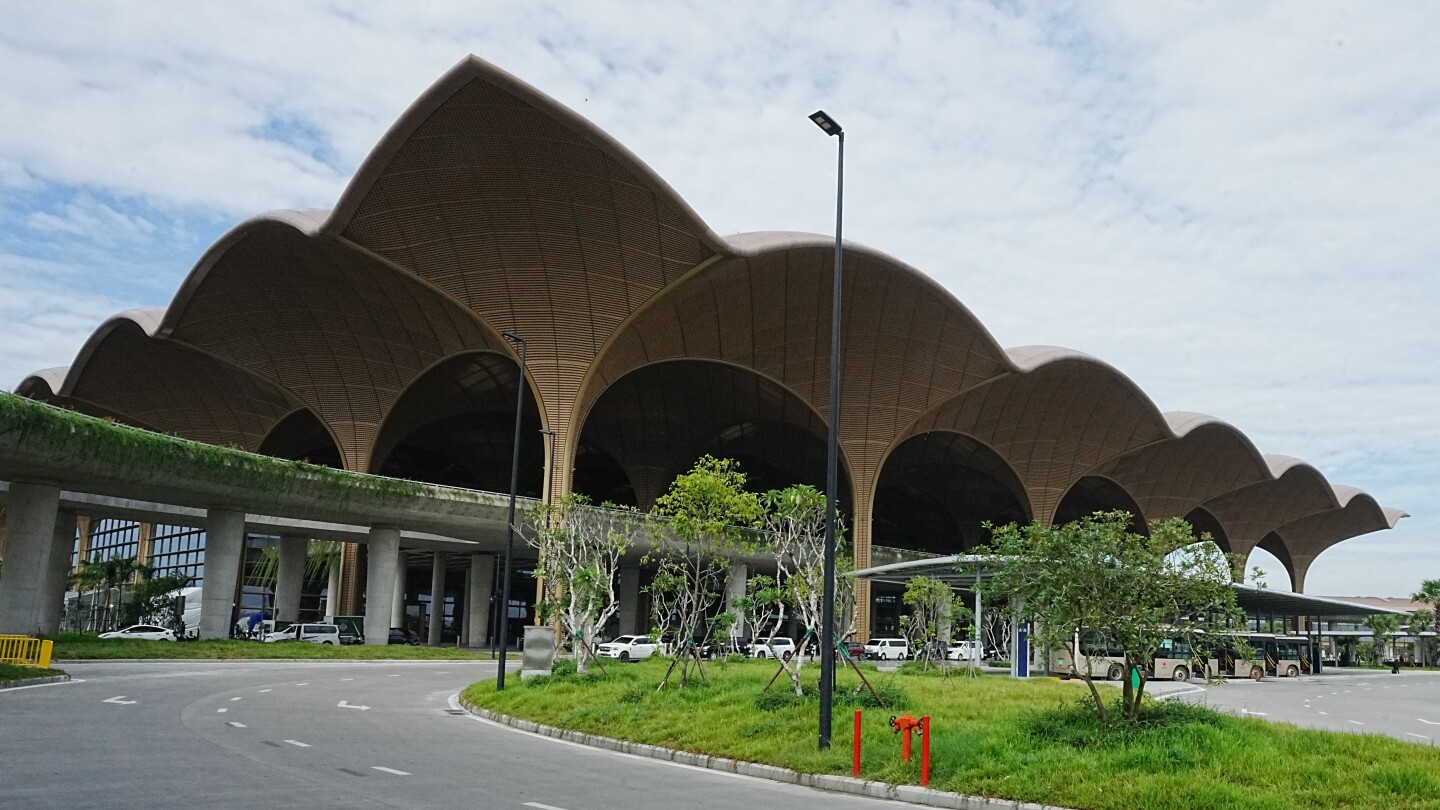
    Cambodia’s Prime Minister Hun Manet inaugurated the state-of-the-art Techo International Airport on Monday, marking a significant milestone in the nation’s efforts to revitalize tourism and attract foreign investment. Located in Kandal province, approximately 30 kilometers south of Phnom Penh, the $2 billion facility replaces the aging Phnom Penh International Airport, which had operated for nearly seven decades with a single runway. The new airport, a joint venture between the Cambodian government and the Overseas Cambodian Investment Corp., began operations in September and features three runways. Initially designed to handle 13 million passengers annually, its capacity is projected to expand to 30 million by 2030 and 50 million by 2050. Hun Manet expressed optimism that the airport would serve as a catalyst for economic recovery, aiming to surpass pre-pandemic tourism and investment levels. However, Cambodia’s tourism sector faces challenges, including the recent death of a South Korean man allegedly lured into an online scam center, which has drawn international attention to the country’s illegal cybercrime industry. Additionally, a brief but tense border conflict with Thailand in July further impacted tourism. Despite these setbacks, Cambodia welcomed 4 million foreign tourists from January to August 2023, with plans to leverage its second major airport in two years—the Siem Reap-Angkor International Airport, opened in October 2023—to support the iconic Angkor Wat temple complex.

  • Body of slain Nepali hostage held in Gaza repatriated after release by Hamas

    Body of slain Nepali hostage held in Gaza repatriated after release by Hamas

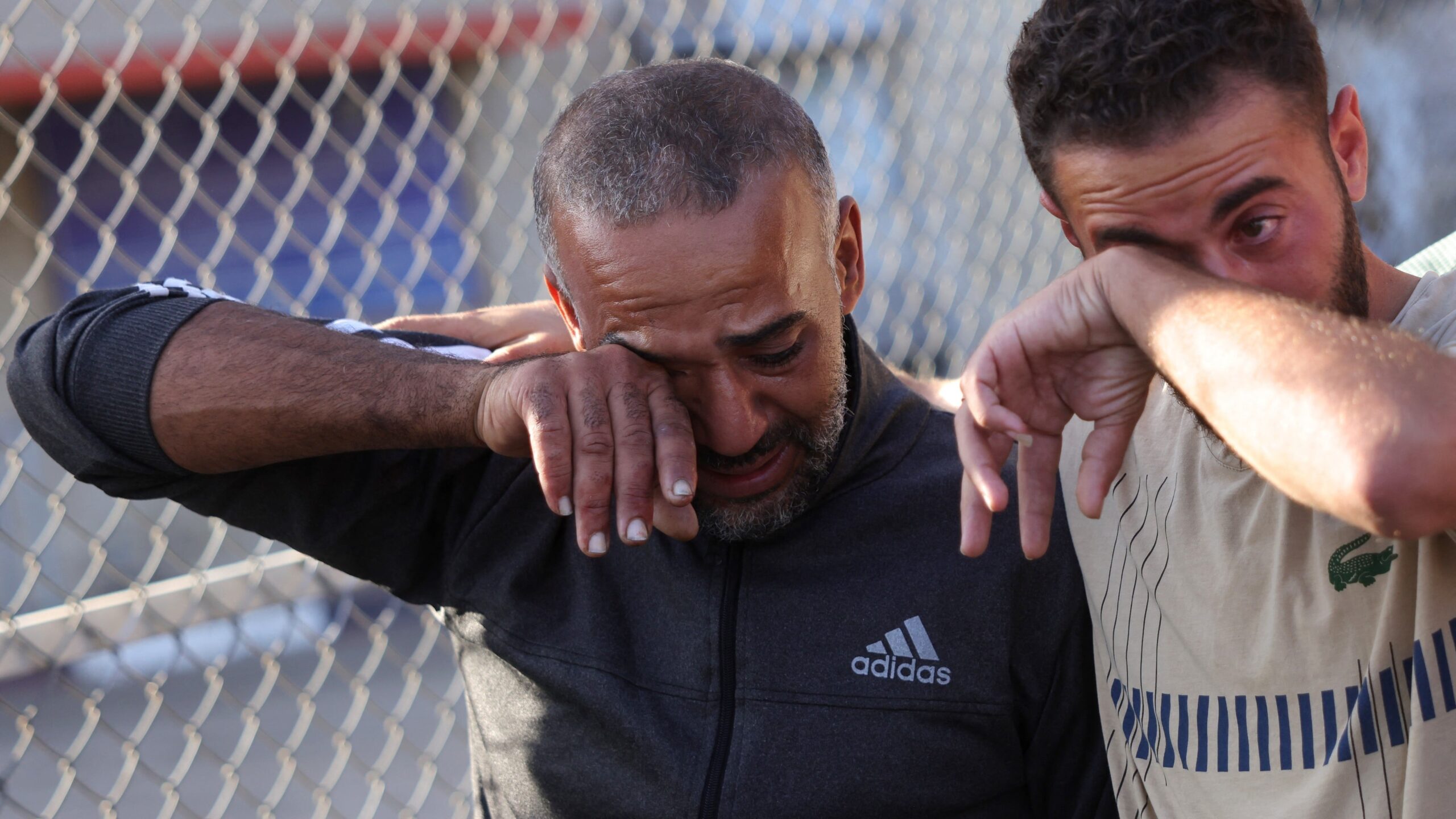
    The remains of Bipin Joshi, a Nepali student tragically killed while held hostage in Gaza, were repatriated to Kathmandu on Monday. Joshi’s body arrived at Tribhuvan International Airport from Israel’s Ben Gurion International Airport, where it was received with solemn honors. Nepal’s Foreign Ministry confirmed that the body would be transported to his hometown of Bhimdattanagar later in the evening. Joshi was one of 17 Nepali students studying agriculture in southern Israel when Hamas launched its devastating attack on October 7, 2023, sparking the ongoing Gaza conflict. He had arrived in Israel just a month prior as part of a student exchange program, working and studying at Kibbutz Alumim near the Gaza border. The Hamas assault claimed the lives of 10 Nepali students and left six others injured. Joshi, aged 22 at the time, was abducted during the attack. The Israel Defense Forces confirmed his death in captivity on October 14, 2023, while his mother and sister were in the United States advocating for his release. Nepal’s Prime Minister Sushila Karki paid tribute to Joshi at a ceremony at Kathmandu’s airport, draping the national flag over his coffin. She praised his courage, stating, ‘Bipin’s bravery is a source of pride for every Nepali. He is a son of Nepal, a son of every mother. We will never forget him. He lives in our hearts.’ The Nepali government emphasized its efforts to secure Joshi’s release during his captivity, expressing deep sorrow over the tragic outcome.

  • Fire on Air China flight shows why airlines are banning power bank use onboard

    Fire on Air China flight shows why airlines are banning power bank use onboard

    A recent incident aboard an Air China flight from Hangzhou to Incheon has reignited concerns about the safety of lithium batteries on aircraft. Smoke began emanating from an overhead compartment, prompting crew members to swiftly extinguish flames later identified as a lithium-battery fire. The plane was safely diverted to Shanghai, and no injuries were reported. However, the event underscores the potential dangers of small electronic devices mid-air, particularly power banks and other lithium-powered gadgets. This incident has drawn global attention to the handling and packing of such devices, with UAE airlines already implementing stricter regulations. Emirates, flydubai, and Etihad Airways have banned the use of power banks onboard and imposed specific rules to mitigate risks. The International Air Transport Association (IATA) has also launched a campaign, ‘Travel Smart with Lithium Batteries,’ to educate travelers on safe practices. According to IATA, lithium batteries are found in a wide range of everyday items, from smartphones to medical devices, and improper handling can lead to severe consequences. Safety experts warn that damaged or overcharged lithium-ion or lithium-polymer cells can overheat, triggering thermal runaway, which can result in fires or explosions. To ensure safety, IATA recommends travelers follow seven simple rules, including carrying devices in hand baggage, protecting loose batteries, and checking airline-specific regulations. The Air China incident serves as a stark reminder of the importance of adhering to these guidelines to prevent potential in-flight emergencies.

  • 23 Indians rescued after explosion, fire on tanker off Yemen’s coast

    23 Indians rescued after explosion, fire on tanker off Yemen’s coast

    A dramatic maritime rescue unfolded off the coast of Yemen as 23 Indian crew members were saved following an explosion and subsequent fire aboard the Cameroon-flagged LPG tanker MV Falcon. The incident occurred on Saturday, October 18, 2025, at 7:00 AM UTC, approximately 113 nautical miles southeast of Aden. The vessel, en route from Oman’s Sohar Port to Djibouti, was carrying a full load of liquefied petroleum gas when the explosion took place, causing the ship to drift and ignite a fire that engulfed 15% of the vessel. Early reports indicate the explosion was accidental, though investigations are ongoing. The EU Naval Force Operation Aspides swiftly launched a search-and-rescue mission after radio communications revealed the crew was preparing to abandon ship. Of the 24 crew members who initially evacuated, 23 were successfully rescued, while two remain missing, and one was still onboard the tanker at the time of the last update. Due to the risk of further explosions, nearby vessels were advised to maintain a safe distance. A private company has since taken over the salvage operation. This incident highlights the ongoing dangers in the Red Sea corridor, where Yemen’s Houthi rebels have been targeting commercial ships in solidarity with Palestinians amid the Israel-Gaza conflict. Operation Aspides, a defensive maritime mission, continues to safeguard civilian ships and crews navigating these perilous waters.

  • Trump says ceasefire still in force after Israeli bombs rain down on Gaza

    Trump says ceasefire still in force after Israeli bombs rain down on Gaza

    US President Donald Trump confirmed on Sunday that a ceasefire in Gaza remains intact, despite a series of deadly Israeli airstrikes targeting Hamas positions in southern Gaza. The strikes, which Israel claimed were in response to alleged truce violations by Hamas, resulted in at least 45 fatalities, according to Gaza’s civil defence agency. Four hospitals in Gaza corroborated the death toll, reporting an influx of casualties. Israel’s military stated it is investigating the reports but emphasized its commitment to enforcing the ceasefire, vowing to respond firmly to any breaches. Hamas denied the accusations, with one official alleging that Israel fabricated pretexts to resume hostilities. The ceasefire, brokered by Trump on October 10, aimed to halt over two years of devastating conflict between Israel and Hamas. However, its implementation has faced significant challenges, including the suspension of aid to Gaza due to alleged violations. The war has claimed over 68,000 lives in Gaza, with more than half being women and children. Meanwhile, Hamas has released 20 surviving hostages and is working to recover the bodies of those who died. Israel has returned 150 Palestinian bodies to Gaza, linking the reopening of the Rafah crossing to the recovery of all deceased. The situation remains volatile, with both sides accusing each other of undermining the fragile peace.