分类: technology

  • Institute to build space data centers

    Institute to build space data centers

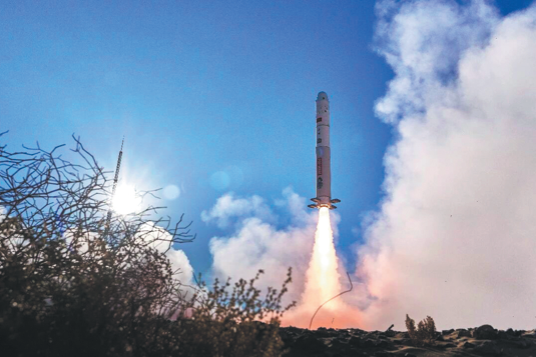
    Beijing’s aerospace technology sector is pioneering an innovative solution to the global computing power shortage exacerbated by artificial intelligence’s exponential growth. The Beijing Astro-future Institute of Space Technology, under director Zhang Shancong’s leadership, is developing orbital data centers that leverage the unique advantages of space environment to overcome terrestrial limitations.

  • Cute robot pets emerge as cuddly companions

    Cute robot pets emerge as cuddly companions

    In a significant technological advancement within the emotional AI sector, robotic companion pets are emerging as innovative solutions for urban professionals seeking low-maintenance companionship. These AI-driven creations, exemplified by products like Ropet and Moflin, combine sophisticated sensor technology with emotionally responsive behaviors to simulate genuine pet interactions.

    The Ropet robotic pet, developed specifically for young female white-collar workers, represents a breakthrough in emotional artificial intelligence. Priced at $299 for its basic version, this feline-inspired device features multi-sensor capabilities including a nasal camera, forehead microphone, and tactile sensors that enable it to perceive and respond to human interactions through audio, visual, and touch inputs. The unit’s LED-screen eyes display food imagery during feeding interactions, while its AI model allows for personality development based on user treatment patterns.

    Market validation has been substantial, with Ropet’s Kickstarter campaign attracting 1,134 backers and raising approximately $400,000—exceeding its initial goal by 300 times. Similarly, Casio’s Moflin AI rabbit toy sold over 7,000 units at 59,400 yen ($380) each within months of release.

    According to industry analysis by Global Market Insights, the emotion AI market is projected to expand from $2.9 billion last year to $19.4 billion by 2034, indicating robust growth potential for companion robotics. The technology’s appeal lies in its ability to stimulate oxytocin secretion while reducing anxiety and depression through non-verbal companionship.

    He Jiabin, CEO and co-founder of Ropet, emphasizes that these devices provide ‘soft companionship’ rather than verbal communication, intentionally designed to trigger caregiving instincts and childlike playfulness. Users like tech columnist Yoky Liu report meaningful emotional connections with their robotic companions, noting that the devices’ evolving personalities reflect their own behavioral patterns over time.

    This technological innovation addresses growing urban loneliness while offering a cost-effective alternative to traditional pet ownership, representing a significant convergence of artificial intelligence, emotional wellness, and consumer electronics.

  • 18-year-old Abu Dhabi expat wins KT+150 grand prize for self-charging power bank pitch

    18-year-old Abu Dhabi expat wins KT+150 grand prize for self-charging power bank pitch

    An 18-year-old Indian expatriate and environmental science student has claimed the grand prize in the inaugural KT+ 150 List Makers Elevator Pitch competition. Dhana Abdul Fathah, a second-year student at the American University of Sharjah, secured Dh250,000 worth of media coverage in Khaleej Times and 250,000 Skywards Miles from Emirates for her innovative self-charging power bank concept.

    The winning invention utilizes micro-energy chips that harness ambient energy from movement and light, eliminating the need for external charging sources. The Abu Dhabi-born student developed her submission under significant time constraints, creating and submitting her pitch video within just four hours before the competition deadline while simultaneously managing her university examinations.

    Dhana’s inspiration emerged from her academic focus on environmental science and sustainability, with several months of preliminary research preceding her competition entry. She anticipates requiring approximately one year to advance from research and development to creating a functional prototype, with ambitions to establish a formal startup venture by her graduation.

    The competition, organized by Khaleej Times, attracted over 20 entries according to Chief Content Officer Ted Kemp. Judges selected three finalists including Dhana’s power bank concept. Other shortlisted proposals included a zero-waste circular economy farm café that would convert restaurant scraps into compost for growing produce, and a proposed magic academy in Dubai aimed at fostering cognitive transformation through magical education.

    Despite her achievement, Dhana acknowledges forthcoming challenges in securing investors and scaling her technology. She maintains an additional role as remote ambassador for the Abu Dhabi-based Middle East Business Alliance for Sustainability while pursuing her studies.

  • FireBull AB sets global benchmark in lithium-ion fire safety amid rising battery risks

    FireBull AB sets global benchmark in lithium-ion fire safety amid rising battery risks

    In a landmark development for fire safety technology, FireBull AB has established a new global standard for combating lithium-ion battery fires as concerns mount over the risks associated with widespread battery adoption. The fluorine-free firefighting formulation, engineered by Enforcer One and distributed regionally by Frontline Innovations, has obtained certification under the stringent NTA 8133 lithium-ion battery fire standard, positioning it as the world’s sole foam agent meeting this critical benchmark.

    Independent testing has demonstrated unprecedented efficacy, with FireBull AB extinguishing hazardous battery blazes within a remarkable 16 to 20 second window while preventing reignition for periods exceeding 20 minutes. This performance breakthrough addresses critical safety gaps in electric vehicle infrastructure, battery logistics, warehousing operations, and maritime transport where conventional fire suppression methods have proven inadequate.

    John Kneller, Director at Frontline Innovations, emphasized the significance: “This certification validates that lithium-ion battery fires can now be contained swiftly, safely, and without environmental trade-offs.” The formulation is completely free of PFAS/PFOS compounds, eliminating environmental and ESG concerns associated with fluorinated chemicals while maintaining operational effectiveness at just 0.25% concentration.

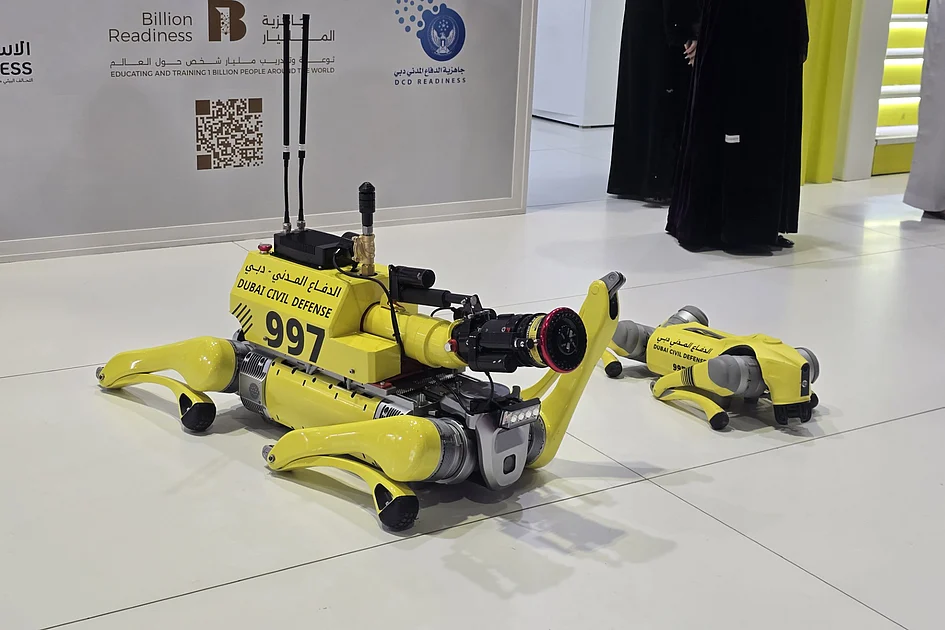
    The solution offers practical advantages through compatibility with existing fire suppression infrastructure, allowing integration without costly system upgrades. For rapid response scenarios, Enforcer One’s portable Compressed Air Foam Systems including the wearable Enforcer Air 3 unit provide mobility for high-risk environments, while larger vehicle-mounted systems support dynamic operational needs.

    This technological advancement arrives amid escalating frequency and severity of lithium-ion battery incidents, with significant implications for insurance risk assessment, regulatory compliance frameworks, and corporate liability management. Safety experts caution that continued reliance on uncertified or outdated fire suppression systems may jeopardize insurance claims and expose organizations to substantial reputational damage.

    With formal approval from UAE Civil Defence already secured, Frontline Innovations has announced upcoming regional demonstrations allowing operators to witness the technology’s capabilities firsthand. As global industries accelerate electrification initiatives, FireBull AB represents a critical safeguard against one of the most persistent and dangerous hazards in the energy transition landscape.

  • Beijing institute plans to build space data centers

    Beijing institute plans to build space data centers

    The Beijing Astro-future Institute of Space Technology is spearheading an innovative project to launch high-computing-power experimental satellites by late 2025 or early 2026. This initiative aims to address the escalating global demand for computing power, exacerbated by the rapid expansion of artificial intelligence and the limitations of traditional data centers. Zhang Shancong, the institute’s director and chief scientist at Beijing Orbit Twilight Technology Co., highlighted the challenges faced by terrestrial data centers, including excessive land use, skyrocketing energy consumption, and environmental cooling constraints. Space-based solutions, leveraging the abundant solar energy and the stable minus 270°C cosmic environment, offer a promising alternative. These satellites will enable continuous solar power generation and highly efficient passive radiation cooling, potentially revolutionizing the way computational needs are met in the future. This groundbreaking approach underscores China’s commitment to technological innovation and sustainable development.

  • Machines Can Think 2026 launches in Abu Dhabi, fueling UAE’s $100 billion AI push

    Machines Can Think 2026 launches in Abu Dhabi, fueling UAE’s $100 billion AI push

    Abu Dhabi is positioning itself at the forefront of artificial intelligence innovation with the announcement of Machines Can Think 2026, a landmark summit scheduled for January 26-27, 2026, at Park Hyatt Saadiyat. The event represents a significant milestone in the United Arab Emirates’ ambitious national strategy to establish itself as a global AI powerhouse.

    The summit, organized by Polynome, will convene an exceptional gathering of more than 20 leading AI researchers from over 12 countries alongside top executives from technology giants including NVIDIA, Meta, and Google. The program features an extensive agenda comprising over 50 keynote presentations, more than 10 hands-on workshops, and immersive demonstration zones where attendees will experience cutting-edge AI technologies firsthand.

    Aligning with the UAE’s comprehensive 2031 AI strategy and its substantial $100 billion investment in artificial intelligence infrastructure, the event will explore three dedicated thematic tracks: Co-Evolution (addressing human-AI interfaces), Technical Breakthroughs, and Executive Strategies for responsible AI adoption. Notable session highlights include ‘UAE Stargate: Building a National AI Fabric,’ ‘Foundation Models and Infrastructure,’ and ‘AI for Life Sciences,’ alongside pioneering demonstrations in computer vision under the theme ‘Machines Can See and Act.’

    Prominent speakers include Michal Valko (Chief Models Officer at a Stealth AI Startup), Manohar Paluri (VP of AI at Meta), Andrey Doronichev (CEO of Optic), Marc Hamilton (VP of Solutions Architecture at NVIDIA), and Serge Belongie (Director of the Pioneer Centre for AI). The summit has secured partnerships with prestigious institutions including Mohamed bin Zayed University of Artificial Intelligence (MBZUAI).

    Alexander Khanin, Founder and CEO of Polynome.ai, emphasized the summit’s role as a catalyst for transformative dialogue: ‘As AI is projected to contribute $320 billion to the regional economy, our mission is to convert this potential into tangible progress, enabling nations and industries to build sustainable, intelligent systems.’

    Professor Ivan Laptev of MBZUAI and co-founder of Machines Can See added: ‘Abu Dhabi is rapidly emerging as a center for advanced AI. This summit exemplifies that momentum by fostering global collaboration and knowledge exchange across computer vision, machine learning, and natural language processing.’

    The event builds upon the success of previous Machines Can Summits, which attracted 3,500 attendees from 82 countries in its last iteration. The 2026 edition will be complemented by a sister event, Machines Can See, in Dubai, with both initiatives designed to accelerate responsible AI development and adoption. The summit will also feature a dedicated panel on inclusion in AI, organized in partnership with Women in AI.

  • Mediclinic launches new app, ushering in a new era of digital healthcare in the UAE

    Mediclinic launches new app, ushering in a new era of digital healthcare in the UAE

    Mediclinic Middle East has introduced a groundbreaking digital healthcare platform that fundamentally transforms patient engagement across the United Arab Emirates. The newly launched Mediclinic application represents a comprehensive technological leap, integrating multiple healthcare services into a single, seamless ecosystem designed to prioritize accessibility and personalized care.

    The innovative platform consolidates appointment scheduling, teleconsultation capabilities, electronic medical records, and customized care plans within a secure, user-friendly interface. This development marks a significant milestone in Mediclinic’s digital evolution, replacing fragmented legacy systems with a unified solution built around patient convenience and empowerment.

    Users experience dramatically streamlined access through UAE Pass integration, achieving secure authentication in under thirty seconds. The intuitive interface enables immediate navigation to essential services, including real-time physician consultations and medical history review. A particularly notable advancement is the expansion of on-demand virtual care, allowing patients to obtain medical advice without pre-scheduled appointments.

    The application incorporates sophisticated family management features, permitting authorized caregivers to oversee health journeys for dependents while maintaining rigorous digital security protocols. For chronic condition management, the platform offers structured care pathways with educational resources and follow-up mechanisms, transforming the application from a transactional tool into an ongoing health partnership.

    Dr. Sara Alom Ruiz, Chief Commercial Officer of Mediclinic Middle East, stated: ‘This launch embodies our strategic vision to establish regional leadership in digital-first healthcare delivery. We’re fundamentally reimagining patient care through the integration of technological innovation, clinical excellence, and intuitive design.’

    Ahmad Awada, Director of Innovations and Digital Health, added: ‘This application will serve as our digital gateway, evolving into a comprehensive super-app capable of supporting future partnerships and increasingly personalized user experiences within our ecosystem.’

    This initiative aligns with the UAE’s broader digital health infrastructure development, demonstrating Mediclinic’s commitment to advancing intelligent, patient-centered healthcare solutions. The application is now available for download on major mobile platforms, offering UAE residents unprecedented control over their healthcare management.

  • Asahi says 1.5 million customers’ data leaked in cyber-attack

    Asahi says 1.5 million customers’ data leaked in cyber-attack

    Japanese beverage giant Asahi has disclosed the severe impact of a ransomware attack that struck its operations in September, potentially compromising the personal information of over 1.5 million customers. The cyber-attack, which targeted Asahi’s data centers, forced the company to revert to manual processes, significantly disrupting its production and distribution systems. Asahi confirmed that the personal details of individuals who interacted with its customer service centers were likely exposed, including names, genders, addresses, and contact information. Additionally, data belonging to approximately 107,000 current and former employees, along with 168,000 family members, were also potentially leaked. The attack, attributed to the ransomware group Qilin, encrypted Asahi’s data and demanded a ransom for its release. While credit card details were not compromised, the breach has raised significant concerns about data security. Asahi has delayed its full-year financial results to focus on mitigating the attack’s fallout and restoring its systems. The company has assured that its European operations, including brands like Peroni and Fuller’s Brewery, remain unaffected. Asahi’s president, Atsushi Katsuki, apologized for the disruptions and emphasized efforts to strengthen cybersecurity measures. The attack has also led to temporary shortages of Asahi products in Japan, where the company holds a 40% market share. This incident follows a series of high-profile cyber-attacks on global corporations, highlighting the growing threat of ransomware in the digital age.

  • Most Mena hospitals up to 18 months away from AI readiness, reveals expert

    Most Mena hospitals up to 18 months away from AI readiness, reveals expert

    Hospitals across the Middle East and North Africa (MENA) region are still six to 18 months away from achieving full readiness for large-scale artificial intelligence (AI) implementation, according to industry experts. Despite significant enthusiasm and rapid investments in AI, most institutions lack the essential foundational processes, governance frameworks, and leadership awareness required for safe and effective deployment. Brian de Francesca, Special Envoy for AI and Synthetic Workforce Development at the Arab Hospitals Federation, highlighted this gap during the DATE summit in Dubai, emphasizing that AI adoption is not merely a software purchase but a comprehensive organizational transformation. He noted that many leaders are unaware of AI’s current capabilities, limitations, and associated risks. Sid Ahmed Benraouane, an advisor to the Dubai Government, stressed the importance of visionary leadership in harnessing AI’s potential, warning that without proper safeguards, organizations risk deploying poorly understood systems. Aditya Balaraman, AI innovation lead at Magure, echoed these concerns, pointing out that while ambition is abundant in the region, a clear roadmap is essential for sustainable AI integration. He emphasized that AI could serve as a levelling technology, enabling lower-income markets to catch up if the right investments are made.

  • Dubai’s AI officer in every govt department is ‘leading by example’, says top official

    Dubai’s AI officer in every govt department is ‘leading by example’, says top official

    Dubai’s strategic early adoption of artificial intelligence (AI) has positioned the emirate as a global leader in digital innovation. According to Marwan Al Zarouni, CEO of AI at Dubai’s Department of Economy and Tourism (DET), the city’s ‘lead by example’ approach has been instrumental in integrating AI across public services and regulatory systems. Speaking at the Care for Sustainability MENA event in Dubai, Al Zarouni emphasized the importance of appointing an AI officer in every government department to ensure alignment, ownership, and swift execution of AI initiatives. This unified vision has enabled Dubai to stay ahead of international competitors in the AI race. Dubai’s journey with AI began long before many other cities, with the UAE appointing the world’s first Minister of AI in 2017 and launching dedicated education programs as early as 2012. This early start allowed Dubai to build the necessary skills, structures, and regulations to support AI’s rapid evolution. Al Zarouni highlighted the D33 economic agenda, which aims to double Dubai’s GDP by 2033, with AI expected to contribute Dh100 billion annually. Additionally, Dubai is striving to become one of the top three global cities within the next decade, supported by initiatives like the Dubai 500 School, which fosters startups and investors through talent, capital, and mentorship. Policy development remains a cornerstone of Dubai’s innovation ecosystem, with frameworks like the Virtual Asset Regulatory Authority (VARA) designed to provide legal clarity for businesses. Al Zarouni described Dubai’s approach as ‘intelligent infrastructure,’ focusing on agility, safety, and real-world outcomes. The city’s commitment to AI is not theoretical but practical, with AI deeply integrated into its operations. The event also showcased the commercial opportunities created by Dubai’s AI strategy. Alex Pavan, Founder and CEO of Emtribe, noted that the UAE’s focus on sustainability and digital transformation has made it an ideal location for AI-driven businesses. Emtribe’s platform, entirely built using AI, exemplifies the potential of Dubai’s AI ecosystem. Pavan emphasized the importance of automation and digitalization in achieving sustainability goals, particularly in decarbonization and energy optimization. Dubai’s leadership in AI and sustainability continues to attract global attention, solidifying its position as a hub for innovation and technological advancement.