分类: technology

  • Sydney park highlights Chinese culture with hi-tech

    Sydney park highlights Chinese culture with hi-tech

    Sydney’s city center has become the stage for a groundbreaking cultural fusion where ancient Chinese traditions meet advanced digital technology. The newly launched immersive exhibition at DigiPark transports visitors into the heart of Chinese cultural landscapes through a spectacular 180-degree curved high-definition screen and enveloping surround sound systems.

    At the core of the experience lies the Orbital Cinema, where audiences find themselves virtually immersed in traditional Chinese scenery. The digital journey begins with clouds parting to reveal majestic green mountains and flowing streams reminiscent of classical Chinese paintings. As the visual narrative progresses, viewers appear to drift through mist toward traditional architectural structures before witnessing the magical ascent of Kongming lanterns against a night sky, culminating with the majestic flight of a Chinese dragon across the digital canvas.

    This technological marvel represents the Southern Hemisphere debut of an immersive cultural concept that originated in China and has previously captivated audiences across Southeast Asia, including Malaysia, the Philippines, and Thailand.

    University of Technology Sydney quantum physicist Associate Professor Chris Ferrie expressed astonishment at the seamless integration of technology and cultural storytelling. ‘The technology becomes invisible, creating a truly immersive experience that’s both impressive and somewhat intimidating—we’re literally standing on screens, which challenges our conventional relationship with digital displays,’ he remarked.

    Professor Ferrie emphasized the significance of introducing Australian audiences to Chinese cultural traditions through such innovative mediums, noting that ‘Chinese culture’s extensive historical tradition presents exciting and fascinating learning opportunities, particularly in multicultural Australia.’

    The exhibition’s economic and cultural significance was highlighted by Sydney Councilor Adam Worling during the January 28 opening ceremony. He characterized the installation as ‘a unique addition to Sydney’s attractions that enhances the city’s cultural and entertainment offerings while supporting economic growth and creative employment opportunities.’

    Councilor Worling, who was born in the Year of the Horse, additionally expressed enthusiasm for participating in upcoming Chinese Spring Festival celebrations during the Fire Horse year.

    The launch coincides with promising market projections for Australia’s immersive technology sector. According to Grand View Research’s Australia Immersive Technology Market Size & Outlook report, the industry generated approximately $537 million in revenue during 2024, with projections indicating potential growth to over $2.65 billion by 2030, representing a compound annual growth rate of 31.6% from 2025 onward.

  • Streamlined services for overseas visitors unveiled

    Streamlined services for overseas visitors unveiled

    China has launched a comprehensive digital initiative designed to eliminate technological barriers for international travelers and non-mainland residents. The Cyberspace Administration of China, in collaboration with ten other government departments, has released the “Implementation Guidelines on Improving the Convenience of Digital Services for Inbound Overseas Visitors,” marking a significant step in the nation’s high-standard opening-up policy.

    The guidelines establish a two-phase roadmap targeting 2027 as the deadline for resolving persistent challenges in telecommunications, mobile payments, tourism, and public transportation systems. The ultimate objective is to achieve world-class digital services that seamlessly integrate local systems with international standards.

    Key measures include modernizing urban rail systems to accept international bank cards, requiring transportation apps to provide multilingual services, and simplifying telecom registration processes for foreign visitors. The policy specifically addresses payment integration challenges by encouraging support for overseas electronic wallets and decoupling mobile payment systems from mandatory domestic phone number verification.

    Additionally, the initiative promotes the development of digital international medical platforms that collaborate with major insurance companies to facilitate secure health record sharing. While advancing these convenience measures, the guidelines emphasize strengthened data security protocols and enhanced personal information protection, particularly for cross-border payments and online reservation systems.

    Industry experts have welcomed the changes, noting that previous systems often operated on domestic assumptions that created obstacles for short-term visitors. The transformation is expected to boost inbound tourism spending, revitalize travel and lodging sectors, and provide new momentum for China’s digital economy development.

  • Electric motorcycle riders in Kenya demand more flexible battery networks

    Electric motorcycle riders in Kenya demand more flexible battery networks

    NAIROBI, Kenya — Africa’s rapidly expanding electric motorcycle sector is confronting a critical infrastructure challenge that threatens to undermine its sustainable growth: proprietary battery systems that lack cross-network compatibility. This technological fragmentation has sparked widespread frustration among riders and prompted calls for industry-wide standardization.

    Prominent Kenyan podcaster Francis Kibe Njeri has emerged as a vocal advocate for reform, utilizing his social media platforms to highlight how manufacturers’ remote lockout features can immobilize vehicles after periods of inactivity. “It is fundamentally unjust that we purchase these motorcycles while the batteries remain manufacturer property, restricting us to their exclusive charging networks,” Njeri asserted.

    The economic impact on riders has been substantial. Oscar Okite, a Nairobi-based e-bike operator, reported losing approximately 500 Kenyan shillings ($4.50) daily when unable to locate compatible swap stations. “The limited availability of accessible charging points directly constrains our earning potential,” he explained.

    Despite the clear cost advantages—with operators saving up to 40% on daily expenses compared to gasoline-powered alternatives—the continent’s e-mobility ecosystem remains constrained by vertically integrated business models. Current industry data reveals East Africa leads in deployment with 89 active e-mobility companies, having attracted $207 million in investments by September 2024.

    Asset financing expert Eric Tsui identified interoperability as the sector’s primary bottleneck: “The most counterproductive scenario involves numerous swap stations incapable of serving all riders. We urgently need standardized systems that allow battery exchange across all operator networks.”

    Industry leaders acknowledge the complexities. Spiro CEO Kaushik Burman expressed conditional openness to network sharing, emphasizing safety certifications: “We welcome manufacturers interested in adapting their bikes to our battery system, but unrestricted access without proper integration poses unacceptable risks.”

    In a potential breakthrough, Ampersand announced Africa’s first open-platform battery network in January, enabling compatible motorcycles from multiple manufacturers to utilize its infrastructure. CEO Josh Whale described this initiative as transforming the company into an electric “fuel station” that promotes market expansion without redundant infrastructure development.

    For riders like Kevin Macharia, these changes cannot arrive soon enough. “Transitioning to electric was meant to enhance our earnings, not leave us stranded roadside awaiting battery swaps,” he remarked, capturing the urgent need for industry-wide cooperation in Africa’s clean transportation revolution.

  • 40+ sensors, live data: 7 top facts on driverless car Sheikh Hamdan rode in

    40+ sensors, live data: 7 top facts on driverless car Sheikh Hamdan rode in

    Dubai has officially entered the era of autonomous transportation with Crown Prince Sheikh Hamdan bin Mohammed bin Rashid Al Maktoum personally inaugurating the city’s first driverless taxi service. In a significant demonstration of confidence, Sheikh Hamdan took an actual ride in the autonomous vehicle to attend the World Governments Summit at Madinat Jumeirah, marking a transformative moment in urban mobility.

    The RT6 taxi, developed by Chinese technology giant Baidu Apollo Go, represents cutting-edge autonomous vehicle technology. The vehicle operates entirely without human intervention, utilizing artificial intelligence to make real-time driving decisions. Equipped with an impressive array of more than 40 sensors including LiDAR, radar systems, and intelligent cameras, the vehicle maintains constant environmental awareness, effectively serving as its visual and auditory perception system.

    Beyond mere sensor technology, the autonomous taxi leverages live data processing capabilities and high-definition mapping systems to navigate dynamic road conditions. Unlike fixed-route autonomous vehicles, Dubai’s new taxi service adapts to real-time traffic situations, safely adjusting to changing circumstances on busy urban roads.

    The sixth-generation autonomous vehicle has been specifically engineered for mass public deployment and has already accumulated substantial operational experience. Prior to its Dubai deployment, Baidu’s autonomous vehicles completed over 150 million kilometers of safe driving across multiple cities, encompassing more than 10 million passenger trips.

    Supporting this technological rollout, Baidu has established its first international autonomous vehicle operations center outside China at Dubai Science Park. The 2,000-square-meter facility serves as the nerve center for monitoring vehicle performance, implementing software updates, conducting safety verification, and managing daily operational logistics.

    The service is projected to become available to the general public during the first quarter of 2026, positioning Dubai at the forefront of smart city transportation solutions and setting a new standard for urban mobility in the Middle East.

  • Flying robot takes on ice-covered power lines in Hunan

    Flying robot takes on ice-covered power lines in Hunan

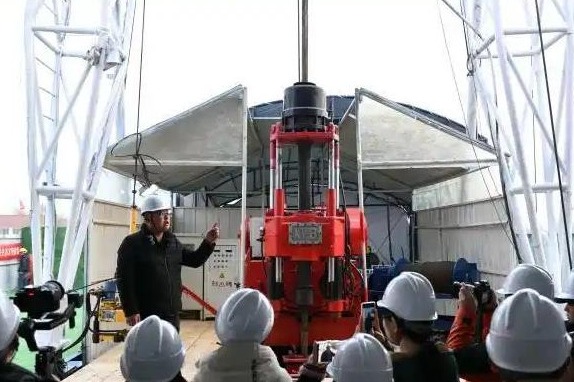
    A groundbreaking Chinese-developed aerial robot has successfully completed its inaugural operational mission in Cili County, Zhangjiajie, demonstrating remarkable capabilities in maintaining power infrastructure during severe winter conditions. The innovative KICE-500 de-icing robot, engineered by Hunan Disaster Prevention Technology Co Ltd based in Changsha, represents a significant technological advancement in safeguarding electrical grids against ice accumulation.

    The autonomous flying apparatus executed its pioneering real-world operation this week, effectively clearing a 500-meter section of ground wire in merely 20 minutes. This achievement is particularly noteworthy as it addresses the longstanding challenge of maintaining power transmission systems in remote, difficult-to-access mountainous regions where traditional maintenance methods prove impractical or hazardous.

    This technological innovation emerges as a critical solution during extreme winter weather patterns that frequently threaten power stability across China’s varied terrain. The robot’s dual capability of both flight and precision de-icing operations eliminates the need for human workers to undertake dangerous high-altitude interventions in freezing conditions, thereby enhancing both operational efficiency and worker safety.

    The successful deployment in Hunan province marks a milestone in China’s ongoing efforts to modernize infrastructure maintenance through technological innovation. This development signals a new era in disaster prevention technology, potentially setting a global standard for addressing similar challenges in cold climate regions worldwide.

  • Dubai’s driverless taxi service to start operating in March: Sheikh Hamdan

    Dubai’s driverless taxi service to start operating in March: Sheikh Hamdan

    Dubai is poised to inaugurate its groundbreaking autonomous taxi service in March 2026, marking a significant milestone in urban transportation innovation. The initiative, personally endorsed by Crown Prince Sheikh Hamdan bin Mohammed Al Maktoum, will deploy an initial fleet of 100 fully driverless vehicles operated through strategic partnerships between Dubai’s Roads and Transport Authority (RTA) and three technology leaders: pony.ai, Uber, and Baidu’s Apollo Go.

    The Crown Prince demonstrated his confidence in the technology by personally utilizing a Baidu Apollo Go self-driving vehicle for transportation to the World Governments Summit 2026 at Madinet Jumeirah. Documenting the experience on social media with the caption ‘Hands off. Future On. #SelfDrivingCar,’ Sheikh Hamdan emphasized Dubai’s commitment to transforming urban mobility. ‘This is only the beginning of our journey to the future. The best is yet to come for Dubai,’ he stated, adding that the future of mobility in the emirate would be ‘smarter, safer, more efficient, and more inclusive.’

    This deployment represents a particularly notable expansion for Baidu’s Apollo Go, marking its first operational venture outside China. The company has announced ambitious plans to scale its Dubai fleet to over 1,000 vehicles in the coming years, signaling long-term commitment to the Middle Eastern market. The initiative reflects Dubai’s comprehensive strategy to position itself as a global leader in smart transportation solutions, incorporating rigorous safety protocols while pioneering next-generation mobility infrastructure that aims to enhance quality of life through sustainable transport innovation.

  • Video platform hit with fine by Beijing cyberspace authorities

    Video platform hit with fine by Beijing cyberspace authorities

    Chinese regulatory authorities have levied a substantial penalty against leading short-video platform Kuaishou for systemic failures in content moderation and cybersecurity protocols. The Beijing Cyberspace Administration disclosed on Friday a fine totaling 119.1 million yuan ($17.16 million) following an extensive investigation into the platform’s operations.

    The regulatory action was initiated after authorities detected a significant increase in livestreamed content violating China’s strict internet decency standards. The investigation revealed critical deficiencies in Kuaishou’s compliance framework, including inadequate response to security vulnerabilities and insufficient mechanisms for removing prohibited content in accordance with China’s cybersecurity legislation.

    In an official statement, the administration characterized these operational failures as severe violations with substantial negative social impact. The penalty amount was determined based on the gravity of infractions and calculated according to statutory provisions within China’s internet governance framework.

    The regulatory body reaffirmed its commitment to rigorous enforcement of digital content policies, emphasizing that all online platforms must prioritize cybersecurity measures and maintain legally compliant operating environments. Authorities urged industry participants to strengthen internal governance systems and assume greater responsibility for protecting user rights and public interests.

    Kuaishou responded with a formal apology acknowledging deficiencies in risk management, security infrastructure, and internal control mechanisms. The platform indicated it has implemented corrective measures addressing these shortcomings and committed to enhancing its compliance protocols and governance structures. Company representatives stated they have derived significant lessons from the incident and will intensify efforts to balance platform development with regulatory obligations.

  • Flying over water? Abu Dhabi to roll out Seagliders for faster emirate-wide travel

    Flying over water? Abu Dhabi to roll out Seagliders for faster emirate-wide travel

    Abu Dhabi is poised to revolutionize coastal transportation through the introduction of cutting-edge Seaglider technology, marking a significant advancement in sustainable mobility solutions. The ambitious initiative, targeting full operational deployment by 2028, will implement fully electric, zero-emission vessels capable of gliding above water surfaces at high speeds.

    The groundbreaking project emerged from a strategic agreement signed between key governmental and private entities including the Department of Culture and Tourism – Abu Dhabi (DCT Abu Dhabi), the Abu Dhabi Investment Office (ADIO), the Integrated Transport Center (Abu Dhabi Mobility), and VERSA Advanced Maritime Services. This collaboration represents a comprehensive effort to enhance maritime connectivity while maintaining environmental sustainability.

    Initial operational phases will concentrate on establishing routes connecting Abu Dhabi City with the Al Dhafra Region, with subsequent expansion planned throughout the emirate and broader UAE territories. VERSA, distinguished as the nation’s inaugural Seaglider operator, has been developing this visionary transportation concept since 2022.

    The partnership encompasses extensive feasibility studies and market analyses examining operational, commercial, and environmental dimensions of Seaglider implementation. These Wing-in-Ground (WIG) effect craft will be integrated into Abu Dhabi’s transportation network through carefully designed operational models aligned with the emirate’s tourism development objectives.

    Sheikha Alyazia Bint Sultan Bin Khalifa Al Nahyan, Chairperson and Owner of VERSA Advanced Maritime Services, emphasized the transformative nature of the project: “Our vision extends beyond merely introducing new vessels—we’re fundamentally reimagining coastal mobility paradigms for the nation. This partnership enables us to convert innovation into practical infrastructure that is environmentally clean, operationally efficient, and specifically tailored for the emirates’ unique requirements.”

    Tourism officials highlighted the dual benefits of enhanced connectivity and environmental responsibility. Saleh Mohamed Al Geziry, Director General for Tourism at DCT Abu Dhabi, stated: “By adopting advanced eco-friendly mobility solutions like Seagliders, we’re not only improving transportation networks but also demonstrating our commitment to sustainable development while delivering exceptional experiences for residents and international visitors alike.”

    Transport authorities confirmed the initiative’s alignment with broader smart mobility strategies. Dr. Abdulla Hamad AlGhfeli, Acting Director General of the Integrated Transport Centre, noted: “This agreement represents a crucial advancement in expanding intelligent, sustainable transportation across multiple domains. We’re establishing foundational frameworks for innovative, low-emission services that will improve connectivity while minimizing the ecological impact of marine transportation systems.”

  • Industry leaders convene to address infrastructure safety and intelligence at Safe Dubai 2026

    Industry leaders convene to address infrastructure safety and intelligence at Safe Dubai 2026

    Dubai prepares to host industry pioneers at the Safe Dubai 2026 forum on February 13th, where infrastructure intelligence and safety will take center stage during the UAE’s unprecedented construction expansion. The event, organized by geotechnical monitoring leader Encardio Rite, arrives as the nation’s construction sector projects remarkable growth reaching $130.8 billion by 2029.

    The one-day conference at Grand Hyatt Dubai will convene senior experts to address critical challenges in urban development, focusing specifically on how monitoring data and intelligent systems can enhance safety protocols, optimize intervention strategies, and strengthen lifecycle management decisions across large-scale projects.

    Professor Kenichi Soga from University of California, Berkeley will deliver the keynote address, sharing insights from global infrastructure projects and examining how integrated monitoring systems combined with engineering expertise are reshaping real-world decision-making processes.

    Arushi Bhalla, Managing Director of Encardio Rite Group, emphasized the industry’s evolution: “We’ve progressed beyond mere data collection into predictive, intelligence-driven asset management. The contemporary challenge lies not in data accessibility but in our capacity to interpret complex information in ways that genuinely enhance safety, performance, and long-term infrastructure outcomes.”

    The forum’s timing proves particularly relevant given McKinsey’s staggering findings: global construction inefficiencies cost approximately $1.6 trillion annually, largely attributable to limited visibility and fragmented operational insights. As infrastructure systems grow increasingly complex and interconnected, the imperative for data-driven decision-making becomes ever more critical.

    Safe Dubai 2026 aims to establish a collaborative platform where industry professionals can develop strategies to transform monitoring data into measurable improvements in efficiency, safety, and accountability across the built environment. Registration remains open for professionals seeking to engage with these transformative discussions.

  • Building the ‘City of the Future’: Xiong’an AI Park fosters next-gen innovation

    Building the ‘City of the Future’: Xiong’an AI Park fosters next-gen innovation

    The Xiong’an Artificial Intelligence Industrial Park has rapidly evolved into a thriving hub for technological advancement, attracting over 60 enterprises since its inauguration in June 2025. This concentrated AI ecosystem is demonstrating remarkable growth potential and emerging as a cornerstone for China’s ambitious ‘City of the Future’ initiative.

    Strategically positioned within the Xiong’an New Area, the park benefits from formidable academic backing through partnerships with Tsinghua University’s Institute for AI Industry Research and Institute for Interdisciplinary Information Sciences. This collaboration ensures a continuous pipeline of research commercialization projects transforming theoretical concepts into practical applications.

    Current infrastructure spans approximately 69,000 square meters, with 25,000 square meters already operational. Expansion plans are underway to add nearly 400,000 square meters of additional facilities, signaling strong confidence in the park’s long-term development trajectory.

    The park’s operational philosophy centers on innovation-driven, application-oriented development, with the Xiong’an Artificial Intelligence Research Institute serving as its core intellectual engine. This approach focuses on advancing next-generation AI theory while simultaneously driving practical innovation across multiple sectors.

    According to Xu Pengcheng, an official at the Industrial Operations Center, the park has successfully attracted high-quality enterprises specializing in AI model development and trusted data spaces. Notably, over 80% of these companies originated from Beijing, including publicly listed corporations and university-incubated projects.

    The park’s management has implemented tailored support mechanisms aligned with Xiong’an New Area’s talent acquisition policies. These include living subsidies for recent graduates, which effectively reduce labor costs for resident companies while providing comprehensive support for workforce development and retention.