分类: technology

  • People — and robots — are getting ready to celebrate the Lunar New Year in China

    People — and robots — are getting ready to celebrate the Lunar New Year in China

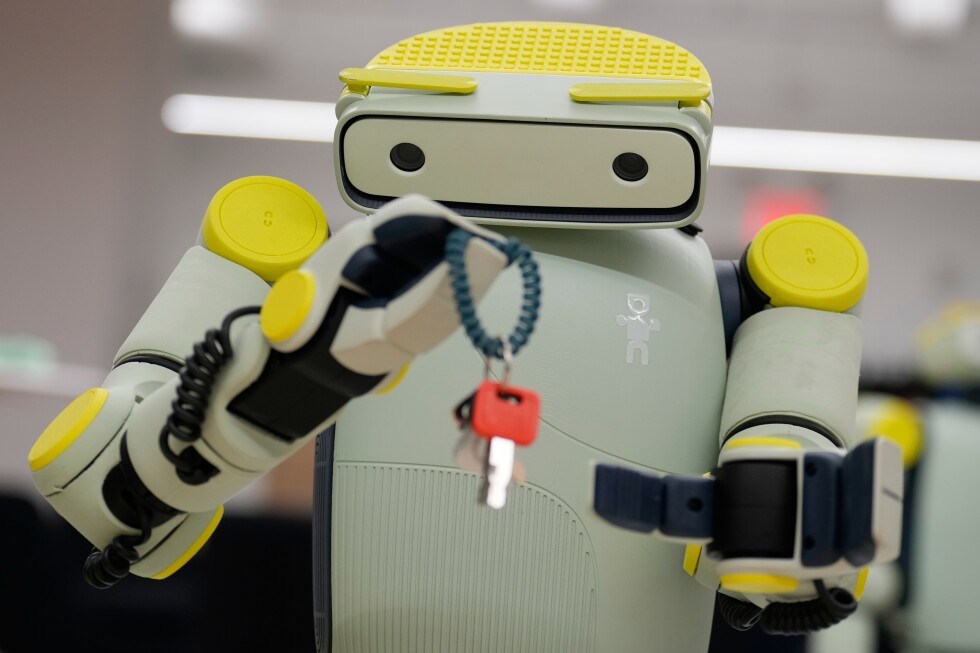
    BEIJING — In an innovative fusion of tradition and technology, Chinese humanoid robots are preparing to take center stage during Lunar New Year celebrations. Four 95-centimeter-tall robots recently conducted dress rehearsals at a Beijing shopping mall, captivating audiences while performing intricate lion dances in colorful costumes.

    The annual technology fair, returning for its second consecutive year, will feature significantly expanded robotic demonstrations. According to Qiu Feng, a member of the organizing committee, this year’s event will include substantially more robots performing diverse cultural acts including traditional dance, martial arts, Peking Opera, poetry recitals, and soccer matches.

    Chinese startups including Booster Robotics are driving these technological advancements. The company plans to display approximately 20 humanoid robots capable of autonomous decision-making without remote control intervention. “Once the whistle sounds, all decision-making and motion control are handled by the robots themselves,” explained Ren Zixin, Marketing Director at Booster Robotics.

    While the robots demonstrate improved precision and more sophisticated movements compared to previous years, human assistance remains essential for tasks like costuming and repositioning when robots halt unexpectedly during performances.

    China continues to intensify its development of artificial intelligence-powered robotics, focusing on reducing human intervention while expanding capabilities. The Lunar New Year technology fair serves as both public entertainment and a demonstration of China’s rapidly evolving robotics sector, showcasing machines that can perform activities ranging from stacking blocks to preparing traditional sweets like syrup-coated hawthorn berry skewers.

  • Valentine’s Day 2026: Best gadgets, tech gifts in UAE for him and her

    Valentine’s Day 2026: Best gadgets, tech gifts in UAE for him and her

    As Valentine’s Day 2026 approaches in the UAE, technology has redefined romantic gifting traditions. While flowers and chocolates remain temporary gestures, tech gadgets offer lasting utility and daily reminders of affection. Major retailers across the Emirates are showcasing innovative devices that blend practicality with emotional significance.

    The gaming enthusiast’s ultimate gift emerges as the PlayStation 5 Pro, available through Amazon.ae, Noon, and Sharaf DG starting from Dh2,659. This enhanced console delivers superior visual performance and smoother gameplay for shared entertainment experiences.

    For organizational convenience, Apple’s AirTag tracking devices provide practical solutions for misplaced essentials, retailing from Dh119 at Apple Store UAE and online platforms. The Amazon Kindle series, starting at Dh329, offers bibliophiles improved display technology and extended battery life for literary enjoyment.

    Health-conscious couples can consider the Apple Watch Series 11 (from Dh1,300) with advanced fitness tracking capabilities, while creative partners might appreciate the Fujifilm Instax Mini 12 instant camera (from Dh305) for capturing spontaneous moments. The Sony ZV-E10 mirrorless camera (from Dh2,415) serves content creators with 4K video capabilities.

    Essential upgrades include premium wireless earbuds from leading brands, smartphone replacements for outdated devices, and the Anker Nebula Capsule 3 Laser projector (from Dh2,499) for transforming living spaces into private cinemas. Digital photo frames from Dh184 allow for rotating displays of cherished memories.

    These technological alternatives to traditional Valentine’s gifts are available through authorized retailers including Virgin Megastore, Jumbo Electronics, and major online marketplaces, offering UAE residents opportunities to express affection through functional, long-lasting devices.

  • Macao, HK universities establish joint lab for robotics, embodied intelligence

    Macao, HK universities establish joint lab for robotics, embodied intelligence

    In a landmark collaboration between two special administrative regions, the University of Macau and Hong Kong Polytechnic University have officially established the Joint Laboratory for Robotics and Embodied Intelligence—the first jointly funded research facility between Macao and Hong Kong. The agreement, signed on February 12, 2026, represents a significant advancement in cross-regional academic cooperation.

    The pioneering initiative includes not only the state-of-the-art research facility but also introduces a dual PhD program featuring joint supervision by faculty members from both institutions. This educational component aims to cultivate elite talent capable of driving innovation in emerging technological fields.

    University of Macau Rector Song Yonghua emphasized the strategic alignment of institutional strengths, noting that ‘this collaboration merges UM’s capabilities in interdisciplinary research, artificial intelligence, and engineering with PolyU’s distinguished expertise in applied science and engineering practice.’ The partnership is positioned to accelerate both fundamental research and practical technology transfer in cutting-edge domains including intelligent robotics and embodied artificial intelligence.

    PolyU President Teng Jin-Guang characterized the initiatives as creating ‘a substantial platform for interdisciplinary teams from both universities to conduct impactful research.’ He further highlighted the project’s potential to ‘address challenges in transformative technologies and accelerate the translation of research outcomes for the benefit of Hong Kong, Macao, and the nation overall.’

    This collaboration marks a new chapter in academic integration within the Greater Bay Area, demonstrating how regional partnerships can leverage complementary strengths to advance technological innovation and high-level talent development in strategically important fields.

  • Connected‑care technologies gain momentum as hospitals seek integrated safety and monitoring systems

    Connected‑care technologies gain momentum as hospitals seek integrated safety and monitoring systems

    Healthcare institutions throughout the region are accelerating their adoption of interconnected care technologies in pursuit of enhanced medication management and patient monitoring solutions. This strategic shift represents a broader industry transition toward unified platforms that seamlessly integrate medical devices, data analytics, and automated processes—effectively reducing clinical workloads while simultaneously improving precision and visibility across patient care pathways.

    Three transformative trends are currently reshaping the healthcare technology landscape. Pharmacy automation has emerged as a cornerstone of operational efficiency, with advanced systems revolutionizing pill packaging, single-dose preparation, and robotic storage optimization across diverse pharmacy settings. According to Bilal Muhsin, Executive Vice President and President of the Connected Care Segment at BD, these technologies have transitioned from optional enhancements to essential infrastructure components.

    Medication management is evolving through intelligent, connected infusion technologies exemplified by platforms like BD’s Alaris system. These sophisticated solutions integrate directly with hospital data streams, enabling unprecedented precision in medication delivery oversight. Muhsin emphasizes BD’s leadership position in this rapidly expanding global market segment, highlighting the healthcare industry’s swift migration toward predictive, interoperable systems.

    Patient monitoring technologies are achieving new levels of sophistication through minimally invasive approaches. The proliferation of hemodynamic and cardiac-insight technologies capable of capturing real-time physiological data addresses the growing demand for earlier detection of clinical deterioration. These advanced tools constitute vital elements within connected-care ecosystems, facilitating the industry-wide transition toward continuous, data-informed clinical decision-making.

    This technological evolution is simultaneously influencing corporate structures within the med-tech sector. BD’s recent spin-off of its Biosciences and Diagnostics divisions represents what Muhsin characterizes as strategic realignment, enabling the company to concentrate exclusively on medical technology innovation. Connected Care now stands positioned as a primary driver of long-term organizational value.

    As connectivity expands, regulatory compliance and data sovereignty requirements have grown increasingly complex. BD’s infrastructure architecture deliberately separates patient identity information from clinical data to maintain privacy protections while still enabling valuable clinical insights through advanced analytics.

    In the UAE market, BD is pursuing growth through long-term strategic partnerships rather than transactional supply arrangements. These collaborations typically span five to fifteen years and involve close cooperation with hospital partners to align on shared clinical and operational objectives.

    The company’s innovation pipeline continues to deliver cutting-edge solutions, including the recently launched BD Pyxis Pro dispensing cabinet. This advanced system incorporates guided medication retrieval, specialized cold-storage capabilities, and AI-powered analytics that allow clinicians to investigate trends using natural language queries.

    According to Muhsin, BD’s competitive advantage stems from its unique dual-capability approach: combining industry-leading clinical devices with integrated data intelligence—a model that increasingly defines the future of connected healthcare throughout the region.

  • Nation’s satellite data reception coverage reaches new heights

    Nation’s satellite data reception coverage reaches new heights

    China has achieved a monumental advancement in space infrastructure with the successful commissioning of its northernmost satellite data receiving facility in Mohe, Heilongjiang province. The strategically positioned Mohe Satellite Data Receiving Station, developed by the Chinese Academy of Sciences’ Aerospace Information Research Institute, commenced full operations on December 12, marking a technological breakthrough in the nation’s Earth observation capabilities.

    Station director Shi Shengpu and his team are preparing to celebrate their first Spring Festival at the revolutionary facility, which represents China’s highest-latitude satellite reception installation. The station’s unique geographical positioning has expanded China’s satellite reception coverage by approximately 4 million square kilometers, dramatically enhancing observational capabilities in polar and high-latitude regions.

    The cutting-edge facility features three sophisticated satellite data receiving systems capable of processing S/X dual-band and dual-polarization data. Each system handles an average of more than 24 satellite tracks daily, supporting data reception for 25 national land observation satellites across multiple series including resource monitoring, environmental disaster reduction, and high-resolution imaging.

    By the end of 2025, the station had demonstrated exceptional performance metrics, successfully receiving data from 36,001 satellite tracks and acquiring over 1,775 terabytes of data with a remarkable success rate exceeding 99.79%. The facility boasts near-real-time transmission capabilities, fully automated reception systems, and extends daily reception time for single polar-orbiting satellites by approximately 24 minutes—a 20% increase in operational efficiency.

    This technological marvel significantly improves China’s capacity for critical applications including land surveys, environmental protection, weather forecasting, and disaster monitoring. The development, which required over three years of construction effort, positions China at the forefront of satellite data reception technology with key technical indicators reaching international advanced standards.

  • Smart Dragon 3 rocket lifts off at sea with seven satellites

    Smart Dragon 3 rocket lifts off at sea with seven satellites

    China’s aerospace sector achieved another milestone on Thursday as a Smart Dragon 3 carrier rocket successfully deployed seven satellites into orbit during its ninth maritime launch operation. The launch occurred at 2:37 PM local time from a specialized launch vessel positioned off the coastal waters of Yangjiang in Guangdong Province.

    The China Academy of Launch Vehicle Technology, the primary developer of the Smart Dragon rocket series, confirmed the mission’s complete success in an official statement. Among the deployed payloads was a Pakistani remote-sensing satellite, highlighting China’s growing role in international space collaboration. This mission represents China’s twelfth space launch of 2026, demonstrating the nation’s accelerating pace in space exploration.

    Technical specifications reveal the Smart Dragon 3 as a substantial solid-propellant launch vehicle, standing 31 meters tall with a diameter of 2.65 meters. With a liftoff weight of 140 metric tons, the rocket possesses the capability to deliver payloads of up to 1.5 tons to sun-synchronous orbits at approximately 500 kilometers altitude.

    The rocket’s operational history shows exclusive maritime launches since its inaugural flight in December 2022 from the Yellow Sea, which successfully placed 14 satellites in orbit. The consistent use of sea-based platforms offers strategic advantages including expanded launch flexibility, reduced population risks, and optimized orbital insertion trajectories.

  • Guardian One drives smart education with next-gen AI and robotics

    Guardian One drives smart education with next-gen AI and robotics

    Guardian One Technologies, a leading UAE-based IT service provider, has unveiled a comprehensive suite of artificial intelligence and robotics solutions designed to transform educational systems worldwide. The company’s initiative directly supports the UAE Artificial Intelligence Strategy 2031, which aims to integrate AI technologies into academic curricula and prepare students for the demands of an increasingly digital global economy.

    The company’s innovative educational portfolio features adaptive learning platforms that customize instruction based on individual student performance, robotics-enabled STEM programs that provide hands-on coding and automation experience, and intelligent analytics systems that deliver real-time insights into learning outcomes for educators. Additionally, virtual AI tutors extend learning beyond traditional classroom settings by offering personalized academic support while enhancing student confidence.

    Dr. Ashith Piriyattiath, CEO of Guardian One Technologies and a recognized thought leader in AI and digital transformation, emphasized that these technologies are designed to augment rather than replace educators. “AI in education must serve a higher purpose — empowering teachers, engaging learners, and preparing societies for the future,” stated Dr. Ashith, who holds a Doctorate in Artificial Intelligence and Digital Transformation.

    Building on its established presence in the UAE technology ecosystem, Guardian One is now accelerating its international expansion strategy with planned entries into key European and Asian markets. The expansion will focus on delivering AI-driven digital transformation, smart education ecosystems, and enterprise technology solutions tailored to regional innovation priorities.

    Early deployments of Guardian One’s educational platforms have demonstrated measurable improvements in student performance, particularly in STEM disciplines, digital literacy, and analytical problem-solving. Educators have reported reduced administrative workloads and enhanced data-driven decision-making capabilities through the implementation of these technologies.

    The company has established itself as a comprehensive technology partner offering services spanning network infrastructure, cybersecurity, cloud transformation, artificial intelligence, system integration, and custom software development for enterprises, government entities, and educational institutions.

    Under Dr. Ashith’s leadership, Guardian One continues to align its innovation efforts with national development priorities while building strategic partnerships to support its global expansion roadmap, positioning the company at the forefront of defining the future of intelligent, inclusive, and globally connected education.

  • Intelligent trains debut on Beijing-Xiong’an express rail link

    Intelligent trains debut on Beijing-Xiong’an express rail link

    China’s rail transportation enters a new era of intelligent mobility with the debut of fully automated trains on the Beijing-Xiong’an express rail corridor. The 86-kilometer high-speed link, currently in its final construction phase, will connect Xiong’an New Area’s urban terminal through Langfang to Beijing Daxing International Airport, seamlessly integrating with the capital’s subway network.

    The newly unveiled trains represent a technological leap in rail engineering. Constructed with advanced carbon fiber composites rather than traditional metals, these intelligent vehicles achieve superior strength-to-weight ratios. Their striking silver-gray exteriors feature graduated blue stripes that evoke celestial and oceanic imagery, creating a visually distinctive identity for the future-forward transportation system.

    Passenger comfort receives revolutionary treatment through AI-driven environmental controls. Each train incorporates over 2,900 intelligent sensors that continuously monitor cabin conditions. Sophisticated algorithms automatically regulate air pressure, temperature, and lighting systems to minimize ear discomfort during high-speed transitions. The interior design prioritizes passenger experience with coffee-gray seating featuring concealed foldable tables and expanded armrests. Standing passengers benefit from specially designed leaning pads strategically positioned near doors.

    Upon operational commencement, the high-speed link will dramatically compress travel durations. The journey from Xiong’an to Daxing Airport will reduce to approximately 30 minutes, while connectivity to Beijing’s Lize business district will be achieved in about one hour. This transportation advancement represents a critical infrastructure milestone in integrating Xiong’an—Hebei province’s designated future city—with China’s capital region, facilitating economic integration and regional development.

  • Watches: MB&F reinvents the chronograph with the LM Sequential Flyback EVO

    Watches: MB&F reinvents the chronograph with the LM Sequential Flyback EVO

    In a bold departure from traditional watchmaking conventions, MB&F has unveiled the LM Sequential Flyback EVO, representing a fundamental reengineering of chronograph technology. Rather than iterating on existing designs, Maximilian Büsser’s horological concept laboratory has completely rethought the chronograph from first principles, creating what may be the most significant advancement in timing complications in recent history.

    The LM Sequential Flyback EVO builds upon the groundbreaking foundation established by its 2022 predecessor, which earned the prestigious GPHG Aiguille d’Or award for its innovative approach. This latest evolution introduces the flyback function to the EVO family for the first time, crafted in grade 5 titanium with a striking aquamarine dial plate.

    At the heart of this technological marvel is Stephen McDonnell’s mechanical genius, previously demonstrated in the LM Perpetual. The timepiece features two fully independent chronographs, each with dedicated seconds and minutes displays and separate pushers. The revolutionary Twinverter mechanism at the nine o’clock position operates as a binary switch that can simultaneously control both chronographs—starting, stopping, or alternating between them with a single press.

    This architecture enables unprecedented timing capabilities, from split-second comparisons to cumulative tracking across multiple simultaneous events. The integrated flyback function allows for instantaneous resetting and restarting of running chronographs, significantly enhancing practical usability.

    The mechanical sophistication required to make this complex system reliable is extraordinary. McDonnell’s solution incorporates internally jewelled vertical clutches combined with specially developed jewelled rollers within the flyback system, minimizing friction and energy loss despite two chronographs sharing the same movement.

    Visually, the timepiece maintains the distinctive EVO aesthetic with its bezel-free design that opens the dial beneath the domed sapphire crystal. The inclined time display at six o’clock improves legibility while creating a more intimate connection between the watch and wearer.

    Priced at CHF 168,000, the LM Sequential Flyback EVO represents not just technical achievement but a philosophical statement about the future of high-complication watchmaking—demonstrating that true innovation lies not in adding complexity but in making complexity feel intuitive and human-centered.

  • By The Numbers: A look at European rocket Ariane 64’s maiden launch

    By The Numbers: A look at European rocket Ariane 64’s maiden launch

    Europe’s aerospace sector reaches a pivotal milestone as the Ariane 64 rocket prepares for its inaugural commercial mission from the European Spaceport in Kourou, French Guiana. This enhanced configuration marks a significant technological leap, featuring four powerful boosters that substantially increase payload capacity to low Earth orbit.

    The Thursday launch represents the sixth flight overall for the Ariane 6 program but the first deploying commercial payloads—specifically 32 internet satellites for Amazon’s burgeoning mega-constellation project. This mission positions the European launch vehicle directly against market dominator SpaceX in the increasingly competitive satellite deployment sector.

    Technical specifications reveal the Ariane 64’s formidable capabilities: standing 62 meters tall with a core stage measuring 5.4 meters in diameter, the vehicle utilizes four boosters consuming 142,000 kilograms of solid propellant within just over two minutes. This configuration enables the rocket to deliver approximately 21.6 metric tons to low Earth orbit—more than double the capacity of its two-booster variant.

    The Ariane 6 program embodies European collaboration at its finest, backed by 13 member nations of the European Space Agency and coordinated through approximately 600 subcontractors led by ArianeGroup. Manufacturing occurs across multiple European facilities, with core stage assembly in Les Mureaux, France, and upper stage production in Bremen, Germany. Each rocket comprises roughly 300,000 individual components, transported via emissions-reducing cargo ships across the Atlantic.

    Propulsion systems combine solid rocket boosters with advanced liquid propulsion: a main engine using supercooled hydrogen and oxygen, plus a versatile upper stage engine capable of multiple reignitions to precisely position satellites. The complete mission duration from liftoff to satellite separation is projected at 1 hour and 54 minutes.

    Amazon’s participation signals its serious entry into the satellite internet arena, currently dominated by SpaceX’s Starlink constellation. Founded by Jeff Bezos—who simultaneously operates rocket company Blue Origin—Amazon plans to deploy over 3,200 satellites to provide global broadband coverage.