分类: technology

  • Nvidia CEO Huang won’t attend India AI summit next week, company says

    Nvidia CEO Huang won’t attend India AI summit next week, company says

    In a significant development for the upcoming India AI Impact Summit, Nvidia Corporation announced on Saturday that its high-profile CEO Jensen Huang will not be attending the prestigious technology gathering scheduled for next week. The summit, which will be formally inaugurated by Indian Prime Minister Narendra Modi on Thursday, was expected to feature Huang as one of its most anticipated participants.

    According to communications from MSL, Nvidia’s media representation agency in India, unforeseen circumstances have compelled Huang to cancel his planned appearance. The technology executive was scheduled to address media representatives in New Delhi on Wednesday prior to the main summit events.

    The absence of the Nvidia chief executive represents a notable change for the landmark artificial intelligence conference, which anticipates attendance from numerous global technology industry leaders and political figures. Huang’s participation had been widely anticipated given Nvidia’s dominant position in the artificial intelligence hardware sector and India’s growing significance as a technology market.

    This development occurs against the backdrop of increasing global competition in artificial intelligence development and India’s concerted efforts to establish itself as a major player in the AI ecosystem. The summit remains positioned as a crucial platform for discussing India’s artificial intelligence strategy and fostering international collaboration in technological innovation.

  • UAE’s du to invest in Singapore-India-Gulf subsea cable system for high data connectivity

    UAE’s du to invest in Singapore-India-Gulf subsea cable system for high data connectivity

    In a significant move to bolster digital infrastructure, UAE telecommunications provider du has entered a strategic partnership with Cyprus-based subsea infrastructure specialist Datawave Networks Limited. The collaboration centers on investment in and the landing of the Singapore-India-Gulf (SING) submarine cable system within the UAE.

    The next-generation SING cable is a major fiber optic network designed to interconnect six pivotal locations across the region: Kalba, UAE; Muscat, Oman; Mumbai, India; Chennai, India; Kedah, Malaysia; and Singapore. This infrastructure is engineered to provide ultra-high-capacity and exceptionally low-latency connectivity, creating a robust digital bridge linking the Middle East, South Asia, and Southeast Asia.

    A primary strategic objective of this project is to diversify international data pathways. By establishing a UAE landing point, the initiative will markedly reduce reliance on traditional and potentially vulnerable routes, such as those transiting the Red Sea corridor. This enhancement in route diversity is critical for strengthening global network resilience and ensuring uninterrupted data flow.

    The investment is a direct response to the UAE’s rapid emergence as a global hub for artificial intelligence (AI) innovation, advanced computing, and cloud expansion. This growth has triggered an exponential surge in demand for international bandwidth and premium low-latency connectivity. The SING cable’s flexible architecture is specifically tailored to allow hyperscalers, cloud providers, and major enterprises to scale their capacity efficiently, thereby supporting the accelerating adoption of AI and digital technologies across the UAE, the broader Gulf region, India, and Southeast Asia.

  • Experts examine AI’s potential risks

    Experts examine AI’s potential risks

    Washington witnessed a pivotal gathering of artificial intelligence experts this week as the Center for Strategic and International Studies hosted an in-depth analysis of the newly released International AI Safety Report 2026. This second edition of the comprehensive global assessment, chaired by Turing Award laureate Professor Yoshua Bengio of Universite de Montreal and the Mila-Quebec AI Institute, represents a collaborative effort spanning more than 30 nations and international organizations, including significant contributions from China.

    The seminar revealed that international coordination has emerged as the paramount concern in addressing AI’s rapidly evolving risks. Stephen Clare, the report’s lead writer, explained the foundational purpose: “to build a shared evidence base to inform decision-making about AI technologies” amid widespread uncertainty about the actual technical realities.

    Technical safeguards expert Stephen Casper presented a detailed examination of frontier model development stages, emphasizing that “different types of safeguards and risk management techniques apply at different parts in the life cycle.” While acknowledging progress in creating multi-layered defenses, Casper highlighted persistent governance gaps, particularly concerning open-weight models that cannot be recalled once released and whose safeguards are easier to remove.

    The report particularly noted China’s substantial contributions to the AI landscape, accounting for 24.2% of notable models in 2024. Chinese advancements including DeepSeek R1, Alibaba’s Qwen series, Tencent’s Hunyuan-Large, and Moonshot AI’s Kimi models have narrowed the capability gap with leading closed models to less than one year in certain cases. China’s AI Safety Governance Framework 2.0 (2025) received special recognition for providing structured guidance on risk categorization and countermeasures throughout the AI lifecycle.

    Despite the daunting challenges posed by AI’s rapid progression, Professor Bengio expressed optimism based on the collaborative spirit demonstrated by the international expert community. The report deliberately avoids specific policy recommendations, instead focusing on synthesizing scientific evidence to support informed policymaking and establish a shared evidence base for global decision-makers navigating this complex technological landscape.

  • China demonstrates AI computing power in outer space with satellite network breakthrough

    China demonstrates AI computing power in outer space with satellite network breakthrough

    China has achieved a significant milestone in space technology with the successful deployment of artificial intelligence models operating directly in orbit through an advanced satellite network. The breakthrough demonstrates the nation’s growing capabilities in space-based computing systems.

    The pioneering project, known as the “Three-Body Computing Constellation,” represents a collaborative effort between Zhejiang Lab and international partners. Initially launched in May 2025 with twelve satellites, the constellation has undergone extensive testing over nine months to validate its core functionalities including orbital networking, computational processing, AI model deployment, and scientific instrument verification.

    Among the technological achievements are the operation of two massive AI models in space: an 8-billion-parameter remote sensing system and an equally sophisticated astronomical time-domain model. These represent some of the largest AI parameter models currently operational in orbit worldwide.

    The remote sensing capability was demonstrated in November 2025 when it successfully conducted an infrastructure census across 189 square kilometers in northwest China, automatically identifying structures like stadiums and bridges despite challenging heavy snow conditions.

    For astronomical research, satellites equipped with specialized cosmic X-ray polarization detectors implemented an AI model that classifies gamma-ray bursts with remarkable 99% accuracy while significantly reducing data transmission requirements and processing timelines.

    A critical advancement includes the establishment of inter-satellite communication links among six satellites, forming the foundation for a comprehensive space network. When fully realized with over 1,000 planned satellites, the constellation is projected to deliver unprecedented computational power exceeding 100 quintillion operations per second.

    According to Li Chao from Zhejiang Lab, this space-based computing architecture enables direct data processing in orbit, allowing refined information to be delivered immediately to end-users rather than raw data requiring extensive ground processing.

  • The Embassy of India in the UAE and Symbiosis Dubai host the ‘Road to AI Impact Summit 2026’

    The Embassy of India in the UAE and Symbiosis Dubai host the ‘Road to AI Impact Summit 2026’

    Dubai has emerged as a pivotal hub for international artificial intelligence collaboration following the successful hosting of the Road to AI Impact Summit 2026. The event, jointly organized by the Embassy of India in the UAE and Symbiosis International University’s Dubai campus, convened on February 10-11 at the Dubai Knowledge Park, marking a significant milestone in bilateral technological cooperation.

    The summit represents a critical component of India’s global diplomatic outreach, with Indian missions worldwide conducting similar preparatory events building toward the flagship India AI Impact Summit scheduled for February 16-20, 2026 in New Delhi. This strategic initiative aligns with Prime Minister Narendra Modi’s vision for establishing an inclusive, ethical, and internationally collaborative AI ecosystem that prioritizes responsible innovation and practical implementation.

    Indian Ambassador to the UAE Dr. Deepak Mittal inaugurated the proceedings, emphasizing the transformative potential of AI in educational environments. “In a futuristic city like Dubai, AI is increasingly becoming a co-author in classrooms and institutions, not to replace human intelligence, but to expand human capability,” Dr. Mittal stated during his inaugural address. He highlighted the summit’s triple objective: to educate stakeholders, democratize access to AI tools, and responsibly harness technological advancements for workforce development.

    The two-day program assembled distinguished academicians, policy architects, and industry pioneers from both nations. Key participants included Dr. Vidya Yeravdekar, Pro-Chancellor of Symbiosis International University; Dr. Ramakrishnan Raman, Vice-Chancellor; Dr. Ashwin Fernandes, Executive Director for AMESA at QS; Dr. Rajiv Yeravdekar, Provost of Medical & Health Sciences; and Dr. Anita Patankar, Executive Director of Symbiosis Dubai.

    Dr. Vidya Yeravdekar expressed appreciation for the embassy’s selection of Symbiosis Dubai as host institution, noting the university’s existing commitment to AI integration through specialized centers like the Symbiosis Artificial Intelligence Institute and the Symbiosis Centre for Applied AI. “Education must evolve alongside technology, preparing our students not just to learn, but to lead and make an impact in a rapidly changing world,” she emphasized.

    The event underscores India’s expanding technological leadership and its diplomatic efforts to showcase capabilities in digital public infrastructure and ethical innovation. Simultaneously, it strengthens the growing partnership between India and the UAE—a relationship increasingly rooted in technological exchange, educational collaboration, and shared aspirations for a technology-driven future that benefits both nations and the global community.

  • Low-altitude vehicle adds futuristic flair to flower market in Guangzhou

    Low-altitude vehicle adds futuristic flair to flower market in Guangzhou

    Guangzhou’s ancient Spring Festival flower market tradition received a futuristic upgrade on Friday as crowds witnessed the debut of a low-altitude flying vehicle alongside traditional blossoms and tangerine trees. The Tianhe Sports Center market, among several opening across Guangdong’s capital, integrated cutting-edge mobility technology with centuries-old Lunar New Year customs, creating a striking juxtaposition of past and future celebrations.

    The aerial vehicle, developed by Xpeng Motors’ subsidiary Aridge, hovered above the vibrant market where generations of Chinese families have gathered to select festive flora symbolizing prosperity and good fortune. This technological showcase represented a deliberate fusion of cultural heritage and innovation during China’s most important holiday period.

    Aridge founder Zhao Deli explained the symbolic significance: “The integration of flying technology with traditional flower markets embodies the spirit of welcoming innovation while honoring tradition—a perfect metaphor for transitioning from the old to the new year.” The demonstration attracted substantial attention from both holiday shoppers and technology enthusiasts, creating unexpected synergy between cultural preservation and technological advancement.

    The event marks growing commercial applications of low-altitude mobility technology in China, particularly during high-visibility public gatherings. Guangzhou’s municipal authorities supported this innovative approach to enhancing traditional cultural experiences, suggesting potential future integrations of technology with public festivities.

  • EC-Council launches Enterprise AI Credential Suite in Dubai to strengthen UAE’s AI workforce

    EC-Council launches Enterprise AI Credential Suite in Dubai to strengthen UAE’s AI workforce

    In a landmark event celebrating its 25th anniversary, cybersecurity education leader EC-Council has introduced a comprehensive Enterprise AI Credential Suite in Dubai, marking a significant advancement in artificial intelligence workforce development. The launch features four specialized role-based certifications alongside an enhanced Certified CISO v4 program, strategically designed to address the growing demand for AI expertise across the United Arab Emirates.

    This initiative directly supports the UAE’s National Strategy for Artificial Intelligence 2031 and aligns with Dubai’s ambitious AI agenda as the nation accelerates its transition toward integrating trusted artificial intelligence solutions across multiple economic sectors. With national economic projections indicating potential AI contributions exceeding Dh 335 billion to economic growth, the credential suite addresses the critical shortage of professionals capable of implementing, securing, and governing AI systems at scale.

    The newly unveiled certifications encompass Artificial Intelligence Essentials (AIE), Certified AI Program Manager (CAIPM), Certified Offensive AI Security Professional (COASP), and Certified Responsible AI Governance and Ethics Professional (CRAGE). These programs are structured around EC-Council’s comprehensive ‘Adopt. Defend. Govern.’ framework, providing organizations with the necessary tools to deploy AI responsibly, protect systems against evolving threats, and establish robust governance protocols from initial implementation.

    Jay Bavisi, Group President of EC-Council, emphasized the strategic importance of this development: ‘As AI becomes increasingly integral to service delivery and operational efficiency across the UAE, organizational success will fundamentally depend on possessing skilled teams capable of managing and protecting these advanced systems with full accountability.’

    The expanded certification portfolio builds upon EC-Council’s established partnerships with government entities and defense institutions, further solidifying the organization’s role in promoting secure and ethical AI adoption practices both within the region and globally.

  • Hollywood studios take aim at ‘ultra-realistic’ AI video tool

    Hollywood studios take aim at ‘ultra-realistic’ AI video tool

    A major confrontation has erupted between Hollywood’s largest studios and TikTok’s Chinese parent company ByteDance over its newly launched AI video generator, Seedance 2.0. The Motion Picture Association (MPA), representing industry giants including Netflix, Disney, Warner Bros, and Paramount, has issued a forceful demand for ByteDance to immediately cease operations of the tool, alleging “massive scale” copyright infringement of protected films and television content.

    The conflict centers on Seedance 2.0’s capability to generate hyper-realistic video clips from simple text prompts. During its pre-launch testing phase, the tool produced viral content such as a meticulously choreographed fight scene between Tom Cruise and Brad Pitt, Will Smith confronting a monstrous entity, and characters from “Friends” reimagined as otters. These AI-generated scenes, derived from existing intellectual property without authorization, quickly flooded social media platforms, triggering alarm throughout the entertainment industry.

    In a statement to the BBC, the MPA condemned ByteDance’s launch of a service that operates “without meaningful safeguards against infringement,” accusing the company of disregarding copyright law that protects creators and underpins countless American jobs. MPA Chairman and CEO Charles Rivkin stated the organization is demanding an immediate halt to the infringing activity.

    In response, ByteDance asserted that the referenced content was created during a limited testing phase and that it has already suspended the ability for users to upload images of real people. The company claims it respects intellectual property rights and is implementing stronger policies, monitoring mechanisms, and processes to ensure regulatory compliance.

    The launch has sent shockwaves through Hollywood, prompting dire warnings from industry professionals. Rhett Reese, co-writer of the “Deadpool” films, expressed being “terrified” by the technology’s implications, stating that the professional quality of the output suggests a potential revolution—or decimation—of the industry as we know it. Conversely, writer Heather Anne Campbell compared the current output to fan fiction, noting that even with infinite budget and capability, generating truly original ideas remains the fundamental challenge.

  • China successfully recovers first-stage booster of Long March 10 rocket from sea

    China successfully recovers first-stage booster of Long March 10 rocket from sea

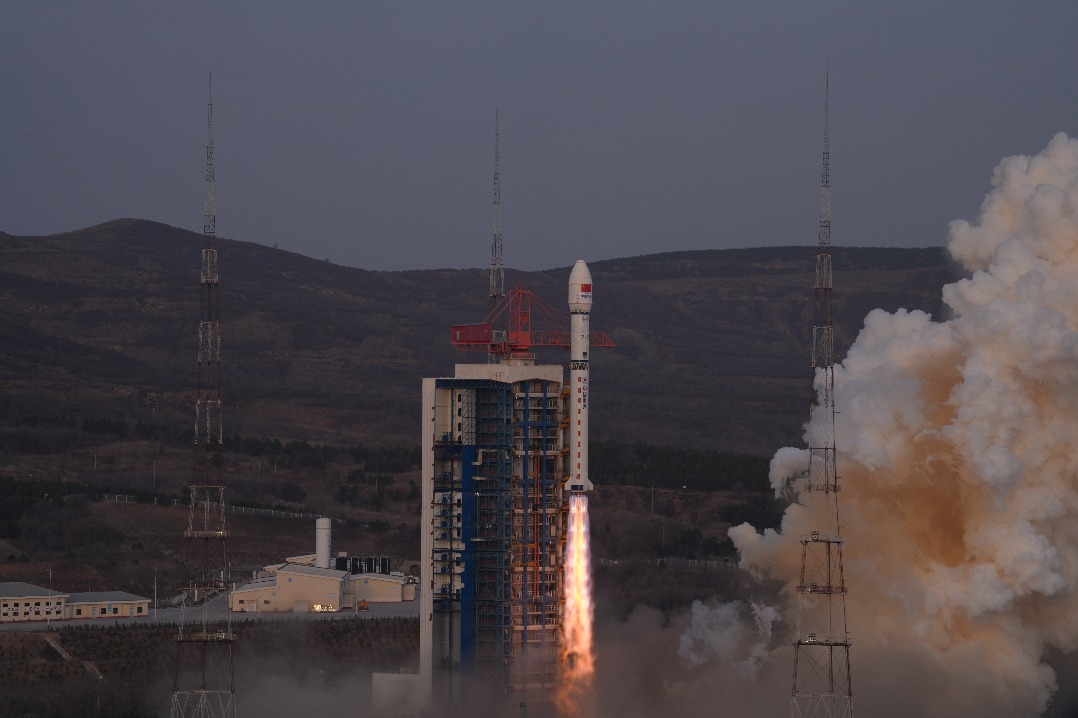
    China has reached a significant milestone in its space exploration program by successfully retrieving the first-stage booster of its Long March 10 launch vehicle from maritime waters. This unprecedented achievement represents the nation’s first successful sea recovery operation for a rocket’s primary propulsion component.

    The recovery operation, conducted by China’s specialized maritime search and retrieval team, demonstrates substantial advancements in rocket reusability technology—a critical factor in reducing space mission costs and increasing launch frequency. The successful retrieval from sea conditions presents additional technical challenges compared to land-based recoveries, requiring precise trajectory prediction, marine navigation capabilities, and specialized recovery equipment.

    This accomplishment directly supports China’s ambitious manned lunar mission program, for which the Long March 10 rocket serves as a primary launch vehicle. The recovered booster will provide valuable engineering data for researchers analyzing performance characteristics, structural integrity, and potential refurbishment requirements for future reusable rocket systems.

    The technological breakthrough positions China among a select group of nations capable of marine rocket recovery operations, potentially transforming the economic model of space access through reusable launch systems. This achievement follows recent successful flight tests related to China’s manned lunar exploration objectives, indicating accelerated progress in the country’s space capabilities.

  • Watch SpaceX rocket blast off to International Space Station

    Watch SpaceX rocket blast off to International Space Station

    SpaceX has executed another triumphant launch of its Falcon 9 rocket, marking a significant milestone in commercial spaceflight operations. The spacecraft embarked on a vital resupply mission to the International Space Station (ISS), carrying essential scientific equipment and provisions for the orbiting laboratory’s crew.

    The launch spectacle captivated audiences as the powerful rocket engines ignited, propelling the vehicle through Earth’s atmosphere with breathtaking precision. This mission represents the latest achievement in NASA’s Commercial Resupply Services program, which partners with private companies to maintain continuous operations aboard the ISS.

    SpaceX’s demonstrated capability for reliable space transport continues to revolutionize access to orbit, reducing costs while increasing launch frequency. The successful deployment underscores the growing importance of public-private partnerships in advancing space exploration and scientific research in microgravity environments.

    The Falcon 9’s first stage successfully returned to Earth, landing vertically on a designated recovery platform, demonstrating SpaceX’s commitment to reusable rocket technology that has transformed spaceflight economics. This mission contributes to ongoing research in fields ranging from astrophysics to biomedical studies that benefit from the unique conditions of space.