分类: technology

  • New tech aids safe air transport of lithium batteries

    New tech aids safe air transport of lithium batteries

    China has achieved a technological breakthrough that enables the safe aerial transportation of lithium batteries, addressing a long-standing aviation safety challenge while creating new opportunities for global trade. The innovative system successfully completed real-world testing with the transportation of a 250-kilogram power lithium battery from Ezhou Huahu International Airport to Shenzhen, completing the journey in just two hours—an 80% efficiency improvement over traditional ground transportation.

    The comprehensive safety solution, developed through a national research initiative under China’s 14th Five-Year Plan, employs a multi-layered protection approach. At its core is a specialized protective casing constructed from advanced materials that provide thermal insulation, flame retardancy, pressure reduction, toxin mitigation, and fire suppression capabilities. According to research leads from Chongqing Jiaotong University, the containment system demonstrated exceptional performance during rigorous testing, preventing flame escape and maintaining surface temperatures below 100°C during battery combustion events.

    Complementing the physical protection is an intelligent monitoring system that tracks twelve critical parameters in real-time, including temperature, pressure, and gas levels within the protective equipment. Utilizing AI-driven early warning algorithms, the system can detect subtle abnormalities such as minor gas leaks with remarkable precision. Third-party verification confirms the system’s average response time of 5.38 seconds and an accuracy rate exceeding 96%, providing unprecedented safety assurance.

    This advancement comes at a crucial time as China’s lithium battery industry continues its rapid expansion, with total output value surpassing 1.2 trillion yuan ($169.7 billion) in 2024, representing a 24% year-on-year increase. The technology promises to unlock significant economic potential by enabling efficient air transport of lithium batteries, with capacity ranging from 5 to 30 metric tons per flight depending on aircraft specifications.

    Industry experts highlight the particular advantage for international markets, where meeting delivery timelines is critical. Currently, over 90% of lithium batteries are transported by land or sea, with only 2-3% utilizing air transport due to safety concerns. This technological breakthrough is poised to transform this landscape, supporting Chinese companies in expanding their global market presence while maintaining the highest safety standards.

  • Draft rules seek to safeguard network data security

    Draft rules seek to safeguard network data security

    China’s Cyberspace Administration has unveiled comprehensive draft regulations establishing a systematic framework for network data security risk assessments. The proposed measures, announced on December 7, 2025, aim to strengthen the lawful and effective utilization of data while addressing evolving cybersecurity challenges.

    The draft defines data security risk assessment as a comprehensive process involving identification, analysis, and evaluation of risks associated with data and data-processing activities. Under the new framework, processors handling ‘important data’ would be required to conduct mandatory annual security assessments. The regulations stipulate that immediate targeted assessments must be performed whenever significant changes occur that could adversely impact overall data security.

    For processors of ‘general data,’ the administration encourages voluntary risk assessments at minimum three-year intervals. Organizations may conduct these evaluations internally or engage certified third-party institutions. However, assessment agencies detecting major security risks must promptly notify both the data processor and provincial-level cyberspace authorities in accordance with regulatory requirements.

    The draft specifies circumstances requiring mandatory third-party assessments, including: when data-processing activities present relatively high security risks; following security incidents resulting in leakage or theft of important data or large-scale personal information; and when operations potentially threaten national security or public interest.

    Data processors face specific obligations during assessments, including providing assessors with access to necessary data facilities, systems, and operational logs. Companies must address identified vulnerabilities and submit rectification reports within 15 working days after assessment completion. Regulatory authorities retain power to order corrections when data-processing activities endanger national security or public interest, with non-compliant entities potentially facing suspension of important data processing operations.

    Wang Zhicheng, an official from the Office of the Central Cyberspace Affairs Commission, characterized the measures as establishing a ‘full life cycle and multi-element evaluation system’ designed to address emerging security challenges posed by artificial intelligence, big data, and blockchain technologies. The framework embeds risk assessment throughout the entire data life cycle—from collection and storage to processing, transmission, and deletion—while evaluating multiple dimensions including technological protections, management implementation, personnel responsibilities, and institutional mechanisms.

    The Cyberspace Administration has opened the draft for public consultation until January 5, 2026, seeking stakeholder feedback before final implementation.

  • Amazon, Microsoft pledge mega AI investments in India

    Amazon, Microsoft pledge mega AI investments in India

    In a landmark demonstration of confidence in India’s technological future, Amazon and Microsoft have unveiled massive investment commitments totaling $52.5 billion. This strategic move positions India as a primary beneficiary of global AI infrastructure development.

    Amazon announced on Wednesday its plan to inject $35 billion into the Indian market by 2030, focusing on AI-driven digital transformation, export enhancement, and employment generation. This commitment builds upon the company’s previous $40 billion investment, solidifying its status as India’s largest foreign investor. A substantial portion will be allocated to developing local cloud computing and artificial intelligence infrastructure.

    Microsoft’s parallel announcement of a $17.5 billion investment follows its earlier $3 billion commitment this year. The technology giant revealed plans to establish a new hyperscale cloud region in Hyderabad, scheduled for operational status by mid-2026. This cluster of data centers will form a critical component of India’s AI value chain. Additionally, Microsoft will provide access to its sovereign public cloud platform, enabling organizations to maintain sensitive data within national borders while leveraging advanced computational tools.

    The investment surge reflects India’s emergence as a significant AI and cloud infrastructure hub. Recent months have witnessed substantial commitments from other tech leaders, including Google’s $15 billion AI data hub initiative and Intel’s collaboration with Tata Electronics on a $14 billion semiconductor manufacturing project.

    Prime Minister Narendra Modi acknowledged the growing global optimism toward India’s AI capabilities following his meeting with Microsoft CEO Satya Nadella. The government’s semiconductor mission, offering generous subsidies for chip manufacturing facilities, has been instrumental in attracting these investments.

    Microsoft’s expansion includes integrating AI technologies into government platforms to support approximately 310 million informal workers. This initiative forms part of Microsoft’s broader $23 billion global AI expansion across multiple countries including Canada, Portugal, and the UAE.

    Despite India’s substantial internet user base of one billion and significant tech talent pool, the nation continues to trail global leaders like China and the United States in AI development. The forthcoming unveiling of India’s sovereign AI model in February 2025 represents another milestone in the country’s technological advancement strategy.

  • Watch Australian teens test out social media on first day of ban

    Watch Australian teens test out social media on first day of ban

    Australia has embarked on an unprecedented social experiment with the implementation of a nationwide ban on social media access for users under the age of 16. On the first day of this sweeping policy, Australian teenagers provided the BBC with a real-time glimpse into their attempts to log on to platforms like TikTok, Instagram, and Snapchat, revealing a complex digital landscape of adaptation, frustration, and technological workarounds.

    The policy, designed to shield minors from online harms such as cyberbullying, inappropriate content, and data privacy issues, represents one of the world’s most aggressive governmental interventions in digital youth protection. Early observations indicate a patchwork of outcomes: while some younger teens found themselves completely locked out of their accounts, others encountered partial restrictions or began immediately seeking alternative access methods, including Virtual Private Networks (VPNs) to bypass geographical restrictions.

    This digital clampdown has ignited a fiery debate across the nation. Proponents, including child safety advocates and many parents, hail the move as a necessary step to safeguard mental health and ensure a more developmental childhood. Conversely, critics and digital rights groups argue the ban is overly simplistic, potentially stifling creativity, social connection, and digital literacy. They also raise significant concerns about enforcement and the potential for such measures to push youth toward less regulated, and potentially more dangerous, corners of the internet. The effectiveness of this bold policy and its long-term societal impact remain subjects of intense global scrutiny.

  • China sends remote-sensing satellite into orbit

    China sends remote-sensing satellite into orbit

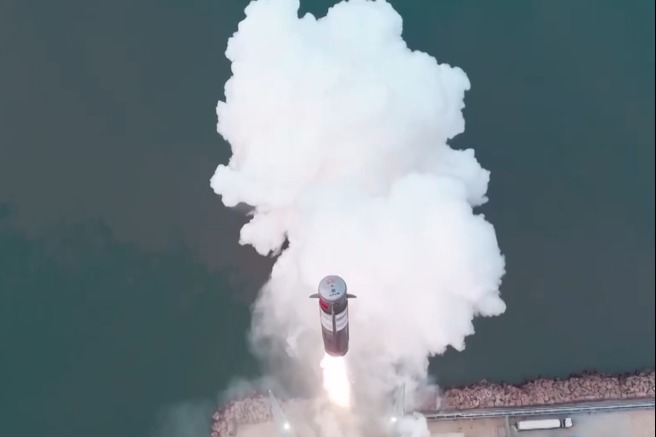
    China has successfully deployed the Yaogan-47 remote-sensing satellite into orbit, marking another milestone in its expanding space capabilities. The spacecraft was carried aloft by a Long March 4B rocket that launched at 11:41 a.m. on Tuesday, December 9, 2025, from the Jiuquan Space Launch Center in Inner Mongolia.

    The China Aerospace Science and Technology Corporation (CASC), the state-owned enterprise overseeing the mission, confirmed that the satellite reached its intended orbital parameters as planned. The Yaogan-47 represents the latest addition to China’s primary series of Earth observation satellites, designed and manufactured by the China Academy of Space Technology.

    This advanced satellite will perform comprehensive monitoring functions including land resource surveys, urban mapping operations, agricultural yield assessment, and environmental protection initiatives. Additionally, it will contribute to disaster prevention and mitigation efforts through its sophisticated sensing capabilities.

    Remote-sensing technology operates by detecting and measuring reflected and emitted radiation from terrestrial and marine surfaces, enabling detailed analysis of physical characteristics across the planet. Data collected by the Yaogan constellation has become integral to both governmental decision-making and commercial applications throughout China.

    The launch vehicle, developed by the Shanghai Academy of Spaceflight Technology, demonstrates significant payload capacity—capable of delivering multiple satellites with a combined mass of 2.5 metric tons to sun-synchronous orbits approximately 700 kilometers above Earth.

    This mission constitutes China’s 82nd space endeavor of the year and the 614th overall deployment of a Long March rocket series, underscoring the nation’s sustained commitment to space exploration and technological advancement.

  • China rolls out 2-ton unmanned cargo plane

    China rolls out 2-ton unmanned cargo plane

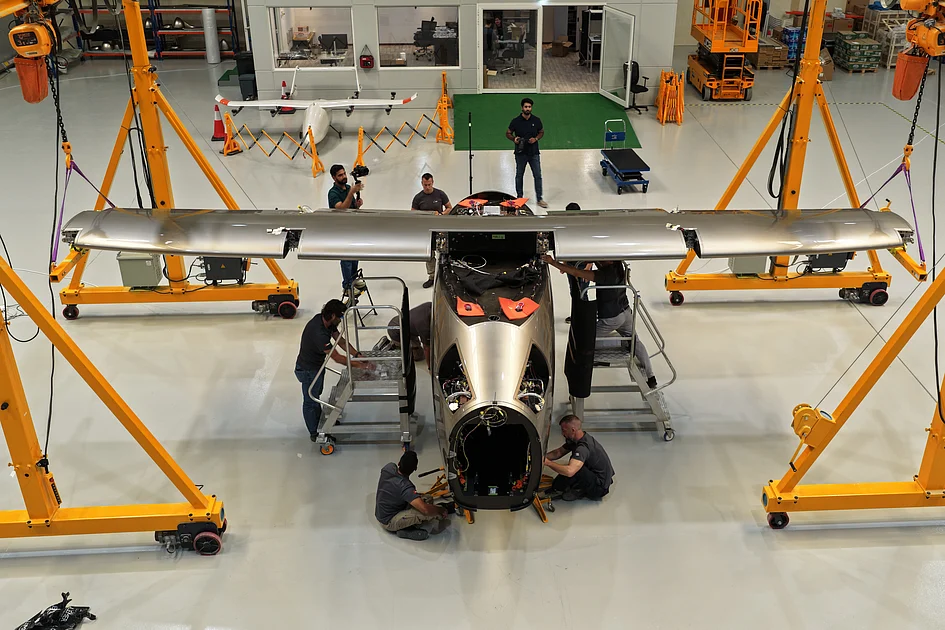
    Shenyang Sunny Aeronautics and Space Adventure Company has achieved a significant milestone in autonomous aviation technology with the production launch of its SUNNY-T2000 unmanned cargo aircraft. The 2-metric-ton capacity aircraft rolled off production lines in Shenyang, Liaoning Province on December 6, 2025, marking a substantial advancement in China’s logistics and emergency response capabilities.

    The SUNNY-T2000 features a 15-cubic-meter rectangular cargo compartment designed to transport diverse payloads including emergency supplies, industrial components, and agricultural products. With an operational range exceeding 1,000 kilometers fully loaded, the aircraft can operate from runways as short as 800 meters, enabling access to remote regions and challenging terrain. Its aerial cargo drop capability makes it particularly valuable for emergency rescue missions and forest firefighting operations alongside常规logistics functions.

    Professor He Jun, Chairman of Shenyang Sunny and academic at Shenyang Aerospace University, emphasized the aircraft’s role in addressing limitations of existing cargo planes regarding payload capacity, internal space, and range efficiency. “Current air transport struggles to compete with ground logistics for large-scale operations, creating substantial demand for long-distance unmanned cargo solutions,” He noted.

    The company is already advancing more ambitious projects, including 6-ton and 7-ton cargo aircraft models. The 6-ton variant, powered by an ATP120 turboprop engine, offers container-equivalent cargo space of approximately 67 cubic meters. Development is also underway for a 10-ton commercial aircraft targeting cross-regional heavy cargo transportation.

    These developments align with Shenbei New District’s strategic focus on low-altitude economy as an emerging growth sector during China’s 14th Five-Year Plan period. The district has attracted over thirty enterprises specializing in low-altitude technologies, forming a comprehensive manufacturing ecosystem led by Shenyang Sunny and Optimal Aerospace Science and Industry Group.

    Infrastructure development supports this expansion, with approval of 14 airspaces and two drone logistics test routes—the largest such allocation in Liaoning Province. The district has established 21 temporary takeoff/landing points and is developing Shenbei General Airport alongside the Aifeike Flight Camp’s second phase. Notably, Northeast China’s first low-altitude aircraft equipment quality inspection center will be established in the district.

    According to Li Linghui, Deputy Director of Shenbei’s Industry and Information Technology Bureau, these initiatives position the district to become a national cluster and demonstration zone for low-altitude economic activities, integrating the SUNNY-T2000 with larger aircraft models through Shenbei University City’s delivery routes to create a multi-tiered logistics network.

  • China launches new remote sensing satellite

    China launches new remote sensing satellite

    China has successfully deployed a new Earth observation satellite into orbit, marking another significant advancement in the nation’s space capabilities. The Yaogan-47 remote sensing satellite was launched aboard a Long March-4B carrier rocket from the Jiuquan Satellite Launch Center in northwest China at 11:41 a.m. Beijing Time on December 9, 2025.

    The satellite achieved its predetermined orbit following a flawless launch operation, according to official reports. This mission represents the 614th flight of China’s Long March rocket series, demonstrating the country’s growing expertise and reliability in space launch technology.

    The newly deployed satellite is designed to serve multiple civilian purposes including comprehensive land resource surveys, urban development planning, transportation infrastructure design, and agricultural production assessment. Additionally, the satellite’s advanced sensing capabilities will contribute to environmental monitoring and disaster management programs, providing valuable data for natural disaster prediction and mitigation efforts.

    China’s expanding constellation of remote sensing satellites enhances the nation’s ability to monitor Earth’s surface with increasing precision and frequency. The successful launch continues China’s pattern of regular space missions that support both scientific research and practical applications for sustainable development and resource management.

  • EU investigates Google over AI-generated summaries in search results

    EU investigates Google over AI-generated summaries in search results

    The European Commission has initiated a formal investigation into Google’s artificial intelligence systems, marking a significant escalation in regulatory scrutiny of AI development practices. The probe centers on whether the tech giant improperly utilized content from websites and YouTube videos to train its AI models without providing adequate compensation or opt-out mechanisms to content creators.

    The investigation will specifically examine Google’s AI Overview feature, which displays AI-generated summaries above traditional search results, and its conversational AI Mode that provides ChatGPT-style responses. Regulators expressed concern that these innovations may be diverting traffic from original content sources, potentially devastating publishers who rely on advertising revenue. The Daily Mail reported a 50% decline in click-through rates since the implementation of AI Overviews.

    Commission executive vice-president Teresa Ribera emphasized that while AI brings ‘remarkable innovation’ and benefits, its development must not compromise European values or creative ecosystems. ‘A free and democratic society depends on diverse media, open access to information, and a vibrant creative landscape,’ she stated.

    Google responded that the investigation ‘risks stifling innovation in a market that is more competitive than ever,’ adding that Europeans deserve access to cutting-edge technologies. The company pledged continued collaboration with news and creative industries during the AI transition.

    AI ethics advocates welcomed the probe. Ed Newton-Rex of Fairly Trained noted that content creators face ‘career suicide’ if they avoid publishing online, yet Google essentially requires them to permit their work to train competing AI systems. He called the investigation ‘critically timed’ for global creators.

    The outcome could have far-reaching implications for how tech companies train AI models using publicly available content, potentially establishing new precedents for compensation and consent in the digital era.

  • China deploys 15th batch of internet satellites into orbit

    China deploys 15th batch of internet satellites into orbit

    China has successfully launched its fifteenth cluster of low-orbit internet satellites, marking another significant advancement in its ambitious space-based connectivity initiative. The deployment occurred at 6:11 am Beijing Time on December 9, 2025, utilizing a modified Long March 6A carrier rocket from the Taiyuan Satellite Launch Center in Shanxi province.

    The China Aerospace Science and Technology Corp (CASC), the nation’s primary state-owned space contractor, confirmed the satellites successfully reached their predetermined orbital trajectories shortly after launch. This latest batch of satellites was engineered and manufactured by the China Academy of Space Technology, a Beijing-based subsidiary of CASC.

    With this successful mission, China’s state-operated mega constellation now exceeds 110 satellites in orbit, substantially enhancing the network’s coverage and capacity for global internet services. The Long March 6A medium-lift launch vehicle, developed by the Shanghai Academy of Spaceflight Technology, features a sophisticated design incorporating a 50-meter liquid-propelled core booster augmented by four solid-fuel side boosters. Weighing 530 metric tons at liftoff, this versatile rocket platform is capable of delivering payloads to various orbital configurations including sun-synchronous, low-Earth, and intermediate circular orbits.

    This launch represents multiple milestones: the 81st Chinese space mission of the year and the 613th overall flight for the Long March rocket series. Notably, this mission marks the fifth utilization of the Long March 6A variant specifically dedicated to expanding China’s orbital internet infrastructure, demonstrating the country’s growing proficiency in frequent and reliable space deployments.

  • Baotou bets on digitized carbon ticket

    Baotou bets on digitized carbon ticket

    The industrial city of Baotou in Inner Mongolia Autonomous Region has emerged as an unexpected pioneer in climate innovation through its groundbreaking digital carbon ticket system. This homegrown environmental program represents a significant evolution in carbon market mechanisms, combining blockchain verification with ecological conservation to create a transparent, efficient carbon trading ecosystem.

    At the core of this initiative is a digital platform launched in 2021 that transforms traditional carbon credits into blockchain-verified digital assets. The system certifies carbon sequestration achieved by local forests and grasslands, creating tradeable digital tokens that provide real-time tracking and verification capabilities unavailable in conventional paper-based carbon credit systems.

    The program’s practical impact became evident in June 2023 when Guyang county successfully monetized 150,000 metric tons of carbon credits generated from a 1,500-hectare state forest. This transaction, valued at over 2 million yuan ($281,754), demonstrated the economic potential of carbon trading while funding continued ecological development.

    Unlike traditional corporate-focused carbon markets, Baotou’s system actively engages citizens through a mobile application that converts everyday eco-friendly activities—such as walking, cycling, and conservation efforts—into redeemable carbon credits. Residents like Qin Dan report widespread community participation, with neighbors earning carbon points that can be exchanged for merchant discounts or traded on the platform.

    According to Feng Xiaodong, Director of Reform Development and Science Technology at Baotou’s Forestry and Grassland Bureau, the city has established a comprehensive carbon neutrality mechanism that uploads all critical operational data to blockchain for certification. This ensures unprecedented transparency throughout the carbon ticket development, trading, and application process.

    The model’s success has attracted national attention, with enterprises from Zhejiang, Shandong, and Fujian provinces purchasing Baotou’s carbon credits to offset their emissions. The program reached a significant milestone when its credits were used to neutralize emissions during the 14th National Winter Games in 2024, marking the first application of regional carbon products at a national sporting event.