Against the backdrop of shifting demographics and rising consumer demand for professional household care, China’s vast, traditionally labor-heavy domestic service industry is undergoing a rapid digital transformation, with artificial intelligence and robotics becoming core tools to reshape service delivery and matching efficiency. A groundbreaking example of this tech integration can be found in Hefei, the capital of Anhui province, where a smart diaper sensor developed through a partnership between local domestic service provider Wansao and an AI startup is redefining infant care. The wearable device, fitted with high-sensitivity odor and humidity detectors, automatically tracks a newborn’s physical condition, logs real-time digestive data, and sends instant alerts to caregivers’ wearable wristbands when a diaper change or attention for an upset stomach is needed. This data is then synced with a cloud-based digital platform alongside caregiver-kept feeding records to build a personalized health profile, enabling nannies and parents to monitor infant development with far greater precision than traditional manual care. The developers have already outlined plans to adapt the technology for use with frail, elderly care recipients who require round-the-clock monitoring, expanding its impact beyond childcare. This smart device is just one of dozens of technology trials transforming China’s domestic service sector, which already hit a market value of 1.2 trillion yuan ($174 billion) and employed more than 30 million workers nationwide in 2024. Beyond sensor-based monitoring solutions, AI-powered digital platforms are overhauling the outdated worker-client matching process. Wansao president Ding Xiaomei explained that the company is building large language model-powered platforms trained on years of aggregated domestic service industry data and private industry knowledge bases. These platforms do not only address common questions from both families and domestic workers, but also generate detailed digital work profiles for service providers, allowing the system to quickly match households with candidates that fit their specific needs from a database of tens of thousands of workers. Robotics is also carving out a key space in the market, particularly in the fast-growing eldercare segment. Across multiple Chinese cities, companion robot Xiaoli, developed by Beijing-based Seelink Technology, is already deployed in nursing homes and private family homes. The robot conducts routine health checks including blood pressure and blood oxygen monitoring, sends automatic alerts to family members when abnormal health indicators are detected, and provides conversational companionship to socially isolated elderly residents. Li Yang, a representative of Seelink Technology, noted that the company has launched two tailored versions of Xiaoli — one for institutional eldercare facilities and another for home-based care — and plans to continuously expand the robot’s service capabilities to meet evolving needs. Two major forces are driving this rapid tech adoption in the domestic service space: surging consumer demand and targeted government policy support. Demographic change has been the core demand driver: by the end of 2024, China was home to more than 310 million people aged 60 and above, accounting for roughly 22 percent of the total population. Combined with shrinking average household sizes that leave fewer family members available to provide informal care, demand for both professional childcare and eldercare domestic services has skyrocketed. Industry data from Chinese research firm Zero Power Intelligence Group shows that China’s eldercare robot market already surpassed 30 billion yuan in 2024, with projections to hit 50 billion yuan by 2025. Li Yang noted that just a few years ago, only a small number of companies were developing intelligent companion robots for eldercare, but today, new market entrants are increasing rapidly, making the sector increasingly dynamic. Policy support has also acted as a key catalyst for transformation. In April 2025, China’s Ministry of Commerce joined eight other central government departments to release a policy guideline supporting the upgrading of household service consumption. The guideline explicitly called for accelerating the sector’s digital transformation, and encouraging the adoption of emerging technologies to expand innovative application scenarios across all segments of household services. Despite the clear growth trajectory and promising potential, industry insiders point out that the sector still faces tangible practical barriers to widespread adoption. For one, current robotics solutions remain prohibitively expensive for most average households. Additionally, most existing smart machines can only perform narrow, simple tasks, as navigating the unstructured, complex environment of a typical household requires far more advanced perception and mechanical dexterity than current commercial technologies offer. Data security and standardization also remain major sticking points: domestic work inherently involves processing highly sensitive personal information, and the absence of unified industry-wide data standards makes secure, efficient data sharing and processing far more complicated. Still, industry observers remain optimistic about the long-term future of tech integration in the space. As Yang noted, the development trajectory is clear and manageable, and smart technologies will likely evolve from serving as specialized assistants in commercial care settings to becoming reliable, everyday companions in ordinary households across China.
分类: technology
-

Nation’s open-source chip ecosystem to push global collaboration
For decades, accessing the architecture required to design cutting-edge high-end computer chips has come at a prohibitive cost: millions of dollars in mandatory licensing fees locked most early-stage startups out of the industry, creating an uneven playing field dominated by a small handful of proprietary technology holders. Today, a game-changing open standard called RISC-V instruction set architecture is rapidly growing in global traction, offering a free, collaborative alternative to the closed, costly proprietary models that have long defined the sector.
During the 2026 Zhongguancun Forum, China’s premier annual event for showcasing top national scientific and technological advances held in Beijing last week, industry and research leaders announced that China has successfully built out a complete, end-to-end RISC-V ecosystem. This integrated network spans from foundational technological innovation to full-scale industrial implementation, establishing China as a key global contributor to the worldwide push for more accessible, autonomous computing infrastructure.
To simplify how RISC-V works, an instruction set architecture can be thought of as the core “dictionary” that allows chips to function. Just as humans rely on dictionaries to understand and use words, a chip depends on this set of standard instructions to interpret and run software commands. While legacy architectures such as Intel and AMD-controlled x86 charge steep licensing fees and ban users from modifying the core design, RISC-V operates on an open-source model that grants anyone the right to freely use, alter, and build on the existing framework.
At a side event held alongside the main forum, the Chinese Academy of Sciences (CAS) unveiled two landmark new developments that complete the domestic ecosystem. The first is Xiangshan, an open-source processor platform that acts as the high-performance hardware core of the ecosystem. The second is open-Ruyi, a domestically developed operating system built from the ground up exclusively to run on the Xiangshan hardware.
As modern computing continues to evolve, simply increasing a chip’s raw clock speed is no longer enough to meet growing demand. The central challenge today is scalable computing: the ability to manage massive volumes of concurrent tasks and distribute processing power efficiently across complex networks. This makes high-performance processor cores the “command centers” that determine a computing system’s overall speed and functionality.
According to Bao Yungang, deputy director of the CAS Institute of Computing Technology, the Xiangshan core currently ranks as the most powerful open-source RISC-V processor available globally. In the SPEC CPU2006 industry benchmark test, the standard for measuring processor performance, the Xiangshan core hits 16.5 points per gigahertz — a score that reflects exceptional efficiency when handling complex computational tasks. Bao added that the Xiangshan-openRuyi pairing creates a reinforcing feedback loop, where technological development responds directly to industry needs, and real-world application in turn drives further innovation. He also noted that the Xiangshan core is already deployed in key sectors including artificial intelligence, cloud computing, and industrial controls.
Unlike traditional chip development workflows, where software is retrofitted to match existing hardware — a process that often creates unnecessary inefficiencies, open-Ruyi was designed from its inception to align perfectly with the Xiangshan core’s unique technical specifications, explained Wu Yanjun, deputy director of the CAS Institute of Software. This native alignment unlocks full performance potential, as the synergy between hardware and software is critical to maximizing processing power, Wu noted.
To lower the barrier for third-party developers and enterprises to join the ecosystem, CAS also launched the RuyiSDK, a comprehensive software development kit that acts as a one-stop resource for engineers. The toolkit provides all the pre-built tools, documentation, and frameworks developers need to build custom software for the platform, eliminating the need to start development from scratch.
Beyond accessibility and innovation, the shift to open-source chip architecture also addresses growing global concerns over supply chain security, offering a path for countries and companies to avoid being cut off from critical computing technology due to trade disputes, export restrictions, or exploitative pricing. Liu Yanan, chip technology director at China Mobile (Suzhou) Software Technology Co., explained that the long-term goal of the ecosystem is to deliver an autonomous, cost-effective computing infrastructure that can meet the wide range of processing demands created by the fast-growing global digital economy.
To date, CAS has assembled one of the world’s largest RISC-V research and development cohorts, with more than 600 hardware-focused researchers and 400 software engineers working on the project. Its global open talent and development programs have already drawn more than 27,000 participants from over 1,100 universities across the world, marking a clear shift toward a more inclusive, collaborative global model for the future of semiconductor development.
-
Future ‘air taxis’ showcased in Wuhan
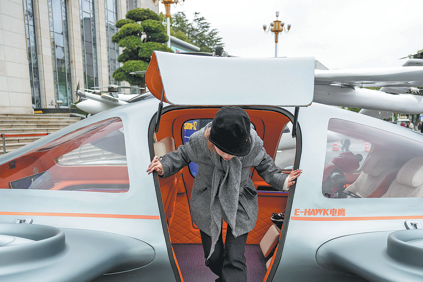
Shortly after the 2026 Spring Festival holiday, Wuhan’s annual government economic conference took an unexpected futuristic turn: the quiet convention space at Hongshan Auditorium was underscored by the low hum of spinning rotor blades, where four cutting-edge electric vertical takeoff and landing (eVTOL) aircraft stood on public display. More than just a technological exhibition, the event served as a clear public declaration of Hubei province’s ambition to become a leading hub for China’s fast-growing low-altitude economy, a sector recently elevated to national strategic priority by Beijing.
As the industry moves beyond early concept testing and into the final stretch toward full commercial rollout, 2026 is widely viewed as a make-or-break year for crossing the gap between experimental development and mass consumer adoption. Huang Xiaofei, vice president of strategy for Shanghai-based eVTOL developer Volant Aerotech, framed the moment as a pivotal inflection point: “As the core technological driver of a projected trillion-yuan market, eVTOL has officially exited the concept verification phase and entered the commercial sprint.”
The four aircraft on display in Wuhan each showcased distinct innovations tailored to address current gaps in the emerging eVTOL sector, from consumer accessibility to operational range and specialized use cases. E-hawk Technology’s 1.2-metric-ton model, for example, integrated fully enclosed rotors to drastically improve ground safety, a key concern for urban deployment. Company chairman Cai Xiaodong outlined a two-pronged approach to bring the aircraft to market: consumers will be able to purchase their own craft for a projected price below 2 million yuan ($289,500), or access air taxi services via a ride-sharing model that mirrors popular on-demand ground ride-hailing apps. “In the future, it will be as simple as pulling out your phone from a residential compound or city park to call a real flying taxi,” Cai explained, noting the firm plans to launch a two-seat version this year focused on low-altitude logistics and scenic tourism operations.
Wuhan-based Xunqi Technology addressed one of the most common limitations of pure-electric eVTOLs: range anxiety. Its hybrid tilt-rotor V1000 model uses a hybrid range-extender system to deliver a total range exceeding 1,000 kilometers — enough to fly nonstop from Wuhan to Beijing, Guangzhou, or Shanghai without mid-journey recharging. “Pure electric eVTOLs’ biggest shortfall is range, which we solve with our hybrid system,” said Li Jia, the company’s deputy chief designer. The 400-kilogram capacity craft has already had its type certification application accepted by the Civil Aviation Administration of China, a critical regulatory milestone, with its first full test flight scheduled for 2026.
One of the most socially impactful prototypes on display came from Wuhan Fusheng General Aviation, which unveiled a pure-electric eVTOL designed to function as a flying micro intensive care unit for emergency medical response. Traditional medical evacuation helicopters cost roughly 10,000 yuan per hour of operation, but the new design cuts that cost to just 2,200 yuan per hour, according to company executive president Chen Zhaoyan. What makes the craft unique, Chen added, is its ability to complete patient triage, real-time vitals monitoring, and medical data synchronization directly within the cabin, with an interior purpose-built to accommodate a full stretcher and portable CT scanner. Later this year, the firm will partner with Wuhan University’s Zhongnan Hospital to test the aircraft’s capability for transporting medicine and blood plasma, with a goal of making the affordable technology accessible to ordinary communities by 2027.
Rounding out the exhibition was the SW01, a compact recreational eVTOL that stood out for its consumer-friendly design. Replacing complex traditional aircraft controls with a familiar steering wheel and throttle setup, and featuring a transparent open canopy, the craft targets recreational users with a target price below 500,000 yuan, letting casual users safely fly over scenic parks and lakes.
The Wuhan showcase is far more than a local technology event: it reflects a coordinated national push to unlock the low-altitude economy. A newly revised civil aviation law, set to take effect in July 2026, will formalize clear management rules for airspace below 300 meters, clearing away long-standing regulatory barriers for eVTOL deployment. Earlier this month, five central government departments including the Ministry of Industry and Information Technology released joint guidelines mandating that at least 90 percent of low-altitude public airways be covered by ground mobile communication networks by 2027, laying the critical infrastructure needed for widespread safe operation of urban air taxis.
-
Most powerful cargo drone takes wing
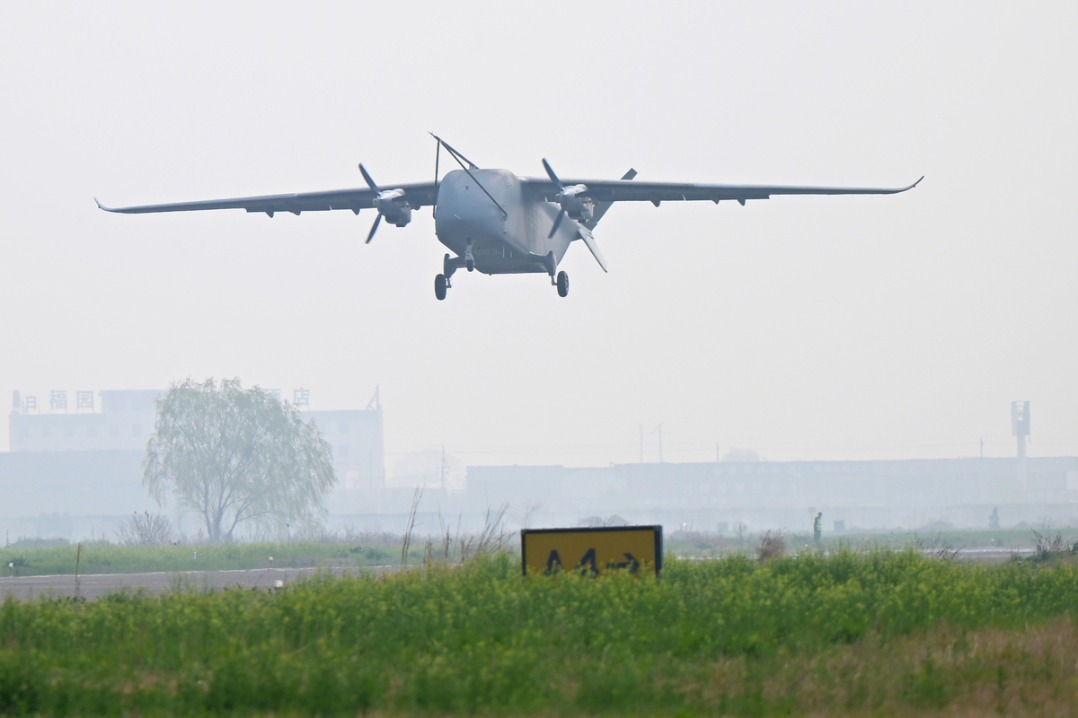
On March 31, 2026, a historic milestone in global unmanned aviation was achieved in Zhengzhou, Henan province, when the Norinco Luca — touted as the world’s most capable heavy cargo drone — completed its first test flight, marking a major breakthrough for China’s domestic unmanned aerial system (UAS) industry.
Developed by Norinco UAS, a Beijing-based subsidiary of China North Industries Group Corp, the 7-ton prototype, also called Changying-8, lifted off from Zhengzhou Shangjie Airport at 9:30 a.m. local time. The aircraft remained aloft for approximately 30 minutes before a smooth touchdown at the departure airfield. Throughout the entire flight, the drone operated under the control of its on-board intelligent autonomous systems, with ground-based human controllers providing real-time oversight. Engineering teams conducted comprehensive checks of the drone’s flight control, avionics, electronic infrastructure, and power systems during the test, and confirmed all systems performed in line with pre-flight expectations.
With a length of 17 meters and a wingspan stretching 25 meters, the Norinco Luca boasts an unmatched maximum payload capacity of 3.5 metric tons — a figure roughly equal to the combined weight of 50 average-sized adults. To put that capability in context, the drone can transport more than 1,700 cotton winter coats or 700 disaster relief tents in a single sortie, making it an ideal platform for long-distance logistics delivery. Its maximum operational range exceeds 3,000 kilometers, a distance comparable to a non-stop flight between Beijing and Urumqi in northwest China’s Xinjiang Uygur autonomous region.
Unlike large manned cargo aircraft that require long, fully paved runways, the Norinco Luca can complete takeoff and landing on runways shorter than 500 meters. This short-field performance allows it to operate from underdeveloped airfields in challenging environments, including high-altitude plateaus and remote island outposts where traditional cargo aircraft cannot reach. The aircraft features an 18-cubic-meter cargo bay with accessible entry points at both the front and rear of the fuselage, enabling ground crews to turn the drone around for its next mission in as little as 15 minutes — a design that dramatically boosts logistics turnover efficiency for high-volume operations.
To guarantee maximum operational safety, the drone is powered by two domestically manufactured turboprop engines, and incorporates multiple layers of safety redundancy for all critical systems, including flight control, navigation, and power distribution. It also comes equipped with cutting-edge smart aircraft health monitoring and automatic fault diagnosis functions that allow teams to identify and address issues before they impact operations.
Geng Jianzhong, chief designer of the Norinco Luca, explained that the drone’s flexible modular design, high power output, large payload capacity, and standardized equipment interfaces allow ground personnel to quickly swap out mission payloads to adapt to a wide range of operational scenarios. Beyond routine commercial cargo delivery, the platform can be reconfigured to support emergency communications restoration, weather modification, border patrol, and electronic reconnaissance missions, filling critical capability gaps in remote and high-need environments.
In the wake of the successful maiden flight, Geng outlined the development team’s next steps: the company will now prioritize completing the drone’s airworthiness certification process, preparing for customer deliveries, and rolling out commercial operations. At the same time, the team will continue advancing research into next-generation safe, efficient, and intelligent low-altitude transportation solutions.
“Building on the foundation of this platform, we plan to develop even larger, smarter, and more advanced unmanned aerial systems in the coming years,” Geng said. “We also intend to design unmanned helicopters with vertical takeoff and landing capabilities, allowing us to offer fully integrated logistics solutions that meet the diverse operational and transportation needs of customers across a wide range of scenarios.”
-
Chinese robotaxis stall in apparent ‘malfunction’: police
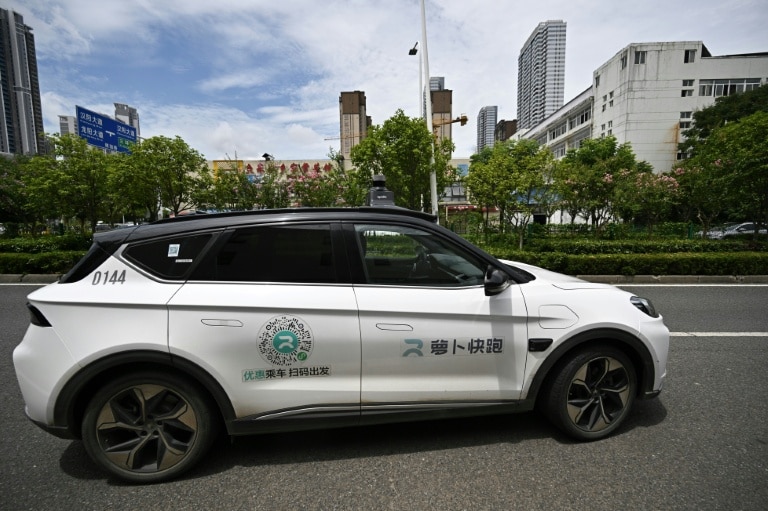
A cluster of Baidu-owned autonomous robotaxis came to an unexpected standstill on roads in central China’s Wuhan city this week, leaving passengers stranded after what local police have preliminarily identified as a system-wide malfunction. The incident, which unfolded on Tuesday evening, prompted a flood of emergency calls to local law enforcement, with reports of multiple Baidu Apollo Go vehicles blocking lanes after becoming immobile.
Launched as Baidu’s flagship commercial autonomous ride-hailing service, Apollo Go first rolled out paid driverless trips in Beijing back in 2021, and has since expanded its operational footprint to designated zones across dozens of Chinese cities. Wuhan alone hosts more than 500 vehicles from Baidu’s driverless fleet, making it one of the service’s largest domestic hubs.
In an official statement released Wednesday, Wuhan police confirmed that preliminary investigations point to a system malfunction as the root cause of the simultaneous stalls, though authorities did not disclose the exact number of vehicles affected by the disruption. Footage and posts shared by affected passengers on Chinese social media platforms have offered a first-hand look at the disruption: multiple videos show riders stuck inside stationary robotaxis stuck in active traffic lanes, repeatedly attempting to reach Baidu customer service via in-car tablets with no response. One passenger documented they remained stranded in the middle of a road for more than 30 minutes, with a social media caption questioning if the entire Apollo Go service had been paralyzed.
As of press time, Chinese tech giant Baidu has not issued an immediate public response or comment to Agence France-Presse’s request for information about the incident. Beyond its domestic operations, Baidu has actively pursued global expansion of its autonomous driving technology in recent years, striking integration deals with major U.S. ride-hailing platforms Lyft and Uber to bring its self-driving systems to international markets.
Company filings show the service has seen rapid growth in ridership over the past 12 months: in the fourth quarter of 2024, Apollo Go completed 3.4 million fully driverless rides, representing a more than 200% year-over-year increase in total trip volume. The Wuhan malfunction comes as autonomous vehicle technology continues to face ongoing scrutiny around the world over system reliability, emergency response protocols, and public safety as companies scale commercial deployments.
-
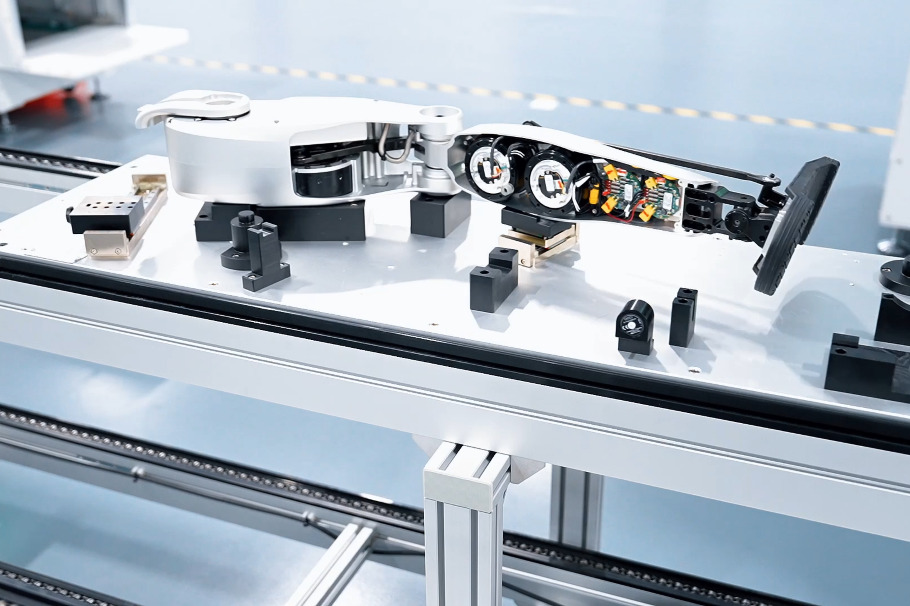
Foshan opens China’s highest producing humanoid robot production line
Foshan’s Nanhai district has inaugurated China’s pioneering automated production line dedicated exclusively to humanoid robots, boasting an unprecedented annual manufacturing capacity exceeding 10,000 units. This state-of-the-art facility commenced operations on Sunday, representing a monumental advancement in China’s strategic push toward humanoid robot industrialization.
The groundbreaking project emerges from a strategic collaboration between Guangdong Dongfang Precision Science & Technology—a nationally recognized leader in sophisticated equipment manufacturing—and Leju Robotics, an innovative enterprise specializing in cutting-edge robotic technology research and development.
Leveraging an advanced industrial internet platform, the production line implements comprehensive digital management systems and full-cycle quality traceability protocols. This technological infrastructure enables the facility to achieve remarkable production efficiency, completing one fully assembled humanoid robot every 30 minutes throughout its operational cycle.
The establishment of this production base signifies a crucial milestone in China’s broader technological roadmap, accelerating the transition from experimental robotics research to full-scale commercial manufacturing. This development positions Foshan as a central hub in China’s rapidly expanding robotics ecosystem, potentially reshaping global supply chains for advanced humanoid robots.
-
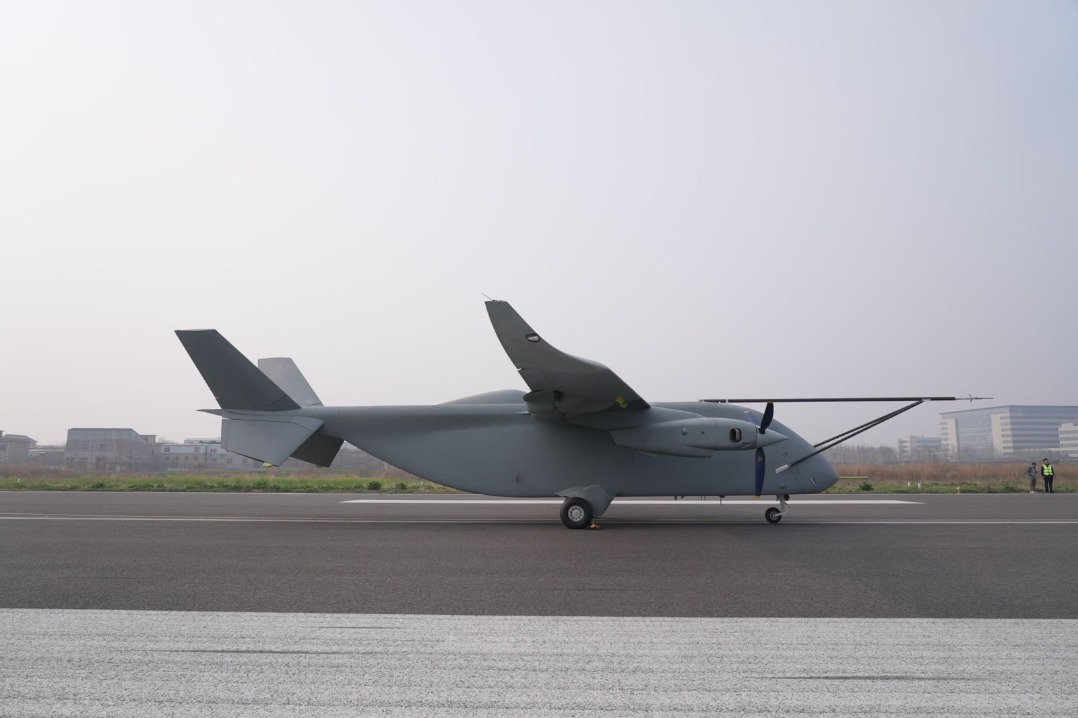
Norinco Luca, the world’s most powerful cargo drone, makes debut flight
China’s aviation sector achieved a significant technological milestone on Tuesday as the Norinco Luca, now recognized as the world’s most powerful cargo drone, successfully completed its inaugural flight in Zhengzhou. This groundbreaking demonstration marks a pivotal advancement in unmanned aerial logistics capabilities.
The debut flight represents the culmination of extensive research and development efforts by China North Industries Group Corporation (Norinco), one of the country’s leading defense and technology enterprises. The Luca drone’s unprecedented payload capacity and operational capabilities position it at the forefront of autonomous cargo transportation technology.
Aviation experts highlight that the Luca’s successful maiden voyage demonstrates remarkable engineering achievements in drone design, propulsion systems, and autonomous navigation. The aircraft’s performance metrics establish new benchmarks for heavy-lift unmanned aerial vehicles, potentially revolutionizing how goods are transported across challenging terrains and remote regions.
This technological breakthrough carries substantial implications for multiple sectors including emergency response, military logistics, remote area supply chains, and commercial freight transportation. The drone’s capacity to operate without human pilots in complex environments could significantly reduce delivery times and operational costs while improving access to isolated communities.
The development aligns with broader global trends in autonomous transportation innovation and reflects China’s growing capabilities in advanced aerospace technology. Industry analysts anticipate that the Luca platform could establish new standards for cargo drone operations worldwide, potentially influencing regulatory frameworks and operational protocols for unmanned heavy-lift aircraft.
Further testing and certification processes are expected to follow this successful debut flight as Norinco works toward operational deployment of the Luca system in various applications.
-
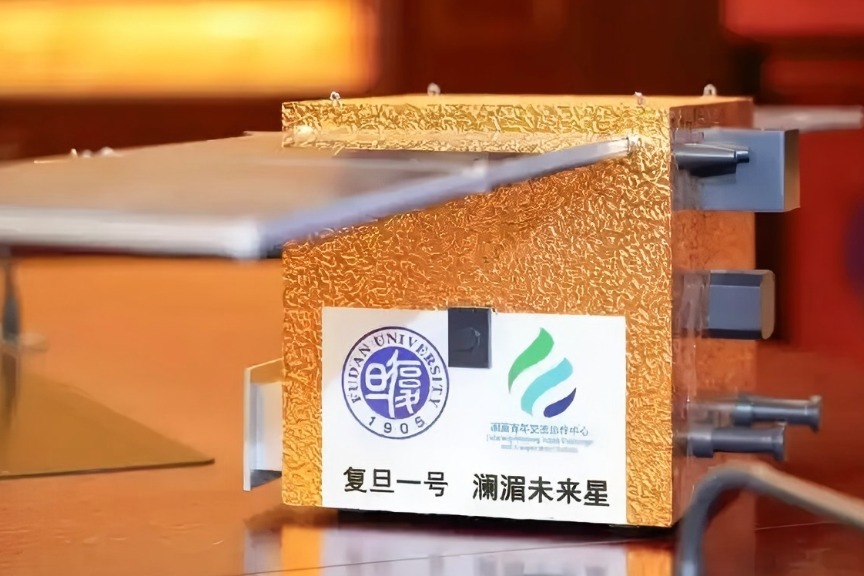
Fudan advances VLEO satellite tech
Shanghai’s prestigious Fudan University has announced groundbreaking advancements in Very Low Earth Orbit (VLEO) satellite technology, positioning China to challenge United States dominance in space infrastructure. The university revealed on Thursday that it has achieved critical technological breakthroughs and expects to unveil a prototype satellite imminently, with an engineering model anticipated by late 2026 or early 2027.
The development comes as the US maintains overwhelming space infrastructure superiority with over 11,000 satellites in orbit—representing more than 70% of global assets. SpaceX’s Starlink constellation alone operates approximately 10,000 satellites, creating substantial first-mover advantages. Experts identify VLEO technology as a strategic opportunity for China to leapfrog existing space capabilities.
VLEO satellites operate at altitudes of 150-300 kilometers, significantly lower than traditional low-Earth orbit satellites that function at 350-2,000 kilometers. This proximity to Earth provides exceptional advantages including reduced launch costs (90% lower than conventional satellites), minimal radiation exposure, rapid deorbiting capabilities, and negligible space debris accumulation. Performance metrics are equally impressive: Earth observation resolution reaches 0.1-0.5 meters (comparable to aerial drones), while signal latency drops to just 5 milliseconds with communication speeds exceeding traditional LEO satellites by tenfold.
The primary technical challenge has been atmospheric drag at such low altitudes. Fudan’s research team has innovated air-breathing plasma propulsion technology that captures nitrogen and oxygen molecules from the thin upper atmosphere to use as propellant. This breakthrough enables continuous thrust-drag balance, allowing indefinite orbital maintenance with a design life exceeding two years.
According to Zhao Qiang, Party Secretary of Fudan’s Institute of Modern Physics, the university is committed to ‘advancing core technologies and promoting industry-academia-research integration to establish VLEO as a strategic advantage for China.’
The program’s next phase involves launching a joint research initiative for civilian applications across the Lancang-Mekong region. Associate Professor Yang Yang revealed plans for a six-satellite constellation capable of revisiting the same ground location within one hour, significantly enhancing regional economic development and public welfare applications.
Concurrently, Fudan announced its ‘Lancang-Mekong Future Satellite’ has operated successfully for eighteen months, producing landmark scientific achievements including China’s first satellite-based ‘front view’ solar image using Mg II k spectra. These observations enable unprecedented high-resolution (better than 0.1 nanometer) extreme ultraviolet spectral analysis of magnesium ion lines, contributing to improved understanding of solar activity mechanisms and enhanced space weather forecasting capabilities.
Some research outcomes have already been integrated into Fudan’s space weather prediction models, demonstrating preliminary effectiveness in ionospheric weather forecasting.
-
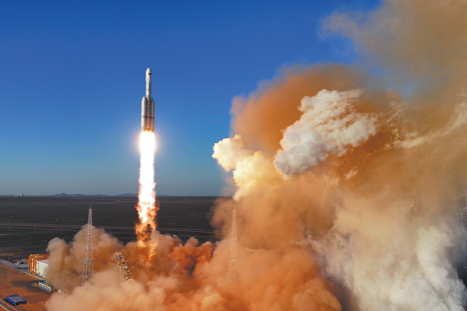
Commercial rocket makes maiden flight
In a groundbreaking advancement for China’s commercial space sector, CAS Space successfully conducted the inaugural launch of its Kinetica 2 medium-lift rocket from the Jiuquan Satellite Launch Center on Monday evening. The landmark mission deployed multiple payloads into designated orbits, including the innovative New March 02 experimental robotic cargo spacecraft.
The 53-meter-tall liquid-fuel rocket, developed by the Beijing-based commercial space enterprise, ignited its nine first-stage engines at 7:00 PM local time, casting an intense glow across the Gobi Desert landscape. The launch vehicle demonstrated exceptional performance by precisely delivering its payloads to predetermined orbital positions within a remarkably short flight duration.
Among the deployed assets, the New March 02 cargo vessel represents a significant technological achievement. Designed and manufactured by the Chinese Academy of Sciences’ Innovation Academy for Microsatellites, the 4.2-ton spacecraft incorporates advanced systems capable of sustaining orbital operations for up to three years. This development introduces a new dimension to China’s space logistics capabilities, previously dominated by the larger Tianzhou series of cargo vehicles.
Project Manager Yang Haoliang emphasized the strategic importance of this achievement: ‘Kinetica 2 provides mission planners with enhanced flexibility for space station resupply missions. The coexistence of multiple launch systems ensures mutual backup capability, substantially strengthening our cargo transportation infrastructure.’
The rocket’s innovative modular design features a common booster core configuration where the first-stage core and two side boosters utilize identical modules. This engineering approach allows for customizable configurations by adding or removing boosters to meet varying mission requirements while maintaining cost efficiency through component commonality with its predecessor, Kinetica 1.
Notably, the mission marked the first integration of commercial rocket technology within China’s manned space program framework. With a payload capacity of 8 tons to sun-synchronous orbit and 12 tons to low-Earth orbit, Kinetica 2 demonstrates competitive specifications comparable to international counterparts.
The company has announced ambitious plans for booster recovery systems in subsequent flights, with Deputy Chief Designer Lian Jie revealing that future missions will attempt integrated recovery of all three boosters as a single unit. This approach promises improved aerodynamic performance, enhanced reliability, and reduced manufacturing complexity.
CAS Space is establishing production capacity for 20 Kinetica 2 rockets annually at its newly operational facility in Shaoxing, Zhejiang province. The company projects that achieving reusability could reduce launch costs to approximately half that of SpaceX’s Falcon 9 rocket.
Looking forward, the development of the Kinastra 1 upper stage, scheduled for maiden flight later this year, will enable the rocket family to reach high-altitude orbits including geosynchronous transfer and lunar transfer trajectories—positioning CAS Space as China’s first commercial enterprise with such advanced capabilities.
-

Meta, Snapchat, TikTok and YouTube aren’t fully complying with child account ban, Australia says
Australia’s eSafety Commissioner has initiated potential legal proceedings against five major social media platforms—Facebook, Instagram, Snapchat, TikTok, and YouTube—for alleged failures in enforcing the nation’s pioneering age restriction laws. The regulatory action comes as the government asserts these platforms are implementing minimal compliance measures despite legislation that took effect December 10 prohibiting children under 16 from maintaining accounts.
Commissioner Julie Inman Grant’s office released its inaugural compliance report revealing that while approximately 5 million Australian accounts have been deactivated since the law’s implementation, a substantial number of underage users continue to access platforms through various circumvention methods. The report identified “significant concerns” regarding half of the ten platforms subject to the legislation, with evidence gathering underway against the five named companies.
The regulatory body has documented problematic practices including systems that permit unlimited attempts to bypass age verification and mechanisms that prompt underage users to retry verification even after self-declaring as minors. Platforms found in systemic violation face potential fines reaching AU$49.5 million (approximately US$33 million).
Communications Minister Anika Wells accused the non-compliant platforms of deliberate resistance, stating: “Social media platforms are choosing to do the absolute bare minimum because they want these laws to fail. We’re the first in the world to do this—of course they don’t want these laws to work.”
Company responses varied significantly. Meta acknowledged the industry-wide challenge of age verification while committing to compliance. Snap reported locking 450,000 accounts with ongoing daily enforcement. TikTok declined comment, while Alphabet (YouTube’s parent company) did not immediately respond.
Legal experts anticipate courts will determine what constitutes “reasonable steps” in age verification, particularly given technological limitations. RMIT University information sciences expert Lisa Given noted the central question becomes whether platforms should be held accountable for imperfect verification systems.
Concurrently, constitutional challenges have emerged with Reddit and the Digital Freedom Project filing suits claiming the law infringes on Australia’s implied freedom of political communication. A preliminary hearing is scheduled for May 21.